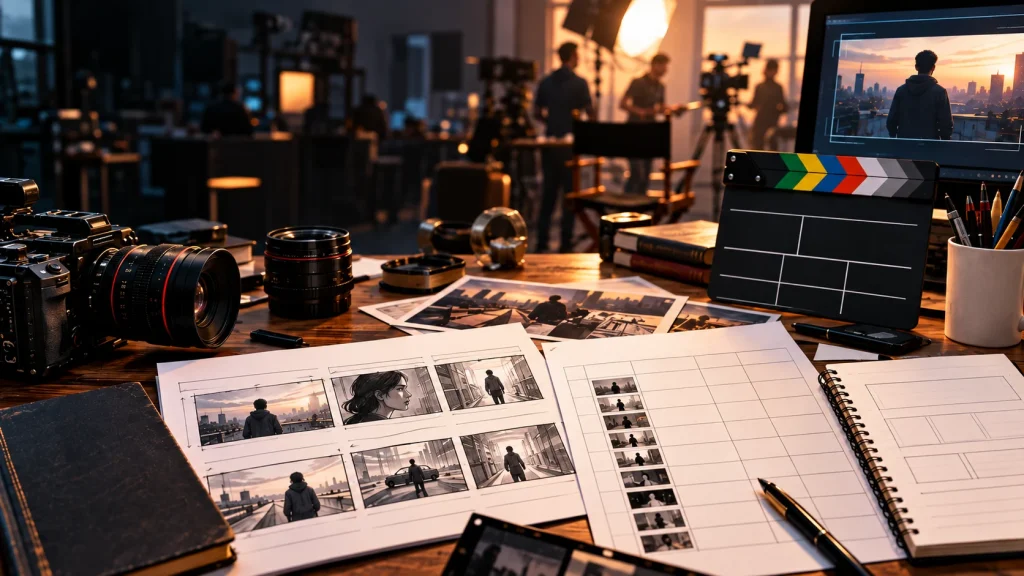
A short film often begins with an image that everyone on the team imagines differently. The writer sees a quiet corridor. The director sees a tense approach to a closed door. The cinematographer wants to know where the light comes from, while the producer is already wondering whether the location is available after dark.
A moving sketch can make that conversation more concrete. Video creation tools such as Seedance 3.0 offer a way to explore a visual idea before a crew commits to filming it. The useful result is not necessarily a finished shot. It can be a shared reference that helps people explain timing, atmosphere, and the part of the scene that actually matters.
Choose a scene with one clear dramatic job
Imagine an original mystery short in which a caretaker discovers that a room has been occupied overnight. Nothing spectacular needs to happen. A light under the door, a pause, and a small reaction can establish the scene. That makes it a manageable starting point for previsualization because the team can judge whether the sequence creates curiosity.
Write the dramatic intention before describing the camera. Perhaps the audience should notice the light before the character does. That decision affects the angle and duration of the opening shot. Without it, a prompt can become a collection of attractive visual adjectives that produce atmosphere without advancing the story.
Keep the initial test small. A single approach to the doorway is enough to compare a static frame with a slow forward movement. Once the team understands that choice, it can discuss the reaction shot. Trying to settle the entire film in one generated sequence makes individual problems harder to identify.
Build references from the film you can actually make
Seedance 3.0 includes text, image, and reference based workflows. For a modest production, the most useful reference may be an ordinary photograph of the available corridor rather than an elaborate image of a location the crew will never access. A rough reference that reflects real constraints can lead to a better planning conversation.
Photograph the intended space from several practical camera positions and note where doors, windows, and electrical outlets sit. Use reference material that the team owns or has permission to use. If the purpose is to explore a fictional environment, label it as a concept so nobody mistakes a generated detail for something already secured for production.
References can guide a visual direction, but they should not be treated as a promise of exact reconstruction. A generated version may change the width of a doorway or introduce another light source. Those differences are useful to discuss, particularly when an attractive result suggests a shot that the real location cannot support.
Describe movement in filmable terms
A prompt becomes easier to assess when it names a subject, an action, and a camera behavior. For the caretaker scene, that might mean a person stopping several steps from the door while the camera remains behind them. Lighting and texture can follow once the action is understandable.
When using Seedance 3.0 to explore alternatives, change the most important decision first. Compare the same action with a locked camera and with a restrained push forward. A rapid orbit might look impressive, but it answers a different question and may undermine the quiet tension. The strongest visual choice is the one that serves the scene.
Use the rough cut to test timing
Individual clips can hide a pacing problem that becomes obvious when they are placed together. Assemble the promising candidates in an ordinary editing timeline, using temporary cards where footage is missing. The pause outside the door may feel effective by itself and overly long after the previous scene. Watching the sequence in context makes that difference apparent.
Keep dialogue, music, and sound choices provisional during this stage. A dramatic sound effect can make an unclear image seem more successful than it is. View the sequence without sound once, then listen separately to the proposed audio rhythm. Each pass exposes a different part of the storytelling.
A Seedance 3.0 draft can also help identify an unnecessary shot. If the audience understands the discovery from a wide frame and a reaction, an additional close-up may add little. That is a useful production decision even if none of the generated footage appears in the completed film.
Bring the crew into the review
Show the test with a specific question attached. Ask whether the reveal arrives too early, whether the camera position hides important information, or whether the mood depends on an impractical lighting setup. A focused question gives collaborators permission to challenge the image instead of politely admiring it.
The cinematographer may suggest a simpler physical move. The production designer may notice a prop that changes the meaning of the scene. An actor may explain that the proposed pause gives the character no believable motivation. These responses turn a visual experiment into collaborative preparation rather than a fixed instruction handed down to the crew.
Separate inspiration from the shooting plan
Generated motion does not demonstrate that a camera can travel through a real wall or that a small room has space for equipment. Translate each selected idea into a practical shot description. Record the camera position, the action, the intended duration, and the equipment or location constraints that need checking.
The role of Seedance 3.0 here is to support that translation. Keep the moving reference beside a floor plan, photographs, and production notes. If the generated clip invents an architectural detail, remove that detail from the plan. The crew should arrive with decisions it can execute, not an image whose hidden assumptions only become apparent on set.
Know when the experiment has answered the question
Previsualization can become a distraction when the team keeps pursuing a perfect simulated shot. Set a modest review limit and decide what would count as useful progress. Agreement on the reveal, the framing, and the pace may be enough. A rough result that resolves those questions has already done valuable work.
For an independent filmmaker, the appeal of Seedance 3.0 is the chance to make an uncertain idea discussable. The final performance, location, and edit will still bring their own discoveries. A good planning clip leaves room for those discoveries while giving the people making the film a clearer place to begin.

Sandra Larson is a writer with the personal blog at ElizabethanAuthor and an academic coach for students. Her main sphere of professional interest is the connection between AI and modern study techniques. Sandra believes that digital tools are a way to a better future in the education system.