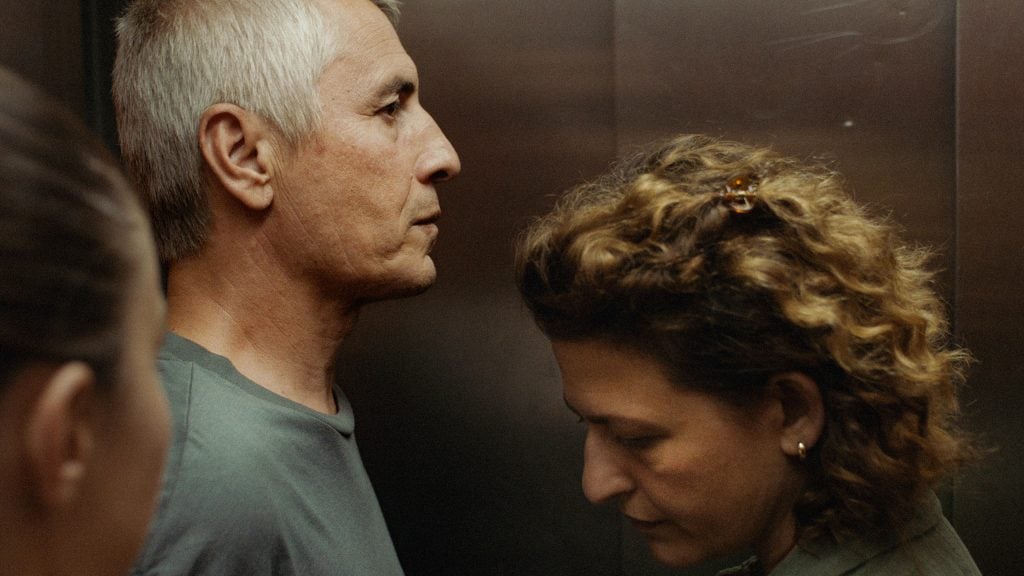
There’s a despair that runs through Shame and Money, the sort that settles in slowly and surely, and once it’s there, it doesn’t leave. From its opening moments, Visar Morina’s latest film establishes a world defined by exhaustion — emotional, physical, financial. It’s not a movie interested in easy tragedy or inspirational survival. Instead, it sits with the long stretch between crisis and collapse, where dignity erodes little by little and pride becomes both armor and poison.
The film follows Shaban (Astrit Kabashi), a devoted family man whose sense of identity is tied almost entirely to his ability to provide. After losing their livelihood in a rural Kosovar village, Shaban, his wife Hatixhe (Flonja Kodheli), and his elderly mother Nana (Kumrije Hoxha) relocate to the capital in hopes of rebuilding a stable life. What they find instead is a hypercapitalist system with no patience for people already on their knees. Jobs are scarce, expenses pile up quickly, and the city offers opportunity only to those who already have leverage.
Kabashi’s performance is the film’s emotional anchor. His Shaban is a man constantly swallowing his humiliation, every failure internalized before it’s ever spoken aloud. There’s a stiffness to his body language, a sense that he’s always bracing himself for the next disappointment. He rarely raises his voice, rarely allows himself emotional release, and that restraint makes the moments where his composure cracks devastating. You feel how deeply he believes that asking or even accepting help is a personal failure, even as circumstances make independence impossible.
That tension sits at the center of the film. Shaban’s mother’s savings keep the family afloat, and his brother-in-law Alban (Alban Ukaj), with a mix of generosity and judgment, repeatedly offers assistance. But every act of support chips away at Shaban’s sense of worth. The film’s title isn’t metaphorical; shame and money are inseparable forces here, bound together so tightly that survival itself feels transactional.
Morina and co-writer Doruntina Basha are very clear about what they’re interrogating. The film’s exploration of masculinity and pride is direct, sometimes almost confrontational. In several scenes, particularly those in which Shaban begs for work on the street while Alban confronts him, the message lands a little too cleanly. The humiliation is obvious. The power imbalance is unmistakable. The emotional intent is never unclear. While these moments are effective, they occasionally tip into being overly explicit, as if the film doesn’t quite trust the audience to sit with ambiguity. It’s not too big of a critique or even a bad thing per say but it isn’t exactly subtle.
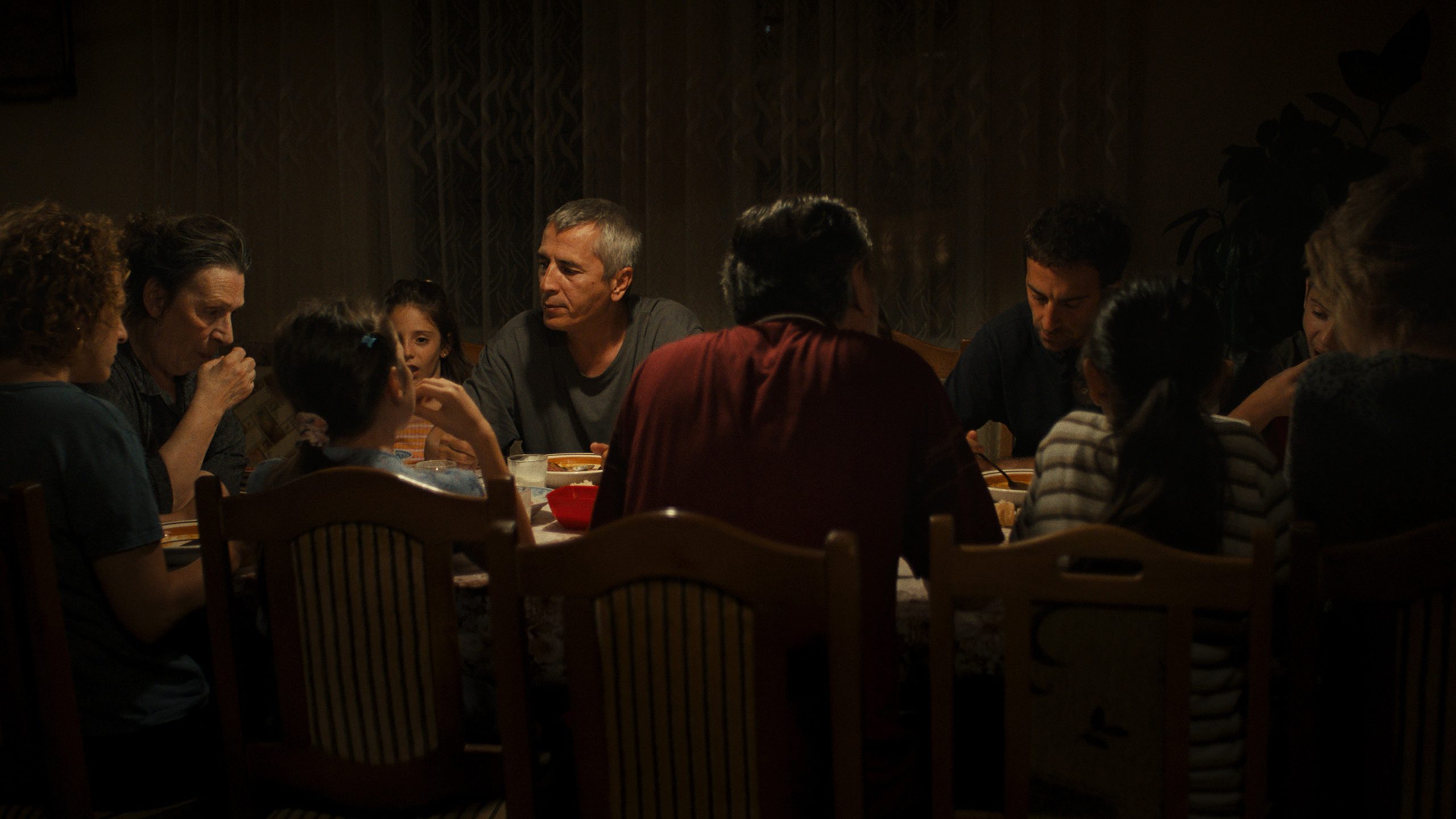
Still, what Shame and Money does exceptionally well is depict the slow violence of instability. There is no single breaking point, no dramatic turning moment where everything collapses at once. Instead, pressure accumulates quietly. A missed opportunity here. A small debt there. The awkward exchanges at dinner.
Some of the film’s most interesting choices happen during these domestic moments. Early dinner scenes are staged with the camera locked behind Nana’s back, her still figure dominating the foreground while the family eats in tense silence. The framing subtly emphasizes generational weight; the past literally watches over the present while also reinforcing how trapped the family feels within their circumstances. These moments are visually thoughtful and emotionally precise, suggesting far more than the dialogue ever states.
At times, though, Morina’s direction feels restrained to a fault. The minimalism is purposeful, but it also contributes to the film’s unrelenting bleakness. There are almost no moments of relief, warmth, or tonal contrast. Scene after scene carries the same emotional temperature, and while that consistency reinforces the suffocating nature of poverty, it can also be numbing. The film becomes something you admire more than you emotionally connect with, or one could say respected rather than enjoy.
That heaviness extends to the performances across the board. Flonja Kodheli brings this certain strength to Hatixhe, a woman forced to mediate between her husband’s pride and her family’s reality. Kumrije Hoxha is especially strong as Nana, whose calm presence and financial sacrifice underscore the irony of Shaban’s masculinity; the household survives because of the very dependency he refuses to acknowledge.
The film’s final act is where Morina fully commits to his worldview. The ending is brutal, emotionally barren, and very intentionally devoid of catharsis. There’s no release, and no suggestion that suffering leads to enlightenment. It simply stops, leaving the audience to sit with the weight of everything that came before. It’s an ending that feels honest, even if it’s difficult to embrace. Life, the film argues, doesn’t resolve itself just because endurance has run out.
Shame and Money is not an easy watch; it’s not grotesque or exploitative, but just emotionally draining. Its emotional distance and relentless tone may push some viewers away, and its thematic bluntness occasionally undercuts its subtlety. Yet its commitment to realism, anchored by a deeply affecting central performance, makes it a powerful portrait of people trapped between dignity and desperation.
This is cinema that refuses comfort. It asks you not to feel better, not to hope, not to look away, but only to understand how fragile stability truly is when pride becomes the last thing left to lose.
Shame and Money had its World Premiere in the World Cinema Dramatic Competition section of the 2026 Sundance Film Festival.
Director: Visar Morina
Writers: Visar Morina, Doruntina Basha
Rated: NR
Runtime: 130m
This is cinema that refuses comfort. It asks you not to feel better, not to hope, not to look away, but only to understand how fragile stability truly is when pride becomes the last thing left to lose.

Roberto Tyler Ortiz is a movie and TV enthusiast with a love for literally any film. He is a writer for LoudAndClearReviews, and when he isn’t writing for them, he’s sharing his personal reviews and thoughts on Twitter, Instagram, and Letterboxd. As a member of the Austin Film Critics Association, Roberto is always ready to chat about the latest releases, dive deep into film discussions, or discover something new.