If you popped by a Party City or Spirit Halloween in the second half of October in desperate need of a couple’s Halloween costume, chances are you might consider Frankenstein and his bride. But how much do we really know about the monster’s spouse? He has been a mainstay of popular culture since Mary Shelley committed him to the page in 1818. (208 years later, and he is contending for a Best Picture Oscar.) The Bride, apart from lead portrayals by Elsa Lanchester in 1935 and Jennifer Beals 50 years later, has mostly served as a secondary character, functioning in response to who he is and wants to be in the mad world they inhabit. That, of course, begs the question: who is the Bride apart from her association with the monster, and is it possible to know her as we know him?
Maggie Gyllenhaal explores several possibilities with The Bride!, her second directorial feature after The Lost Daughter, which netted three Oscar nominations in 2021. This film is markedly different for the budding filmmaker, with mile-a-minute stylistic and narrative swings, all in service of the titular Bride. We meet her as Ida (Jessie Buckley), a sly, charming young woman at a bustling, bawdy dinner table in downtown Chicago. The vibe suddenly shifts when the spirit of Mary Shelley (also Buckley) possesses Ida, sending her into an explosive fit that forces Detective Jake Wilkes (Peter Sarsgaard) to pull her away. Another Shelly-driven fit leads to Wilkes accidentally pushing her down a flight of stairs, killing her.
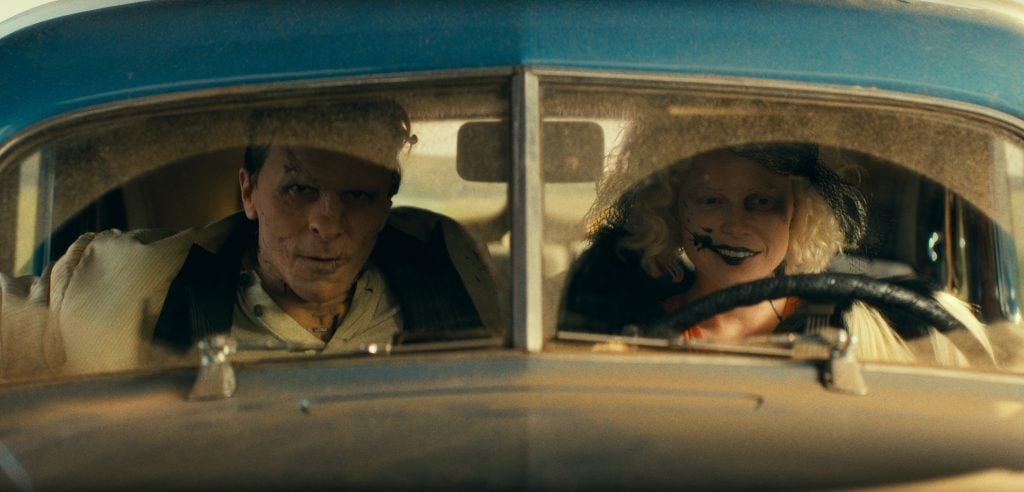
That might be the end of Ida’s story, but not The Bride!, character or film. That’s due to Frank (Christian Bale), better known as Frankenstein’s monster. He arrives in town to seek the help of Dr. Euphronious (Annette Bening), a self-proclaimed mad scientist who is an expert in “re-invigoration.” He wants her to “re-invigorate” a woman for him, so that he might finally find companionship, carnal or otherwise. She agrees, and the two end up discovering Ida’s remains in a potter’s field. Ida has no memory of her past life, and doesn’t quite know what to make of Frank’s interest in her. (It doesn’t help that Mary Shelley is still banging about in her re-invigorated head.) Frank basically grants Ida a new lease on life, which she takes to with wild and somewhat reckless abandon, leading to her and Frank going on the run together.
But is Ida’s new life really for her sake?
The most salient point that The Bride! strives to make concerns the structural social limits on women’s agency. The 1930s world that Gyllenhaal brings to the screen is a familiar one, where women are sidelined at best and brutalized at worst by men taking their liberties with them. It’s a world where Ida dancing in the middle of a nightclub invites groping, abusive hands, or a highly competent woman must play second fiddle to a criminally negligent lead detective (who also happens to be an accidental murderer).
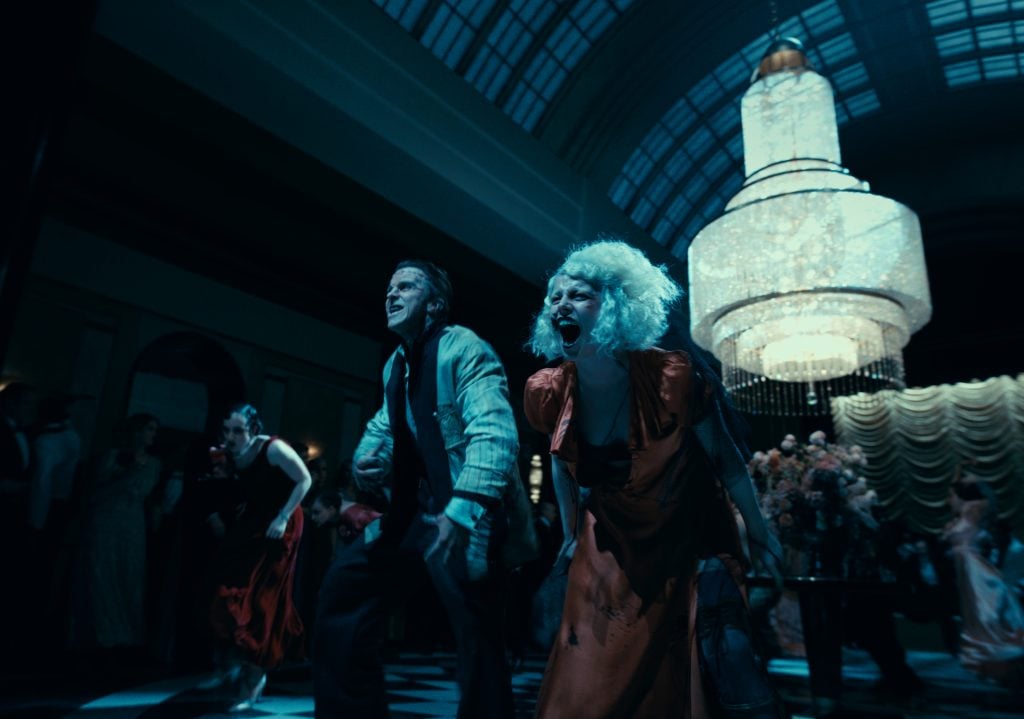
The active and passive diminishing of women exists in every frame, a thematic contrast to Gyllenhaal’s free-flowing, wildly idiosyncratic visual and tonal flourishes. She and cinematographer Lawrence Sher frequently experiment with color and scale, phantasmagoric imagery, and Old Hollywood references throughout the film. Ida’s deadly fall down the stairs is framed as a cosmic and spiritual transfer of one’s soul, hinting at her imminent rebirth. Her revival in Dr. Euphronious’s lab is a dazzling, explosive light show, speaking to the opportunities she will ostensibly have in her second life. The film’s most unhinged (and glorious) sequence has Frank and Ida turning a glitzy New York party into a “Thriller”-esque flash mob set to Irving Berlin’s “Puttin’ on the Ritz.” At the film’s best, Gyllenhaal eschews convention and gleefully embraces the absurd, macabre foundations of the Frankenstein mythos, enveloping us in an atmosphere where everything is possible.
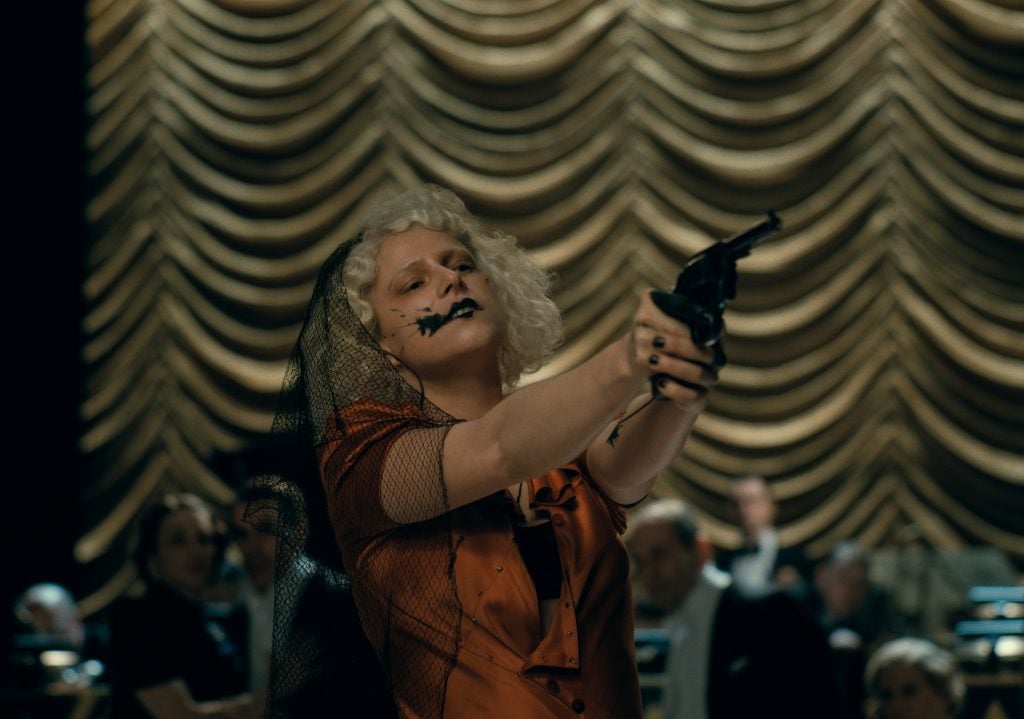
That doesn’t factor in one’s gender, which limits, if not cripples, those possibilities. For Ida, those limits are primarily set by two figures: Frank and, surprisingly, Mary Shelley. Frank begins as mostly sympathetic, a being rejected by the world who seeks what all humans do on some level: love. However, as his relationship with Ida unfolds, it’s clear that there’s a one-sided element to the romance. Because Ida doesn’t remember her life, Frank invents one for her, from her new name, Penelope, to the story of his proposal. Frank, unwittingly and then purposefully, robs Ida of her agency in their relationship, pushing the initially shy and thoughtful creature into an anarchist chaos agent.
As for Shelley, her possession of Ida is just as insidious, forcing Ida to repeat her words and passages, even as they push Ida to the brink of madness and frequently put her life in jeopardy. While less cleanly realized than her take on Frank and Ida, Gyllenhaal uses Ida and Mary’s connection to demonstrate how brittle a woman’s autonomy can be, to the point where even another woman can override it, to her detriment. Ida and Mary also represent the complications of individual agency warping authorial intent, where Mary’s powerful words are written off as mental health crises from Ida’s lips.
While its overarching theme is very compelling, The Bride! stumbles in the execution of the story itself. As Frank and Penelope (formerly known as Ida) continue their crime spree, it becomes less clear what we’re supposed to make of their romance. Are they star-crossed lovers with a penchant for murder, or are they each other’s ruin? Their relationship may sit in a middle space, but Gyllenhaal doesn’t provide enough about them for us to say definitively. (Also confusing matters is Penelope’s confusion over her own actions, spurred by Mary Shelley’s interventions.) That lack of clarity leads to a very muddled final stretch, in which Ida’s true involvement with Detective Wilkes and Penelope’s continued unraveling cause us to lose track of our central couple.
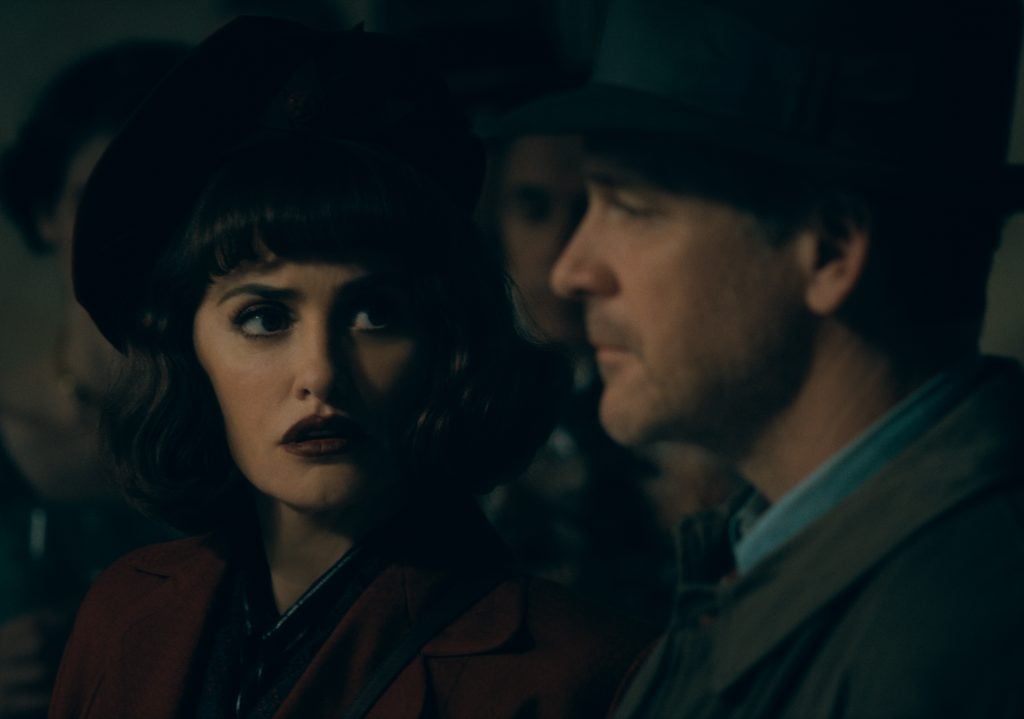
Gyllenhaal’s narrative and stylistic swings demand a dynamic cast to keep us engaged during the misses. Jessie Buckley is just as capable of swinging big, delivering a bold, brassy, go-for-broke performance that taps every part of her body to capture a woman on the brink. On the surface, her work here is a huge leap from her Oscar-nominated work in Hamnet. However, some of her most memorable moments on screen come when she sets aside the bombast to quietly convey uncertainty, empathy, and heartbreak. Christian Bale, the monster to Buckley’s bride, can do unhinged in his sleep, but he is most effective working within the monster’s vulnerabilities, particularly his loneliness and grace. Bale and Buckley work well together, more so as sweet, tentative lovers than natural-born killers. Of the supporting cast, Annette Bening and Penelope Cruz are very funny as highly capable women surrounded by men’s incompetence and condescension.
The Bride! doesn’t reveal much about the Bride of Frankenstein to compensate for two centuries of sitting on the monster’s sidelines. However, Maggie Gyllenhaal does offer a raucous but sobering reminder of how deeply ingrained misogynist attitudes and behaviors are in society, and how even the most fantastical interpretations cannot escape their most toxic effects. Perhaps some directorial restraint might’ve led to a cleaner film, but given what it successfully explores about female agency in a patriarchal world, the messiness feels purposeful, even required. If we know little more about the Bride of Frankenstein than we did before, we at least know that Gyllenhaal isn’t afraid to get monstrous.
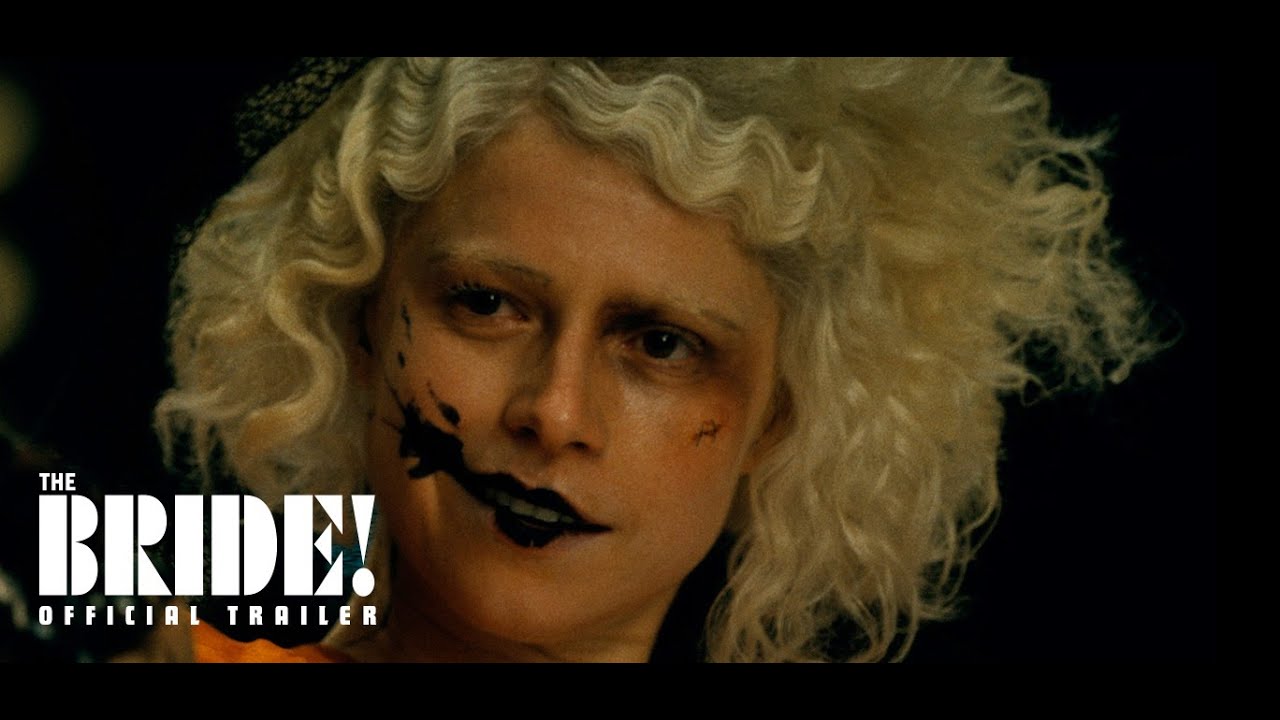
The Bride! doesn’t reveal much about the Bride of Frankenstein to compensate for two centuries of sitting on the monster’s sidelines. However, Maggie Gyllenhaal does offer a raucous but sobering reminder of how deeply ingrained misogynist attitudes and behaviors are in society, and how even the most fantastical interpretations cannot escape their most toxic effects.

A late-stage millennial lover of most things related to pop culture. Becomes irrationally irritated by Oscar predictions that don’t come true.
![‘Black Zombie’ Review – Power To The Zombie [SXSW 2026]](https://cdn.geekvibesnation.com/wp-media-folder-geek-vibes-nation/wp-content/uploads/2026/03/Black-Zombie-BZ-STL46-2-300x169.jpg "‘Black Zombie’ Review – Power To The Zombie [SXSW 2026]")