TL;DR
- The Platts are sent millions of years into the past after a series of mysterious temporal disturbances around Oak Street.
- Greg dies protecting his family during the original version of events.
- Denise, Audrey, Brian and Jeannette eventually escape through a wormhole that returns them to the same night in 1982.
- Denise uses her knowledge of what is about to happen to save Greg and several neighbors before Oak Street disappears again.
- The ending appears happy, but it also creates alternate versions of people and some major unanswered timeline questions.
Warning: Major spoilers for The End of Oak Street follow.
The End of Oak Street begins like a suburban dinosaur movie and ends by turning itself into a surprisingly complicated time-travel story.
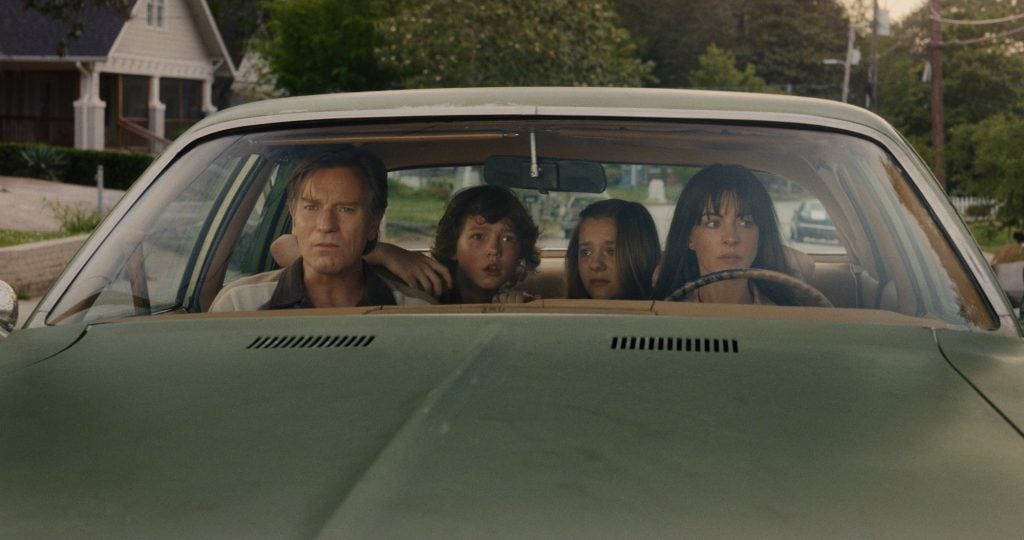
David Robert Mitchell spends most of the film following the Platt family as Greg, Denise, Audrey and Brian attempt to survive after Oak Street is somehow ripped out of 1982 and deposited millions of years into Earth’s prehistoric past. Dinosaurs provide the most immediate danger, but the strange wormholes appearing around the neighborhood eventually become far more important.
Those wormholes are also how the movie delivers a seemingly happy ending after making audiences watch one member of the Platt family suffer an especially brutal death.
What Actually Sent Oak Street Back In Time?
The movie never provides a definitive answer for who or what created the phenomenon, but it starts dropping clues long before the neighborhood disappears.
During the opening block party, a radio broadcast mentions that NASA has detected mysterious ripples in space. At first, the detail sounds like meaningless background chatter. It becomes much more significant when unexplained flashes of light begin appearing around the neighborhood and objects from completely different periods start crossing through time.
Extinct plants appear where they should not exist. Even dinosaur waste somehow finds its way into a modern backyard. These incidents suggest that the eventual disappearance of Oak Street is not the beginning of the phenomenon at all. They are smaller ruptures occurring before the much larger event.
Audrey eventually connects what they are experiencing to wormholes. Her interest in astronomy becomes useful as she theorizes that space and time are effectively folding together, allowing objects and people to cross enormous temporal distances almost instantly.
The Smaller Wormholes Were Warning Signs
The easiest way to understand the movie’s time travel is to think of the early events as tremors before an earthquake.
Small portals begin exchanging material between 1982 and the prehistoric world. Eventually, whatever instability is causing them becomes powerful enough to grab an entire section of Oak Street and transport it into the distant past.
That also explains why the prehistoric environment does not necessarily belong to one perfectly accurate period. The film mixes creatures and plant life from different eras because the disturbance is apparently pulling pieces of Earth’s history together rather than opening one neat doorway to a single date.
Once the neighborhood is trapped there, the process begins working in reverse. Smaller openings back to 1982 appear and disappear throughout Oak Street, offering the survivors possible routes home.
Greg Really Does Die In The Original Timeline
The movie’s most shocking moment comes when Greg sacrifices himself during an attack by an allosaurus.
After already suffering a devastating injury, Greg continues fighting to give Denise and the children time to escape. The dinosaur ultimately kills him, and there is little ambiguity about what happens. The Greg who traveled into the prehistoric past with his family is dead.
That distinction becomes important because the ending does not actually resurrect him.
The family eventually encounters another wormhole. Denise, Audrey, Brian and Jeannette make it through and discover that they have returned to 1982. More importantly, they have arrived on the same rainy night when Oak Street originally disappeared.
They have traveled back to a moment before Greg’s death ever happened.
Denise Figures Out How To Save Greg
Once Denise realizes where and when they are, she understands that knowing the future gives them an opportunity to change it.
Jeannette immediately heads off to warn her family. Denise finds a pay phone and begins contacting people who died during their original trip, telling them to get away from Oak Street before the temporal event occurs.
Her most important move involves Greg.
Earlier in the story, Denise learned that Greg had secretly lost his job and had been working as a pizza delivery driver. She uses that information to place a fake order that sends this earlier version of Greg far enough away from the neighborhood that he is not transported into the prehistoric past.
Oak Street still disappears.
Greg simply is not standing on it when it happens.
So Is The Greg At The End The Same Greg?
Physically, yes. Experientially, no.
The Greg enjoying life with Denise and the children at the end of the movie is the version who never traveled back in time. He never fought dinosaurs, never suffered the loss of his leg and never sacrificed himself to save his family.
Denise, Audrey and Brian remember all of those events because they lived through them before traveling backward. Greg does not.
This creates one of the stranger consequences of the movie’s otherwise emotional reunion. The Greg who underwent significant personal growth during the prehistoric ordeal is still dead. His surviving counterpart has effectively been handed a second chance without personally experiencing the events that originally changed him.
What Happens To Oak Street The Second Time?
The neighborhood still gets pulled into the past despite Denise’s intervention.
The difference is that several people have now escaped the affected area before it happens. Greg is gone. Jeannette’s family receives a warning. Other residents who died during the original timeline are also given the opportunity to leave.
When Oak Street disappears, prehistoric terrain is effectively exchanged with the missing suburban land. Dinosaurs and other pieces of the ancient ecosystem end up appearing in 1982, which understandably attracts government attention.
The military deals with the dinosaurs rather less delicately than the Platts did.
Why Are There Two Jeannettes?
The final barbecue contains one of the movie’s strangest visual jokes and perhaps its biggest clue about how time travel works.
Jeannette traveled back from the prehistoric period alongside the Platts. When she returned to 1982, however, the original 1982 version of Jeannette was still alive.
She warned her parents and younger self to leave before the neighborhood disappeared.
That means both versions survive.
By the epilogue, the movie appears to show two Jeannettes existing simultaneously. One experienced everything that happened in the prehistoric past. The other avoided it entirely because her future counterpart warned her.
The moment is played for humor, but it confirms that changing the past does not simply erase the travelers who already experienced the original timeline.
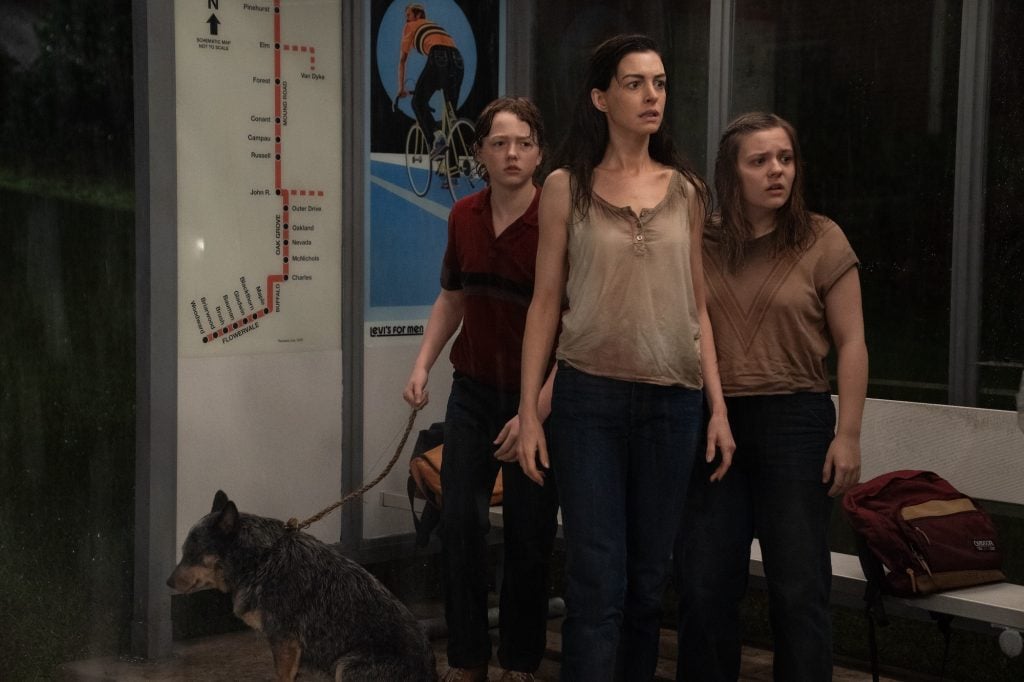
Does That Mean There Are Now Two Timelines?
This is where the ending gets messy.
The simplest interpretation is that the movie allows altered history to exist alongside people who remember the original version. Denise and the children can change what happens without being erased because their experiences have already occurred from their perspective.
However, saving Greg creates a major paradox.
If Oak Street still gets transported to the past, then another version of Denise, Audrey and Brian should still be standing on the street when it happens. Greg is the only family member Denise deliberately removes.
That potentially means another Platt family is currently stranded millions of years in the past without Greg.
And that version of events could go very differently.
The Happy Ending May Be Hiding Something Much Darker
During the original timeline, Greg’s sacrifice is essential to his family’s survival. If another Denise and her children are transported without him, there is no guarantee they make it through the same encounters.
The movie never addresses this directly because its emotional focus remains on the characters we have followed. They survived, changed history and now have another opportunity to be a family.
But logically, the ending may have created several new versions of the same people.
It is possible that somewhere in the prehistoric past, another Denise, Audrey and Brian are currently experiencing a completely different nightmare.
What Happens Two Years Later?
The final scenes jump forward two years and show that the surviving Platts have turned their impossible experience into something resembling a normal life.
Denise finally becomes the writer she wanted to be, publishing a book about everything that happened. Appropriately, she calls it The End of Oak Street.
Audrey also appears to have followed through on her academic ambitions. A photograph indicates that she attended Cornell and eventually met astronomer Carl Sagan, whose ideas helped her understand what was happening during the ordeal.
Jeannette remains close to Audrey, while her family is alive thanks to the warning she brought back with her.
On the surface, it is a genuinely happy conclusion.
The Movie Never Explains Who Created The Wormholes
For all the discussion of wormholes, The End of Oak Street deliberately avoids giving the phenomenon a definitive origin.
There is no machine responsible for it. No villain appears to explain a master plan. Nobody discovers an alien device beneath the neighborhood.
The portals simply happen.
That ambiguity fits the film better than a long scientific explanation would. The wormholes are ultimately a mechanism for forcing a fractured family into an impossible situation and then giving them one opportunity to change what they would otherwise lose.
The science-fiction mechanics matter, but the emotional result matters more.
Is The Ending Actually Happy?
For the versions of Denise, Audrey and Brian that we follow throughout the movie, absolutely.
They survive. Greg is alive again from their perspective. Jeannette saves her parents. Denise becomes an author, and the family gets an opportunity to rebuild the life that seemed completely destroyed during their prehistoric ordeal.
The problem is everything the movie quietly leaves behind.
There may be multiple versions of the same characters. Another Platt family may have been transported into the past. The surviving Greg never experienced the transformation that his dead counterpart did, and the world of 1982 has now received undeniable proof that dinosaurs and temporal wormholes exist.
The End of Oak Street treats those complications almost like background noise.
Maybe that is the point.
The Platts were given the one thing almost nobody gets after tragedy: a chance to go back and make a different choice.
They take it.
Whether the universe agrees that they fixed everything is another question entirely.

Elara is a dynamic writer and blogger who specializes in pop culture and movie reviews. With a background in film studies and journalism, she combines her deep knowledge of the entertainment industry with a sharp, insightful writing style that keeps readers coming back for more.