I know, I know—“the book is always better” is basically sacred scripture among readers. Nine times out of ten, it’s true. But every once in a while a filmmaker comes along, looks at a perfectly good novel, and says, “Cool story… needs more explosions, tighter pacing, and an ending that doesn’t make me want to yeet the hardcover at the wall.” And somehow, against all odds, they pull it off.
Here are the adaptations that, in my completely subjective but also completely correct opinion, surpass their literary source material—often in very specific, undeniable ways. Buckle up.
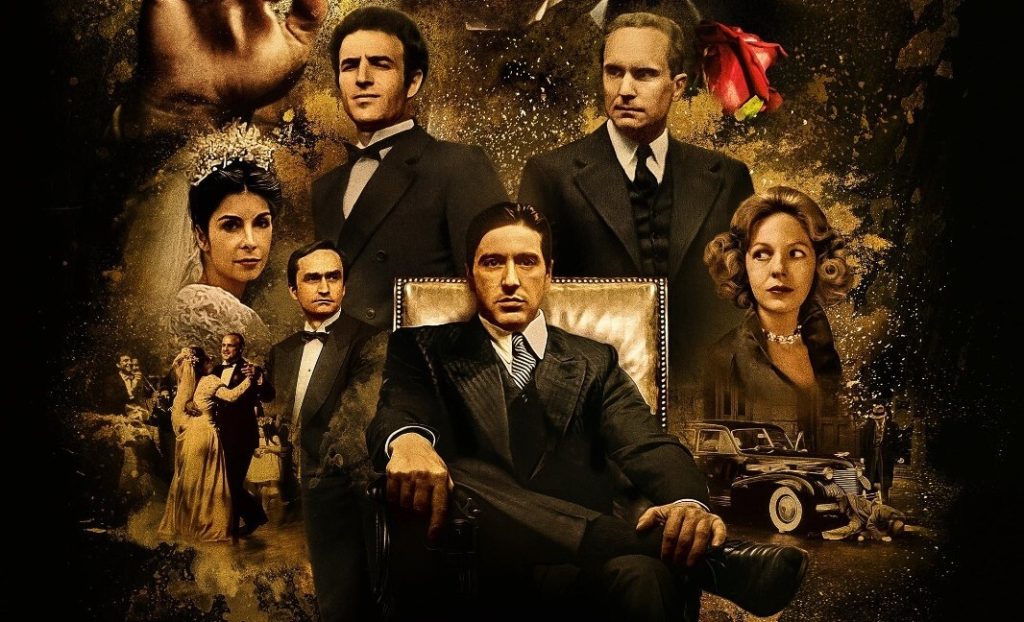
1. The Godfather (1972) > The Godfather by Mario Puzo
Mario Puzo’s novel is a juicy, sprawling mafia soap opera. It’s fun, but it’s also bloated with subplots nobody asked for—like the entire Lucy Mancini vagina-surgery storyline and Johnny Fontane’s Hollywood drama that feels like it belongs in a different book.
Francis Ford Coppola and Puzo (yes, the author co-wrote the script) ruthlessly trimmed the fat. The result is laser-focused on the Corleone family tragedy. But the real genius is in the cinematic choices that simply don’t exist on the page.
The baptism sequence—Michael standing godfather to his nephew while his orders murder half the New York underworld—is one of the greatest montages in film history. In the book, the hits happen, but they’re scattered across chapters. On screen, intercut with Latin liturgy and Nino Rota’s organ score? Pure chills.
The ending is even better in the film. The novel spells out Michael’s moral decay in long internal monologues. The movie just shows Kay’s face as the office door slowly closes on her. No dialogue needed. Diane Keaton’s expression does the work of ten pages.
Puzo himself said multiple times that the movie was better and happily accepted his Oscar for improving his own book. When the author admits defeat, the case is closed.
2. Jaws (1975) > Jaws by Peter Benchley
The book has:
- An affair between Ellen Brody and Hooper
- A pointless Mafia subplots
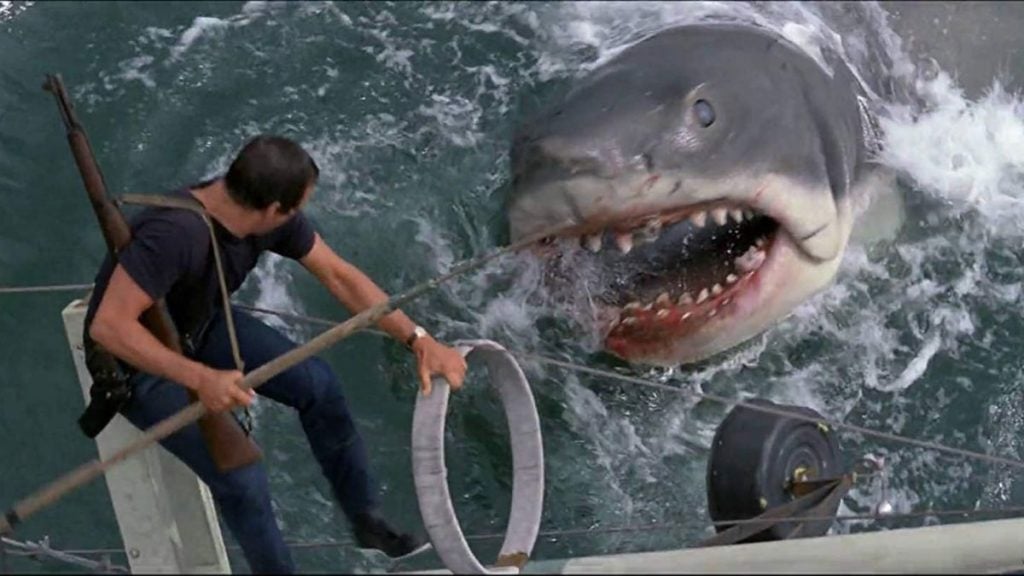
- A shark that dies of exhaustion (yes, really—it just gets tired and sinks)
Spielberg looked at that and said, “Nah.” He ditched the affair (thank God), kept the tension between the three men on the boat, hired John Williams to invent the sound of impending doom with two notes, and turned the finale into a pressurized-tank explosion that still makes crowds cheer fifty years later.
Peter Benchley spent the rest of his life doing shark-conservation work because the movie terrified people so thoroughly. That’s accidental environmental activism. That’s how you know the adaptation won.
3. The Shining (1980) > The Shining by Stephen King
Brace yourselves—King fans are already loading their pitchforks.
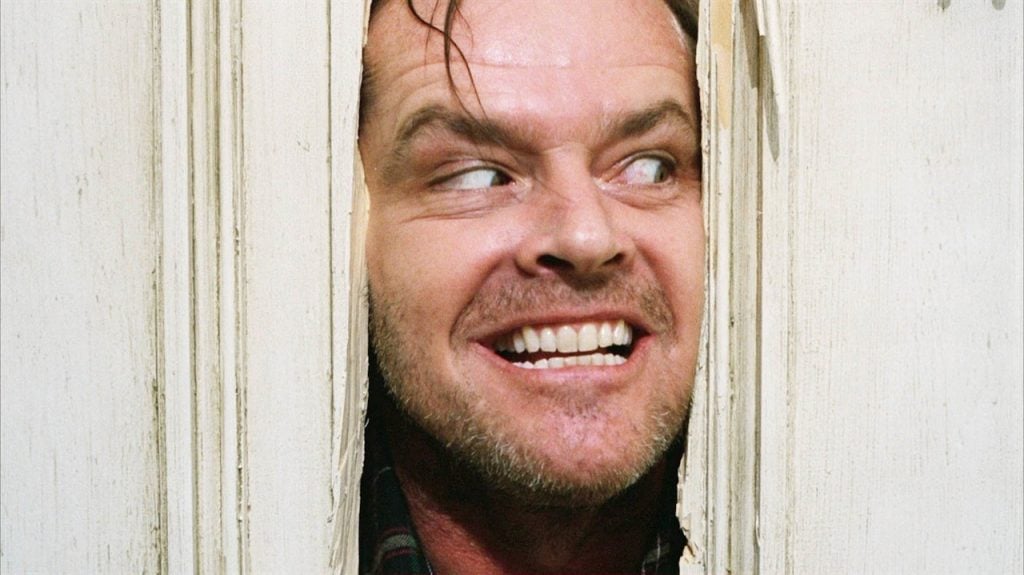
Stephen King famously despises Kubrick’s version. He thinks it guts Jack Torrance’s redemption arc and turns him into a lunatic from frame one. He’s not entirely wrong. But Kubrick made a colder, more existential, more visually perfect horror film.
The hedge maze chase? Invented for the movie. (the book has topiary animals that come to life—neat in theory, impossible to film in 1980 without looking like a low-budget Disney ride). The endless corridors, the elevator of blood, “REDRUM” written on the door in reverse—these images are burned into collective nightmares.
King wrote a 1997 miniscript to “correct” it. It’s… fine. It’s not The Shining we quote. Kubrick’s version is a masterpiece of atmosphere over exposition, and sometimes that trade-off creates something greater than the original intent.
4. Fight Club (1999) > Fight Club by Chuck Palahniuk
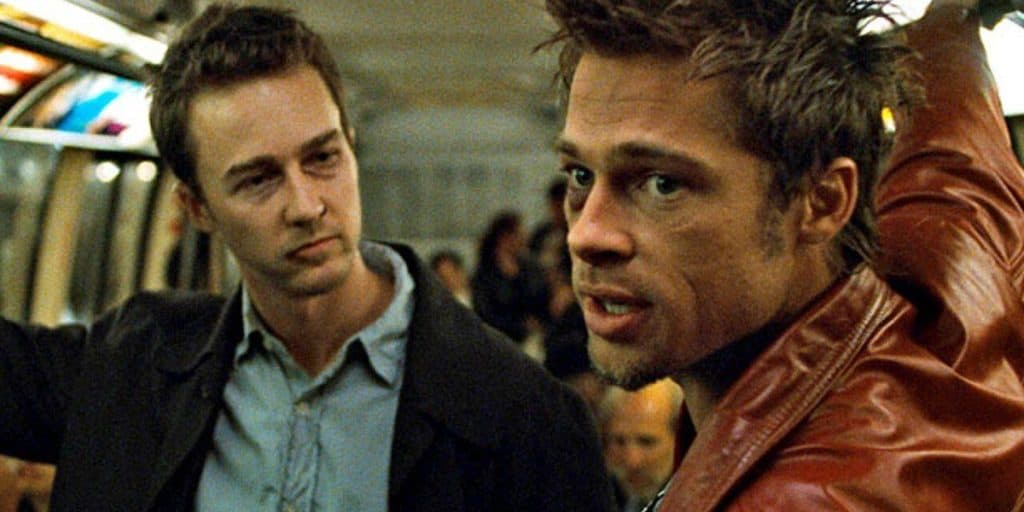
The book is sharp, funny, and anarchic. The movie is a cultural sledgehammer.
David Fincher and Jim Uhls tighten the satire, make the narrator’s dissociation more cinematic, and—most importantly—change the ending. In the novel, Project Mayhem’s bombs fizzle; Tyler’s plan fails spectacularly. In the movie, the buildings collapse in perfect choreography while Pixies’ “Where Is My Mind?” plays and the narrator finally holds Marla’s hand.
It’s darker, weirder, and infinitely more iconic. Chuck Palahniuk has said repeatedly that he prefers the film’s ending and thinks Fincher improved the book. When the author waves the white flag, you hang it in the museum.
5. The Lord of the Rings trilogy (2001–2003) > The Lord of the Rings by J.R.R. Tolkien
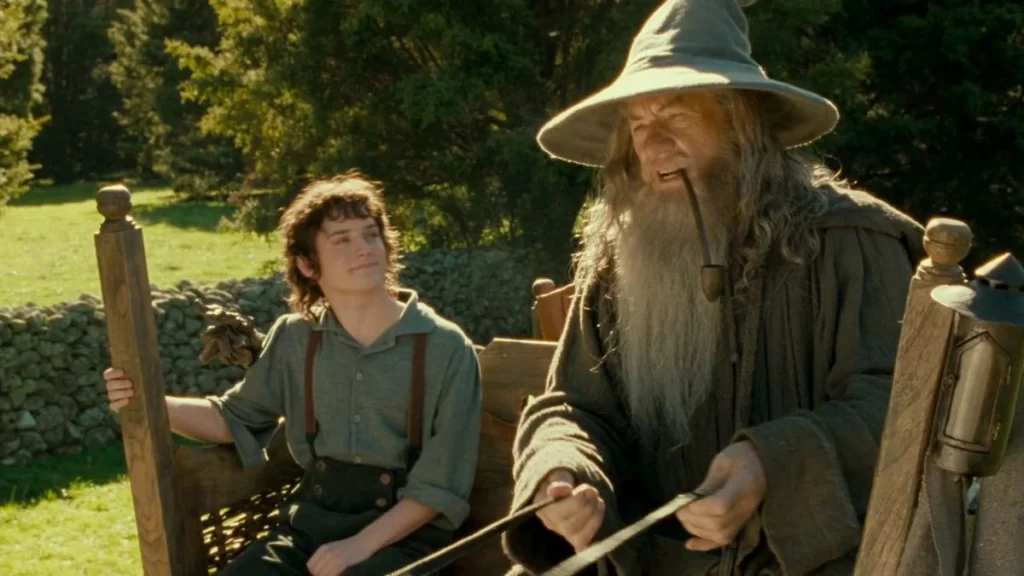
Deep breath. Yes, the books are literary monuments. They’re also 1,200 pages of elves singing about trees.
Peter Jackson had the audacity to cut Tom Bombadil (blessed be), Arwen’s role expanded, the Scouring of the Shire compressed, and Faramir actually tempted by the Ring for five minutes instead of being Jesus in chainmail.
The films gave us the lighting of the beacons, “For Frodo” at the Black Gate, Théoden’s charge at Pelennor Fields—moments that hit harder on screen than on page because of scale, music, and faces. Tolkien probably would have hated every frame, but Jackson made a generation fall in love with Middle-earth who would have quit during “The Old Forest” chapter.
6. Game of Thrones Seasons 1–4 > A Song of Ice and Fire (so far)
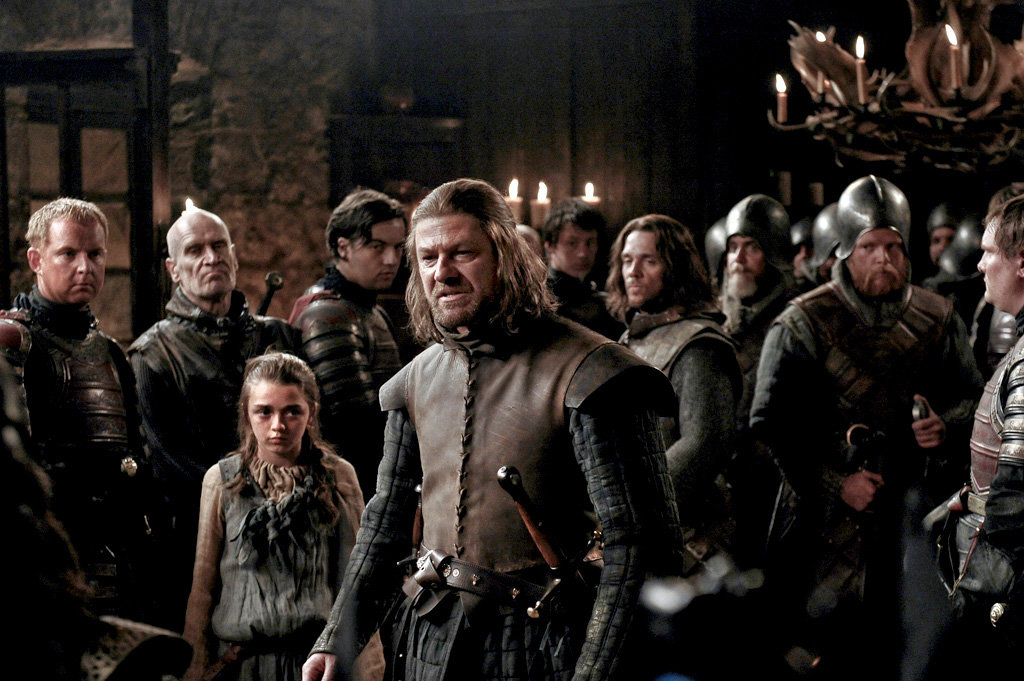
George R.R. Martin is a genius, but Feast for Crows and Dance with Dragons are where pacing goes to die. Early GoT knew how to trim the briar patch of new characters and side quests.
Ned Stark’s execution, the Battle of Blackwater, Oberyn vs. the Mountain, and especially the Red Wedding—all are devastating in the books, but the show’s direction, score, and acting elevate them to trauma. Michelle Fairley’s silent scream as “The Rains of Castamere” swells is television’s most brutal minute.
Martin has publicly praised many of these scenes and admitted that film can sometimes do what prose can’t.
7. Blade Runner (1982) > Do Androids Dream of Electric Sheep? by Philip K. Dick

Dick’s novel is a brilliant but cluttered philosophical tract about empathy tests and electric sheep. Ridley Scott kept the core question—“What does it mean to be human?”—and wrapped it in neon noir and Vangelis’ synth score.
The ending is far superior: book Deckard retires Rachel and goes home to his fake toad. Movie Deckard flees with Rachel into an uncertain future while Rutger Hauer delivers the “tears in rain” monologue that makes grown men cry. Case closed.
Honorable Mentions That Could Have Their Own Articles
- The Princess Bride (1987) – The framing device is funnier with Peter Falk and Fred Savage.
- Forrest Gump (1994) – Turns a savage satire into something oddly life-affirming.
- Shutter Island (2010) – That final line lands harder when Leonardo DiCaprio whispers it.
- Children of Men (2006) – Alfonso Cuarón turns P.D. James’ dry theological thriller into one of the most visceral depictions of societal collapse ever filmed.
- Arrival (2016) – Ted Chiang’s “Story of Your Life” is beautiful, but Denis Villeneuve makes the non-linear time concept emotionally devastating.
Look, 90 % of the time the book wins. But when a filmmaker truly understands the strengths of their medium—pacing, visuals, sound design, the power of a single close-up—they can transcend the page.
Sometimes the movie really is better.
And if you disagree—that’s what the comments (or the bookshelf) is for.

DC Fanboy! Superman is the greatest comic book character of all time. Favorite movies are Man of Steel, Goonies, Back To the Future