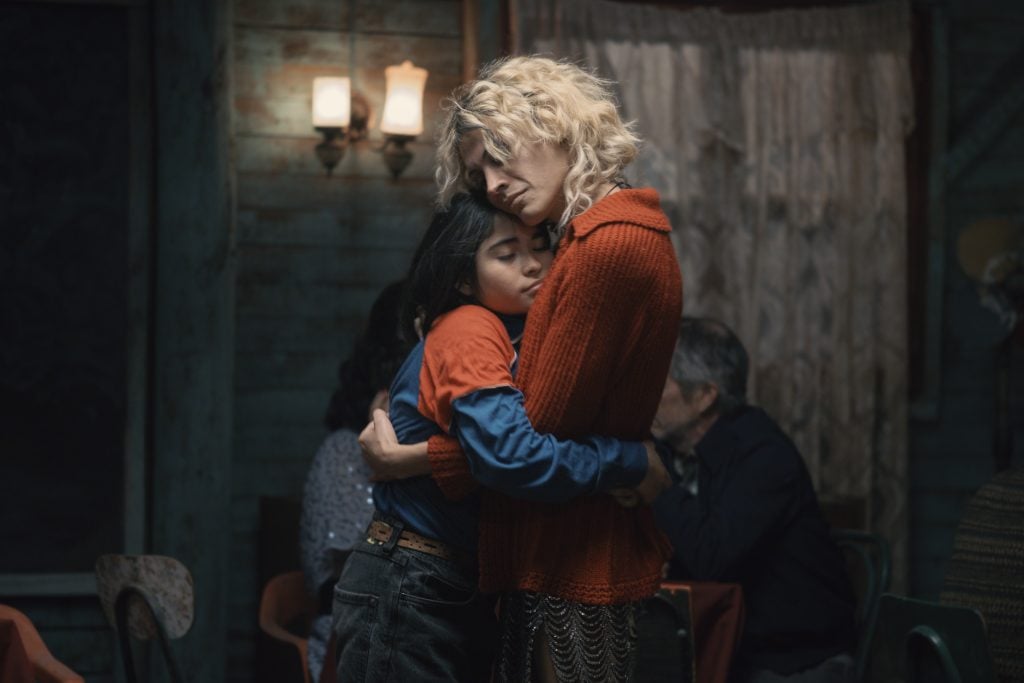
At first glance, The Mysterious Gaze of the Flamingo seems like a movie about decay. Dusty, forgotten miner towns, and dying bodies. It starts as a sad film, with an AIDS allegory, deteriorating bodies of the queer characters of a down-on-its-luck Chilean mining town. But it’s also a magical realist world of freedom, drag queens and trans women roaming around freely in their home cabaret and the surrounding nature. It’s both miserable and cheerful, it’s hopeless but also cozy and loving.
The film contrasts the decay of the HIV-infected bodies with the beauty of that queer cabaret getaway on the outskirts of this forgotten mining town. There could be a scene of someone suffering, followed by a little dance between Lidia and her adoptive mother, Flamingo, that blends both poetry and destruction. Diego Céspedes’ debut feature is an unflinching look at the tragedy of a foreign queer story, and how no happy endings can be found from souls uniting in a hostile environment. It’s a tale of motherhood, friendship, toxic love, jealousy, seduction, and death, all through the lens of its queer characters, especially its transfemme characters.

The story is centered around Lidia, an orphan, adopted by a queer family that the whole community of the mining town avoids, on the bigoted basis that this family possesses a lethal gaze that spreads the plague among the men. It’s the “love gaze,” and the only way those men could evade it is by avoiding looking at those women. In one scene, the queens have their talent show at the saloon, one after the other showcasing their special talent, until it is time for Flamingo to take the stage. Lidia’s face immediately lights up, and she smiles, watching her adoptive mother and her best friend shine in those few moments when she is not suffering her illness behind closed curtains.
The sex scene between Yovani and Flamingo is animalistic, wild, and dark. It’s Yovani’s hunger to own Flamingo’s already fragile body, trapped within her deteriorating health. When the events shift to a darker tone, and it becomes only Lidia’s quest for vengeance, the film becomes difficult to watch and reminds us that tragic queer stories sadly still exist, even in a world where we hoped they’d completely vanish. Performances in this beautifully grim tale are excellent, especially the talented child actress Tamara Cortes, who plays Lidia, and of course, the beautiful broken brilliance of Matías Catalán, stealing the camera as Flamingo in every scene.
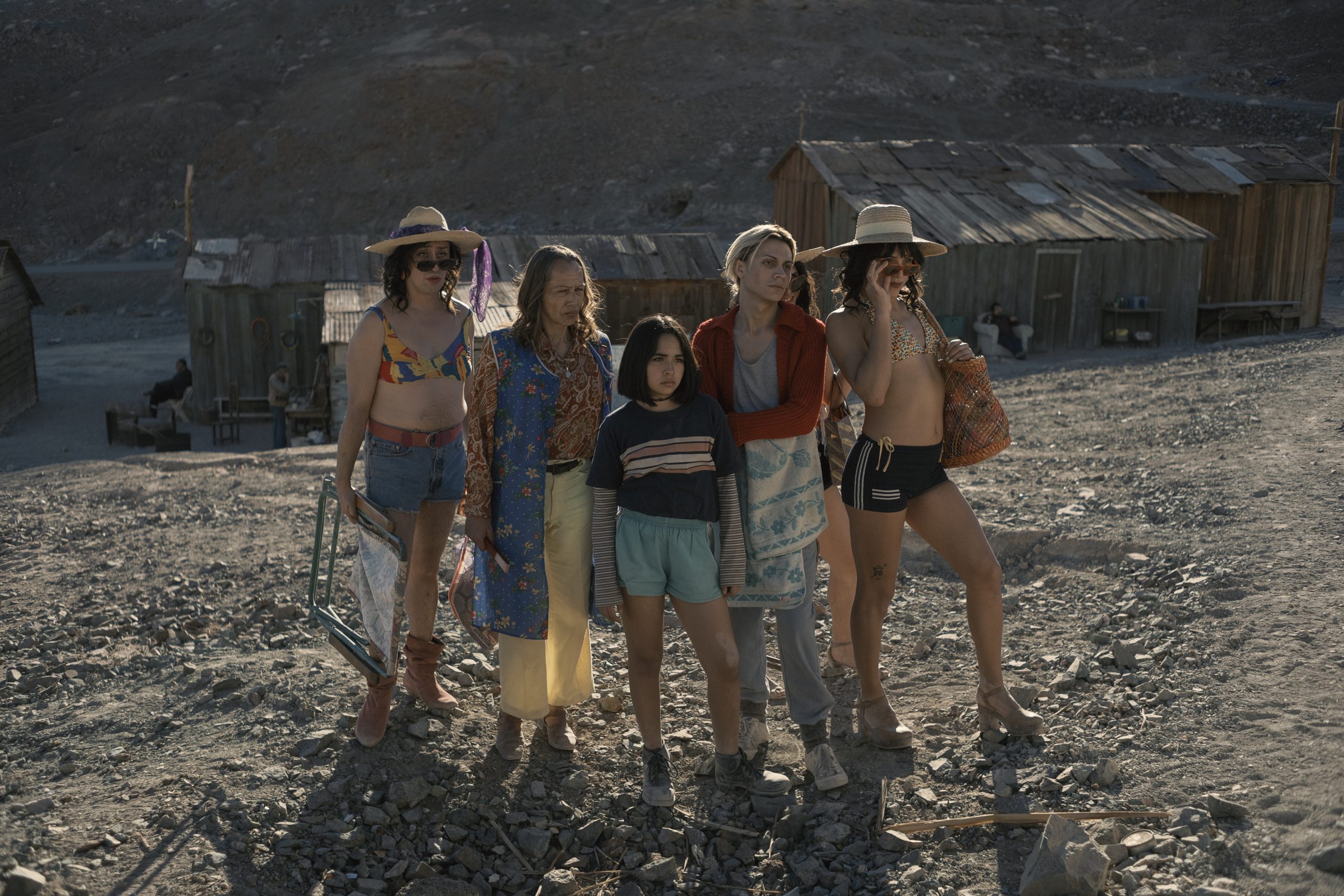
This film doesn’t celebrate life nor denounce death. It’s a journey, in all its complexity and heartache, about the unfortunate lives of people who try to make do with what little they are handed. Our protagonists are not privileged or safe, but opportunistic with winning personalities. They are suffocating under the strain of a town that doesn’t love them, and bodies that fail them, and love stories that do them more harm than good. It’s not an easy watch; a visceral, emotionally draining experience that demands attention, and would lead one to grab their chest and hug themselves after a wild journey through love and revenge. But it’s a rewarding, cathartic experience at the end, one of healing and remembrance in power, not in fear.
I struggle to call The Mysterious Gaze of the Flamingo a fairytale. It’s as much an anti-fairytale as is Guillermo del Toro’s entire body of work. This feature is tense, gripping, poetic, and flamboyant, like the dark passenger to Pedro Almodóvar’s queerverse. It’s not one we are used to watching, now with more positive, thankfully, queer narratives dominating the movie scene. But it’s a unique film, unlike anything anyone has ever seen, and I highly recommend it.
The Mysterious Gaze of the Flamingo is currently available to stream on select digital platforms, including Vimeo, courtesy of Altered Innocence.
This feature is tense, gripping, poetic, and flamboyant, like the dark passenger to Pedro Almodóvar’s queerverse. It’s not one we are used to watching, now with more positive, thankfully, queer narratives dominating the movie scene. But it’s a unique film, unlike anything anyone has ever seen, and I highly recommend it.

Jaylan Salah Salman is an Egyptian poet, translator, and film critic for InSession Film, Geek Vibes Nation, and Moviejawn. She has published two poetry collections and translated fourteen books for International Languages House publishing company. She began her first web series on YouTube, “The JayDays,” where she comments on films and other daily life antics. On her free days, she searches for recipes to cook while reviewing movies.
![‘The Boys’ Season 5 Premiere Doesn’t Pull Any Punches [SPOILER WARNING]](https://cdn.geekvibesnation.com/wp-media-folder-geek-vibes-nation/wp-content/uploads/2026/04/THBY_S5_UR_501_00331_R2_3000-450x300.jpg "‘The Boys’ Season 5 Premiere Doesn’t Pull Any Punches [SPOILER WARNING]")