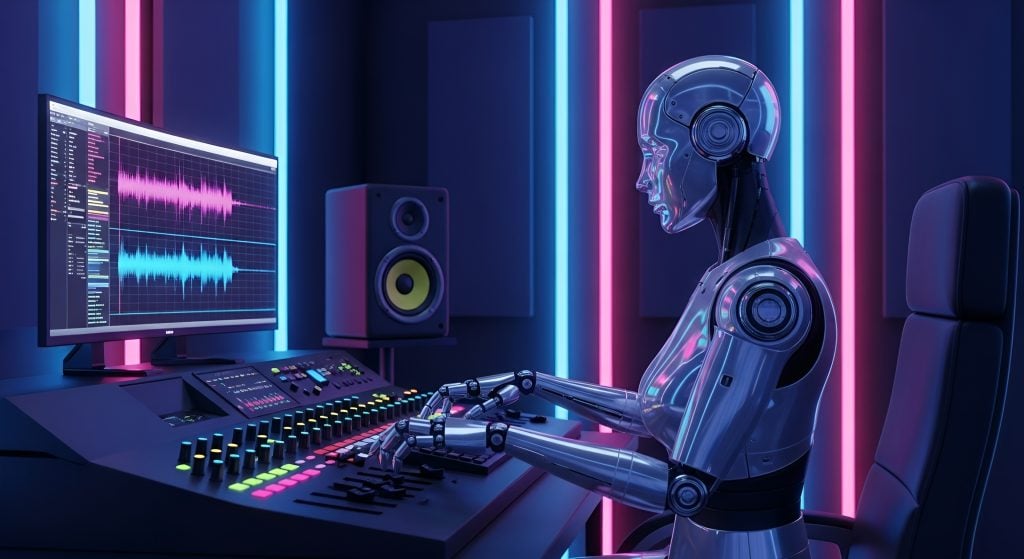
In 2026, AI music visuals are less about “can a model generate something cool” and more about “can a creator ship visuals that actually work in the feed.” The biggest shift is distribution pressure: a track is expected to arrive with a visual presence that’s fast, recognizable, and platform-native. That is why music video maker like Freebeat are showing up in more creator stacks—because they start from the song and produce beat-synced, shareable visuals built around tempo and mood, instead of treating the audio as an afterthought.
The trends below reflect what is actually changing: how creators package visuals, what audiences now expect, and what makes an AI clip feel publishable rather than “generated.”
Trend 1 – AI Music Visuals Shift From One Video to Visual Asset Packs
Why asset packs win in 2026
Single “official videos” still exist, but discovery now comes from repeatable, platform-native pieces. An asset-pack approach matches modern viewing behavior: audiences often meet the track in fragments first, then commit to longer form later. A hook clip earns the stop. A teaser builds anticipation. A loop keeps the track present on profiles and platform surfaces. A longer cut gives fans a place to stay.
Asset packs also reduce creative risk. Instead of betting everything on one cut, a creator can build one visual system and express it in multiple formats. If one version underperforms, another may hit—without breaking identity. This is where speed matters: when a music video generator can deliver a usable draft quickly, making variations becomes realistic rather than exhausting. Freebeat’s positioning around fast, beat-synced outputs supports this “ship multiple assets per track” reality.
What a modern music visual asset pack looks like
A practical pack usually includes a 10–20 second hook clip, a short teaser (often under 10 seconds), a seamless loop for “always-on” presence, and a longer version that can hold attention beyond the scroll. The key is cohesion: every piece should feel like the same world, not separate experiments.
This is also where format planning becomes part of art direction. Many creators build the “hero” version with both vertical and widescreen in mind, then export cleanly rather than cropping as an afterthought. Tools that support common aspect ratios like 9:16 and 16:9 make this easier to execute consistently across platforms.
Trend 2 – Audio Reactive Visuals Get Smarter Than Waveforms
From reactive to structure-aware
Audio-reactive visuals used to mean waveforms, pulsing shapes, and particles responding to amplitude. In 2026, the expectation is higher: visuals should understand musical structure. That means changes in behavior when the song changes—verses that breathe, choruses that lift, bridges that pivot. When structure is acknowledged, even abstract visuals feel intentional.
This trend connects directly to beat and tempo analysis becoming mainstream. When a system can detect BPM shifts, rhythm changes, and intensity, creators get fewer “cool but off” results and more clips that feel paced to the music.
The difference is subtle but decisive: the viewer may not know why it feels better, but they feel that it “fits.”
How to use audio reactive visuals without looking repetitive
Repetition fatigue happens when the visual language never evolves. One solution is to make “reaction” only one layer, not the whole video. Pair reactive motion with a consistent texture language or motif so the clip feels branded. Another solution is to introduce structural milestones: at every chorus, change one variable—density, scale, contrast, or palette accent—so the viewer experiences progression.
Loops also matter more than they used to, especially for platform packaging and always-on presence. Album-cover motion and seamless loops can carry identity with less effort than a full narrative video, and they can be reused throughout a release cycle. Tools that support album cover video generation are built for exactly that kind of repeatable motion identity.
Trend 3 – Anime and Stylized Aesthetics Go Mainstream
Why stylization performs so well in feeds
Stylized visuals read faster than realistic ones. They compress mood into a clear visual statement: color, shape language, and texture immediately signal genre and vibe. This is why anime-inspired looks, cyber aesthetics, retro VHS, and graphic-novel styles thrive in vertical formats. They are legible at speed.
Stylization also solves a practical creator problem: it reduces the penalty of minor inconsistencies. A strongly stylized world gives the viewer a clear rule set, so small variations feel like part of the language rather than a mistake.
What to control to keep a style consistent
Consistency does not come from “more prompts.” It comes from fewer, stronger rules. A stable palette logic, a repeatable motif, and a consistent camera language are usually enough. Style drift is the biggest risk in this trend: when the look changes every few seconds, the output reads like a tool demo rather than a directed piece.
This is also why multi-format exporting matters: the style needs to survive not only from shot to shot, but from platform to platform. When vertical and widescreen outputs share the same identity cues, the release looks intentional rather than patched together.
Trend 4 – Character Consistency Becomes a Requirement
Continuity is the new production value
Audiences are used to AI visuals now. The novelty has worn off. What reads as “high effort” is continuity: recurring characters, stable worlds, and recognizable identities across multiple posts. This is especially true for creators building series content, mascots, or performance-style visuals where a persona needs to remain consistent.
Character inconsistency is also one of the fastest ways to break immersion. If a character’s face, outfit, or proportions drift between scenes, the viewer notices instantly—even if everything else looks polished.
Why dual-character scenes matter
Many music visuals aren’t solo. They feature duos, rivals, pairs, or relationship dynamics. Dual-character scenes add narrative tension quickly, but they also multiply continuity problems. This is why character consistency tooling is becoming a “must-have” feature rather than a nice extra.
Freebeat explicitly highlights character consistency and a dual character mode, aligning with the broader 2026 trend: continuity is now treated as production value, not a luxury.
Trend 5 – Publishability Matters More Than Wow
The difference between a cool demo and a clip worth posting
In 2026, impressive frames are easy to generate. Publishable clips are not. A publishable AI music visual is paced to the track, readable on mobile, and consistent enough to represent a creator’s identity. It does not require the viewer to “forgive” awkward timing, confusing edits, or visual drift.
This is why creators increasingly judge tools by workflow outcomes: how quickly a usable draft appears, how controllable the style is, how stable continuity remains, and how easily the output can be exported into the formats that platforms reward. When a platform’s foundation is “turn audio into shareable videos” with beat/tempo/mood sync, the output tends to start closer to publishable because musical structure is treated as the spine of the edit.
What publishable means in practice
Publishable usually comes down to a few concrete checks. The opening must hook visually within the first second. The chorus must lift. The motif must return. Text (if used) must stay readable on a phone. Exports must be native to the platform, not cropped as an afterthought. Consistency must hold across the set—because audiences do not only judge one clip; they judge the identity built across clips.
A Creator Checklist Before Publishing
A fast pre-post quality pass
Before posting, a quick pass can prevent the most common “AI tells.” Does the first second communicate the vibe? Does the video change behavior when the chorus hits? Does anything drift enough to break the illusion? Does the clip still read clearly on a phone at normal scroll speed? If any answer is “no,” trimming and simplifying usually improves results more than regenerating everything.
A consistency check across the asset pack
The more important check is across the set. A hook clip, teaser, loop, and longer cut should share the same identity cues: palette logic, texture language, motif, and character/world rules. If each asset has a different identity, the campaign becomes forgettable even if individual clips are flashy.
This is where fast iteration becomes meaningful. When a draft can be generated quickly, there is time to curate and standardize outputs into a cohesive pack rather than settling for the first result.
Conclusion
The new trends of AI music visuals in 2026 point to one underlying shift: AI is no longer the differentiator. Direction is. The creators who win are the ones who build a cohesive visual system, ship it across formats, and keep visuals aligned to the song’s structure.
Tools will keep evolving, but the creative bar is already clear. Beat-aware pacing, continuity, and export-ready formats are becoming the baseline. Platforms that are designed around music-first creation—like Freebeat’s beat/tempo/mood-synced approach—fit these trends because they reduce the gap between generation and publishability.
FAQ
How long should AI music visuals be for Shorts and Reels?
Discovery clips typically perform best when they reach the hook quickly and end before repetition fatigue sets in. Many creators start with 10–20 seconds for hook clips, then use longer cuts only when the visual world can hold attention without drifting.
Can AI music visuals fit every genre?
Yes, but visual language should match the music. Abstract and texture-led visuals often suit electronic and experimental tracks. Lyric-first visuals work when the words are the hook. Character-driven visuals fit persona-forward releases.
What is the easiest way to keep AI music visuals cohesive?
Cohesion usually comes from repeatable identity cues: stable palette logic, consistent texture language, and a recurring motif that returns at predictable musical moments.
When should lyrics be on screen?
Lyrics work best when the words are the main hook or when sound-off viewing is common. Text should remain readable on mobile and should not fight the visual rhythm of the track.
How can one visual direction be reused across platforms?
Treat the release like an asset pack: export a vertical hook clip, a teaser, a loop, and a longer cut from the same visual system. Keeping the same identity cues across formats builds recognition, even when platform behavior differs.