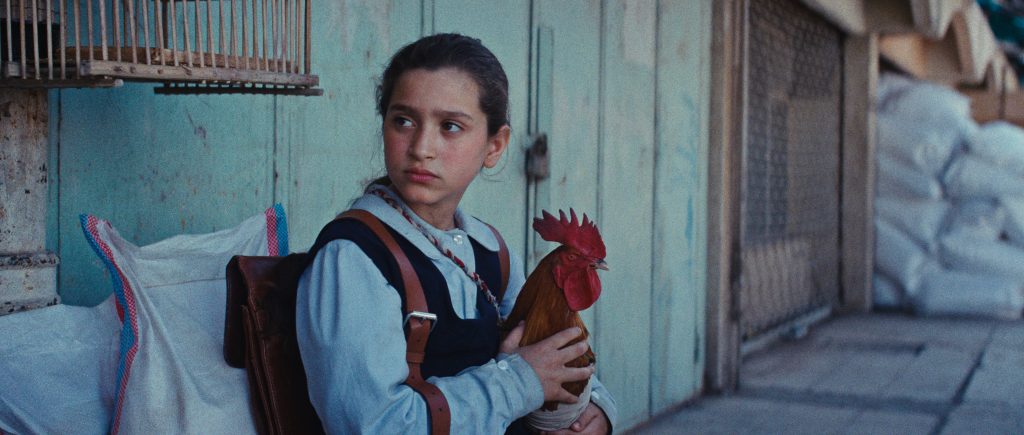
Hasan Hadi’s The President’s Cake opens with a premise so small it almost feels funny at first: a nine-year-old girl is chosen to bake the birthday cake for Saddam Hussein. But the more the film settles into its world, the more that small task stops feeling small. It becomes a threat, a burden, a symbol of everything that has hollowed out the lives of the people who live under a regime that watches and punishes. The film never pushes the point with speeches or melodrama; it simply watches this little girl scramble for flour and eggs in a country where even the basics have been scraped clean by sanctions and fear. Before long, what sounds like a simple errand becomes a portrait of a society that has forgotten what childhood is supposed to look like.
We meet Lamia (Baneen Ahmad Nayyef) in the Mesopotamian Marshes, where she lives with her grandmother, Bibi, played by Waheed Thabet Khreibat. The marshes are beautiful, but you feel right away that beauty isn’t enough to shelter the people living there from the weight of the moment. It’s “draw day,” the day when teachers select which students will bring specific items to the mandatory celebration of Saddam’s birthday. Everybody understands there is no “optional” here; a wrong look, a wrong refusal, a wrong anything can lead to imprisonment or worse. Bibi tries to teach Lamia a few tricks to avoid being picked, but Lamia’s name is called anyway by Musa, a teacher whose stiff posture and clipped tone explain everything without needing a single line of exposition. Lamia is given the one job nobody wants: the cake.
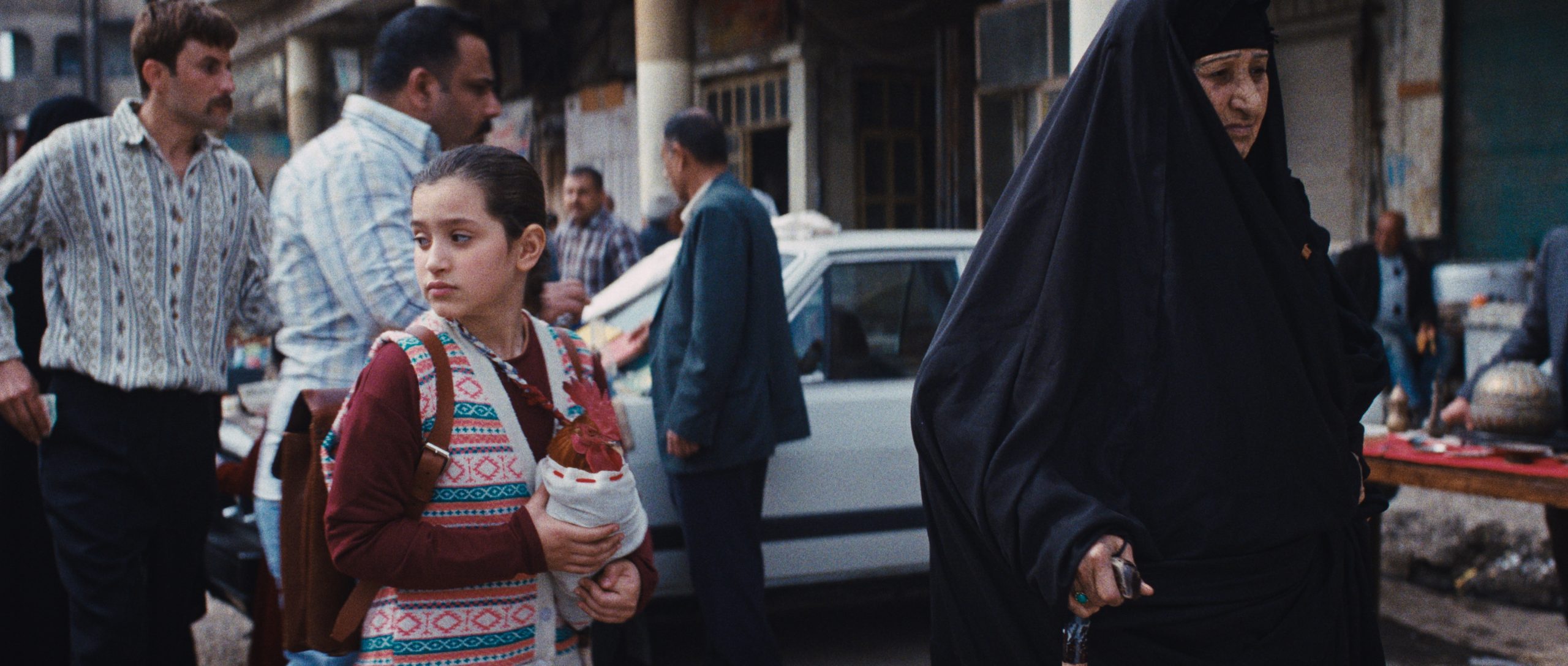
Cake’ – Courtesy of Sony Pictures Classics
From here, the film settles into a loosely structured journey as Lamia runs around the city trying to collect ingredients she can barely afford. Food is scarce and expensive. Adults are distracted, suspicious, or desperate. Most of the people she meets are not outwardly villainous, as they’re just trying to survive in a system that swallows compassion whole. Her friend Saeed tags along, giving her small pockets of emotional relief, but even their companionship has an undercurrent of fear. These kids know too much and trust too little.
What stands out first is how the movie looks. Hadi shoots on film, and it gives everything a soft, documentary aesthetic that makes scenes feel very real and not staged. At times, it resembles a documentary more than a narrative feature in the way people move, the way houses look half-collapsed but still lived in. Nothing feels fussed over. Even the performances have this untrained openness to them, especially from Nayyef. She carries the film with a kind of straightforward honesty–no cute theatrics, no exaggerated innocence. Her face does the same thing real kids’ faces do when they’re confused, scared, or pretending to be brave. You can see her thinking in real time, which is rare in child performances.
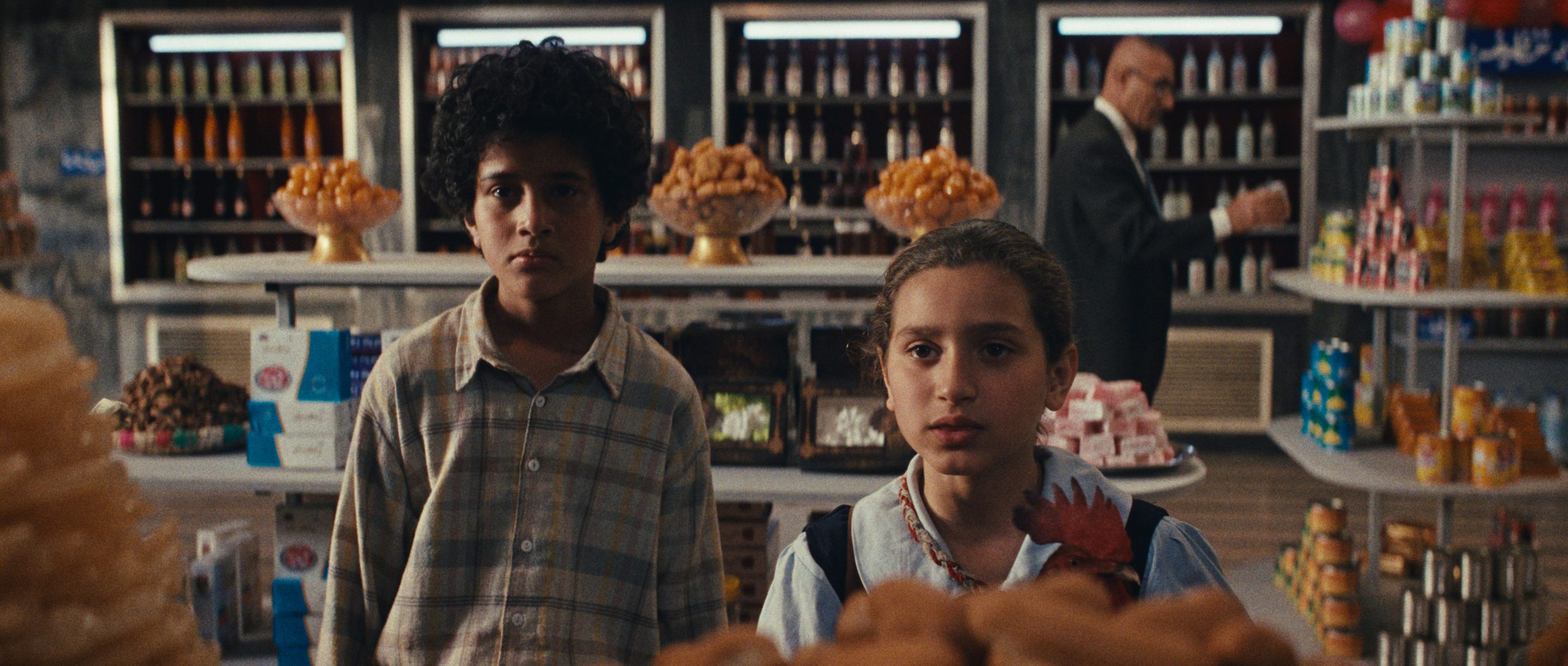
Cake’ – Courtesy of Sony Pictures Classics
Hadi’s script doesn’t waste time making big speeches about dictatorship or war. Instead, the film shows how those forces shrink people’s lives down to the tiniest, most exhausting tasks. A cake isn’t just a cake; it’s a test of loyalty. It’s a demand for cheerfulness in a place where cheer doesn’t belong. The film is sharp about the way regimes force symbolic gestures onto everyday citizens, especially children, and how those gestures end up defining the emotional shape of their lives. Lamia doesn’t fully understand the politics of it; she just understands that failure means danger. That’s enough.
There are places where the film feels a little thin. We don’t learn much about Lamia outside of this mission. We don’t know her parents, and we only get small hints about her life before this day. That absence might be intentional; she’s a child in a place that swallows backstory, but it does leave parts of the film feeling like snapshots rather than a fully rounded portrait. The pacing can also stumble, especially in the middle stretch where the wandering structure starts repeating itself. There are moments when the film almost loses its momentum before pulling itself back together.
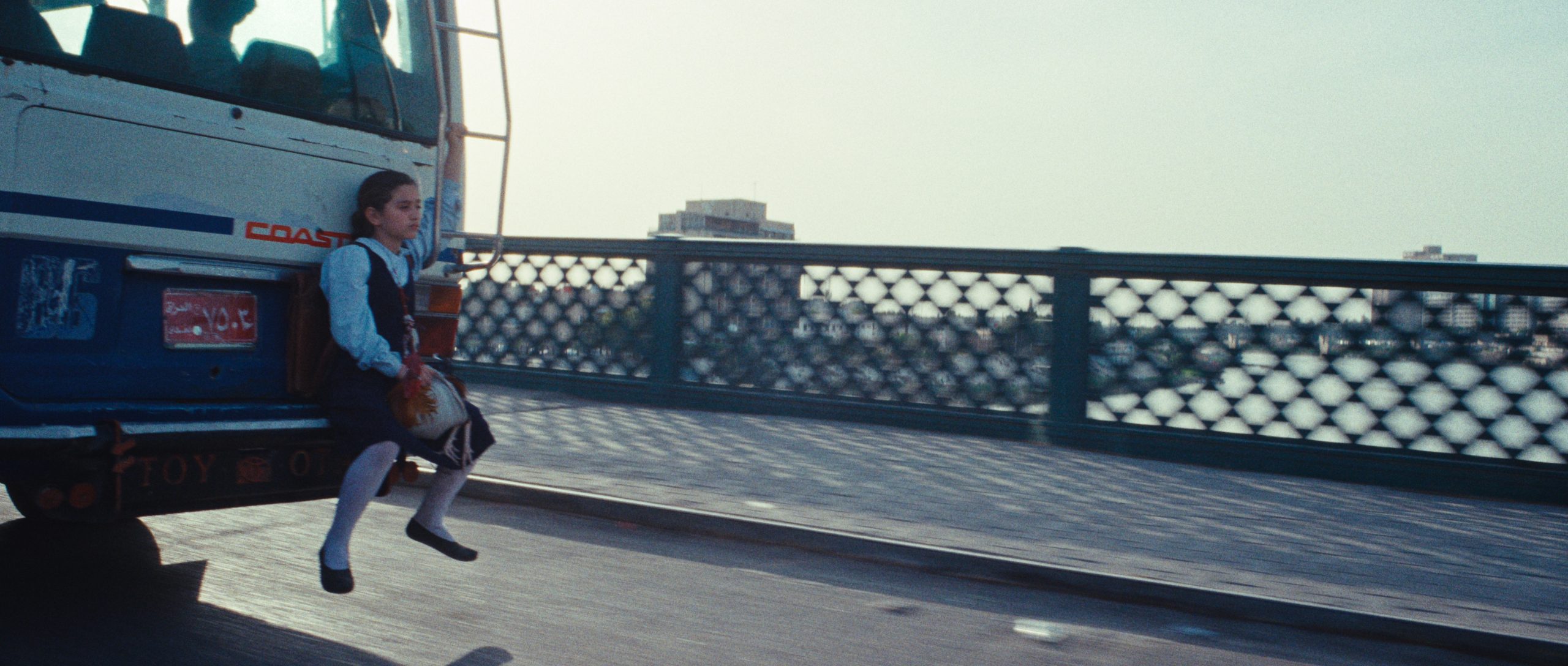
Still, the emotional core works. The more Lamia runs around trying to gather ingredients, the clearer it becomes that the cake isn’t the point. It’s everything around it, the scarcity, the watchfulness, the fear, the way adults bow their heads even when nobody is looking. Hadi’s debut has a calm confidence to it. He knows the power of understatement and doesn’t push harder than he needs to. By the time Bibi’s health declines and strangers argue over who should be responsible for Lamia, the film shows what dictatorship does to communities: it breaks the ability to care for one another without hesitation.
The President’s Cake is very well-crafted, honest, and in lots of ways devastating. What it captures is sadly a real world in which children are forced into roles they can’t yet understand, and a society is stretched thin by sanctions and paranoia. The way innocence erodes in places where survival becomes the only language is more powerful than any polished political speech. Hadi’s voice is already clear, grounded, and compassionate. And in Lamia’s simple, terrified quest to bake a cake, he finds a way to show how entire nations lose their childhoods one errand at a time.
The President’s Cake will debut in select theaters on December 12, 2025, for a one-week Oscar-qualifying run, courtesy of Sony Pictures Classics. The film will return and expand to additional theaters on February 6, 2026. The film is Iraq’s official selection for Best International Film.
The President’s Cake is very well-crafted, honest, and in lots of ways devastating. What it captures is sadly a real world in which children are forced into roles they can’t yet understand, and a society is stretched thin by sanctions and paranoia.

Roberto Tyler Ortiz is a movie and TV enthusiast with a love for literally any film. He is a writer for LoudAndClearReviews, and when he isn’t writing for them, he’s sharing his personal reviews and thoughts on Twitter, Instagram, and Letterboxd. As a member of the Austin Film Critics Association, Roberto is always ready to chat about the latest releases, dive deep into film discussions, or discover something new.