In the age of short-form video, streaming platforms, and algorithm-driven discovery, music is no longer just something we hear—it’s something we see. From TikTok clips to YouTube premieres, visual storytelling has become inseparable from sound. Yet for many musicians and creators, producing a compelling music video remains expensive, time-consuming, and technically demanding.
This gap between creative ambition and production reality is where AI music video generators are beginning to reshape the digital art landscape.
Why Visuals Matter More Than Ever in Music
Today’s audiences rarely experience music in isolation. A song’s first impression often comes paired with visuals: a looping background on Spotify Canvas, a vertical video on Instagram Reels, or an animated visualizer on YouTube. These visuals don’t just decorate the music—they help define an artist’s identity.
However, traditional music video production comes with clear barriers. Hiring a director, renting equipment, coordinating shoots, and editing footage can cost thousands of dollars and weeks of effort. For independent musicians, bedroom producers, and online creators, this model simply isn’t sustainable.
As a result, many artists either skip visuals entirely or rely on repetitive, low-effort templates. This is where AI-driven tools are starting to offer a meaningful alternative.
What Is an AI Music Video Generator?
An AI music video generator uses machine learning models to analyze audio—such as rhythm, tempo, mood, and structure—and automatically generate synchronized visuals. These visuals may include animations, abstract motion graphics, AI-generated imagery, or stylized effects that evolve with the music.
Rather than replacing human creativity, these tools act as creative collaborators. They reduce technical friction and allow artists to focus on storytelling, mood, and artistic direction rather than software complexity.
In recent years, the quality of AI-generated visuals has improved dramatically. Thanks to advances in generative models and real-time rendering, AI music videos are no longer static waveforms—they can feel cinematic, expressive, and emotionally aligned with the music itself.
Beatviz as a Case Study in Creative AI
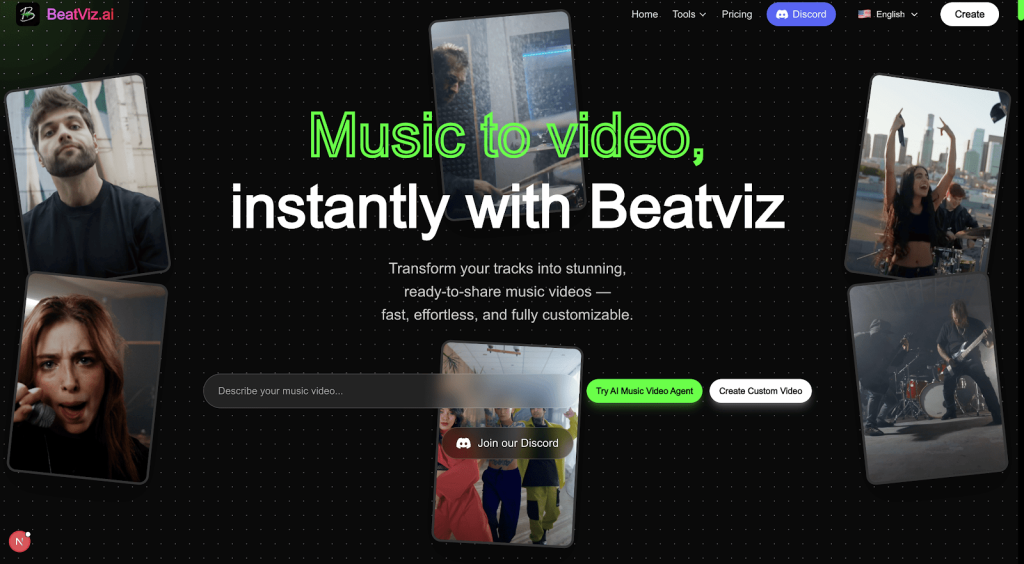
Among the emerging tools in this space, Beatviz offers a clear example of how AI music video generators are evolving beyond novelty.
Instead of positioning itself as a replacement for professional video production, Beatviz focuses on accessibility and creative empowerment. Users can transform their music into visually engaging videos without needing prior experience in animation or video editing. The emphasis is on speed, flexibility, and experimentation—qualities that resonate strongly with today’s creator economy.
For independent artists, this means being able to release music with visuals consistently, not just for major singles. For content creators, it opens the door to dynamic backgrounds, visualizers, and branded visuals that match their sound and aesthetic.
More importantly, tools like Beatviz reflect a broader shift: AI is becoming part of the creative workflow, not an external shortcut.
AI and the Democratization of Digital Art
One of the most significant impacts of AI music video generators is democratization. Historically, high-quality visual art required access to expensive tools, technical training, or professional networks. AI lowers these barriers.
This shift mirrors what happened with digital audio workstations in music production. Just as software like Ableton or FL Studio enabled a generation of self-taught producers, AI-powered visual tools are now doing the same for visual expression.
As a result, we’re seeing a more diverse range of aesthetics emerge online. Artists are no longer constrained by budget or geography; they can experiment freely, iterate quickly, and develop a visual language that evolves alongside their sound.
The Cultural Implications of AI-Generated Visuals
Beyond practicality, AI music video generators raise interesting questions about authorship and digital art. If an algorithm helps generate visuals, who is the artist? The creator? The tool? Or the collaboration between them?
In reality, digital art has always involved tools—cameras, software, filters, and effects. AI simply adds a new layer of abstraction. What matters is intent and curation: the choices creators make, the prompts they use, and the stories they want to tell.
From a cultural perspective, AI-generated visuals are becoming part of the visual language of the internet. They reflect a hybrid aesthetic—part human emotion, part machine interpretation—that feels increasingly native to digital spaces.
Looking Ahead: The Future of AI Music Video Generators
As AI models continue to improve, the future of AI music video generators looks less about automation and more about collaboration. We can expect tools that offer deeper customization, real-time interaction, and tighter integration with creative platforms.
Rather than asking whether AI belongs in art, the more relevant question is how artists choose to use it. For many, AI is not a shortcut but a catalyst—one that enables ideas to move from imagination to screen faster than ever before.
In that sense, the rise of AI music video generators is not just a technical trend. It’s a reflection of how creativity itself is evolving in the digital age—more fluid, more accessible, and more experimental.

Caroline is doing her graduation in IT from the University of South California but keens to work as a freelance blogger. She loves to write on the latest information about IoT, technology, and business. She has innovative ideas and shares her experience with her readers.