How do you follow up one of the best movies of the 2010s when the only member of its main creative team willing to return is its writer? Well, as it turns out, you make something that looks a lot like The Social Reckoning. Written and directed by Aaron Sorkin and inspired by the history behind the Wall Street Journal’s 2021 reporting on the “Facebook Papers”, The Social Reckoning comes across less like a sequel to The Social Network and more like a continuation of its core ideas—that social media’s unchecked influence on the general public poses a danger to the well-being of society. Put simply, The Social Reckoning feels less like The Social Network and more like a Very Special Episode of The Newsroom; a fact that would be more forgivable if The Social Reckoning trusted its audience even half as much as The Newsroom did.
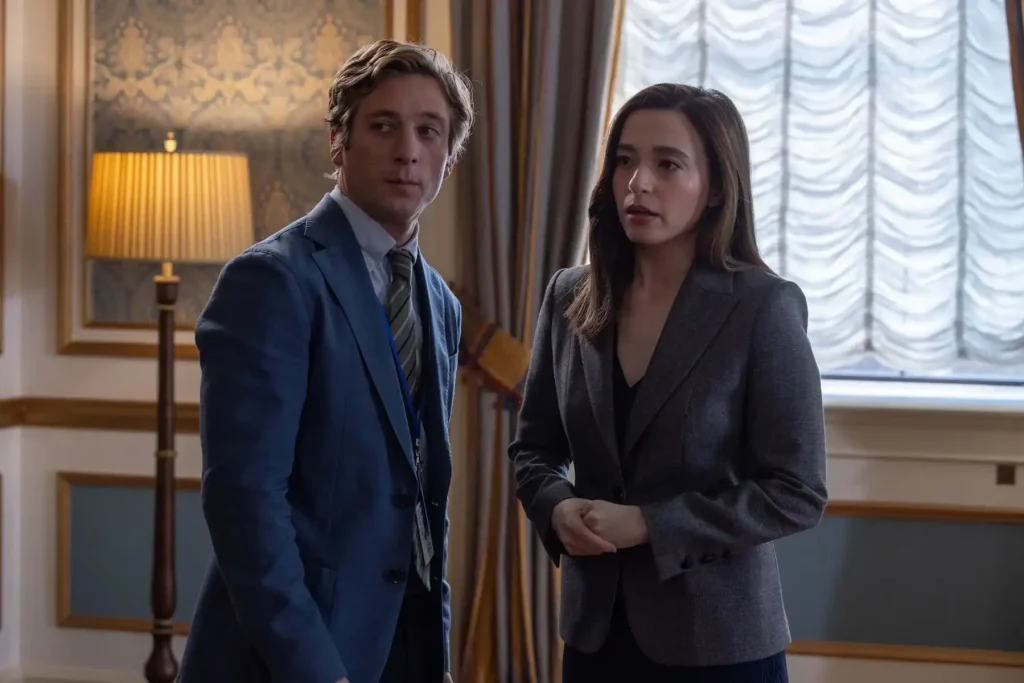
The Social Reckoning follows Facebook employee-turned-whistleblower, Frances Haugen (Mikey Madison), as she enlists the aid of Wall Street Journal reporter and noted tech luddite, Jeff Horwitz (Jeremy Allen White), in exposing the Facebook algorithm’s penchant for leading its users down the rabbit hole of radicalization by showing them a cacophony of inflammatory content. Meanwhile, two years later (and on the eve of the Wall Street Journal’s bombshell report), Mark Zuckerberg (Jeremy Strong) prepares to testify before Congress against a political backdrop amplified by Facebook’s aversion to moderation. What results is Sorkin’s best attempt at creating a political thriller in the vein of All the President’s Men or Spotlight. Except where those movies found drama and tension in their reporters’ quests to expose a society-shaking truth, The Social Reckoning seems less concerned with exposing the truth and more concerned with preaching to the already-converted.
And that’s where The Social Reckoning most resembles an episode of Sorkin’s hit-or-miss HBO series, The Newsroom—a show that, at its worst, could feel more like a patronizing lecture than a tense, dramatic hour of television. Now, in fairness, The Social Reckoning never comes across entirely as a patronizing lecture; rather, it merely feels as though Sorkin doesn’t trust his audience enough to follow the through line of the film—or even to draw their own conclusions about what they see on screen. Instead, Sorkin makes the decision to spell out exactly what happens and when it’s happening in the most obvious ways possible, as though there’s no possible way the audience could be expected to follow a film that’s nowhere near as complicated or frenetic as the David Fincher-directed The Social Network was.
Here, scenes jump back and forth through time, often accompanied by a ridiculous on-screen graphic that looks like a literal timeline (in case you couldn’t figure out how the film bounces around through time). And then, perhaps most insultingly, Sorkin intercuts the film’s climactic monologue (itself a piece of typical Sorkin melodrama) with eye-rolling amounts of footage from, let’s say, a particularly explosive political event that happened at the beginning of 2021. Regardless of whether it’s historically accurate or not, it nevertheless reeks of a director who doesn’t trust his audience to figure out the film’s obvious central theme—that a social media company with unchecked influence over the public might, you know, be a bad idea. And considering how simple a theme that is, that Sorkin believes the film needs to spell it out says far less about the audience than he might think it does.

That The Social Reckoning comes anywhere close to working as well as it does rests almost entirely on the shoulders of its game but underserved cast. While none of the film’s main players—White, Madison, or Strong—ever feel like they have a real grasp on performing the intricacies of Sorkin’s dialogue the way someone like Bradley Whitford or Richard Schiff does, they nevertheless do their level best to elevate the film into something worthwhile. Everyone’s giving their all here; it’s just that Sorkin’s script never gives its cast anything particularly meaty to chew on. Jeff and Frances feel less like characters with complex internal lives and more like chess pieces who exist solely to get the film to its climactic monologue and hammer home the most obvious of themes. So, it’s to White and Madison’s credit that they pop off the screen as well as they do.
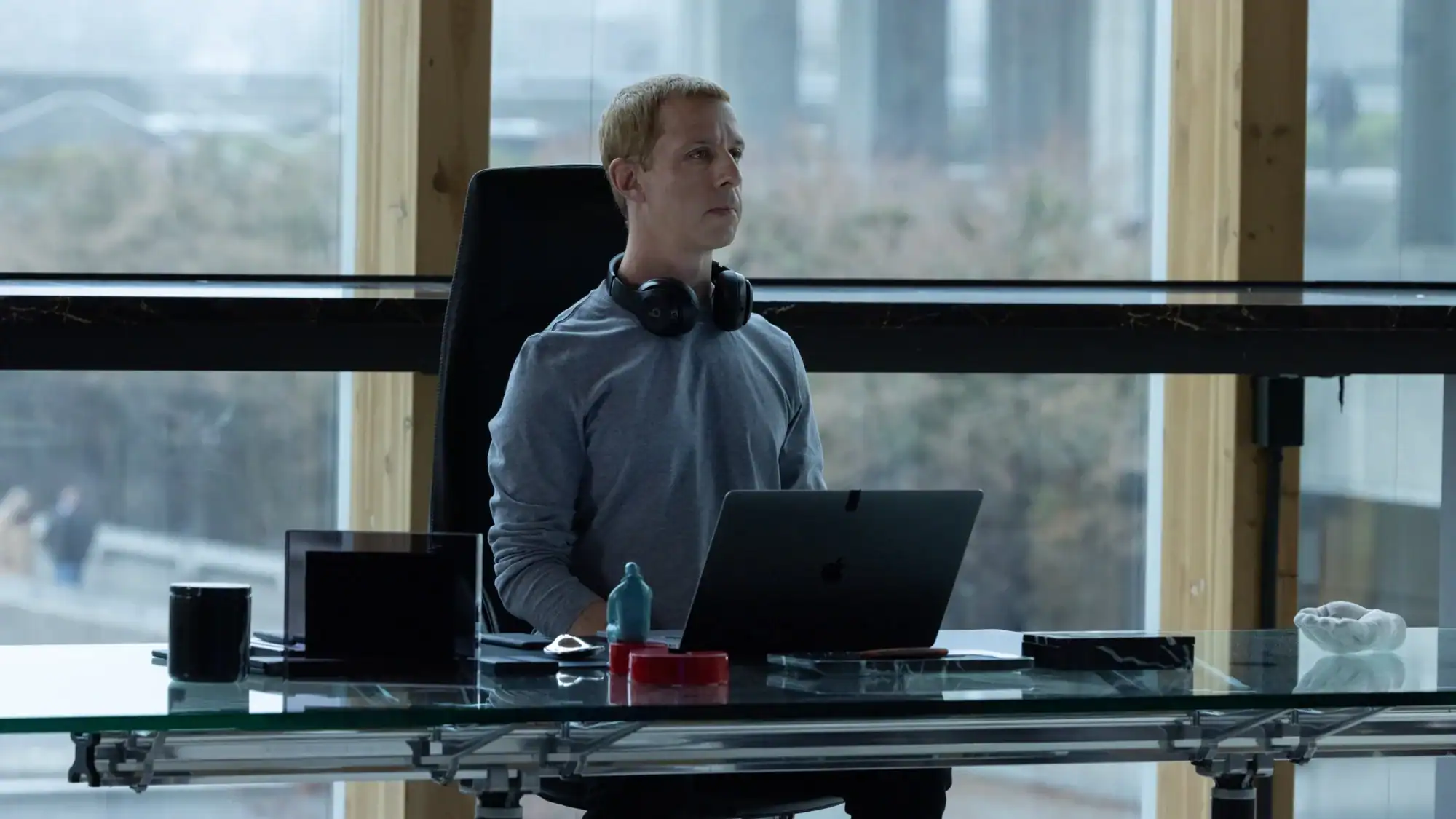
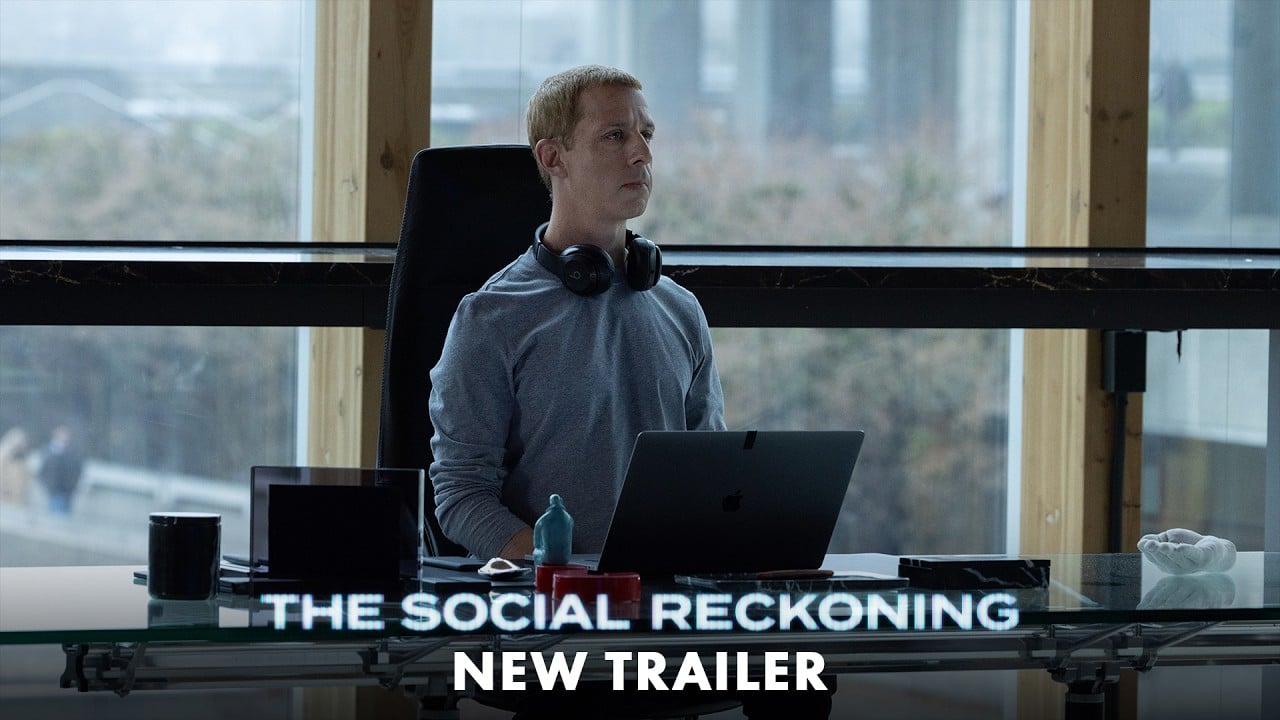
Strong’s performance as Mark Zuckerberg suffers a similar fate, which is worsened by being held in comparison to Jesse Eisenberg’s generational performance as Zuckerberg in The Social Network. But that film had a better script and a better director, none of which should be held against Strong. Here, Strong plays Zuckerberg as exactly the seemingly emotionless android he comes across as in his more recent public appearances. Sorkin’s script just once again never does anything with this idea. It’s merely there, and the film seems to think it’s making a point when it contrasts Strong’s stoic Zuckerberg with the more outwardly emotional Charlie Garrigan (played by a scene-stealing Bill Burr). But ultimately, The Social Reckoning seems to have nothing to say about Zuckerberg on an emotional level, seemingly only interested in the role he plays in Facebook’s apolitical tendencies.
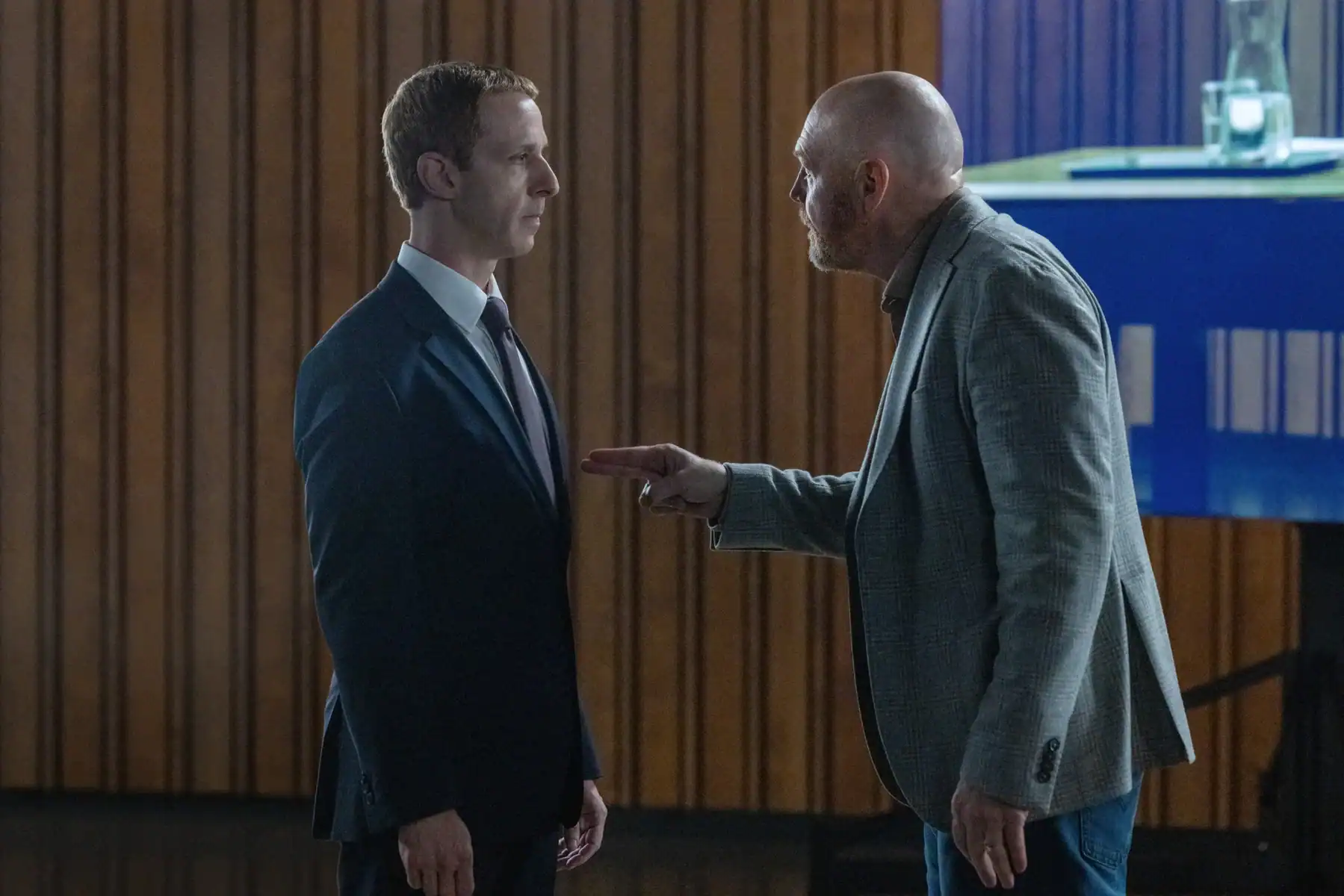
And that’s really where everything falls apart. The Social Reckoning seems to have no interest in the who behind these events. It doesn’t try to understand Mark Zuckerberg the way The Social Network did. Nor does it try to truly explore the hows and whys of Jeff and Frances’ quest to expose Facebook’s harm. Instead, it merely preaches to the already-converted about the dangers of unchecked social media and fails to tell a particularly engaging thriller. It’s a group of actors all giving reasonably decent performances while trying to hold together a film that’s more akin to an op-ed than a piece of narrative cinema. It’s a fine film, but one that ultimately leaves you unimpressed.
If the history of the “Facebook Papers” interests you, a podcast or documentary about the real story will serve you much better. And if you’re looking for a Sorkin fix, you’d be much happier merely rewatching The West Wing, The Social Network, or any of Sorkin’s projects that feature a director who can dampen his worst excesses. For ultimately, The Social Reckoning showcases Sorkin at his most unrestrained—for better or worse.
The Social Reckoning is now playing exclusively in theaters courtesy of Sony Pictures.
Before we let you go, we have officially launched our merch store! Check out all of our amazing apparel when you click here and type in GVN15 at checkout for a 15% discount!
For major deals and money off on Amazon, make sure to use our affiliate link! If you are purchasing any of the latest and best in physical media at MovieZyng, you can support us using our affiliate link.
Aaron Sorkin's "The Social Reckoning" preaches to the already-converted. It feels less like an engaging, tense political thriller and more like an extended soapbox op-ed. It's a competent but ultimately uninspiring affair.
-
GVN Rating

Part-time writer, part-time theatre nerd, full-time dork.