The race to integrate sophisticated, helpful, and scalable AI into Software as a Service (SaaS) products is no longer optional—it is the primary battleground for market leadership. The shift from simple chatbots to fully autonomous, intelligent agents that can execute multi-step tasks, manage complex workflows, and act as a true extension of a software product is redefining user experience. This new paradigm requires a dedicated infrastructure: the AI orchestration platform.
This article explores the rise of agentic AI and reviews the top platforms enabling SaaS companies to custom-build, deploy, and manage their proprietary AI agents with the control and observability required for an enterprise environment.
What is an AI Orchestration Platform?
An AI orchestration platform—often referred to as an Agentic AI Platform—is the foundational infrastructure layer that manages the entire lifecycle of an intelligent agent.
In simple terms, an AI agent is a program that uses Large Language Models (LLMs) to reason, plan, and execute actions, often involving external tools or APIs, to achieve a defined goal. The orchestration platform’s job is to manage the complex components that make this possible:
- Tool Use/Function Calling: Determining which APIs or internal tools the agent needs to call.
- Workflow Management: Defining and managing the sequence of steps for complex, multi-turn tasks.
- Memory Management: Maintaining conversation history and state across interactions.
- Data Grounding (RAG): Connecting the LLM to proprietary or external data sources to ensure responses are accurate and relevant.
- Observability: Providing visibility into the agent’s decision-making, performance, and cost.
Without these platforms, building a production-ready AI agent is a fragmented, complex engineering effort. With them, SaaS companies can industrialize their AI strategy.
Why SaaS Needs AI Orchestration: The Competitive Edge
For SaaS providers, implementing AI agents is a strategic imperative that directly impacts the bottom line through efficiency, customer satisfaction, and product differentiation. There are different use cases for SaaS but let’s take a look at a couple of the most obvious ones.
Use Case: An In-Product AI Agent
An in-product AI agent acts as an always-on co-pilot, fundamentally changing how users interact with the software.
- Automated Feature Walkthroughs: Instead of relying on static documentation or recorded videos, an agent can dynamically guide a user through the features, using real-time data from their environment.
- Task Execution: In a project management SaaS, an agent could take the prompt, “Draft a summary report of last quarter’s tasks that are currently overdue,” query the database, structure the data, and deliver the final report, all in a single interaction.
- Personalized Workflows: Agents can observe user behavior and proactively suggest shortcuts or configurations tailored to an individual’s role or industry.
Use Case: Customer Support Agent
The most immediate and quantifiable impact of agentic AI is in customer support, driving massive cost savings and vastly improved service quality.
- Instant Resolution: Autonomous support agents can resolve up to 80% of routine customer service queries instantly, eliminating hold times and improving customer satisfaction scores.
- 24/7/365 Availability: Agents provide round-the-clock support in any language, serving global user bases without the need for proportional staffing increases.
- Proactive Help: An agent integrated with the product’s monitoring system can detect a potential issue (e.g., a low usage limit warning) and proactively reach out to the user with a solution before they even encounter an error.
Cost Savings and Efficiency Statistics
The economic rationale for this investment is compelling. Implementing an agentic ecosystem offers quantifiable savings in both time and money:
- Efficiency Gains: Companies utilizing AI agents report up to 55% higher operational efficiency and an average cost reduction of 35% across automated tasks.
- Customer Service Impact: AI agents are projected to cut customer service operations costs by over $80 billion by 2026 globally.
- Developer Productivity: Developers using AI coding assistants (a form of agent) report completing coding tasks 126% faster, drastically accelerating product development cycles.
- High ROI: Overall, organizations using generative AI-enabled customer service agents have seen a 14% increase in issue resolution per hour and a significant reduction in the time human agents spend on handling issues.
The Power of Customization: Why Build Your Own AI Agent
The market is saturated with plug-and-play chatbot solutions, but for a modern SaaS company, these generic tools fall short. Every SaaS product is unique—it has its own database schema, API logic, permission layers, and a proprietary knowledge base built over years.
Custom-developing your own AI agent using an orchestration platform is not about reinventing the wheel; it’s about establishing ownership and control over the most critical layer of your next-generation product. Custom agents provide:
- Deep Integration with Proprietary Systems: Generic agents cannot safely or effectively query your private SQL database, access the user’s billing history via Stripe, or initiate a complex workflow in your ERP system. A custom agent, built using an orchestration platform, is designed to know and respect every facet of your architecture.
- Control over Data and Compliance: For regulated industries, data residency, privacy, and security are non-negotiable. Custom-built agents ensure data stays within your controlled environment (e.g., your AWS or Azure VPC) and complies with industry regulations like HIPAA or GDPR.
- Optimized Performance and Cost: By choosing the best model for a specific task (e.g., a small, cheap model for simple intent classification and a powerful, expensive model for complex reasoning), custom orchestration allows you to optimize API calls, dramatically reducing overall LLM costs while maximizing speed.
Review of Top AI Orchestration Platforms
Choosing the right platform is the first and most critical decision in launching an agentic ecosystem. The following platforms represent the leading edge of AI orchestration, offering varying degrees of flexibility, control, and abstraction.
1. Calljmp – an AI orchestration platform for SaaS and beyond
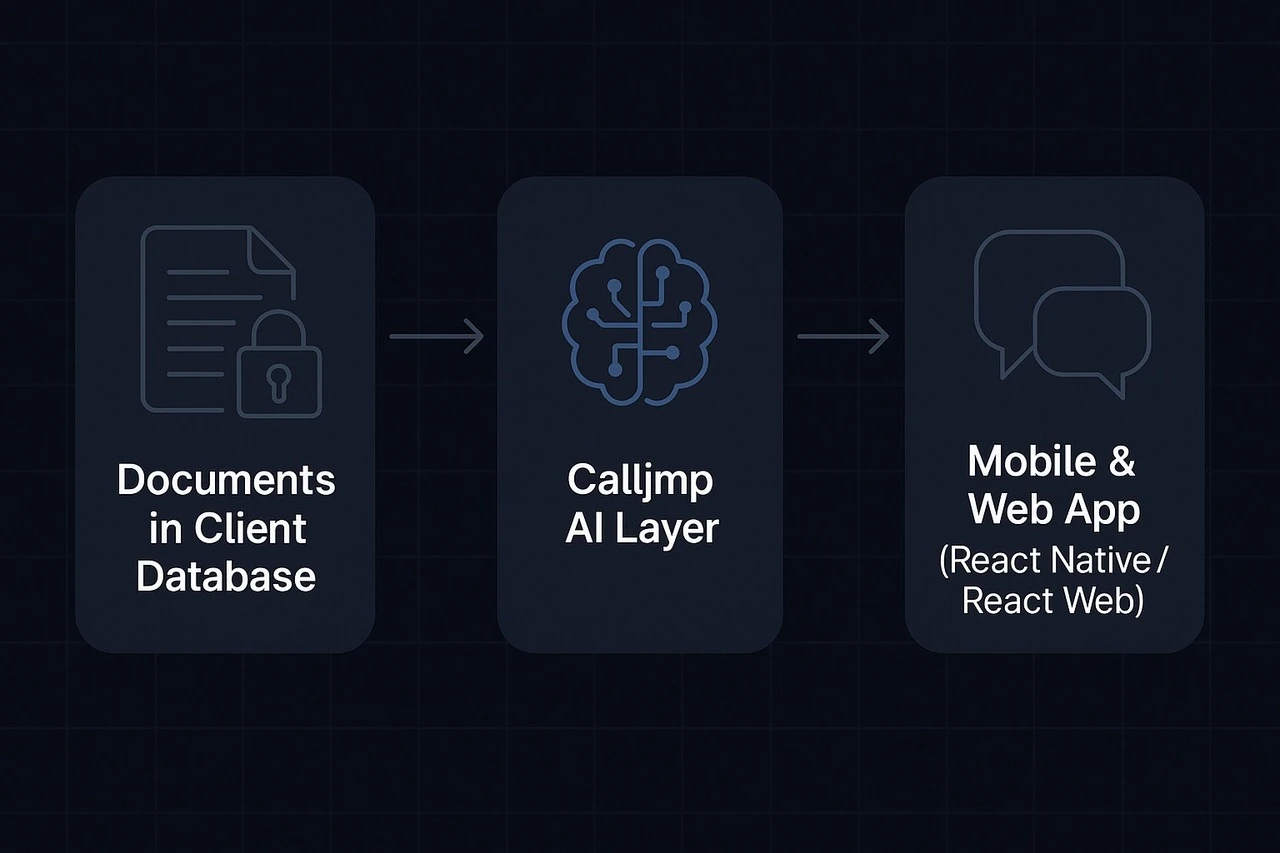
Calljmp is an AI orchestration platform where AI agents are built as code in TypeScript. This approach provides the flexibility, scalability, observability, and control that development teams need to build and maintain sophisticated, production-grade agents. Rather than relying on configuration files or low-code graphical interfaces, Calljmp treats AI agents as a first-class software component, manageable with standard Git workflows and modern DevOps practices.
Key Features and Advantages:
- TypeScript-Native Development: By using TypeScript, SaaS can leverage existing development patterns, type safety, and debugging tools. This vastly improves the maintainability and reliability of complex agents compared to frameworks relying solely on Python or YAML. This provides an unparalleled control and maintainability and ensures that agents can be managed with the same rigor as mission-critical application code.
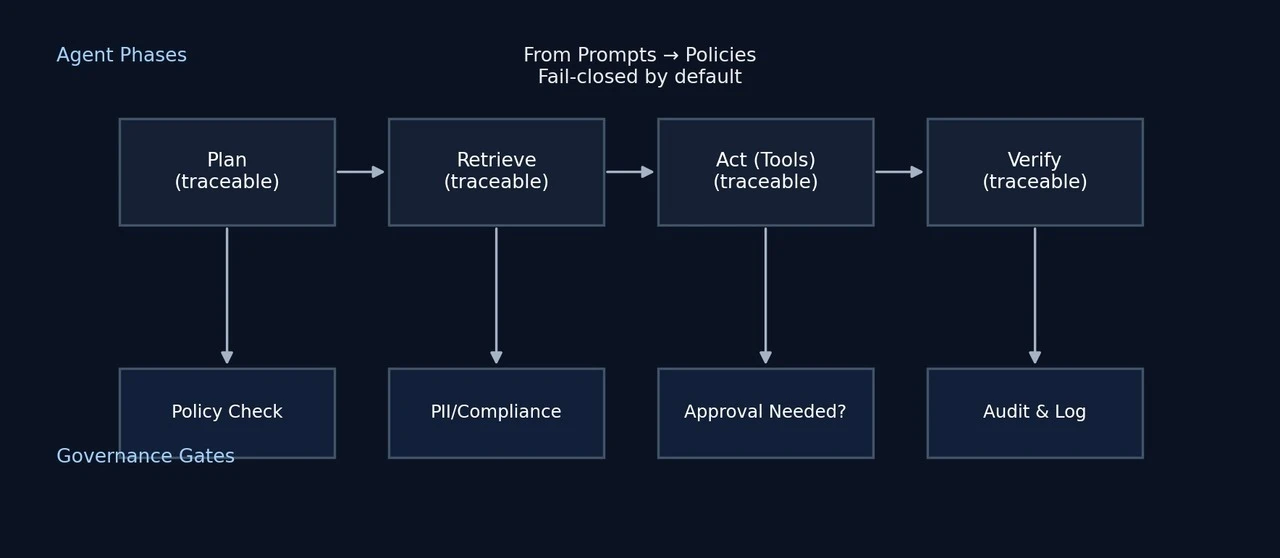
- Observability: Provides deep, integrated visibility into every step of the agent’s execution. This includes tracing the LLM’s thought process (the “chain of reasoning”), tracking tool calls, measuring latency, and logging the cost of each API interaction. This is crucial for debugging, auditing, and cost optimization in production.
- RAG (Retrieval-Augmented Generation): Offers robust tooling for grounding agents in proprietary data. It manages the full RAG pipeline, from data ingestion and chunking to vector storage (with support for multiple vendors) and advanced retrieval strategies. This ensures agents give accurate, context-aware answers based on the SaaS company’s internal documentation or user-specific data.
- Memory: Provides sophisticated, persistent memory management, allowing agents to maintain a continuous, stateful relationship with the user across sessions. It supports various memory types (e.g., conversation buffer, summary memory) and ensures that the agent’s memory is correctly scoped and secured for each authenticated user.
- AI Portals: Enables the creation of embeddable, full-featured AI interfaces (chat widgets, dashboards, co-pilots) that can be instantly deployed into the existing SaaS product. These portals are directly connected to the custom agents, abstracting away the deployment and frontend integration work.
Detailed Use Cases for SaaS:
- Autonomous Developer Co-pilot: A SaaS platform can use Calljmp to build an agent that can read a user’s current codebase or notebook, analyze the proprietary API documentation (via RAG), and then suggest and execute code snippets. The agent can take actions like automatically provisioning cloud resources or writing and running integration tests.
- Compliance and Audit Agent: In FinTech or HealthTech SaaS, a custom agent can be tasked with auditing user activity. It can monitor database write operations, check them against a compliance RAG index (e.g., “Is this transaction size allowed under the terms of service?”), and if an anomaly is detected, automatically trigger an alert to a human compliance officer via an external tool (e.g., a Slack API call).
- Proactive Upsell/Engagement Agent: An agent monitors usage data and identifies users who are about to hit a soft limit (e.g., 90% of storage used). The agent can then generate a personalized, contextual message suggesting an upgrade path, create a support ticket with all relevant historical data, and even generate the pricing quote, all without human intervention.
2. LangChain Hub
LangChain is arguably the most recognized open-source framework for building LLM applications, and LangChain Hub is its centralized platform for sharing and managing components. It focuses on the developer experience by providing a modular, extensible structure for building complex chains and agents.
Key Features:
- Modular Abstraction: LangChain provides structured abstractions for components like LLMs, Prompts, Output Parsers, and Tools. This lets developers quickly swap out models or change logic without rewriting the entire agent.
- Chains and Agents: The core strength lies in “Chains,” which define sequences of calls (e.g., Prompt -> LLM -> Output Parser), and “Agents,” which use an LLM for reasoning to determine the sequence of tools to call.
- Vast Ecosystem: Due to its popularity, LangChain boasts the largest collection of third-party integrations, connectors (for vector databases, document loaders), and a massive open-source community.
- LangSmith (Observability): While LangChain is the development framework, LangSmith is the accompanying paid platform for observability, tracing, and evaluation, essential for moving agents from prototype to production.
Advantages for SaaS:
- Developer Familiarity: Many AI engineers are already familiar with the framework, leading to faster initial prototyping and team ramp-up.
- Flexibility and Customization: The open-source nature means developers can modify virtually every part of the agent’s logic to perfectly match their unique SaaS requirements.
- Cost-Effective Prototyping: The core open-source framework can be used for free, making it ideal for proof-of-concept development before committing to an enterprise platform.
3. Relevance AI
Relevance AI positions itself as a low-code/no-code platform for building and deploying AI workflows, focusing heavily on enabling business teams (not just developers) to create and ship agents. It is designed to take unstructured data and turn it into actionable automation.
Key Features:
- Workflow Builder (Low-Code): Provides a visual canvas for designing complex multi-step AI workflows, allowing users to drag and drop components to connect data sources, LLMs, and external APIs.
- Agent Management: Offers tools for deploying, versioning, and managing a fleet of agents, making it easier for non-technical users to experiment and iterate quickly.
- Data Transformation: Strong capabilities for ingesting and processing unstructured data (documents, emails, spreadsheets) and structuring it for use in RAG or automation tasks.
- Focus on Business Automation: The platform is particularly strong for internal-facing agents that automate tasks like report generation, content summarization, and data categorization.
Advantages for SaaS:
- Speed to Market: The low-code environment drastically reduces the time required for non-critical automation tasks, allowing business operations and marketing teams to build their own agents.
- Workflow Templates: Offers a library of pre-built, common business automation workflows that can be adapted quickly to a SaaS company’s needs.
- Iterative Design: The visual interface makes it simple to test, debug, and rapidly iterate on an agent’s logic.
4. Microsoft Azure AI Studio (Microsoft Foundry)
Microsoft’s offering provides an enterprise-grade, integrated solution, deeply embedded within the Azure cloud ecosystem. It is an all-in-one platform for the full AI lifecycle, from data prep and model training to agent deployment and MLOps (Machine Learning Operations). It is particularly powerful for SaaS companies already committed to the Azure infrastructure.
Key Features:
- Azure OpenAI Service Integration: Offers fully managed access to OpenAI models (GPT-4, etc.) with Azure’s enterprise security, compliance, and guaranteed data privacy.
- MLOps and Governance: Provides robust tools for model versioning, continuous integration/continuous deployment (CI/CD), security guardrails, and centralized monitoring of agent performance and resource usage.
- Built-in Tools (Foundry Tools): A suite of cognitive services (Vision, Speech, Language) that can be seamlessly incorporated into an agent’s toolset, giving the agent complex capabilities beyond pure language processing.
- Responsible AI: Dedicated features and dashboards for implementing safety filters, content moderation, and evaluating fairness and transparency in agent behavior.
Advantages for SaaS:
- Enterprise-Grade Security: Inherits Azure’s world-class security, compliance certifications, and private networking features, essential for handling sensitive customer data.
- Unified Platform: Developers can manage all AI assets (models, RAG indexes, agent code) in one place, streamlining the development and operational workflow.
- Scalability: Leverages the immense, highly scalable infrastructure of the Azure cloud, ensuring agents can handle massive spikes in user demand with low latency.
5. LlamaIndex
LlamaIndex is a developer-first data framework that has evolved into a powerful agent orchestration tool, specializing in Retrieval-Augmented Generation (RAG). Its core focus is on intelligently connecting large language models to external data sources.
Key Features:
- Advanced RAG Pipeline: Provides sophisticated data ingestion, indexing, and retrieval methods, supporting complex data types (multi-page tables, embedded images) for high-accuracy grounding.
- Multi-Modal Capabilities: Specialized features for handling both text and image data in the retrieval and generation process.
- Modular Data Structure: Offers core data abstractions (Documents, Nodes, Indexes) that give developers granular control over how data is processed before being fed to the LLM.
- Agent Tool Abstractions: Similar to LangChain, it provides tools for defining agent functions, but with a strong emphasis on data-aware agents, such as QueryEngineTool for highly efficient, data-specific retrieval.
Advantages for SaaS:
- Best-in-Class RAG Accuracy: For SaaS products that rely heavily on large, proprietary document sets (e.g., LegalTech, Documentation/Help Desk), LlamaIndex provides superior tools to ensure accuracy and minimize “hallucinations.”
- Python/TypeScript SDKs: Available in both major development languages, allowing flexibility for integration into existing stack environments.
- Focus on Data Performance: Optimized for fast, accurate retrieval, which is critical for real-time customer support or in-product co-pilot features where low latency is key to a good user experience.
Conclusion
The shift to agentic architecture is the most transformative movement in the SaaS industry since the adoption of the cloud. The question is no longer if to build AI agents, but how.
The right AI orchestration platform provides the necessary tools for security, scalability, and ownership. Whether you prioritize the enterprise-level governance of Azure AI Studio, the open-source flexibility of LangChain Hub and LlamaIndex, the business agility of Relevance AI, or the developer-native control of Calljmp, the goal remains the same: to stop relying on generic, costly APIs and start owning the intelligence layer of your product.
By choosing a platform that allows you to build sophisticated agents as maintainable, traceable software, SaaS companies can unlock a new era of efficiency and deliver truly differentiated user experiences.

Madeline Miller love to writes articles about gaming, coding, and pop culture.