Tuesday’s Flu sets out to be a tense crime drama intertwined with a personal story of redemption, but it ultimately fails to deliver on either front. The film follows Jason McCutchen (Ross Marquand), a recovering gambler buried in debt to a ruthless bookie and blackmailed by his ex-wife. Desperate to win back custody of his son, Jason sees one final opportunity: fencing a dying client’s lost treasure of gold doubloons. On paper, the premise hints at high stakes, moral dilemmas, and emotional tension, but in execution, the film feels flat, predictable, and lifeless.
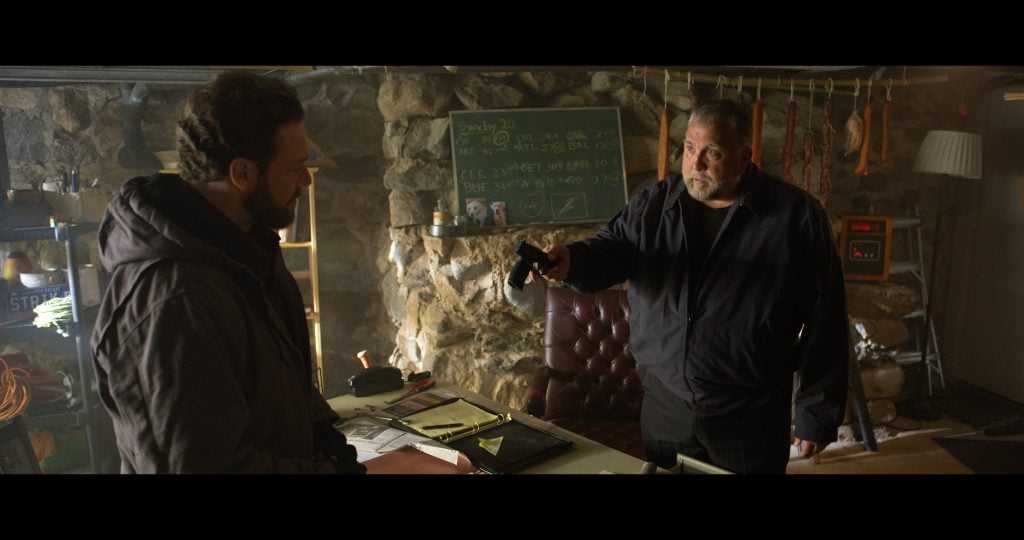
One of the first things that stands out is the visual tone, which is overwhelmingly grey and muted. The washed-out lighting and dull color palette dominate nearly every frame. While it’s possible the filmmakers intended this to reflect Jason’s bleak, desperate world, the effect is more draining than evocative. The visuals strip the story of energy, making it look more like a low-budget procedural than a stylized crime drama. The cinematography fails to enhance the narrative, leaving the film visually inert.

Pacing is another major issue. Tuesday’s Flu takes an uncomfortably long time to get going, and even when the plot starts to move, it lacks momentum. Scenes meant to build suspense or emotional stakes often drag, giving the audience little reason to stay invested. By the time any meaningful plot development occurs, it feels like too little, too late. The film attempts the slow-burn structure common in crime dramas, but it lacks the simmering tension or eventual payoff that usually makes such pacing worthwhile.
The story itself is painfully predictable. Each twist, turn, and revelation is obvious from a mile away. From the outset, viewers can anticipate how characters will react, what the obstacles will be, and even the eventual outcome. Without surprises or genuine emotional stakes, the film struggles to engage, and the audience is left watching a series of events that feel mechanically plotted rather than organically unfolding.
Performance is the only area where Tuesday’s Flu shows any merit. Jon Gries, in particular, delivers a standout performance as Benny. Watching him navigate his character’s pathetic desperation is compelling as well as entertaining, even in an otherwise dull film. Ross Marquand as Jason is convincing; you can tell he is trying his best in portraying this character’s frustration and desperation, though the script gives him very little to work with beyond the basics of the plot. Jackie Earle Haley’s Lester is competent, but the character is underwritten and rarely leaves an impression. Valynn Turkovich as Madine is similarly limited; her presence barely affects the story. Taylor Cross, however, is a misfire as Ash. His attempts at comic relief, improvising songs on his guitar in a running “gag,” fall flat, rendering the character irritating rather than charming or humorous.

Beyond performances, the film struggles with tone. The combination of slow pacing, predictable plotting, and grey visuals creates a lifeless experience. Moments that could carry suspense or emotional weight pass without impact, leaving the audience disconnected. Even the film’s intended emotional core, Jason’s fight to reclaim his son, is underdeveloped.
With such a great ensemble, you’d think Tuesday’s Flu would be an easy home run, but it is a film that squanders its potential and strikes out. The premise is solid, and a few performances stand out, but the slow pacing, flat visuals, predictable narrative, and uneven tone make for a frustrating viewing experience. It’s a movie that might appeal to fans of ultra-quiet crime dramas, but for anyone hoping for tension, excitement, or emotional engagement, you’ll be disappointed. The gamble of watching this film doesn’t pay off, leaving viewers wishing the story had been handled with more energy, focus, and life.
Tuesday’s Flu had its World Premiere at the 2025 Austin Film Festival.
Director: Daniel Roebuck
Writers: Brian Parri, Stephen Parri
Rated: NR
Runtime: 101m
With such a great ensemble, you’d think Tuesday’s Flu would be an easy home run, but it is a film that squanders its potential and strikes out.
-
GVN Rating

Roberto Tyler Ortiz is a movie and TV enthusiast with a love for literally any film. He is a writer for LoudAndClearReviews, and when he isn’t writing for them, he’s sharing his personal reviews and thoughts on Twitter, Instagram, and Letterboxd. As a member of the Austin Film Critics Association, Roberto is always ready to chat about the latest releases, dive deep into film discussions, or discover something new.