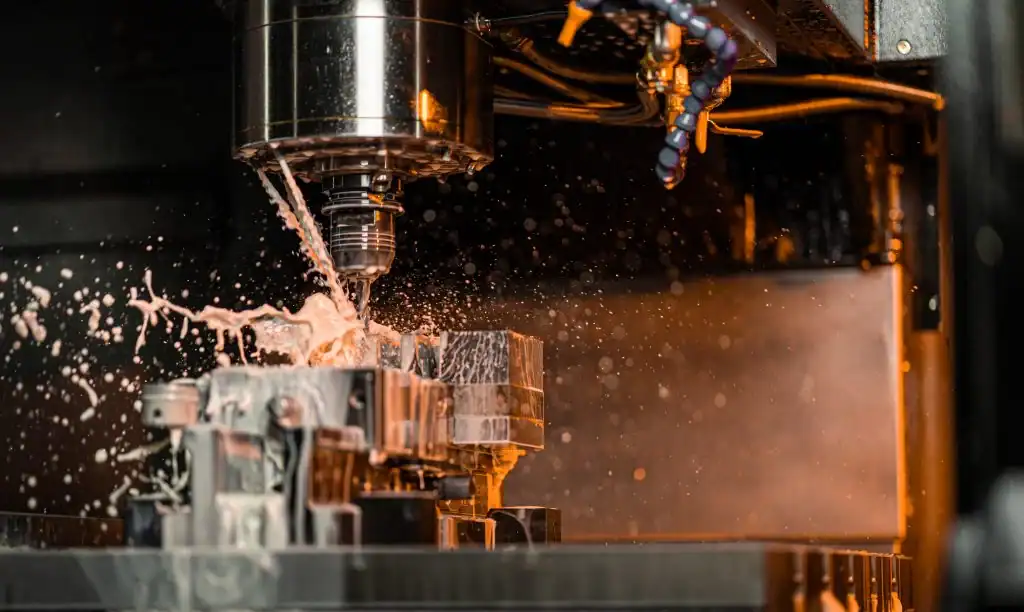
Introduction
Today’s manufacturing is characterized by precision, speed, and repeatability. At the forefront of this growth is the CNC machine. CNC is an acronym for Computer Numerical Control, which puts into play preprogrammed software to run machine tools. These machines are able to shape, cut, drill, and finish materials with a high degree of accuracy. Industries that include automotive, aerospace, electronics, medical devices, and construction use CNC technology daily.
Understanding the basics of what a CNC machine does and the value it brings to the table is key to see how manufacturers achieve consistent quality in modern products. From small-scale metal pieces to large-scale complex components, CNC machining has transformed the manufacturing process.
What Is a CNC Machine?
A CNC machine, which is a product of modern technology. They are run mostly by computers, which input digital information into the machine, which in turn guides the operation of the machine’s tools and material with great precision. Also, it is seen that instead of manual control, these machines use software that is designed for this purpose to run the whole process.
Common CNC machines include: Popular CNC machines are the following:.
- CNC milling machines
- CNC lathes
- CNC routers
- CNC plasma cutters
- CNC laser cutting machines
- CNC grinding machines
Each kind of CNC machine has a different function. For instance, manufacturers use CNC mills, which remove material from a workpiece with rotating tools, and also there are CNC lathes that rotate the material itself for the production of cylindrical shapes.
The machine is also able to perform the same process over and over.
How Does CNC Machining Work?
CAD is used to begin the CNC process. CAD stands for Computer-Aided Design. Engineers develop a digital model of the part that they want. That design is put through a process that turns it into machine-readable code, which usually is what is called G-code.
The CNC machine interprets this code, which in turn causes it to perform the required actions, which are as follows:.
- Cutting
- Drilling
- Turning
- Milling
- Engraving
- Shaping
Sensors and motors in the machine report precise movement. Manufacturers achieve almost error-free results in the tiniest of measurements.
This auto process reduces manual labor and improves production efficiency.
Why Is CNC So Important?
CNC, which in turn is very important, does so by solving many of the issues present in conventional machining. It enables manufacturers to produce complex parts fast and also very safely and with a very high level of consistency.
High Precision
CNC machinery produces very close tolerances, which is of great import in industries that do not tolerate error, which may cause failure, for instance, in the aerospace or medical fields.
Precision improves also, so manufacturers produce less waste, which is a result of fewer parts that they have to reject.
Better Speed and Productivity
A CNC machine will run for many hours once its program is set, which in turn produces components at a much greater rate than manual methods.
This enables companies to meet deadlines and fulfill large production orders.
Consistent Quality
One of the greatest assets of CNC is that it produces repeatable results. The same design may be produced in the range of hundreds to thousands of times at the same quality.
This is essential for mass production.
Complex Design Capability
Some shape types are beyond what can be achieved by hand. CNC machines are able to produce very detailed and complex geometries, which in many cases do not have a human equivalent.
This creates new frontiers in product design.
Improved Safety
In the past, traditional machining required operators to get very close to cutting tools. Today the industry sees that risk reduced with the introduction of CNC machines, which are automated.
The operator’s primary function is to supervise instead of directly control.
CNC Machines in Metal Machining
CNC technology is at the forefront in metal machining, which is a very demanding field, and All You Need to Know about Metal Machining highlights how manufacturers machine parts out of aluminum, stainless steel, brass, copper, and titanium, all of which require precise cutting and forming.
In manufacturing, which involves metal work, the use of CNC machines is seen to produce the following:.
- Engine parts
- Machine components
- Industrial tools
- Fasteners
- Hardware accessories
- Precision brackets
- Custom metal fittings
Companies that have put in work on AIXI hardware and advanced machining solutions see great value in CNC systems. They are able to machine metal to very precise dimensions and with smooth finishes, which is a great competitive asset.
Industries That Depend on CNC
Many industries have outgrown the traditional methods. As industries see in advanced product design their reliance on CNC machining is only increasing.
Automotive Industry
CNC produces engine blocks, gears, shafts, and brake components.
Aerospace Industry
Aircraft components require very close tolerances. CNC is what the industry uses for safety and performance.
Medical Industry
Surgical instruments, implants, and diagnostic equipment require exact machining.
Electronics Industry
CNC machines create casings, connectors and internal hardware parts.
Construction and Hardware
Custom made brackets, hinges, locks, and metal components are a common product of CNC machining.
Advantages Over Manual Machining
Compared to conventional machining processes, in the case of CNC there are improvements:.
- Less human error
- Faster production cycles
- Lower labor costs
- Better surface finish
- Easier scaling for bulk orders
- Reduced material waste
- Higher repeatability
These benefits are what have made CNC become a standard in modern workshops and factories.
The Future of CNC Technology
CNC fields see constant growth in terms of automation, robotics, and smart manufacturing, which are integrated into the processes. Today the industry sees machines that have AI-based monitoring, sensors, and real-time quality control at play.
In the future, CNC systems will outperform in speed and efficiency. Also the industry will see better customization options, predictive maintenance, and fully automated production lines.
CNC will be a main player in manufacturing growth for the years to come.
Conclusion
So what is a CNC machine and why is it so important? It is the base of modern precise manufacturing. CNC machines use computer controlled instructions to shape materials with speed, consistency and accuracy.
Their role in metal machining, industry hardware, and advanced production is great. From the small custom components to large scale manufacturing, CNC improves efficiency, reduces waste, and also produces excellent quality.
As industries see an increase in the call for greater precision and speed from industrial players, CNC machining is only going to grow in importance. It is not a machine tool at all; it is the base of what makes modern manufacturing successful.

Caroline is doing her graduation in IT from the University of South California but keens to work as a freelance blogger. She loves to write on the latest information about IoT, technology, and business. She has innovative ideas and shares her experience with her readers.