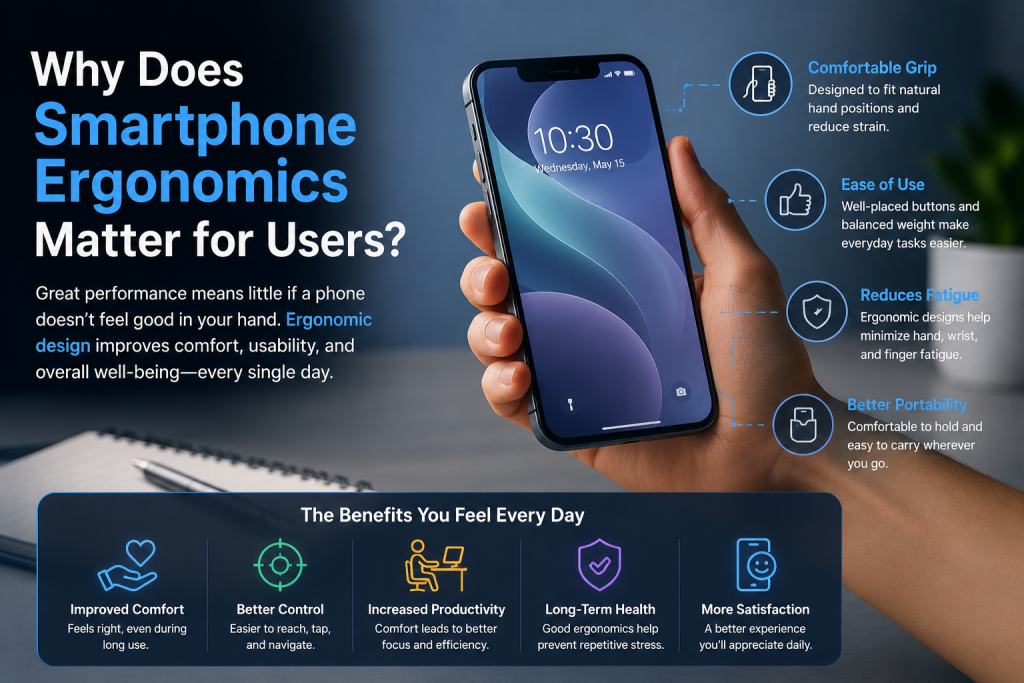
Smartphone ergonomics matters because people hold, tap, scroll, and carry their phones for hours every day. A device that feels balanced and comfortable can reduce strain on the hand, wrist, and fingers while making common tasks easier to complete. Good ergonomic design also improves confidence during one-handed use, reading, messaging, navigation, and media viewing. Instead of focusing only on processor speed or camera quality, users should also consider how a phone fits the hand, how heavy it feels over time, and whether its shape supports comfortable daily use without unnecessary effort or discomfort.
Why Should Users Consider Ergonomics Before Choosing a Smartphone?
Reducing Fatigue During Long-Term Smartphone Use
Users should consider ergonomics before buying a smartphone because comfort directly affects how the device feels during extended use. Repeated scrolling, typing, gaming, and video watching can create strain when a phone is too heavy, too wide, or awkward to hold. A better-designed device places less stress on the palm and fingers, helping users stay comfortable for longer sessions. Ergonomic choices also support better posture by reducing the need for constant grip adjustments. Over time, that can make everyday use feel noticeably easier. When a smartphone matches the user’s hand size and usage habits, it becomes less tiring to use throughout the day, especially during work, travel, or evening entertainment.
Creating a Smoother Experience Across Different Daily Scenarios
Ergonomics also matters because smartphones are used in many settings, not just while sitting still. People check messages while walking, answer calls during commutes, browse recipes in the kitchen, and read articles before bed. In each situation, a phone should feel secure, responsive, and easy to manage. A device with thoughtful proportions and accessible controls can make transitions between tasks smoother and faster. It also helps users avoid accidental drops or awkward hand repositioning. Choosing a smartphone with good ergonomic design supports everyday convenience, whether the priority is quick one-handed texting, comfortable navigation on the move, or steady handling when taking photos, making the overall experience more practical and natural.
How Does Smartphone Ergonomic Design Improve User Comfort?
Balanced Size and Weight for Easier Handling
Balanced size and weight improve comfort by making a smartphone easier to lift, hold, and carry without constant strain. A device that feels too dense can tire the hand quickly, while one with well-managed proportions usually feels more stable during daily use. The HONOR 600 illustrates this well with a 7.8mm thickness and 190g weight, a combination that supports portability without feeling overly bulky. These dimensions help the phone sit more naturally in the hand and pocket, while also reducing heaviness during extended browsing or streaming. When size and weight are carefully balanced, users gain better control, smoother movement between tasks, and a more comfortable experience during repeated handling throughout the day.

Comfortable Grip and Practical One-Handed Use
Grip plays a major role in smartphone comfort because users constantly rely on secure handling for tapping, swiping, and reaching on-screen controls. A phone that feels stable in the hand is easier to use with confidence, especially during one-handed tasks such as replying to messages or checking notifications. Design details can make a meaningful difference here. The HONOR 600 in Qatar features a matte metal frame and symmetrical large-radius corners, both of which help create a smoother, more comfortable hold. The frame can feel more controlled in the palm, while the rounded corners reduce harsh pressure points. Together, these elements support practical one-handed use and make the device feel friendlier during long periods of everyday interaction.
Which Smartphone Features Influence Ergonomic Experience?
Display Design and Viewing Comfort
Display design strongly influences ergonomic experience because users spend so much time reading, watching, and interacting with the screen. A well-designed display should feel comfortable to view and easy to reach without forcing excessive thumb stretching. Screen size must work with the overall body shape so the device remains usable rather than cumbersome. Bezel layout, corner shape, and screen proportions also affect how natural the phone feels in the hand. Good visual ergonomics are not only about image quality; they also involve reducing physical effort during repeated actions like scrolling, typing, and switching apps. When display design aligns with hand comfort and viewing ease, the smartphone becomes less demanding during long daily sessions.
Build Materials and Everyday Durability
Build materials shape ergonomic experience by affecting texture, grip security, temperature feel, and long-term durability. A phone’s surface should feel pleasant in the hand while also standing up to frequent use, pocket carry, and repeated handling. Materials that resist slipping can improve confidence when using the device on the move, while sturdy construction helps preserve the original feel of the phone over time. Durability also supports ergonomics because a device with solid structural quality is less likely to develop issues that affect handling, such as looseness or discomfort around edges. When manufacturers choose practical materials and refined finishing, users benefit from a smartphone that feels reliable, comfortable, and better suited to everyday demands.
Conclusion
Smartphone ergonomics matters because comfort influences nearly every part of daily use, from short messages to long viewing sessions. A phone that balances size, weight, grip, display design, and materials can reduce fatigue, improve control, and make common tasks feel easier. Users should look beyond headline specs and consider how the device actually feels in the hand during real-life routines. Thoughtful design choices, such as a slim profile, manageable weight, comfortable frame, and rounded corners, contribute to a better overall experience. When ergonomics is a priority, a smartphone becomes not only functional, but also more pleasant and practical to use every day.