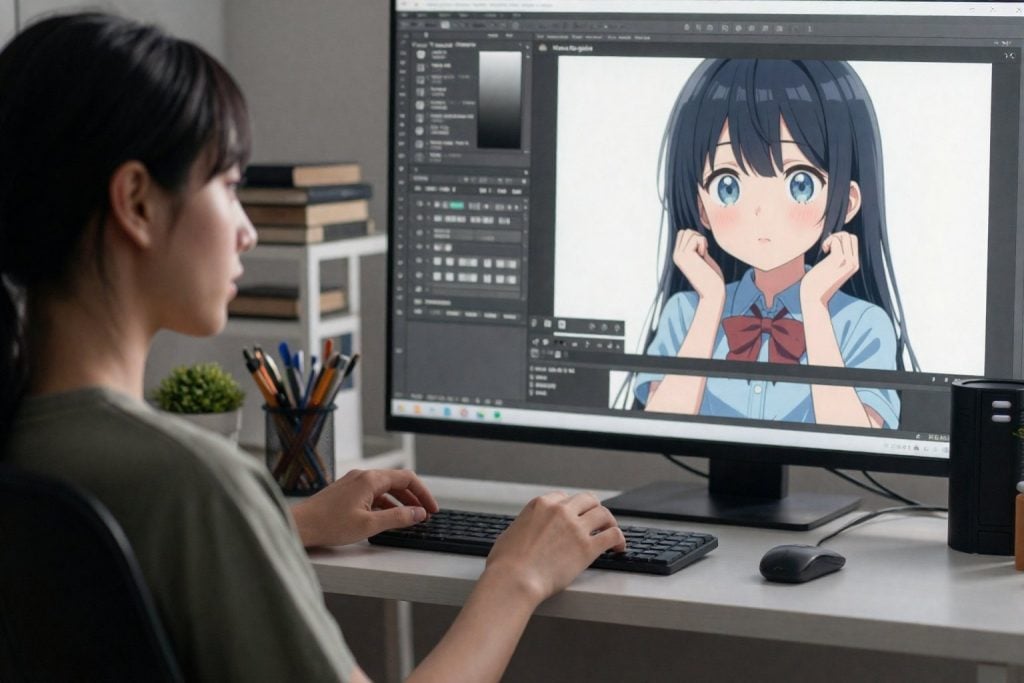
There was a point when I thought generating a strong anime-style image was the end of the workflow.
If the character looked clean, the style felt appealing, and the result was good enough to post, I considered the job done. That was true for a while, especially for profile images, concept pieces, and quick fan-facing visuals.
But over time, the way I actually used content changed.
Static images still mattered, of course, but they stopped being enough on their own. The more I worked with short-form content, social posts, and lightweight creator assets, the more obvious it became: motion changes how people respond to an image.
That does not mean every project needs full animation. It means even subtle movement can make a visual feel more alive, more current, and more usable across modern platforms.
That is also why I started relying more on a free AI anime generator at the start of the process. I did not just need a finished-looking anime image anymore. I needed a flexible base that could work in more than one format.
Why speed matters more than people admit
A lot of conversations around anime-style tools get stuck on one question: is the result perfect?
In real content work, that is often the wrong question.
The more practical question is whether the result is usable, fast to produce, and easy to adapt. In my experience, that is what makes these tools valuable for creators, fan communities, and casual visual workflows.
Most people using anime-style generation are not building a full production pipeline. They are trying to:
- create a profile image
- test an OC concept
- build a visual for a post
- make something fun and recognizable without spending hours on it
Once I started judging tools by that standard instead of by “ultimate perfection,” the workflow made much more sense.
Where anime image generation actually helps
I have found anime-style image generation especially useful when I need fast concept output.
That includes:
- avatar ideas
- character variations
- fan-post visuals
- simple promotional art for creator pages
- quick social assets that need strong style without a heavy process
The biggest benefit is not just that it saves time. It helps me get from vague idea to visible direction quickly. That matters because creative friction is often the real bottleneck.
When I can test an idea fast, I can decide faster:
- whether the concept is worth refining
- whether the character reads clearly
- whether the style fits the intended audience
That kind of speed makes a bigger difference than people expect, especially when I am trying to create multiple assets in one session.
The point where static images started feeling limited
At some stage, I realized I was getting good stills that did exactly what I asked, but they still felt incomplete in actual use.
They looked fine on their own. They just did not always feel engaging enough once I dropped them into a modern content feed.
That is not really a quality issue. It is a format issue.
A still image can communicate design. But movement adds rhythm, attention, and a sense of immediacy. Even a small amount of motion can make a character feel more present.
That became especially noticeable when I compared:
- a clean anime portrait
- the same visual with subtle movement
The second one almost always felt more alive, even when the motion was minimal.
Why I started using image-to-motion more often
This is where photo animation became genuinely useful for me.
What I like about this kind of workflow is that it does not demand a full animation process. I am not trying to build a hand-animated sequence. I am trying to make a still visual more dynamic and more platform-friendly.
That can mean:
- a subtle head movement
- a blink
- light expression change
- a gentle motion pass that makes the image feel less static
For creator-facing content, that is often enough.
In practice, I have found this especially effective for:
- animated profile visuals
- fan edits
- quick character teasers
- lightweight branded clips
- social posts that need more engagement than a still image usually gets
The most useful mindset shift I made
The biggest mistake I made early on was expecting every tool to replace high-end creative work.
That is not the right benchmark.
These workflows are not a replacement for skilled illustrators or animators when the goal is premium, highly controlled production. What they are extremely good at is reducing friction between idea and output.
That distinction helped me use them better.
Instead of asking, “Can this replace everything?” I now ask:
- Can this get me to a usable result faster?
- Can this help me test an idea before committing more time?
- Can this make simple content more engaging without making production heavier?
When the answer is yes, that is already valuable.
What works best in real fan-content workflows
The use cases that keep proving themselves for me are not the most complicated ones. They are the ones where speed, recognizability, and format flexibility matter most.
| Use case | Why it works well |
| Anime avatars | fast, stylish, easy to personalize |
| OC concept visuals | quick way to test identity and mood |
| Fan content posts | strong visual appeal without heavy production |
| Community branding | easy to build recognizable character-based assets |
| Animated social snippets | more eye-catching than stills, but still lightweight |
This is where I think these tools fit best. They are not trying to be everything. They are solving a very practical creative problem: helping people produce appealing visual content faster.
What I actually learned from using both stages together
Once I stopped treating the still image as the finish line, the workflow became much more useful.
Now I think of it like this:
- generate a solid anime-style base
- evaluate whether the image works on its own
- decide whether motion would make it more effective
- add lightweight animation when the format benefits from it
That process feels much closer to how content is actually consumed now. Some visuals are fine as static images. Some become much stronger the moment they move, even a little.
The important part is not forcing animation everywhere. It is knowing when motion adds practical value.
My final takeaway
I still like a strong still image. That has not changed.
What changed is how I think about the role of that image. For me now, it is often the starting point, not the final step.
That shift made my workflow more flexible, more efficient, and honestly more aligned with how people engage with content today. A good anime-style image is still useful. But when I need something that feels more alive, more current, and more scroll-stopping, adding motion is often the upgrade that makes the difference.
That is the real lesson I took from using these tools repeatedly: not every project needs more complexity, but a lot of projects benefit from one more step beyond the still frame.