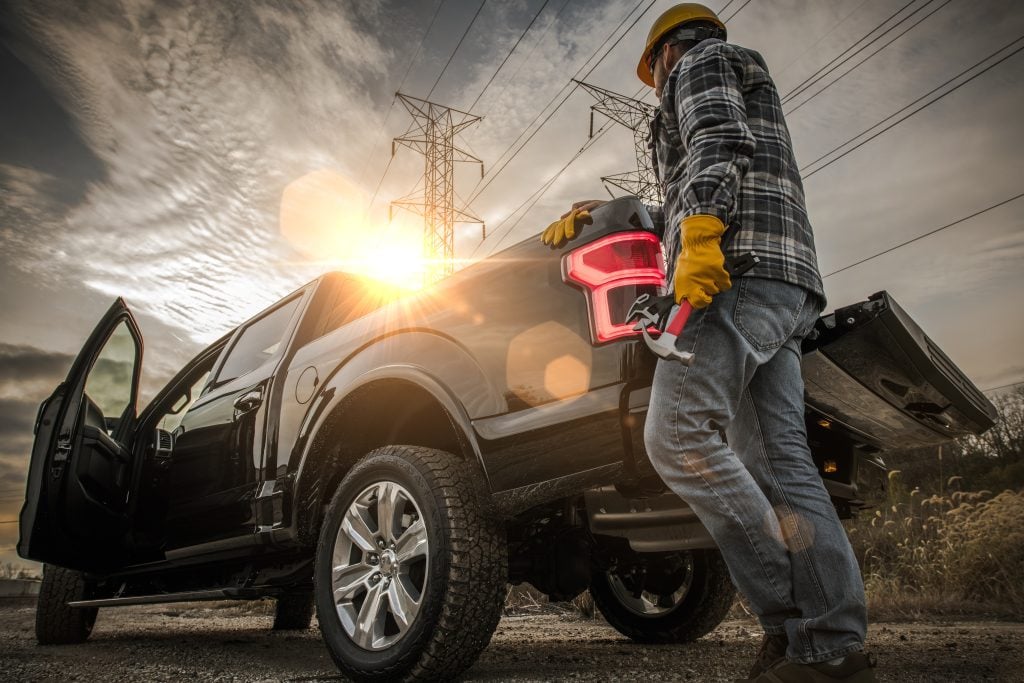
Work trucks operate in demanding environments where durability, safety, and operational efficiency matter every day. Unlike standard passenger vehicles, work trucks often carry heavy loads, tow equipment, travel through rough terrain, and function as mobile toolsites for industries such as construction, agriculture, utilities, and transportation. Because of these responsibilities, technology has become increasingly important in improving both performance and safety capabilities. Modern truck systems are designed to help drivers manage challenging workloads while reducing operational strain and improving awareness. Whether reviewing industry technology trends or researching available OK work trucks, understanding these innovations can provide valuable insight into how modern work vehicles support demanding professional tasks.
Advanced Driver Assistance Systems for Safer Operation
One of the most significant technological developments in work trucks involves advanced driver assistance systems. These technologies are designed to help drivers monitor road conditions, identify potential hazards, and improve situational awareness during daily operations.
Work trucks frequently operate in busy construction zones, industrial sites, highways, and confined delivery environments. In these situations, visibility challenges and vehicle size can increase operational complexity. Driver assistance technology helps address some of these concerns.
Modern systems often use sensors, cameras, radar, and software monitoring tools to track surrounding conditions. Features such as forward collision alerts, blind spot monitoring, and lane departure warnings help drivers recognize situations that may require corrective action.
Forward collision systems can detect potential obstacles or slowing traffic ahead. By providing warnings or limited braking support in certain situations, the technology may help reduce reaction delays.
Blind spot monitoring is particularly valuable for larger trucks because extended vehicle dimensions can create areas that are difficult to observe through mirrors alone.
Lane departure technology also supports safer driving practices by detecting unintended lane movement and notifying the driver when corrective steering adjustments may be necessary.
Although these systems do not replace driver attention or professional judgment, they provide additional layers of operational awareness that can be especially useful during long workdays or demanding driving environments.
Integrated Towing and Trailer Management Technology
Towing capability remains a core function for many work trucks. Whether transporting equipment, hauling materials, or moving specialized trailers, towing tasks place unique demands on both vehicle systems and driver skill.
Modern towing technology has evolved significantly to support safer and more controlled hauling performance.
Integrated trailer management systems are designed to simplify towing operations by helping drivers monitor and manage trailer behavior more effectively.
Key towing technologies commonly found in modern work trucks may include:
- Trailer sway control systems that help stabilize trailer movement during crosswinds or emergency maneuvers
- Tow-specific camera views that improve visibility around trailers and connected equipment
- Trailer brake controllers designed to improve braking coordination between truck and trailer
Trailer sway control technology can be especially important during highway driving or adverse weather conditions. When unstable trailer movement is detected, the system may adjust braking or power delivery to help restore stability.
Camera systems also improve towing confidence by offering additional visual perspectives that may not be available through traditional mirrors alone.
Integrated trailer brake controls support smoother stopping performance by helping coordinate braking forces between the truck and attached equipment.
These technologies contribute to safer hauling practices while reducing some of the operational complexity associated with towing heavy or oversized loads.
Powertrain Management and Performance Optimization Systems
Performance technology plays a central role in determining how effectively a work truck handles demanding tasks.
Modern work trucks depend on sophisticated powertrain management systems that regulate engine performance, transmission behavior, fuel efficiency, and torque delivery.
Electronic control systems continuously analyze operating conditions to optimize vehicle response. Instead of relying solely on mechanical adjustments, today’s trucks use digital monitoring and adaptive programming to improve performance under varying workloads.
Many trucks include selectable drive modes designed for specific applications such as towing, off-road operation, slippery surfaces, or fuel-conscious highway travel.
These settings allow drivers to tailor vehicle behavior to current job requirements.
For example, towing modes may adjust transmission shift patterns to support stronger pulling capability and improved load management. Off-road configurations may alter traction behavior, throttle response, and drivetrain engagement for improved terrain control.
Transmission technology also contributes significantly to work truck performance.
Advanced transmission systems are engineered to manage gear changes efficiently while supporting heavy loads, sustained towing demands, and variable operating conditions.
Modern powertrain systems aim to balance multiple priorities simultaneously, including durability, responsiveness, efficiency, and workload adaptability.
360-Degree Cameras and Visibility Enhancement Technology
Visibility challenges are common in work truck operation, particularly when maneuvering large vehicles through crowded worksites, urban streets, loading areas, or equipment zones.
Technology designed to improve driver visibility has therefore become an increasingly valuable component of modern truck design.
Traditional mirrors remain important, but modern camera systems expand visibility beyond conventional observation methods.
360-degree camera systems use multiple exterior cameras to create a composite visual representation of the vehicle’s surroundings.
This technology can provide drivers with improved awareness when maneuvering through confined environments or navigating around obstacles.
Visibility technology frequently supports tasks such as:
- Backing into loading docks or equipment storage areas
- Maneuvering through crowded construction or utility worksites
- Navigating tight parking zones or restricted access locations
Rearview cameras are especially useful during reversing operations because they provide direct visual access to areas that may otherwise be difficult to monitor from the driver’s seat.
Surround-view systems further improve environmental awareness by helping drivers better understand vehicle positioning relative to nearby objects.
For work environments involving equipment movement, pedestrians, material storage zones, or confined operating spaces, enhanced visibility technology can contribute to safer and more efficient vehicle control.
Fleet Connectivity, Diagnostics, and Operational Monitoring
Modern work truck technology increasingly extends beyond vehicle hardware into digital management systems.
Fleet connectivity and diagnostic tools are transforming how organizations monitor vehicle performance, maintenance needs, and operational efficiency.
Connected vehicle systems allow businesses to collect and analyze data related to truck usage, maintenance scheduling, fuel consumption, and operational patterns.
These technologies help support informed decision-making across fleet operations.
Digital monitoring systems can provide insight into factors such as engine health, service intervals, diagnostic alerts, and performance trends.
Instead of relying solely on reactive repairs after mechanical issues develop, connected diagnostics can help identify maintenance concerns earlier.
Predictive maintenance technology has become particularly important because unexpected downtime can disrupt productivity and increase operating costs.
Telematics systems also allow organizations to review driving behavior, route efficiency, idle time, and operational trends across multiple vehicles.
This level of data visibility helps businesses understand how equipment is being used and where adjustments might improve efficiency or reduce wear.
For industries that depend on reliable transportation and equipment availability, digital connectivity technology represents a major advancement in operational management.
The Growing Role of Safety and Performance Integration
One important trend in modern work truck engineering is the increasing integration between safety technology and performance systems.
Rather than functioning as isolated features, many modern technologies work together to support overall vehicle capability.
For example, towing systems interact with braking controls, powertrain management, stability technologies, and camera systems to create a more coordinated operational environment.
Similarly, driver assistance tools may communicate with steering systems, braking systems, and onboard sensors to support awareness and controlled vehicle behavior.
This integrated approach reflects the growing complexity of modern commercial vehicle engineering.
As work requirements continue evolving, manufacturers increasingly design technology ecosystems that combine safety, efficiency, connectivity, and performance into unified operational platforms.
The result is a more adaptable vehicle environment capable of responding to demanding professional workloads.
Conclusion
Work truck technology continues evolving to meet the growing demands of commercial transportation, industrial operations, and professional jobsite performance. Safety and performance systems now play a critical role in supporting vehicle capability, driver awareness, towing confidence, operational visibility, and maintenance management.
Technologies such as advanced driver assistance systems, integrated towing controls, powertrain optimization tools, enhanced camera visibility, and fleet connectivity solutions demonstrate how modern work trucks extend far beyond traditional mechanical functionality.
Understanding these five major technology categories helps illustrate how innovation is reshaping the role of work trucks across multiple industries. As technology continues advancing, future work vehicles will likely place even greater emphasis on connected systems, intelligent monitoring, operational efficiency, and integrated safety performance.

Hi! I’m Bryan, and I’m a passionate & expert writer with more than five years of experience. I have written about various topics such as product descriptions, travel, cryptocurrencies, and online gaming in my writing journey.