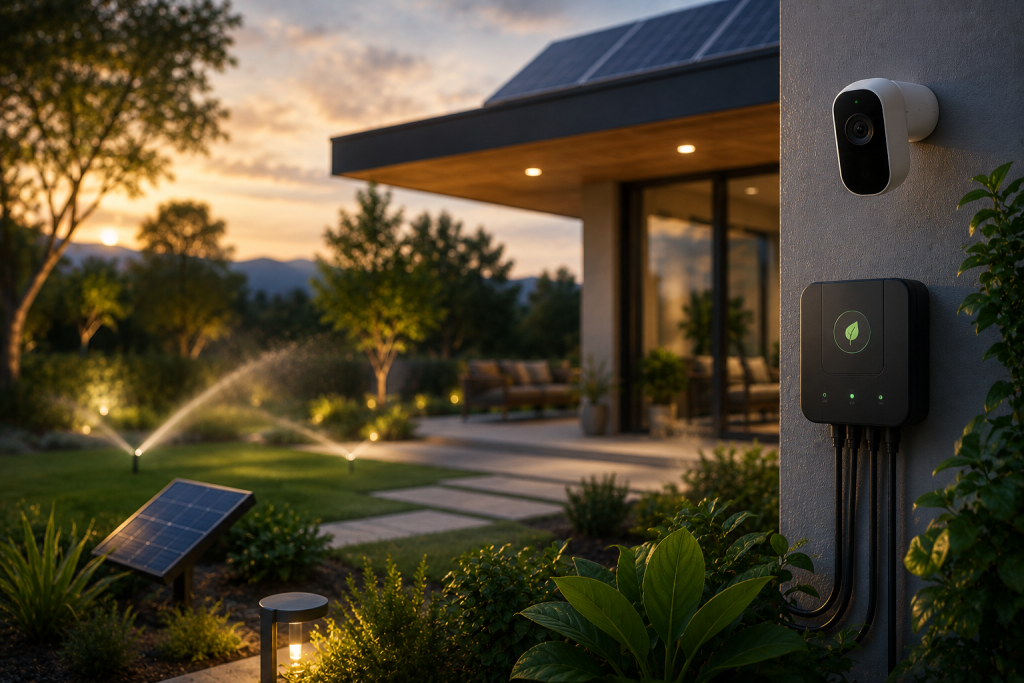
Outdoor spaces require ongoing attention, whether you’re maintaining a home landscape, managing farmland, or caring for a commercial property. Fortunately, modern outdoor technology has evolved beyond simple convenience. Many of today’s solutions help reduce labor, improve water efficiency, and lower energy consumption without sacrificing performance.
Here are seven smart upgrades that can make outdoor maintenance more efficient while delivering long-term value.
Upgrade to Professional Pressure Cleaning Equipment
Cleaning patios, driveways, equipment, fences, and exterior walls with a standard garden hose often takes far longer than necessary while using significantly more water. Professional-grade pressure washers combine higher pressure with lower water flow, allowing users to finish cleaning jobs faster while reducing overall water consumption. Hotsy notes that commercial pressure washers can dramatically reduce water usage compared with a standard hose because they clean more efficiently using fewer gallons per minute.
Businesses, farms, contractors, and property owners frequently rely on https://hotsysouthtexas.com/ for commercial-grade cleaning equipment designed for demanding applications. Choosing equipment matched to the job helps reduce cleaning time while extending the life of vehicles, machinery, and outdoor surfaces.
Install a Solar-Powered Water Pump
Moving water is one of the largest ongoing energy expenses for many rural properties, gardens, and livestock operations. Replacing traditional electrically powered systems with a solar powered water pump allows irrigation or livestock watering systems to operate using renewable energy generated throughout the day.
Solar-powered pumping systems are particularly valuable in remote locations where extending utility service would be expensive. They can reduce operating costs while providing reliable water movement for gardens, ponds, agricultural applications, and off-grid properties.
As solar panel efficiency continues to improve, these systems have become increasingly practical for both residential and commercial users.
Automate Irrigation Scheduling
Watering landscapes manually often results in overwatering, underwatering, or inconsistent schedules. Smart irrigation controllers solve this problem by automatically adjusting watering times based on weather conditions, seasonal changes, and soil moisture.
Many modern controllers connect to local weather forecasts, preventing unnecessary watering before rainfall and reducing waste during cooler periods. Over time, this automation saves both water and labor while supporting healthier plants.
Even relatively small landscapes can benefit from consistent irrigation management without requiring daily attention.
Switch to LED Landscape Lighting
Outdoor lighting improves safety, extends the usability of outdoor living spaces, and highlights landscaping after dark. Older halogen fixtures, however, consume considerably more electricity than modern LED alternatives.
A rectangle fire pit works alongside that lighting as both a heat source and a focal point, keeping a patio or seating area comfortable well past sunset in cooler months.
LED landscape lighting typically lasts much longer while requiring less maintenance and significantly reducing electricity usage. Many systems also support timers, motion sensors, or smartphone controls that prevent lights from operating unnecessarily.
Solar-powered pathway lights provide another option in locations where running electrical wiring would be difficult or expensive.
Monitor Water Usage With Smart Sensors
Water leaks often remain unnoticed until they produce visible damage or unexpectedly high utility bills. Smart outdoor flow sensors and leak detection systems monitor water usage continuously, identifying unusual consumption patterns before they become costly problems.
These systems are particularly useful for irrigation networks, outdoor plumbing, and larger properties where manual inspections are less practical.
Some models can even shut off water automatically when abnormal flow is detected, reducing waste while protecting landscaping and infrastructure.
Use Battery-Powered Outdoor Equipment
Advances in battery technology have made cordless outdoor equipment increasingly capable of replacing gasoline-powered alternatives for many routine tasks. Lawn mowers, string trimmers, hedge cutters, leaf blowers, and chainsaws now deliver strong performance while producing less noise and requiring less maintenance.
Battery-powered equipment also eliminates fuel storage, oil changes, and many engine-related maintenance requirements. For homeowners and many commercial users, these advantages translate into lower operating costs and a more pleasant working environment.
Rechargeable battery platforms further improve efficiency by allowing multiple tools to share the same battery system.
Build an Integrated Outdoor Maintenance System
The greatest savings often come from combining multiple technologies rather than relying on a single upgrade. A property equipped with efficient pressure washing equipment, automated irrigation, solar-powered water pumping, LED lighting, and battery-powered maintenance tools requires less manual labor while reducing ongoing operating expenses.
Instead of treating each purchase independently, consider how different systems work together. Cleaning equipment protects hard surfaces, irrigation automation conserves water, solar pumps reduce electricity costs, and efficient lighting minimizes energy consumption after sunset.
When outdoor technology is selected with long-term performance in mind, the result is a property that’s easier to maintain, less expensive to operate, and better prepared for future efficiency goals.