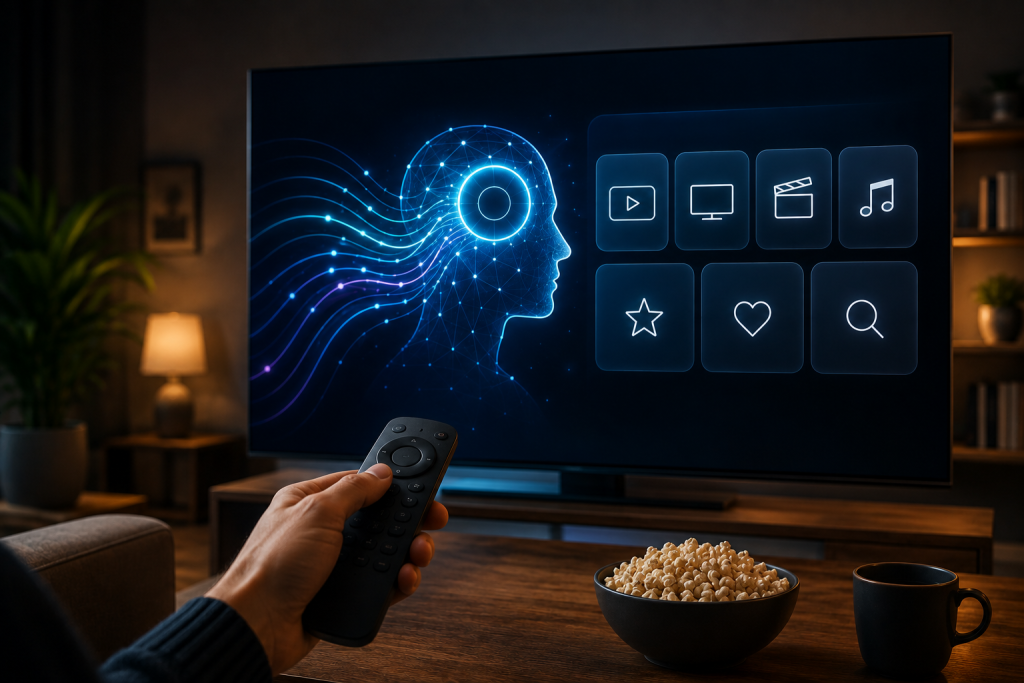
The way people find digital entertainment has shifted massively over the last decade or so. Instead of leaning on TV schedules, newspaper reviews, or just asking a friend what’s good, people now have thousands of movies, shows, songs, games, podcasts, and online videos sitting right at their fingertips at any given moment.
Artificial intelligence has quietly become a huge part of how that discovery actually happens. Streaming platforms, music services, gaming companies, social media networks — they’re all leaning more and more on AI to figure out audience behavior and serve up content that fits what each person actually wants. The result is entertainment that feels a lot more tailored to you specifically, but it also opens up some real questions around choice, privacy, and how much room is left for plain old human judgment.
AI Makes Content Discovery More Personalized
One of the most obvious ways AI has reshaped entertainment discovery is through personalized recommendations. Older recommendation systems mostly leaned on simple stuff like genre, popularity, or your viewing history. Today’s AI systems can chew through a lot more information to spot patterns in how audiences actually behave.
Take an entertainment platform, for instance — it might look at which shows someone actually finishes versus which ones they drop halfway through, what kind of characters they gravitate toward, how often they binge a certain genre. Music platforms and gaming environments do something pretty similar with listening habits or gameplay preferences.
That’s what lets platforms show completely different recommendations to different people. Two folks searching for something to watch might end up with totally different suggestions, even though they’re browsing the exact same content library. As AI-powered digital services keep evolving, platforms like Deepkold are part of that same growing ecosystem of online technology built around modern digital experiences.
Streaming Platforms Are Becoming Smarter
Streaming services made content discovery a lot easier by dumping massive libraries into one place, but too many choices creates its own headache — decision fatigue. People can scroll through titles for ten minutes straight and end up not picking anything at all.
AI-powered recommendation systems exist specifically to cut down on that problem. Instead of expecting a viewer to dig through an entire catalog on their own, platforms can surface movies and shows that already seem to line up with what that person’s into.
AI can also spot connections between pieces of content that don’t seem related on the surface. Someone watching a sci-fi series, for example, might get pointed toward a documentary, an animated series, or even a video game that shares similar themes, even though none of those obviously overlap at first glance.
This kind of approach helps audiences stumble onto content they might’ve completely missed otherwise.
Social Media Is Influencing Entertainment Discovery
Social media has turned into another major doorway into digital entertainment. Short clips, memes, trailers, reviews, creator recommendations — all of it can introduce people to movies, games, music, and shows they weren’t even looking for in the first place.
AI plays a big part in deciding which posts actually show up in someone’s feed. Algorithms look at engagement patterns and other signals to predict what’s likely to hold a person’s attention long enough to matter.
That sets off a kind of discovery loop where people keep getting exposed to new entertainment without really trying to. A short clip from a show can spark interest in the whole series, and a few seconds of a song can send someone down a rabbit hole exploring that artist’s whole catalog.
For creators and entertainment companies, that’s made algorithmic visibility a much bigger deal than it used to be.
AI Is Changing Music Discovery
Music discovery has gone through its own transformation too. Digital music platforms dig through listening histories to build personalized playlists and recommendations.
Instead of just tossing out more songs from an artist you already know, AI can pick up on similarities in rhythm, mood, instrumentation, or general listening behavior. That opens the door for audiences to stumble onto emerging artists and tracks that haven’t really broken through yet.
AI also helps make sense of absolutely massive music libraries. With millions of tracks floating around online, smart categorization makes it a lot easier for listeners to find music that actually fits a specific activity, mood, or moment.
For independent musicians, this cuts both ways. A recommendation system can potentially put an unknown artist in front of a much bigger audience, but the competition for that visibility is still brutal.
Gaming Discovery Is Becoming More Intelligent
Gaming’s going through something pretty similar. Digital storefronts stock thousands of games, and players end up leaning on recommendations just to find anything worth trying.
AI can dig into genres, playtime, purchase history, ratings, and gameplay preferences to figure out what might actually interest a given player. It can also help gaming platforms suggest titles based on what other, similar players tend to enjoy.
It goes beyond just recommendations, though. AI can shape the games themselves too. Developers are using intelligent systems to build adaptive gameplay, characters that respond more naturally, and experiences that feel personalized. As this tech keeps improving, the line between discovering a game and actually experiencing it might start blurring together.
The Benefits and Risks of AI-Driven Discovery
AI-driven entertainment discovery brings some genuinely solid benefits. Audiences find relevant content faster, smaller creators get a real shot at reaching new viewers, and massive libraries become a lot easier to actually navigate.
That said, personalization comes with its own risks too. Recommendation algorithms can end up showing people the same kind of content over and over, just in slightly different packaging. That can trap users in a narrow entertainment bubble where they rarely run into unfamiliar genres, perspectives, or creators.
Privacy’s another sticking point. Personalized recommendations only work because of data, and audiences don’t always have a clear picture of how much information is actually being collected or what it’s being used for.
That’s exactly why transparency is going to matter more and more as AI takes on a bigger role in how people find entertainment.
Human Choice Still Has a Role
Even with AI’s growing influence, human judgment still counts for a lot. Algorithms can guess at what someone might enjoy, but a prediction isn’t the same thing as actual personal taste.
People pick their entertainment for all kinds of unexpected reasons. A friend’s recommendation, a trailer that catches your eye, a performance that sticks with you, plain old curiosity — any of that can lead someone toward something an algorithm would’ve never suggested in a million years.
So the platforms that work best probably combine AI recommendations with real room for exploration. Rather than replacing human choice outright, AI works better as a tool that helps people navigate an increasingly crowded digital landscape.
The Future of Entertainment Discovery
AI’s only going to get more woven into how audiences find digital entertainment going forward. Future systems could get a lot more contextual, understanding not just what someone’s watched or listened to, but how their tastes shift and evolve over time.
Entertainment discovery might end up being less about digging through massive libraries and more about just getting smart, relevant suggestions handed to you. At the same time, people are still going to value recommendations from real humans, creative surprises, and the freedom to wander outside whatever pattern the algorithm’s picked up on.
Platforms like Deepkold are part of that broader digital environment where AI and other emerging tech keep shaping how people interact with content online.
At the end of the day, AI isn’t just changing what people watch, listen to, or play — it’s changing how they even find it in the first place. As digital entertainment keeps expanding, smart discovery tools could end up being one of the most important links between audiences and the content they’re actually looking for.

Caroline is doing her graduation in IT from the University of South California but keens to work as a freelance blogger. She loves to write on the latest information about IoT, technology, and business. She has innovative ideas and shares her experience with her readers.