We don’t deserve Ryusuke Hamaguchi.
That was my biggest takeaway after finishing All of a Sudden, the Japanese filmmaker’s first French-language film, which premiered in competition at the 79th Cannes Film Festival. There are a couple of reasons why, all of which speak to a larger cultural context in which the film is being released. The most important of all is its advocacy, or even demand, for a far more empathetic world than we’re currently living in.
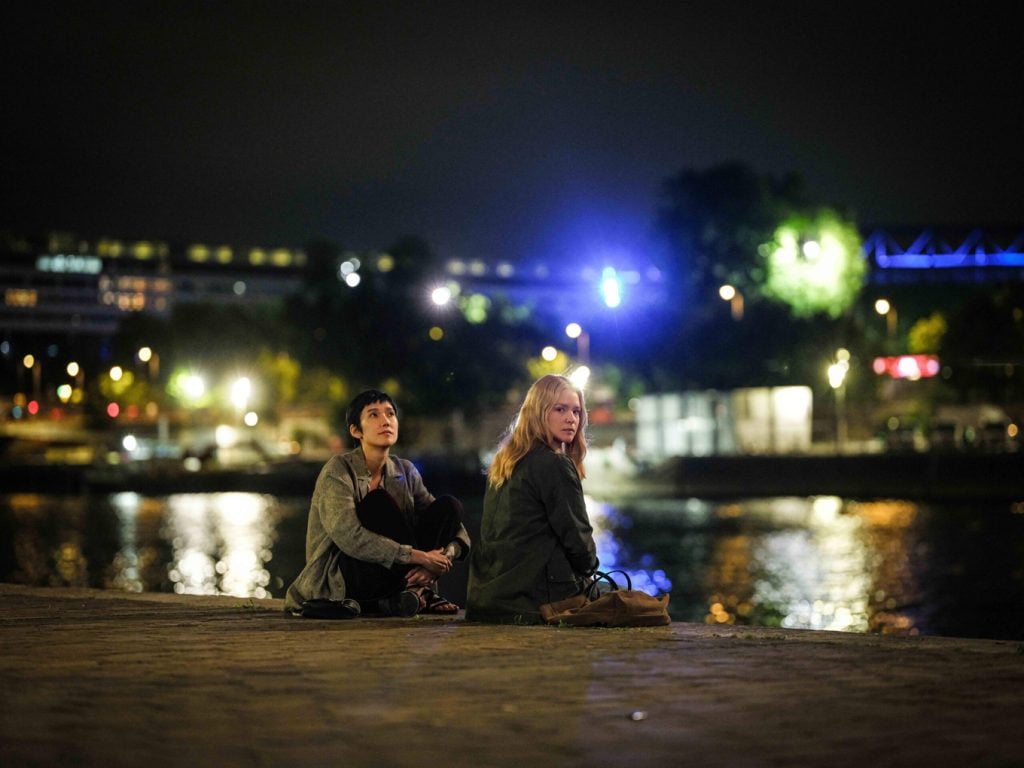
We discover that demand over the course of three-plus hours with Marie-Lou (Virginie Efira) and Mari (Tao Okamoto). Marie-Lou, the director of a nursing home in France, is trying to implement a new framework for treating patients and residents. However, she faces significant pushback from the staff, who insist the training is too labor-intensive and places an unreasonable burden on them. One day, Marie-Lou meets Mari, a Japanese playwright staging an experimental piece in town. Following the performance, Marie-Lou and Mari spend the entire night together, discussing everything from art, politics, the failures of modern capitalism and the global healthcare system, and Mari’s terminal illness.
As you can imagine, that is a lot of ground for two people to cover in a lifetime, let alone in one night. As such, Hamaguchi takes his time, giving Marie-Lou and Mari all the time they need to discuss how the wider world shapes their lives and to bond over the challenges and sacrifices they must make. There is a glimmer of self-awareness within their extended conversation, as if Hamaguchi knows that some viewers might be checking their watches. He addresses them, and those totally enraptured by Mari and Marie-Lou’s exchange, by having Mari pull out an actual whiteboard to visualize their arguments.
Besides being a charming sight gag, the whiteboard is also a vital part of their conversation, allowing Mari and Marie-Lou to clarify their worldviews and understand the larger forces that make their work and lives more difficult than necessary. Marie-Lou gains clarity about how healthcare systems place excessive strain on skilled workers, leading them to rely on tried-and-true methods of care rather than innovate as she does. Mari realizes that her terminal illness is more complicated than a failure of the body, and therefore not a singular burden she must carry alone. That whiteboard, and their entire conversation, is an act of radical empathy for themselves and each other, forging a lifelong friendship in one night.
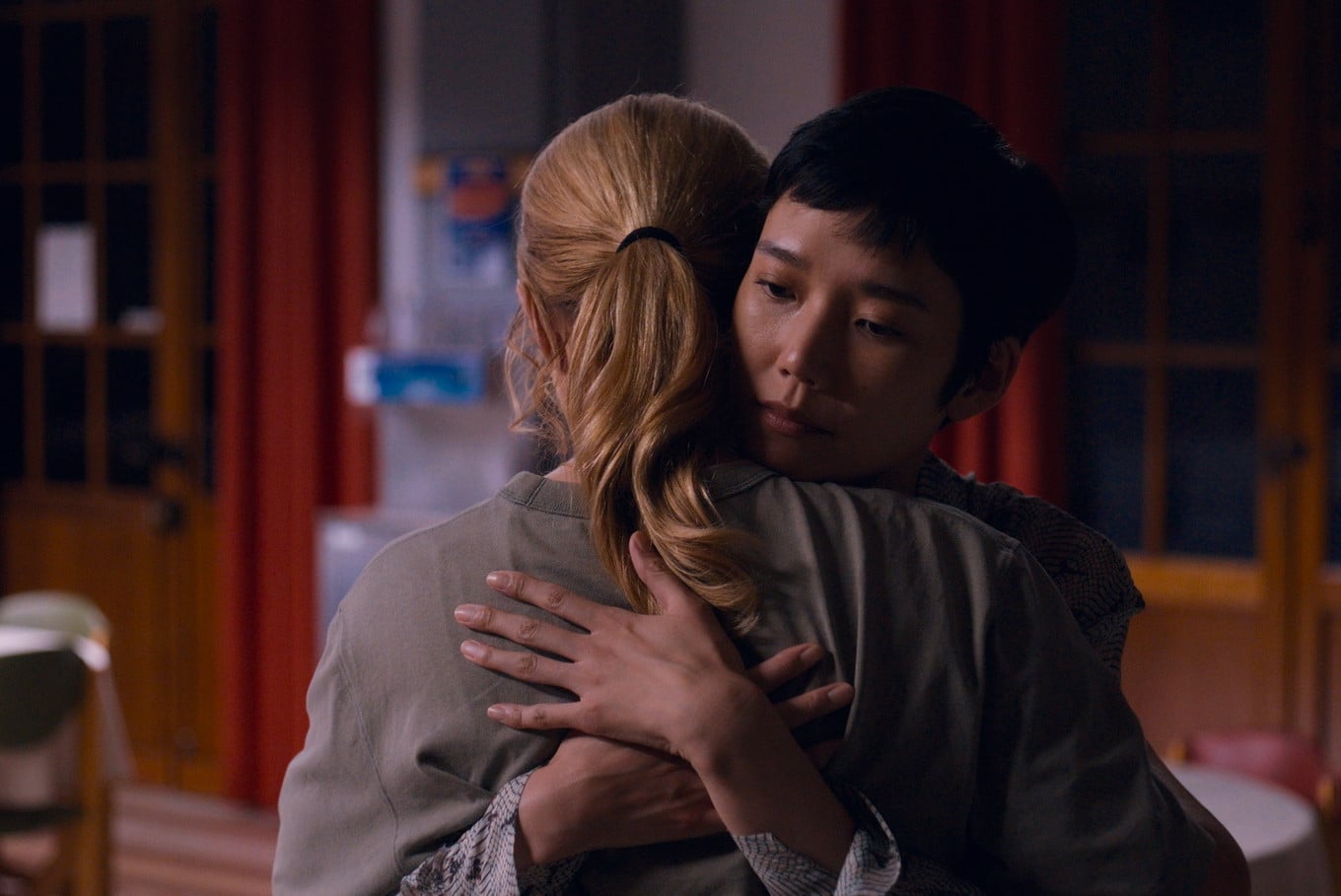
Had the film been solely dedicated to Marie-Lou and Mari’s late-night talking, All of a Sudden would’ve been a dense but worthwhile effort. Their conversation encompasses roughly two-thirds of the film, with the final act showing them putting their work into practice. Marie-Lou and Mari find new leases on life and support each other through the consequences of those changes. Mari was fine to succumb to her illness alone, but Marie-Lou insists on accompanying her to Japan, at least to get her settled. Mari realizes that, even if she can’t rely on our systems, she can rely on people without feeling like a burden. Marie-Lou is similarly reinvigorated, but in service of her work at the nursing home. She still believes in progress, but she understands that she must bring skeptics along on the journey for the sake of patient health and healthcare workers’ well-being.
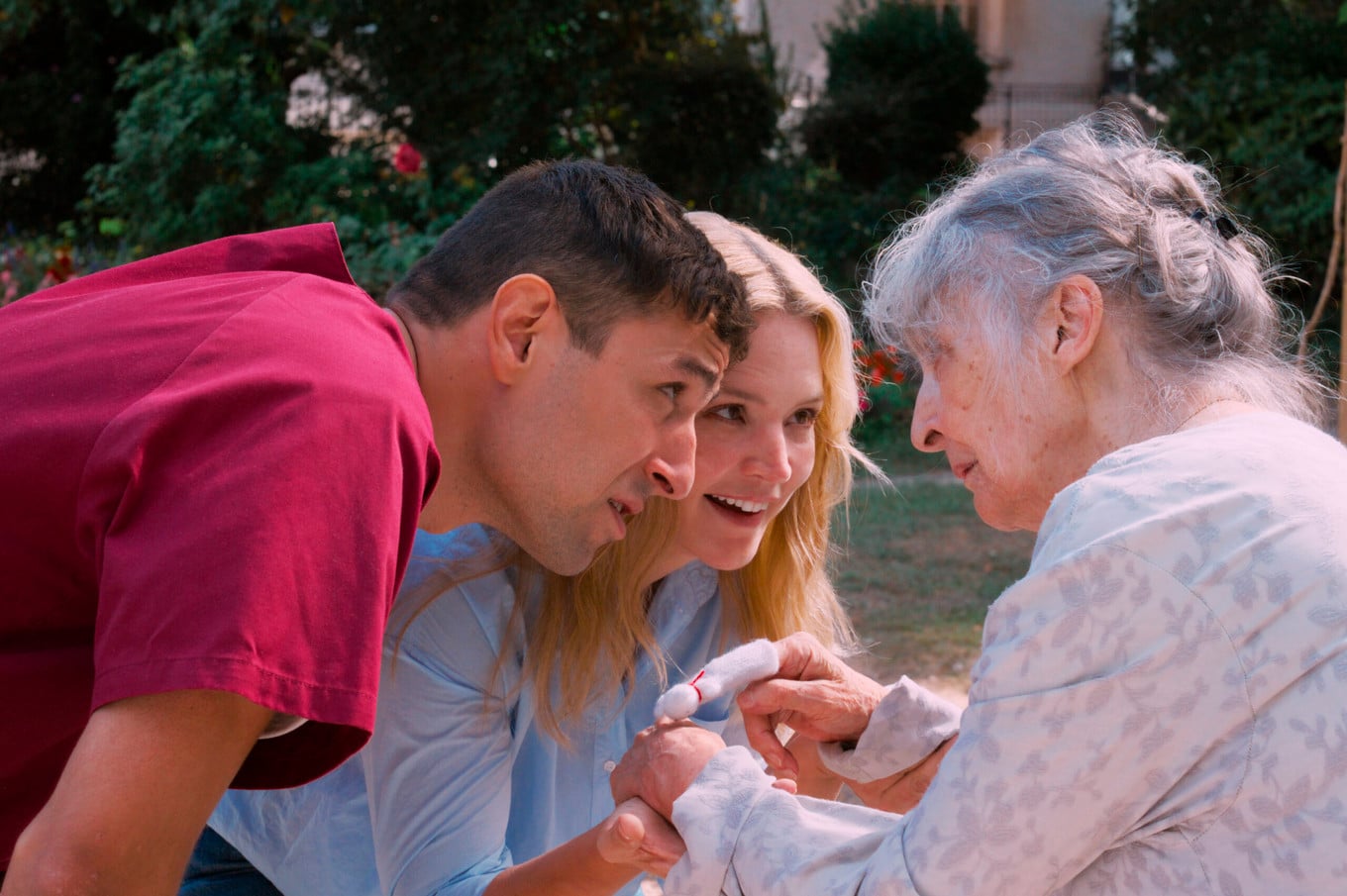
These realizations are followed by scenes that are breathtakingly gracious and empathetic. Back at the nursing home, Marie-Lou’s gentler, human-centered approach to care management has a profound effect on the community, including her perceived critics. She ultimately discovers that everyone – not just the patients but also the nurses and administrators – wants and deserves to be seen. Out of context, seeing a class of elderly patients rubbing each other’s feet in the grass probably looks strange or disturbing to polite sensibilities. In the wake of Mari and Marie-Lou’s painstaking deconstruction of the failures of our social systems, and the acknowledgment of a new well of empathy to fill the spaces made by those failures, those scenes are quietly, beautifully devastating.
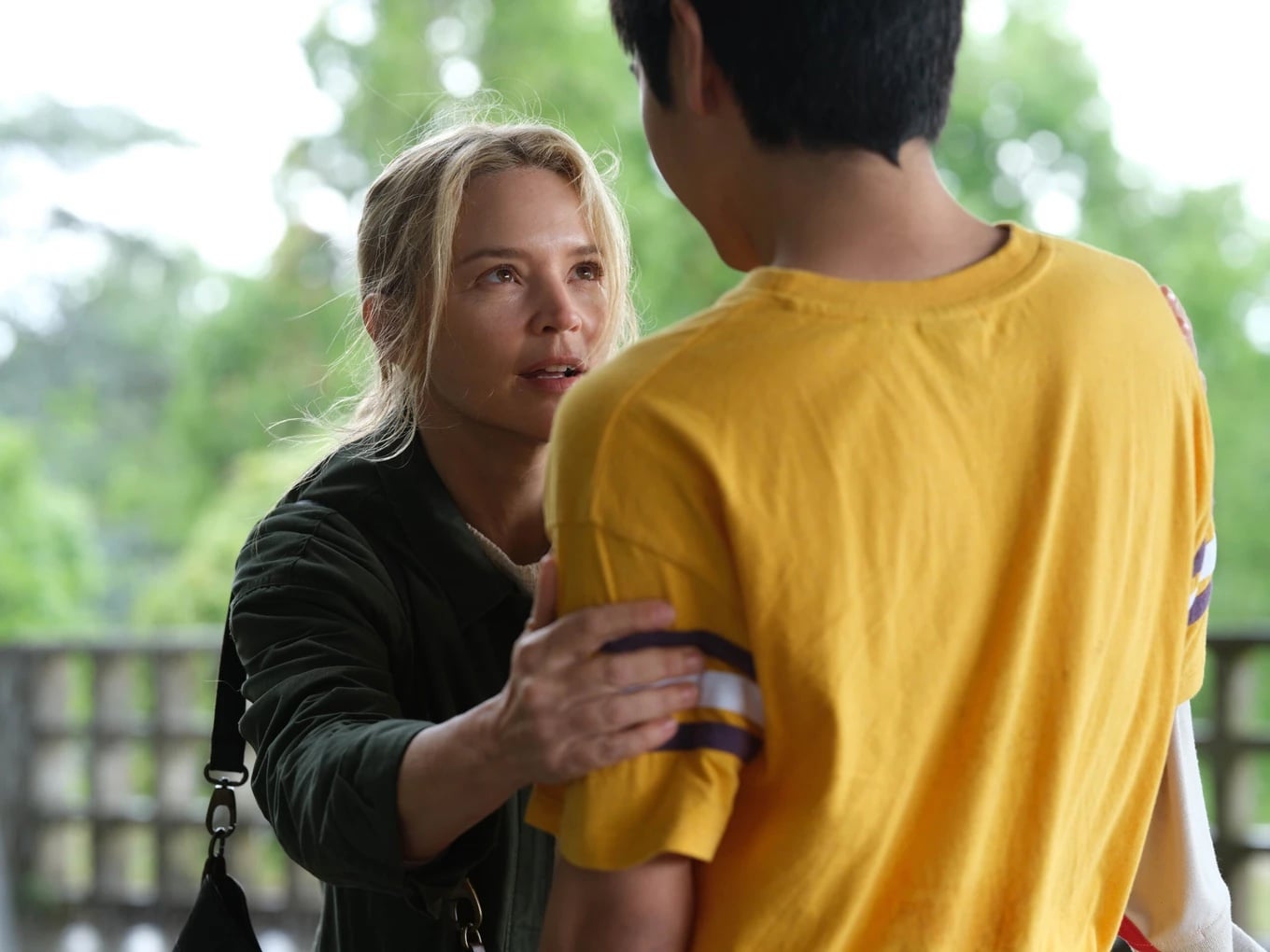
Tao Okamoto and Virginie Efira, who both received Best Actress awards at Cannes, bear a hefty amount of responsibility for the tears shed while watching All of a Sudden. Their performances are masterclasses of quiet contemplation and slow, evolving warmth. One of the joys of Mari and Marie-Lou’s conversation is tracking how they open up to each other. Okamoto’s eyes convey a remote politeness that melts into glass-spun fragility as Mari realizes that Marie-Lou is someone whom she can trust with her most vulnerable thoughts about her illness. Efira, on the other hand, carries Marie-Lou’s world weariness and palpable desire for transformative change equally on her face and in her movements, releasing the tension as Marie-Lou discovers an intellectual and social soulmate in Mari. They complement each other with soft, sparkling chemistry, making us believe that the universe had been waiting to unite them.
In a very sentimental, and perhaps even naive, way, All of a Sudden itself feels like a message of faith delivered at the precisely right moment. Hamaguchi lays out an easily digestible, powerful excavation of how our systems have failed us. Instead of wallowing in the cynicism and misery that such a realization might evoke, he offers us a more empathetic, humanistic path forward. It’s a startling gift, one that I wish I could believe people would receive with open arms.
Even if we don’t deserve Hamaguchi, it would serve us to try to be worthy of him.
All of a Sudden held its World Premiere in the Competition section of the 2026 Cannes Film Festival.
Director: Ryusuke Hamaguchi
Screenwriters: Ryusuke Hamaguchi, Léa Le Dimna
Rated: NR
Runtime: 196m
Before we let you go, we have officially launched our merch store! Check out all of our amazing apparel when you click here and type in GVN15 at checkout for a 15% discount!
For major deals and money off on Amazon, make sure to use our affiliate link! If you are purchasing any of the latest and best in physical media at MovieZyng, you can support us using our affiliate link.
In a very sentimental, and perhaps even naive, way, All of a Sudden itself feels like a message of faith delivered at the precisely right moment. Hamaguchi lays out an easily digestible, powerful excavation of how our systems have failed us.

A late-stage millennial lover of most things related to pop culture. Becomes irrationally irritated by Oscar predictions that don’t come true.