TL;DR
- Great television does not always translate into enough viewers to survive.
- Firefly, Freaks and Geeks and Mindhunter remain among television’s most frustrating premature endings.
- Several shows on this list ended with major storylines unresolved, while others barely had enough time to reveal their potential.
- Some eventually received follow-up movies or revival discussions, but their original cancellations still cut promising runs short.
Nothing tests a television fan’s patience quite like becoming invested in a series only for the network or streaming service to pull the plug.
Sometimes the warning signs are obvious. Ratings fall, budgets rise and everyone begins preparing for the inevitable. Other cancellations arrive like a slap in the face, ending critically acclaimed shows in the middle of ambitious stories and leaving viewers with cliffhangers that may never be resolved.
The streaming era has made the problem even more frustrating. A show can appear popular, dominate online conversations and still disappear after one or two seasons because the numbers behind the scenes did not satisfy whatever equation a platform was using.
For this ranking, we’re focusing on series that were genuinely cut short rather than shows that simply reached a controversial planned conclusion. Quality matters, but so does lost potential. How much more story did the series clearly have left to tell?
These are the shows whose cancellations still hurt.
15. Archive 81
Archive 81 arrived on Netflix with a mystery practically designed to consume an entire weekend. Mamoudou Athie’s Dan Turner is hired to restore damaged videotapes created by documentary filmmaker Melody Pendras, played by Dina Shihabi. The deeper he digs into the tapes, the further the series drifts into cults, supernatural rituals and realities that do not behave the way they should.
Then, just as the finale completely rearranged the possibilities for Season 2, Netflix cancelled it.
One season is enough to appreciate the strange atmosphere and slow-building dread, but nowhere near enough to satisfy the questions created by the ending. Horror television often struggles to maintain mystery over several years. Archive 81 never even got the opportunity to try.
14. The Dark Crystal: Age Of Resistance
Building an enormous fantasy series almost entirely around puppetry in the age of CGI already felt like a minor miracle. Making it this good was even more impressive.
The Dark Crystal: Age of Resistance returned to the world Jim Henson and Frank Oz created in 1982 while expanding Thra into something far richer. The craftsmanship was extraordinary, but the show also succeeded because the characters and political struggle underneath all that technical wizardry worked.
Netflix cancelled it after one season.
The original movie means we broadly know where the larger story eventually leads, but that does not make losing the journey any less frustrating.
13. My So-Called Life
Claire Danes’ Angela Chase only received 19 episodes to become one of television’s defining teenage characters.
My So-Called Life approached adolescence without turning every emotion into a joke or treating teenagers as miniature adults. Crushes felt catastrophic. Friendships changed without warning. Parents were complicated people rather than obstacles waiting for their children to leave the house.
Its influence lasted far longer than its actual run. Countless coming-of-age dramas that followed benefited from territory this series explored with unusual honesty in 1994.
One season was enough to make it important. Imagine what several more might have done.
12. GLOW
The cancellation of GLOW was particularly painful because the series had already been renewed for a fourth and final season.
Alison Brie, Betty Gilpin and the ensemble had spent three seasons turning a fictionalized version of the Gorgeous Ladies of Wrestling into far more than a comedy about outrageous wrestling gimmicks. The show explored ambition, friendship, exploitation, identity and the complicated reality of trying to build a career in entertainment.
Production on the final season began before the COVID-19 pandemic changed everything. Netflix ultimately reversed the renewal, leaving a series that knew it was approaching its ending without the opportunity to actually reach it.
That somehow feels worse than never getting renewed at all.
11. Santa Clarita Diet
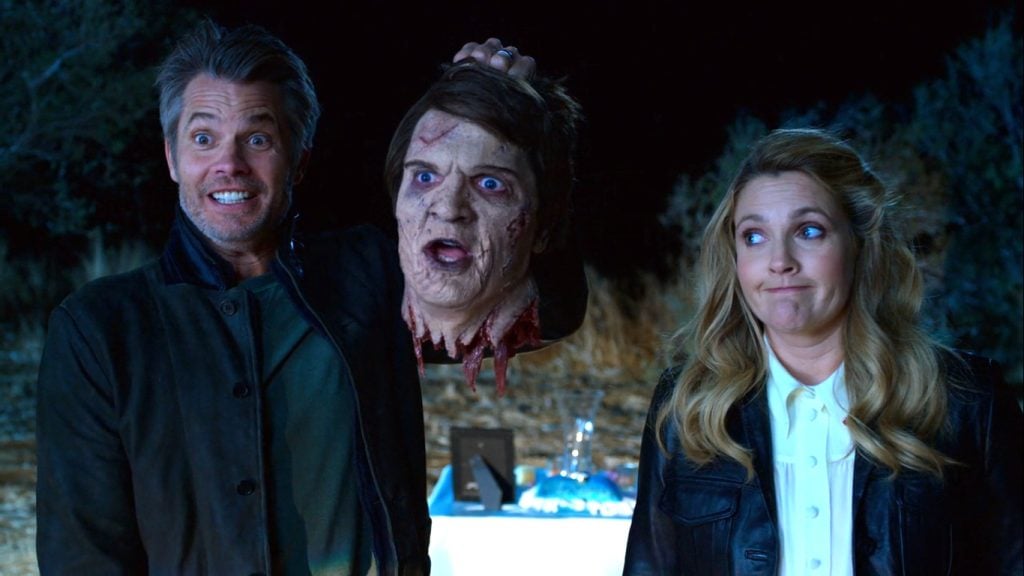
Drew Barrymore becoming an undead suburban real estate agent should have been a gimmick that wore out quickly.
Instead, Santa Clarita Diet developed into a wonderfully bizarre marriage comedy built around Sheila and Joel Hammond trying to maintain normal family life while Sheila develops an increasingly inconvenient appetite for human flesh.
Barrymore and Timothy Olyphant were the secret weapon. The violence could become absurd, but their commitment to the Hammonds’ marriage gave the entire thing an unexpectedly sweet center.
Then Season 3 ended with a major development involving Joel, and Netflix cancelled the series.
The Hammonds deserved to become weird undead suburban soulmates together. We deserved to watch it happen.
10. The OA
Whether you loved The OA or had absolutely no idea what you were watching, it was difficult to accuse the series of lacking ambition.
Brit Marling and Zal Batmanglij built a science-fiction mystery involving near-death experiences, alternate dimensions, mysterious movements and storytelling that became progressively less interested in conventional boundaries. Season 2’s ending pushed that ambition even further with a meta twist that completely changed the rules.
Then it stopped.
The creators had envisioned a larger multi-season story, which makes the cancellation particularly brutal. The OA was not wrapping things up when Netflix ended it. It felt like it had just opened another door.
9. Wonderfalls
Bryan Fuller could probably populate half of a cancelled-too-soon list by himself.
Wonderfalls follows Jaye Tyler, an overeducated and underachieving gift-shop employee whose life becomes considerably stranger when animal figurines begin talking to her and directing her toward people who apparently need help.
The premise was eccentric even by 2004 standards, and Fox aired only a handful of episodes before cancelling it. The complete produced season later found an audience on DVD, where viewers could discover how quickly the show had developed its wonderfully strange identity.
Television eventually became much friendlier to oddball genre comedies. Wonderfalls simply arrived before that door was fully open.
8. Terriers
Sometimes a terrible title really can hurt a great show.
Terriers had nothing to do with dogs. Instead, Donal Logue and Michael Raymond-James played an unlicensed private-investigation duo digging through corruption in Southern California while carrying enough personal problems to fill another series entirely.
The show blended mystery, character drama and dark comedy without drawing much of an audience during its 2010 FX run. By the time enthusiastic reviews and word of mouth started convincing people to give it a chance, the damage had already been done.
It lasted 13 episodes.
That is barely enough time to properly appreciate how good Donal Logue was in it.
7. Pushing Daisies
Pushing Daisies looked like almost nothing else on television.
Lee Pace played Ned, a pie-maker who could bring dead people back to life with a touch. Touch them again and they returned to death permanently. Leave them alive longer than one minute and somebody else nearby had to die instead.
That wonderfully specific rule became the basis for murder mysteries, romance and one particularly complicated relationship after Ned resurrected childhood sweetheart Chuck and discovered they could never touch again.
The writers’ strike shortened its first season, while declining ratings eventually ended the second. Even a hurried epilogue could not replace the years of possibilities that Bryan Fuller’s candy-colored world appeared capable of supporting.
6. Rome
Before enormous fantasy television budgets became relatively common, HBO and the BBC attempted to recreate ancient Rome with spectacular production values.
The result was one of television’s great historical dramas.
Kevin McKidd and Ray Stevenson provide the ground-level perspective as soldiers Lucius Vorenus and Titus Pullo, while the series moves through Julius Caesar’s rise, political betrayal, civil war and the birth of the Roman Empire.
The enormous cost of production contributed to the decision to end the series after two seasons, forcing years of intended history into a much faster conclusion than originally imagined.
Rome still works as a completed story. The frustration comes from realizing how much richer that story might have become with the time originally envisioned for it.
5. Hannibal
It remains slightly astonishing that NBC aired Hannibal at all.
Bryan Fuller’s interpretation of Thomas Harris’ characters was visually extravagant, deeply disturbing and far more interested in psychological obsession than conventional network crime television. Mads Mikkelsen’s Hannibal Lecter and Hugh Dancy’s Will Graham developed one of television’s strangest relationships across three increasingly operatic seasons.
The third-season finale provides enough emotional and thematic resolution that viewers can treat it as an ending.
But Fuller clearly had more territory available, particularly with the possibility of eventually reaching The Silence of the Lambs.
Considering how thoroughly Hannibal transformed familiar material, losing that possibility still feels like an enormous missed opportunity.
4. Deadwood
Deadwood did eventually receive something most cancelled series never get: another chance to say goodbye.
HBO’s western originally ended in 2006 after three seasons, leaving David Milch’s densely written portrait of the South Dakota settlement without the conclusion it deserved. Timothy Olyphant’s Seth Bullock and Ian McShane’s Al Swearengen had helped build one of television’s richest communities around them, filled with characters who could be hilarious, vicious and unexpectedly moving within the same conversation.
Thirteen years later, Deadwood: The Movie finally reunited the characters and provided some closure.
We are grateful it happened.
We still wish the original series had been allowed to finish properly the first time.
3. Mindhunter
The most frustrating thing about Mindhunter is how much unfinished business is sitting right there on the screen.
Jonathan Groff and Holt McCallany play FBI agents Holden Ford and Bill Tench as they help develop the behavioral methods that would eventually influence modern criminal profiling. Their interviews with incarcerated murderers are often more unsettling than traditional crime-show violence because David Fincher and the show’s other filmmakers understand the power of simply letting two people sit across from each other and talk.
Season 2 expands the scope through the Atlanta child murders while continuing to tease Dennis Rader, the BTK Killer, in scenes seemingly designed for a much longer story.
That story never arrived.
Fincher later acknowledged the difficult economics surrounding such an expensive series relative to its audience. From a business perspective, that explanation may make sense.
From the perspective of somebody who watched those BTK scenes waiting for a payoff, it remains brutal.
2. Freaks And Geeks
One season.
Eighteen episodes.
That was apparently all Freaks and Geeks needed to become one of television’s most beloved coming-of-age shows.
Paul Feig’s series follows Lindsay and Sam Weir through high school in 1980 Michigan, surrounded by characters played by a remarkable young cast that included Linda Cardellini, John Francis Daley, James Franco, Seth Rogen, Jason Segel, Busy Philipps and Martin Starr.
The show’s gift was understanding that adolescence can be humiliating without turning its characters into punchlines. Lindsay could make terrible decisions without becoming a bad person. Sam’s problems could seem trivial to adults while remaining enormous to him. Parents were capable of being embarrassing and completely right at the same time.
NBC struggled with scheduling and ratings, and the series never received the time necessary to build a large audience.
The irony is that the people who discovered it afterward never seemed to stop talking about it.
1. Firefly

There may never be a more appropriate answer to the phrase “cancelled too soon.”
Joss Whedon’s Firefly combined a space opera with a western and centered it around Captain Malcolm Reynolds and the crew of the Serenity, a group of smugglers, fugitives and outsiders simply trying to keep flying after losing a war.
Fox’s handling of the series has become almost as famous as the show itself. Episodes aired out of intended order, the original pilot was not used to introduce viewers to the story and the series was cancelled after only 14 episodes had been produced.
Yet those episodes created an extraordinarily durable fanbase.
Nathan Fillion’s Mal, Alan Tudyk’s Wash, Gina Torres’ Zoe, Summer Glau’s River and the rest of the Serenity crew felt like they were only beginning to reveal their histories when the television run ended.
Fans eventually helped generate enough enthusiasm for Universal to finance the 2005 movie Serenity, which answered several major questions and provided considerably more closure than most cancelled shows receive.
But the movie also demonstrates exactly what was lost.
Storylines that could have unfolded gradually across several seasons had to be compressed into two hours. Characters who should have had years together received a final adventure instead.
More than two decades later, people still talk about Firefly as though somebody might reverse the cancellation tomorrow.
Few television shows have ever accomplished so much with so little time.
That makes it our pick for the greatest TV show cancelled before its time.
Why Do Great TV Shows Get Cancelled?
Quality has never guaranteed survival.
Traditional television depended heavily on ratings, advertising and whether a series could hold enough of the audience watching the programs around it. Streaming added entirely different calculations involving completion rates, subscriber growth, production costs and whether another season would provide enough value to justify increasingly expensive contracts.
That is why this list contains everything from a tiny cult comedy to an elaborate historical epic. A show can be cancelled because too few people watched it, because too much money was required to make it or simply because the business circumstances surrounding it changed.
None of that makes reaching an unresolved series finale any less painful.
Sometimes Cancellation Isn’t Really The End
There is at least one reason for optimism.
Firefly eventually became Serenity. Deadwood received a concluding movie more than a decade after its cancellation. Other seemingly dead shows have returned after years away because audiences refused to forget them.
That does not mean every cliffhanger will eventually receive an answer. In most cases, cancelled means cancelled.
But television history has repeatedly demonstrated that passionate audiences can keep a show alive culturally long after a network has stopped paying for it.
Sometimes the cruelest thing about a series ending too soon is imagining everything we never got to see.
Sometimes that imagination is exactly why we never stop talking about it.

DC Fanboy! Superman is the greatest comic book character of all time. Favorite movies are Man of Steel, Goonies, Back To the Future