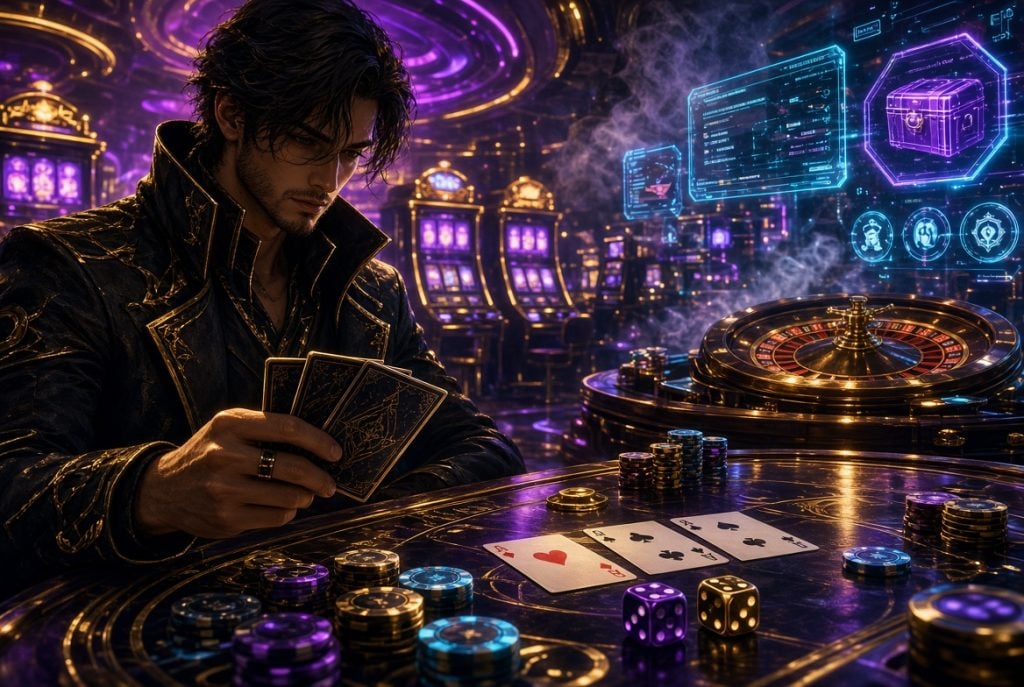
Ever notice how much your favorite RPG feels like a slot machine sometimes? That loot drop animation, the spinning wheel of rewards, the little dopamine hit? None of that is accidental.
Game designers borrowed heavily from casino psychology for decades. Chance-based rewards keep players engaged far longer than pure skill-based systems ever could.
This piece dives into games that embrace casino mechanics openly, plus a few that hide them cleverly. Grab a controller and let’s break down why chance keeps us hooked.
Why Casino Mechanics Work So Well in Games
Randomness triggers something powerful in our brains. Unpredictable rewards release dopamine more effectively than predictable ones, according to behavioral psychology research.
Games exploit this constantly. A guaranteed reward feels nice. An uncertain reward feels exciting, even addictive. Developers know this, and they build systems around it deliberately.
Think about slot machines for a second. The uncertainty of each pull keeps players pulling again. Video games replicate that exact feeling through loot boxes, card packs, and random encounters.
A few psychological principles borrowed directly from casinos:
- Variable ratio reinforcement, where rewards appear unpredictably
- Near-miss effects that make losses feel almost like wins
- Visual and audio cues that amplify excitement during reveals
- Sunk cost feelings that encourage continued play
These principles work whether you are pulling a lever or opening a digital chest.
Top Games Featuring Card Tables and Slots Directly
Some games embrace casino mechanics completely, offering literal card tables and slot machines within their virtual worlds. These titles wear their inspiration proudly.
Red Dead Redemption 2 includes full poker, blackjack, and dominoes mini-games. Players can spend hours at virtual tables instead of the main story missions.
Fallout: New Vegas turns the entire setting into a gambling paradise. Casinos scattered across the map offer slots, blackjack, and roulette, complete with in-world currency systems.
Yakuza games feature entire arcades dedicated to slot machines, mahjong, and card games. Series fans often spend more time gambling virtually than progressing the main story.
Here is a quick comparison of these titles and their gambling depth:
| Game | Casino Features | Depth of Integration |
| Red Dead Redemption 2 | Poker, blackjack, dominoes | Moderate, optional content |
| Fallout: New Vegas | Slots, blackjack, roulette | Deep, tied to main setting |
| Yakuza series | Slots, mahjong, card games | Extensive, dedicated venues |
| GTA Online | Diamond Casino & Resort | Extensive, ongoing content |
These games prove casino mechanics can stand alone as legitimate gameplay, not just background flavor.
Loot Boxes vs. Traditional Gambling: What’s the Difference?
This question sparks endless debate online. Loot boxes technically involve real money and randomized rewards, which sounds suspiciously close to gambling itself.
Traditional gambling involves direct monetary payout potential. You bet money hoping to win money back. Loot boxes typically offer in-game items instead of cash rewards. Online casino platforms represent the more traditional side of this comparison, with services such as Fair Crown offering digital versions of established casino entertainment for adult players.
However, some games blur this line further. Skin trading markets let players convert digital items into real currency, creating a gray area regulators still struggle to define clearly.
Countries have responded differently to this challenge:
- Belgium banned certain loot box mechanics entirely in 2018
- The Netherlands followed with similar restrictions shortly after
- The United States largely left regulation to individual states
- The United Kingdom continues reviewing potential legislation
This patchwork of rules shows how unprepared regulators were for gaming’s evolution into gambling-adjacent territory.
Games That Hide Casino Mechanics Cleverly
Not every game announces its gambling roots openly. Some hide chance-based systems behind cleverly disguised gameplay loops.
Mobile gacha games like Genshin Impact use randomized character pulls disguised as collection mechanics. Players spend real money hoping to unlock rare characters, functionally identical to slot pulls.
Card-based roguelikes, such as Slay the Spire, use randomized card rewards after each battle. The excitement of a rare card drop mirrors casino card game psychology almost perfectly.
Battle royale games often include randomized cosmetic crates. Players purchase keys hoping for rare skins, echoing traditional loot box systems from earlier gaming eras.
Esports and the Rise of Skin Betting
Competitive gaming created its own gambling ecosystem, separate from traditional loot boxes entirely. Skin betting emerged as a massive, largely unregulated industry within esports culture.
Players trade cosmetic items with real monetary value on third-party websites. Some platforms allow users to wager these skins directly on professional match outcomes, functioning almost identically to sports betting.
Counter-Strike became ground zero for this phenomenon. Rare weapon skins sometimes sell for thousands of dollars, creating an entire secondary economy built around chance-based drops and trading.
Regulators struggled significantly with this gray area for years. Skins technically are not currency, yet their real-world value made betting platforms functionally identical to traditional gambling sites.
A few notable developments within skin betting culture include:
- Major lawsuits targeting unlicensed skin gambling platforms
- Valve cracking down on third-party trading integrations
- Increased scrutiny from gambling commissions worldwide
- Growing awareness among younger players about associated risks
This entire ecosystem developed almost accidentally, showing how quickly gaming economies can create genuine gambling markets without traditional oversight.
How Game Designers Test Chance-Based Systems
Building these systems requires serious testing before launch. Studios run extensive internal simulations to calibrate drop rates and ensure rewards feel satisfying without becoming predatory.
Data teams track player spending patterns closely after launch too. If certain mechanics cause unusually high spending among small player segments, developers often adjust systems to reduce potential harm.
Playtesting sessions specifically measure emotional response to near-misses and rare drops. Studios want excitement without crossing into genuinely manipulative territory that damages player trust long term.
Some methods studios use when testing these systems:
- Internal simulations modeling thousands of virtual pulls
- Focus groups measuring emotional response to reward reveals
- Post-launch spending pattern analysis across player segments
- A/B testing different drop rate percentages before finalizing
This careful calibration explains why some games feel rewarding while others feel exploitative, despite using remarkably similar underlying mechanics.
Balancing Fun and Ethical Design
Developers face real pressure regarding these mechanics now. Players increasingly demand transparency around odds and spending limits within games.
Some companies responded proactively. Blizzard, for example, now displays exact drop rates for loot boxes across several titles. This transparency helps players make informed spending decisions.
Age ratings also shifted because of these concerns. Several rating boards now flag games containing randomized purchase mechanics, warning parents about potential gambling-adjacent content.
A few positive changes emerging across the industry:
- Mandatory odds disclosure in several major markets
- Spending caps built into some mobile game platforms
- Parental control options targeting loot box purchases
- Growing player advocacy against predatory monetization
These changes suggest the industry recognizes genuine ethical concerns, even if progress remains slow and inconsistent.
Community Reaction: When Players Push Back
Gaming communities have not stayed silent about these mechanics. Several high-profile backlash moments forced developers to rethink monetization strategies entirely.
Star Wars Battlefront II remains the most cited example. Public outrage over pay-to-win loot boxes forced EA to remove microtransactions temporarily, just days before the game’s official launch.
Reddit communities dedicated to gaming ethics have grown substantially too. Members actively track and expose questionable monetization practices, sometimes influencing developer decisions through sheer public pressure.
Streamers and content creators play an increasingly important watchdog role as well. Popular personalities calling out predatory mechanics can meaningfully damage a game’s reputation within days of release.
What This Means for the Future of Gaming
Chance-based mechanics are not disappearing anytime soon. They generate massive revenue, and players clearly enjoy the excitement they provide.
Expect tighter regulation across more countries within the next few years. Governments increasingly view certain loot mechanics as functionally identical to traditional gambling.
Developers will likely continue innovating creative alternatives too. Battle passes, cosmetic-only rewards, and skill-based progression systems already offer engagement without pure chance dependency.
Final Thoughts
Casino mechanics found their way into gaming because they simply work. That unpredictable reward loop taps directly into how our brains process excitement and anticipation.
Whether you enjoy a straightforward blackjack table in Red Dead Redemption 2 or a gacha pull in a mobile title, the psychology stays remarkably similar. Chance keeps us engaged.
The real question moving forward involves balance. Games can embrace exciting randomness without exploiting players financially, and the best developers already understand that distinction clearly.
Frequently Asked Questions
1. Which video game has the most detailed casino mini-games?
Fallout: New Vegas offers some of the deepest casino integration, with full slots, blackjack, and roulette tied directly into the main game world.
2. Are loot boxes technically considered gambling?
This remains legally debated, though several countries, including Belgium, have classified certain loot box mechanics as gambling under local law.
3. Why do gacha games feel similar to slot machines?
Both use randomized rewards with variable odds, triggering similar psychological reward patterns tied to unpredictability and excitement.
4. Can players check the odds behind loot box rewards?
Yes, several major publishers now disclose exact drop rates, especially in markets requiring legal transparency around randomized purchases.
5. Will governments regulate loot boxes more strictly in the future?
Likely yes, as more countries review existing gambling laws to determine whether certain game mechanics fall under similar regulations.