TL;DR
- Werewolf movies have evolved from Universal monster classics into body horror, action, comedy and psychological horror.
- Ginger Snaps, Dog Soldiers and The Howling helped reinvent the genre for different generations.
- 1941’s The Wolf Man established much of the mythology audiences still associate with cinematic werewolves.
- An American Werewolf in London remains our pick for the greatest werewolf movie ever made.
- Interest in the genre is about to rise again when Robert Eggers’ Werwulf arrives in theaters on Christmas Day 2026.
Few movie monsters offer filmmakers as much creative freedom as the werewolf.
Vampires usually know what they are. Zombies generally stopped being human a while ago. Werewolves are different. The monster and the person are trapped inside the same body, creating stories where the greatest threat can also be the protagonist.
That has allowed werewolf movies to become almost anything filmmakers want them to be. They’ve been tragic romances, creature features, war movies, coming-of-age stories, action franchises, dark comedies and some of the most gruesome examples of body horror ever put on screen.
And 2026 could give the genre another major addition.
Robert Eggers, the filmmaker behind The Witch, The Lighthouse, The Northman and Nosferatu, returns to period horror with Werwulf. Set in 13th-century England, the film stars Aaron Taylor-Johnson, Lily-Rose Depp and Willem Dafoe and arrives in theaters on December 25.
That makes this the perfect time to look back at the films that made lycanthropy one of horror’s most enduring curses.
Here are our picks for the 15 best werewolf movies of all time.
15. Wolf Man (2025)
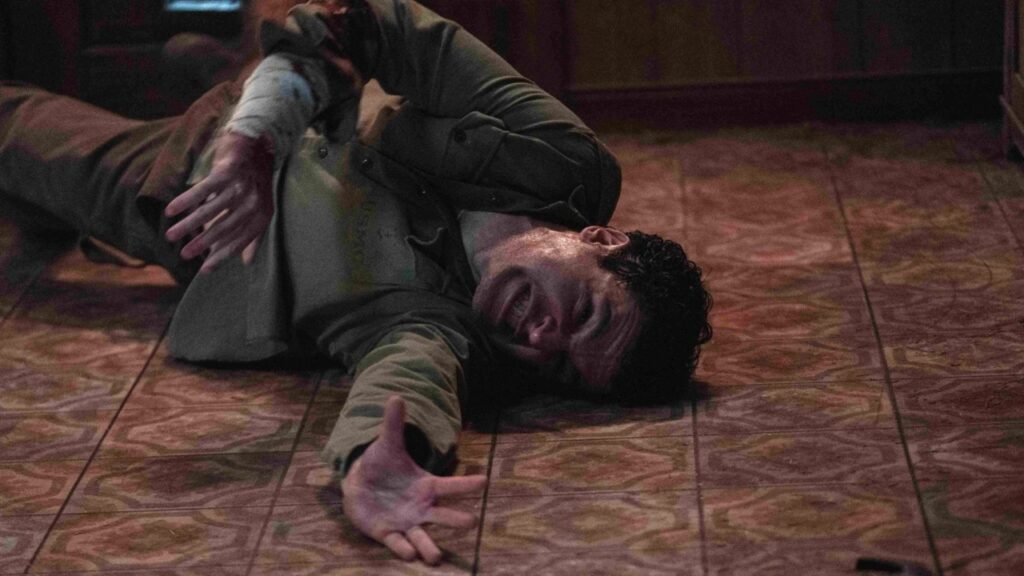
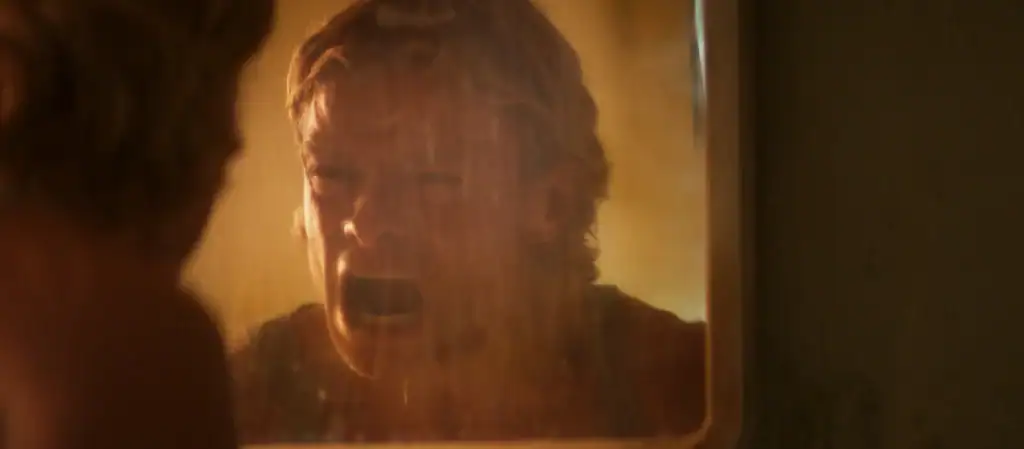
Leigh Whannell’s Wolf Man takes a considerably different approach from the Universal classic that inspired it.
Christopher Abbott plays Blake, a father who travels with his wife and daughter to his childhood home in rural Oregon before an encounter with a mysterious creature begins changing him.
Whannell treats lycanthropy almost like an infection. Instead of one enormous transformation triggered by a full moon, Blake gradually deteriorates physically and psychologically while his family watches the person they know disappear.
The movie divided audiences, particularly with its unconventional creature design, but its use of changing sound, vision and body horror gives the transformation experience an interesting modern perspective.
14. Late Phases (2014)
Late Phases has one of the better premises among modern werewolf movies.
Nick Damici plays Ambrose McKinley, a blind Vietnam veteran who moves into a retirement community and quickly discovers something monstrous is hunting elderly residents whenever the moon is full.
Instead of helplessly waiting for another attack, Ambrose begins preparing.
The result feels almost like Gran Torino colliding with a practical-effects creature feature. Ambrose’s blindness makes the inevitable confrontation even more interesting because he cannot rely on sight to identify where the creatures are coming from.
It is smaller than most films on this ranking, but that’s part of its appeal.
13. Bad Moon (1996)
Sometimes a werewolf movie doesn’t need an elaborate metaphor.
Sometimes you just need a huge monster trying to kill everyone.
Bad Moon follows photojournalist Ted Harrison after an attack in Nepal leaves him cursed with lycanthropy. He moves close to his sister and nephew while attempting to control what happens whenever his condition takes over.
The family’s German Shepherd, Thor, realizes something is wrong long before the humans do.
That gives Bad Moon the unusual distinction of having a dog essentially become the heroic lead of a werewolf movie.
The creature effects are also excellent, giving the movie one of the more intimidating physical werewolves of the 1990s.
12. Silver Bullet (1985)
Based on Stephen King’s Cycle of the Werewolf, Silver Bullet turns a small-town murder mystery into a battle against lycanthropy.
Corey Haim plays Marty, a young boy who begins suspecting that a series of grisly killings around his hometown are being committed by a werewolf. Gary Busey plays his eccentric Uncle Red, who eventually becomes Marty’s unlikely partner in hunting the creature.
The identity of the werewolf gives the story an additional layer because the monster isn’t some mysterious outsider wandering through the woods.
It’s someone trusted by the community.
Silver Bullet isn’t the most sophisticated Stephen King adaptation, but it understands exactly how much fun can be found in kids, fireworks, silver weapons and a monster stalking a quiet American town.
11. Werewolves Within (2021)
Werewolf movies do not always have to be miserable.
Werewolves Within takes the structure of a murder mystery and wraps it around a horror comedy involving a group of increasingly suspicious residents trapped together during a snowstorm.
Sam Richardson’s Finn Wheeler is the overly polite forest ranger attempting to keep everyone alive while determining whether one of them is secretly a werewolf.
The film works because the human characters become almost as dangerous as the possible monster. Paranoia, political disagreements, personal grudges and general stupidity begin tearing the group apart long before anyone knows exactly what is stalking them.
It’s one of the funniest werewolf movies without turning the creature itself into a complete joke.
10. The Cursed (2021)
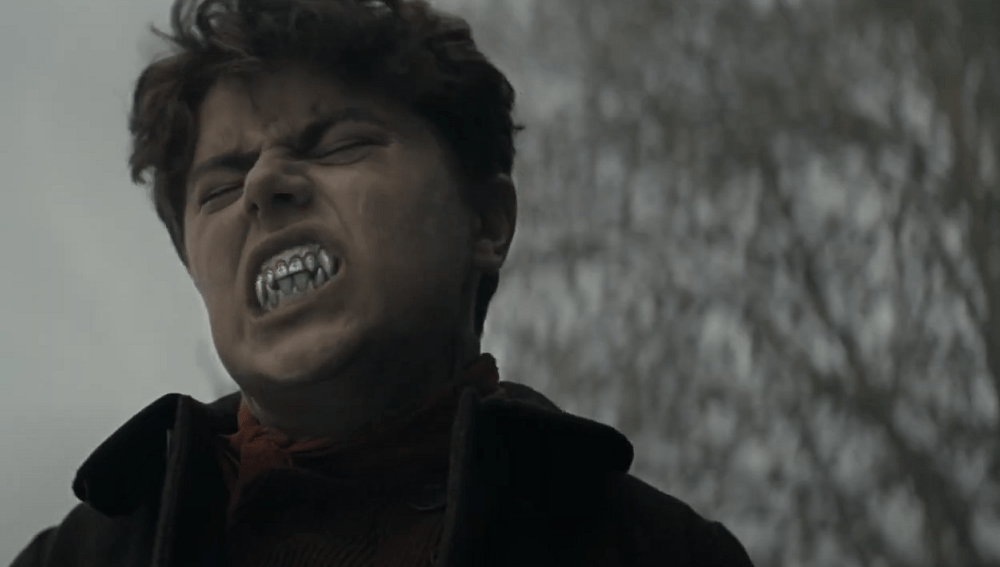
The Cursed, released in some territories under the title Eight for Silver, approaches werewolf mythology as gothic folk horror.
The movie takes place in 19th-century France, where a brutal act committed by a wealthy landowner brings something terrible upon his family and surrounding community.
These are not the familiar furry wolf-men associated with Universal horror.
Director Sean Ellis presents lycanthropy as something diseased, grotesque and deeply connected to the sins committed by previous generations.
The movie’s atmosphere and period setting make it particularly interesting heading into Werwulf, which appears poised to take the monster even further back into European folklore.
9. The Company Of Wolves (1984)
Neil Jordan’s The Company of Wolves feels less like a conventional monster movie and more like a nightmare someone transformed into a fairy tale.
Inspired by Angela Carter’s stories, the film reworks Little Red Riding Hood imagery through interconnected tales involving sexuality, growing up, desire and predatory men who may literally become wolves.
Its transformation effects are wonderfully grotesque.
One sequence involves a wolf emerging from inside a man’s body rather than simply having the human gradually grow fur and fangs.
The Company of Wolves is strange, theatrical and intentionally dreamlike, but it demonstrates how easily werewolf mythology can function as metaphor without losing its capacity to produce genuinely disturbing imagery.
8. Underworld (2003)
Underworld may technically spend as much time with vampires as werewolves, but leaving the Lycans out of a ranking like this would feel wrong.
Len Wiseman’s film imagines vampires and werewolves locked inside a centuries-old secret war hidden beneath modern society.
Kate Beckinsale’s Selene begins as a vampire Death Dealer trained specifically to hunt Lycans before discovering that everything she has been told about the conflict may not be true.
The movie combines gothic horror with early-2000s action aesthetics, creating an entire supernatural mythology that eventually expanded across multiple sequels.
It also helped move werewolves away from isolated full-moon attacks and toward functioning supernatural societies with their own politics, history and agendas.
7. The Curse Of The Werewolf (1961)
Hammer Film Productions made countless movies featuring Dracula and Frankenstein.
Surprisingly, it produced only one major werewolf feature.
Fortunately, The Curse of the Werewolf made it count.
Oliver Reed stars as Leon, whose tragic origins leave him cursed from birth. Director Terence Fisher leans heavily into the doomed nature of lycanthropy, presenting the monster less as an external evil and more as something Leon desperately wishes he could control.
Reed brings an intensity to the role that foreshadows much of his later career, while the film’s colorful gothic style separates it visually from Universal’s earlier black-and-white monster movies.
It remains one of Hammer’s most underrated horror films.
6. Wolf (1994)
Jack Nicholson becoming a werewolf almost feels too obvious.
Wolf takes that premise seriously.
Nicholson plays Will Randall, an aging publishing executive who is bitten by a wolf and begins experiencing improved senses, confidence and physical ability. Rather than immediately treating the transformation exclusively as a curse, the movie initially presents it as something rejuvenating.
Will feels younger.
He becomes more aggressive at work.
He starts reclaiming a life that appeared to be slipping away.
Naturally, there is a price.
Mike Nichols’ film is as much about masculinity, aging and corporate competition as monsters. James Spader also makes an excellent human antagonist before the supernatural side of the story catches up with him.
5. Dog Soldiers (2002)
Neil Marshall figured out that werewolves become significantly scarier when the people fighting them actually know how to fight.
Dog Soldiers follows a squad of British soldiers conducting a training exercise in the Scottish Highlands. They eventually discover an isolated house surrounded by enormous werewolves.
What follows is essentially Aliens with lycanthropes.
The soldiers barricade themselves inside and use whatever weapons they can find while the creatures repeatedly attack. The werewolf designs favor towering physical performers rather than computer-generated monsters, giving every confrontation a tactile brutality.
Marshall also understands exactly when to let the movie be funny without undermining the danger.
The result is one of the most entertaining creature features of the 2000s and an essential werewolf movie for anyone who wants less tragic romance and significantly more violence.
4. Ginger Snaps (2000)
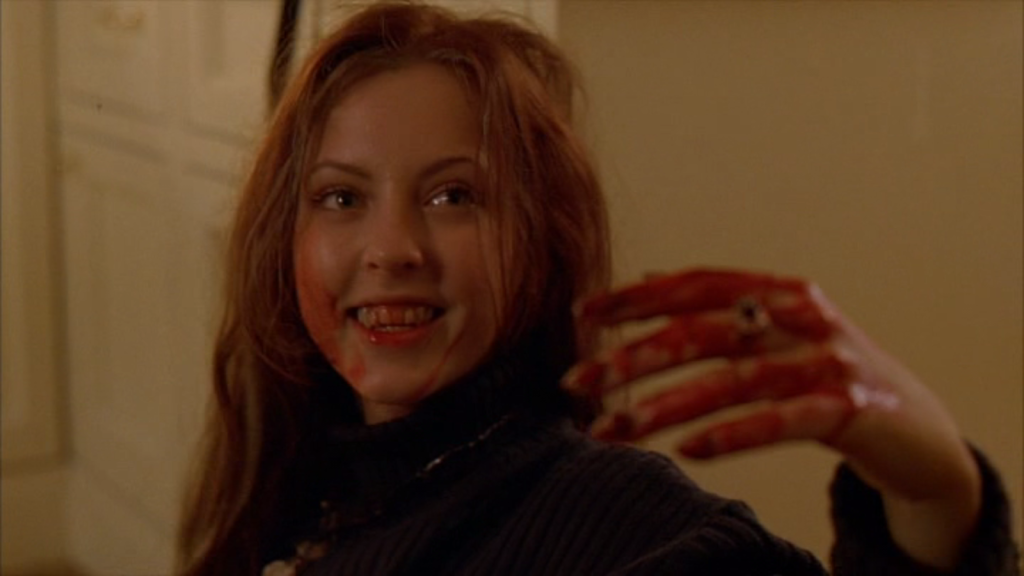
Ginger Snaps found one of the smartest metaphors ever built around lycanthropy.
Puberty is already horrifying.
Why not make it literal?
Katharine Isabelle and Emily Perkins play Ginger and Brigitte Fitzgerald, death-obsessed teenage sisters whose inseparable relationship begins changing after Ginger is attacked by a mysterious creature on the night of her first period.
Hair starts growing in unusual places. Her body changes. Her sexuality emerges. Her moods become increasingly unpredictable.
And eventually people start dying.
The werewolf transformation becomes inseparable from adolescence, femininity and the fear that growing up may cause two sisters who built their identities around each other to drift apart.
More than 25 years later, Ginger Snaps remains one of the most intelligent reinventions of the genre.
3. The Howling (1981)
1981 was an absurdly important year for werewolves.
Joe Dante’s The Howling arrived only months before An American Werewolf in London, and both films helped redefine what audiences expected from transformation effects.
Dee Wallace stars as television journalist Karen White, who travels to an isolated retreat while recovering from a traumatic encounter with a serial killer.
The retreat turns out to be considerably less relaxing than advertised.
Rob Bottin’s practical effects push the transformation into painful body horror, stretching faces and reshaping bodies in a way earlier werewolf films simply could not accomplish.
Dante also brings his trademark dark humor to the material, keeping the movie self-aware without turning it into parody.
The famous final sequence remains a wonderfully cynical punchline to everything that came before it.
2. The Wolf Man (1941)
It wasn’t the first werewolf movie.
It was the one that taught generations of audiences what a werewolf movie was supposed to be.
Lon Chaney Jr. stars as Larry Talbot, who returns to his family estate in Wales and is bitten while attempting to save someone from a wolf attack. He eventually discovers that the creature was a werewolf and that the same curse has now passed to him.
Many pieces of modern werewolf mythology became permanently associated with the monster because of The Wolf Man: wolfsbane, the tragic cursed protagonist and the idea that someone can become a monster despite being fundamentally decent.
Chaney’s performance is what holds everything together.
Larry Talbot isn’t terrifying because he enjoys becoming the Wolf Man.
He’s terrifying because he doesn’t.
He knows something inside him will eventually hurt people, and there may be nothing he can do to stop it.
That tragedy became the foundation almost every great werewolf movie has been building upon ever since.
1. An American Werewolf In London (1981)
More than four decades later, nobody has managed to knock An American Werewolf in London from the top of the mountain.
John Landis follows American backpackers David and Jack as they wander onto the Yorkshire moors and ignore the extremely sensible advice given to them at a local pub.
They are attacked.
Jack dies.
David survives.
Unfortunately, Jack keeps coming back to explain that survival may have been the worse option.
The movie’s greatest trick is balancing tones that should not work together. It can be genuinely funny one moment, horrifying the next and surprisingly sad only minutes later.
Then there is the transformation.
Rick Baker’s effects remain the standard against which virtually every cinematic werewolf transformation is measured. David does not simply disappear behind a cut before emerging as a monster. We watch his body betray him.
His bones stretch. His hands extend. His face reshapes. Every stage looks agonizing.
Baker’s work became so groundbreaking that it earned the inaugural Academy Award for Best Makeup.
But the effects alone are not why the movie remains No. 1.
David’s fate is ultimately tragic. The comedy never eliminates the horror of realizing that a normal person has been turned into something capable of murdering strangers without having any control over what happens.
That’s the heart of almost every great werewolf story.
The monster isn’t hiding somewhere outside.
It’s already inside you.
Honorable Mentions
Werewolf cinema has enough interesting variations that plenty of worthy films missed the final 15.
The Beast Must Die turns lycanthropy into an Agatha Christie-style mystery. Howl traps train passengers with monsters in the British countryside. When Animals Dream offers a quieter Scandinavian coming-of-age interpretation, while Good Manners combines werewolf mythology with romance, motherhood and Brazilian folklore.
There is also Wer, Skinwalkers, The Wolf of Snow Hollow, Teen Wolf and several Universal monster crossovers featuring Lon Chaney Jr.’s Larry Talbot.
Different audiences may want different things from their werewolves, which is exactly why the creature has survived for so long.
Why Robert Eggers’ Werwulf Could Be Perfect For The Genre

Robert Eggers has built his career around taking folklore seriously.
The Witch approached colonial superstition as though the people living through it had every reason to believe the Devil was genuinely waiting in the woods. The Northman immersed itself in Norse culture and mythology, while Nosferatu returned the vampire to something diseased, ancient and genuinely frightening.
Werwulf now gives him another monster that modern culture has spent decades reinventing.
The film takes place in 13th-century England, where a mysterious creature begins stalking the countryside as local folklore appears to become reality. Eggers co-wrote the screenplay with his The Northman collaborator Sjón, while Aaron Taylor-Johnson, Lily-Rose Depp and Willem Dafoe headline the cast.
Everything about that combination sounds suited to a werewolf story built around superstition rather than superhero-style monsters.
Long before scientists in horror movies started discussing infections and genetic mutations, people told stories about humans transforming into wolves because of curses, witchcraft, sin and the Devil.
Eggers gets to return the werewolf to that world.
The Werewolf Movie Is Ready To Transform Again
Werewolves have never enjoyed the same uninterrupted cinematic popularity as vampires or zombies.
Maybe that’s part of what keeps them interesting.
Every generation seems to rediscover the creature and find something different hiding underneath the fur.
The Wolf Man turned lycanthropy into tragedy. The Howling and An American Werewolf in London transformed it into spectacular body horror. Ginger Snaps connected it to adolescence. Dog Soldiers made it an action siege movie. Underworld built an entire mythology around it.
Now Robert Eggers gets his turn.
If Werwulf can bring the monster back to the dark folklore that inspired centuries of stories while delivering the visceral horror Eggers is promising, we may eventually need to make room for one more title near the top of this ranking.
Werwulf arrives in theaters December 25, 2026.

DC Fanboy! Superman is the greatest comic book character of all time. Favorite movies are Man of Steel, Goonies, Back To the Future