TL;DR
- Astonishing X-Men: Gifted is our favorite overall starting point for modern readers.
- Giant-Size X-Men #1 is where the team most fans recognize truly begins to take shape.
- God Loves, Man Kills is an excellent standalone story that captures what the X-Men are really about.
- Ultimate X-Men and X-Men: Season One are good choices if you want the mythology introduced from the beginning.
- You do not need to read more than 60 years of continuity before enjoying an X-Men comic.
Starting X-Men comics can feel significantly more complicated than joining Xavier’s School.
The team has existed since 1963, survived multiple lineups, alternate timelines, deaths, resurrections, clone revelations, time travelers, reality rewrites and enough family drama to make the Summers family tree require its own instruction manual. Asking someone to simply begin with X-Men #1 and read everything in order is not especially helpful.
The better approach is finding the right doorway.
Some readers want to meet Cyclops, Jean Grey and Beast from the beginning. Others are arriving from the movies or X-Men ’97 and want Wolverine, Storm, Rogue, Gambit and Magneto. Maybe you simply want one great story that explains why the X-Men have remained important for more than six decades.
Whatever your entry point, these are 10 of the best X-Men comics for new readers.
10. X-Men: Season One

If starting in 1963 sounds intimidating, X-Men: Season One offers a much easier introduction to Professor Xavier’s original students.
Dennis Hopeless and Jamie McKelvie revisit the early days of Cyclops, Jean Grey, Beast, Angel and Iceman, presenting them as actual teenagers attempting to understand their abilities while learning how to function as a team. Jean provides much of the perspective, which gives the book a more personal approach than simply retelling a collection of old battles.
The advantage is obvious: you get the foundation without needing to adjust immediately to Silver Age storytelling. It will not replace the Stan Lee and Jack Kirby comics for anyone interested in X-Men history, but it is a friendly first day at Xavier’s School.
9. X-Men: Days Of Future Past
One of the most famous X-Men stories ever published is surprisingly short.
Chris Claremont and John Byrne’s Days of Future Past unfolds primarily across Uncanny X-Men #141-142. An older Kitty Pryde sends her consciousness into her younger body in an attempt to prevent an assassination that will eventually lead to a dystopian future where Sentinels have nearly exterminated mutantkind.
New readers may encounter a few relationships they do not completely understand, but the central idea requires very little preparation. Humans fear mutants. That fear creates increasingly extreme attempts to control them. Eventually, everyone pays the price.
If you enjoyed the movie adaptation, reading the dramatically different comic that inspired it is well worth the trip.
8. X-Men: Mutant Genesis
If the X-Men in your head look like the characters from the 1990s animated series, Jim Lee’s artwork probably has something to do with it.
X-Men #1 from 1991 launches a new era with Chris Claremont and Lee bringing together a massive roster divided between Blue and Gold teams. Cyclops, Wolverine, Rogue, Gambit, Storm, Beast, Jean Grey and others are all here, while Magneto immediately becomes central to the story.
There is history behind everyone, but the opening arc does a good job of reminding readers who these characters are through their personalities and relationships. The costumes and visual style also became enormously influential on X-Men: The Animated Series and, decades later, X-Men ’97.
For viewers making the jump from animation to comics, this feels very familiar very quickly.
7. House Of X/Powers Of X

This is not the simplest X-Men comic on the list.
It may be the most exciting one.
Jonathan Hickman, Pepe Larraz and R.B. Silva completely rearranged mutant society with the interconnected House of X and Powers of X. Professor Xavier has abandoned the idea of simply asking humanity for acceptance. Mutants establish the living island of Krakoa as their own nation, former enemies become allies and resurrection changes what death means for mutantkind.
The story jumps across different periods and deliberately withholds information, so expect some confusion. That confusion is intentional.
I would not make this someone’s first X-Men comic if they know absolutely nothing about the characters. But if you understand the basics from the films or television shows and want to see how dramatically Marvel can reinvent the concept, this is an incredible gateway into the modern X-Men.
6. New X-Men: E Is For Extinction
Grant Morrison arrived on New X-Men with one goal that becomes obvious almost immediately: move mutantkind forward.
The opening storyline introduces Cassandra Nova and delivers a catastrophe that dramatically changes the mutant population. Morrison then begins examining mutants less like a tiny superhero team and more like an emerging culture with its own fashion, celebrities, politics and generational divisions.
Frank Quitely also gives the series a visual identity completely different from the colorful superhero costumes that dominated earlier eras.
This is a strong choice for readers who prefer science fiction and big ideas over traditional superhero adventures. It is unmistakably X-Men, but it feels like someone opened the windows and allowed an entirely different kind of story inside.
5. Ultimate X-Men
Marvel’s original Ultimate Universe was created specifically to remove decades of continuity from characters who had become intimidating to new readers. Naturally, the X-Men received the same treatment.
Mark Millar and Adam Kubert rebuild the team from the ground up in Ultimate X-Men #1. Professor Xavier, Cyclops, Jean Grey, Storm, Beast, Wolverine and Magneto are recognizable, but their relationships and histories have been redesigned for a different universe.
Some elements of the series have aged better than others, and longtime fans may disagree with several character interpretations. As a starting point, however, the advantage is enormous: there is nothing before issue #1 that you are expected to understand.
You begin when this version of the X-Men begins.
4. X-Men: God Loves, Man Kills
If someone asked what the X-Men are actually about beneath the costumes, powers and giant robots, God Loves, Man Kills would be one of the first books to hand them.
Chris Claremont and Brent Anderson’s graphic novel pits the X-Men against Reverend William Stryker, a religious fanatic whose hatred of mutants goes far beyond the usual supervillain plan. Magneto becomes an uneasy ally because Stryker’s crusade threatens every mutant regardless of whether they follow Xavier’s philosophy.
The story gets directly to the prejudice metaphor that has defined the franchise for generations. It also demonstrates why Xavier and Magneto can disagree profoundly about how mutants should respond to humanity while still understanding each other better than almost anyone else.
Because it was published as a self-contained graphic novel, you can read it without collecting dozens of surrounding issues. Elements later became major inspirations for X2: X-Men United.
3. Giant-Size X-Men #1 And The Beginning Of The Claremont Era

The X-Men existed for more than a decade before the team most people recognize truly came together.
Len Wein and Dave Cockrum’s Giant-Size X-Men #1 introduces an international lineup assembled by Professor Xavier after his original students disappear during a mission. Storm, Nightcrawler, Colossus and Thunderbird join the team, while Wolverine becomes an X-Man after previously appearing elsewhere in the Marvel Universe.
From there, Chris Claremont takes over with Uncanny X-Men #94 and begins one of the most important creative runs in superhero history.
This is where countless essential pieces of X-Men mythology develop: Jean Grey becoming Phoenix, Wolverine’s relationships with the team, Storm’s growth as a leader, the Shi’ar Empire, the Hellfire Club and eventually stories including The Dark Phoenix Saga and Days of Future Past.
If you want to experience classic X-Men history rather than a modern reinterpretation, start here instead of going all the way back to 1963.
2. X-Men: Grand Design
Maybe you really do want to know the history.
You just don’t want to read several hundred comics to get it.
Ed Piskor’s X-Men: Grand Design takes decades of complicated continuity and retells it as one enormous interconnected narrative. Characters, rivalries and events that originally developed across years are condensed into a comparatively manageable overview of mutant history.
That means the series moves quickly, and some emotional moments inevitably receive less space than they did originally. Think of it less as a replacement for classic X-Men stories and more as an illustrated roadmap.
Read Grand Design, discover which events or characters interest you most, and then go find the original stories behind them.
For someone staring at 60-plus years of X-Men continuity wondering how any of it connects, that roadmap can be extremely valuable.
1. Astonishing X-Men: Gifted
If you want one answer, start here.
Astonishing X-Men begins with a beautifully simple premise: the X-Men need to start acting like superheroes again.
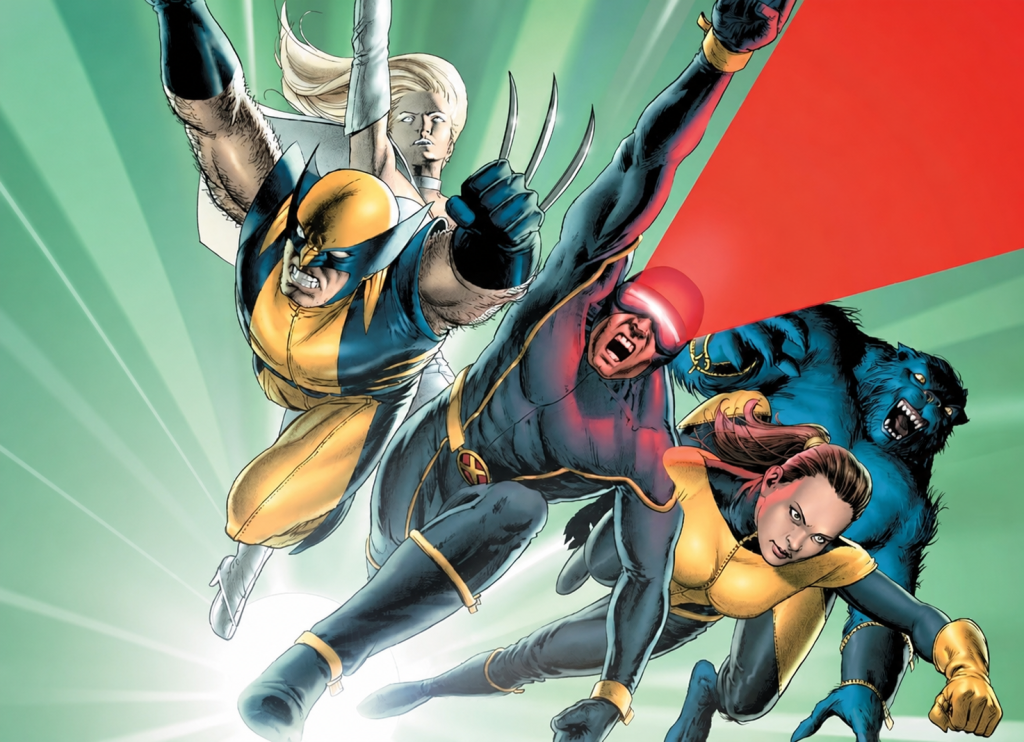
The opening Gifted storyline brings Cyclops, Emma Frost, Wolverine, Beast and Kitty Pryde together under one roof, with Colossus becoming increasingly important as the story develops. A supposed mutant “cure” creates the central conflict while the team attempts to improve public perception of mutants.
John Cassaday gives the X-Men updated superhero costumes after the leather-heavy movie era, while the story balances school drama, humor, action and the political tension that has always powered the franchise.
Most importantly for beginners, it understands that character relationships are the real engine of X-Men.
Cyclops and Wolverine irritate each other. Kitty does not trust Emma. Emma can barely resist antagonizing everyone around her. Beast is forced to confront what a mutant cure could mean personally rather than philosophically.
You will encounter references to older stories, but everything essential to the immediate plot is understandable. If something from the past sounds interesting, you can always investigate it afterward.
That is exactly what a great gateway comic should do.
It gives you a complete story while making you want to read another one.
Where Should A Complete Beginner Start?
The answer depends on what brought you to the X-Men.
If you want something modern and accessible, choose Astonishing X-Men. If X-Men ’97 made you curious about the comics, try Mutant Genesis before exploring Claremont’s classics. If you want to begin with the team’s most influential era, jump into Giant-Size X-Men #1 and continue with Uncanny X-Men #94.
For someone primarily interested in the themes behind the franchise, God Loves, Man Kills delivers almost everything you need in one book. Readers who simply want the mythology reset from zero may be happier with X-Men: Season One or Ultimate X-Men.
The important thing is not worrying about whether you understand every reference.
Nobody begins X-Men comics knowing every Summers sibling, alternate future, resurrected mutant or inexplicably complicated clone situation.
Pick the version of the team that interests you and start reading.
Xavier’s School has always been about welcoming new students anyway.

DC Fanboy! Superman is the greatest comic book character of all time. Favorite movies are Man of Steel, Goonies, Back To the Future