Some arthouse films can be difficult and stomach-turning because of what they show. Blue Film is difficult because of what it asks you to sit with. Writer-director Elliot Tuttle traps the audience inside a conversation that becomes more shocking the longer it continues, not because the film is chasing shock value, but because it refuses to simplify the people inside it. That’s what makes it so unsettling.
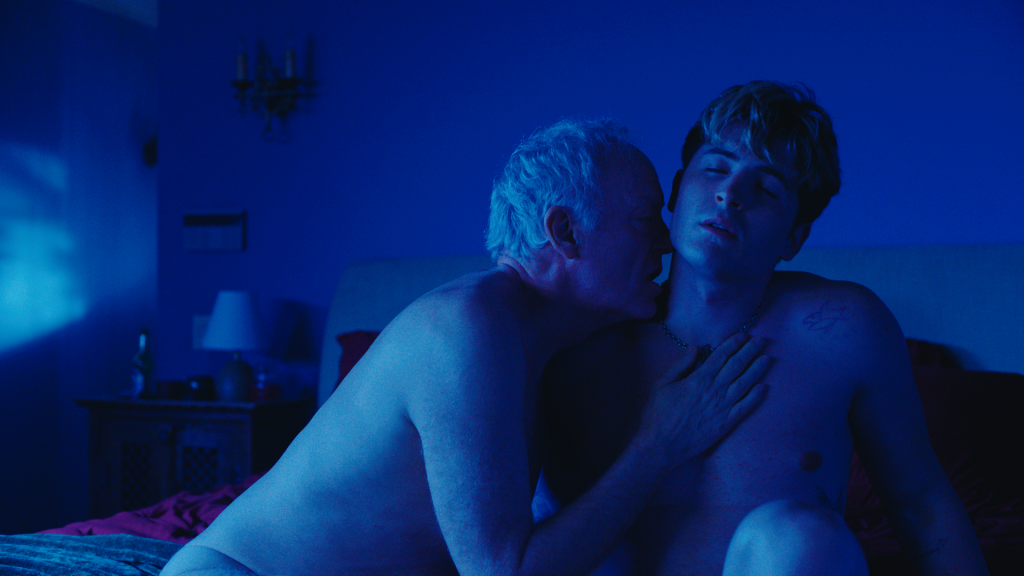
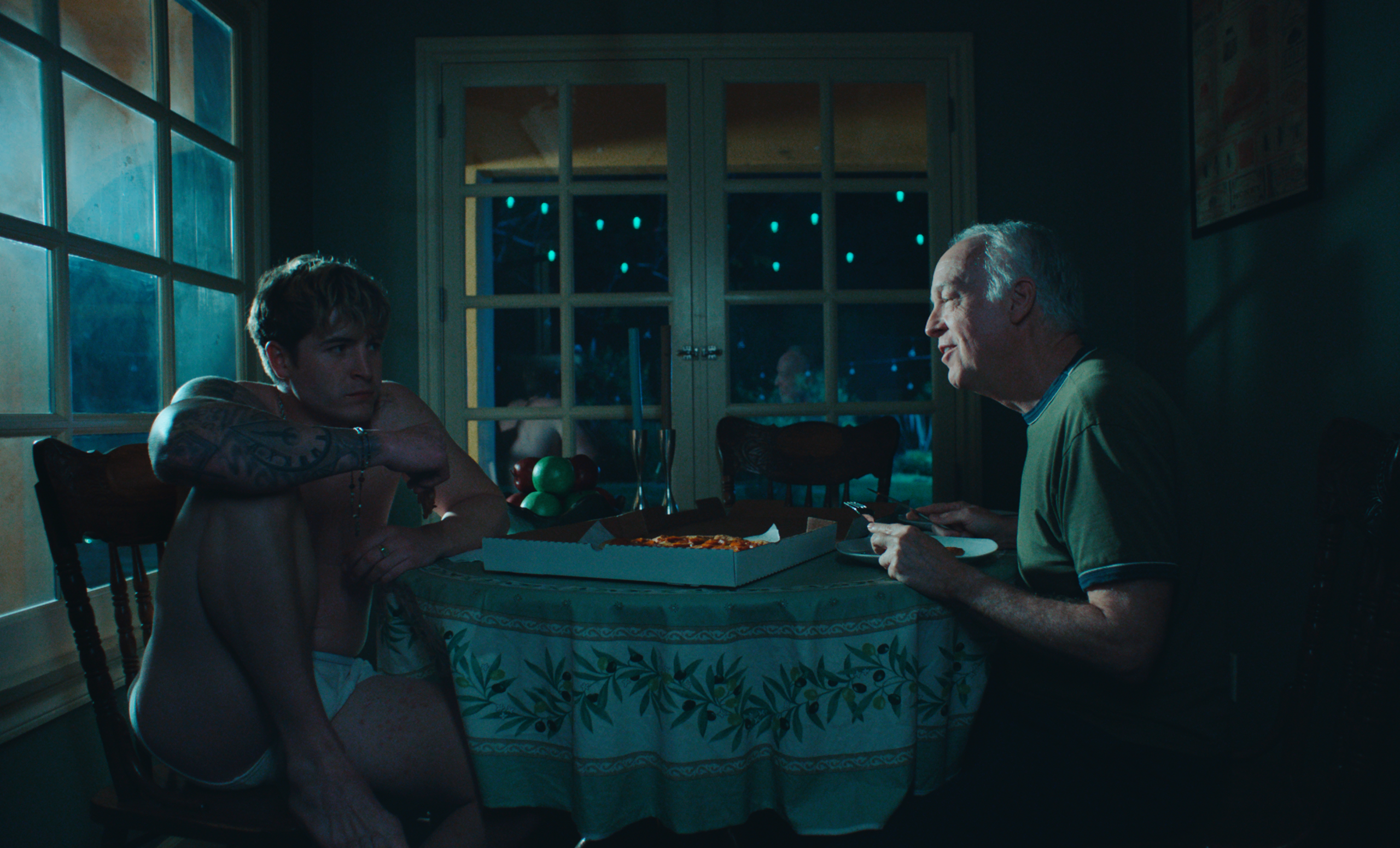
The setup is deceptively small. Aaron Eagle (Kieron Moore), a queer camboy who spends his livestreams humiliating paying viewers for entertainment, agrees to meet an anonymous client for a night of sex and easy money. When he arrives, he discovers the client is Hank Grant (Reed Birney), a former teacher tied to Aaron’s past and a convicted attempted child rapist. From there, the film mostly becomes a long confrontation between two lonely, emotionally damaged men trying to wrestle control of the conversation away from each other.
What immediately separates Blue Film from other chamber dramas is the writing. The dialogue is truly exceptional because it never sounds like characters speaking in “movie dialogue.” These conversations feel unstable and lived-in. They interrupt themselves, dodge questions, and say things they instantly regret. The film understands that emotionally loaded conversations rarely move in clean, linear ways.
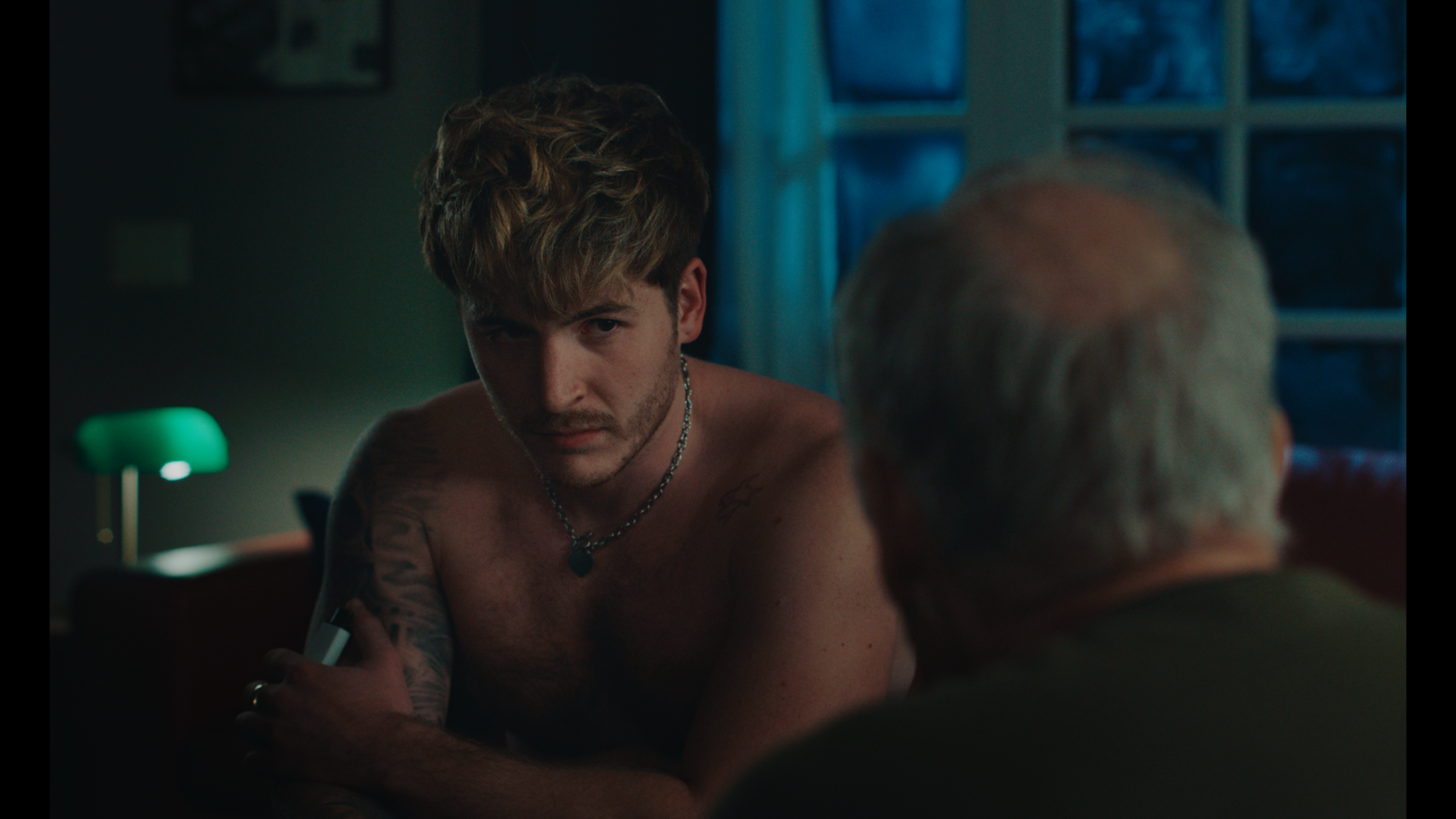
That messiness becomes essential once the film begins circling its central provocation: Hank’s insistence that what he felt for Aaron was “love.” The film is not interested in excusing him. That’s important to make clear. Hank’s actions are monstrous, and the film never frames them otherwise. What makes Birney’s performance so unnerving is that he never plays Hank like a stock predator designed for easy hatred. He plays him as someone whose internal logic feels horrifyingly coherent to himself. There’s a calmness to the way he speaks about things that should be impossible to rationalize. Birney avoids making Hank theatrical or outwardly sinister, which somehow makes him even more upsetting to watch. You understand very quickly that this is a man who has spent years constructing emotional justifications for unforgivable behavior.
And the film forces Aaron (and, well, the audience) to engage with that instead of escaping into simpler moral distance. Moore’s performance is extraordinary because you can constantly feel Aaron managing himself in real time. Aaron’s entire identity is built around performance. Online, he weaponizes humiliation and sexuality to maintain control over other people before they can gain emotional leverage over him. But sitting across from Hank, that control keeps slipping. Moore plays those shifts beautifully. One moment, Aaron is aggressive, mocking, fully in command of the interaction. The next, you can see panic and emotional exhaustion starting to break through. The performance never becomes sentimental or overly exposed, though. Aaron keeps rebuilding the walls around himself as quickly as they crack. Moore and Birney were made to share the screen together. Everything in their careers has led to this film, and it is beautiful as it is disturbing.
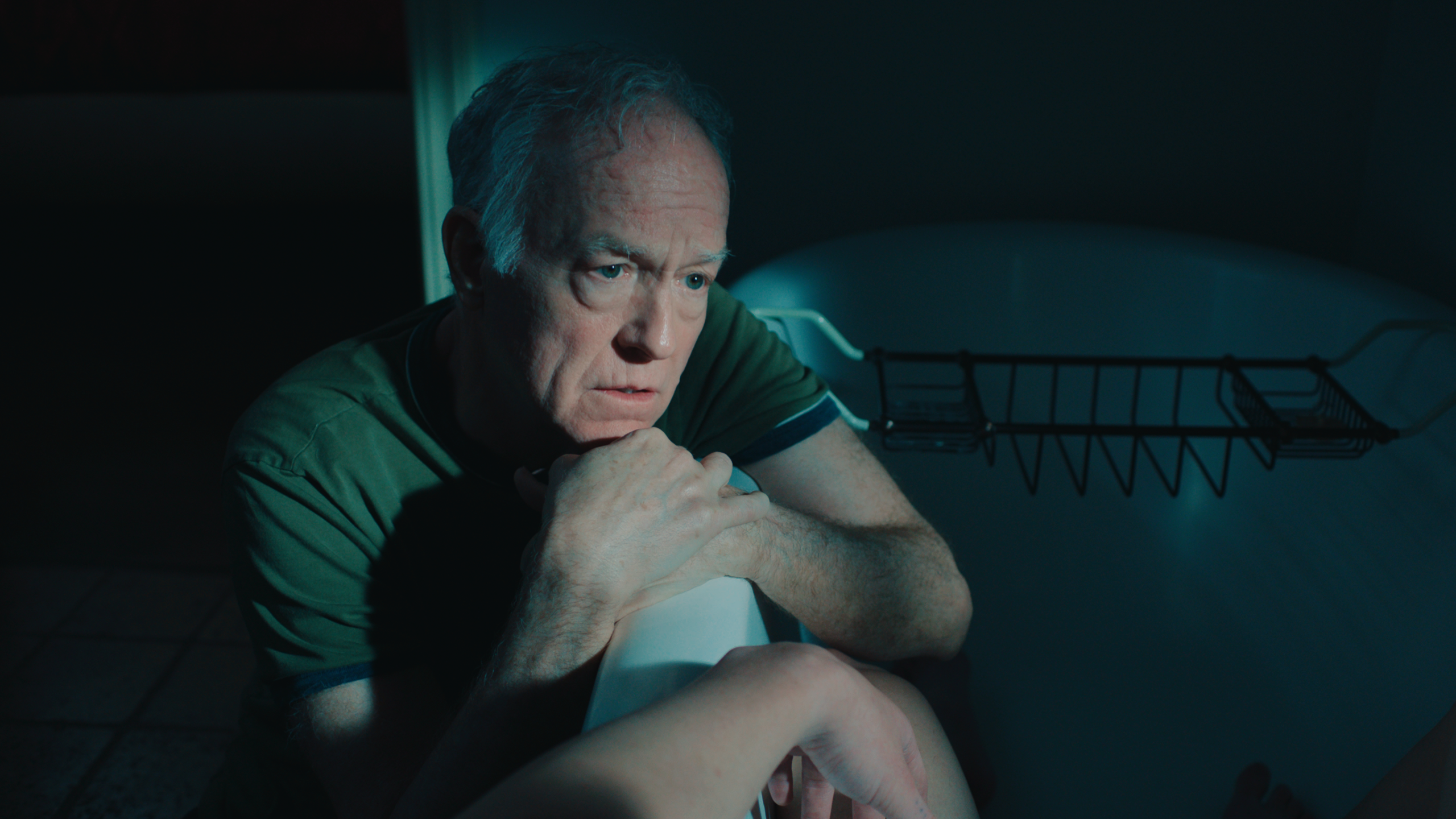
That tension gives the film its pulse. What is easily admirable is that Blue Film fully commits to emotional discomfort without turning itself into empty provocation. There’s a version of this material that could have easily collapsed into exploitation or self-important shock tactics. Tuttle avoids that by keeping the focus on emotional dependency, loneliness, manipulation, and the ways people distort the language of love to justify possession and control.
The film also smartly understands that Aaron and Hank are connected by loneliness, even if the moral reality separating them remains enormous. Aaron sells fantasy and degradation because emotional distance feels safer than honesty. Hank craves intimacy but twists that desire into something predatory and destructive. The film keeps drawing uncomfortable overlaps between desire, power, shame, and dependency without flattening those ideas into false equivalencies.
Visually, Tuttle keeps things restrained. The direction never distracts from the performances, but it still creates an oppressive atmosphere that becomes harder to shake as the film progresses. There’s very little relief once the conversation truly begins. The film wants you trapped in that room with them.
And to be honest, I can completely understand why many people will reject this movie outright. It’s provocative in a very direct way. The subject matter alone, like pedophilia, grooming, sexual manipulation, and emotional abuse, will understandably alienate viewers. Even beyond that, the film refuses the comfort of easy condemnation scenes or cathartic moral clarity. It asks the audience to acknowledge Hank’s humanity without ever forgiving him, and that’s a line many viewers simply will not want to engage with. It is hard to even blame them for that.
But the film earns its approach because it never loses sight of the damage underneath these conversations. The emotional unease the film creates feels intentional and deeply considered rather than provocative for its own sake.
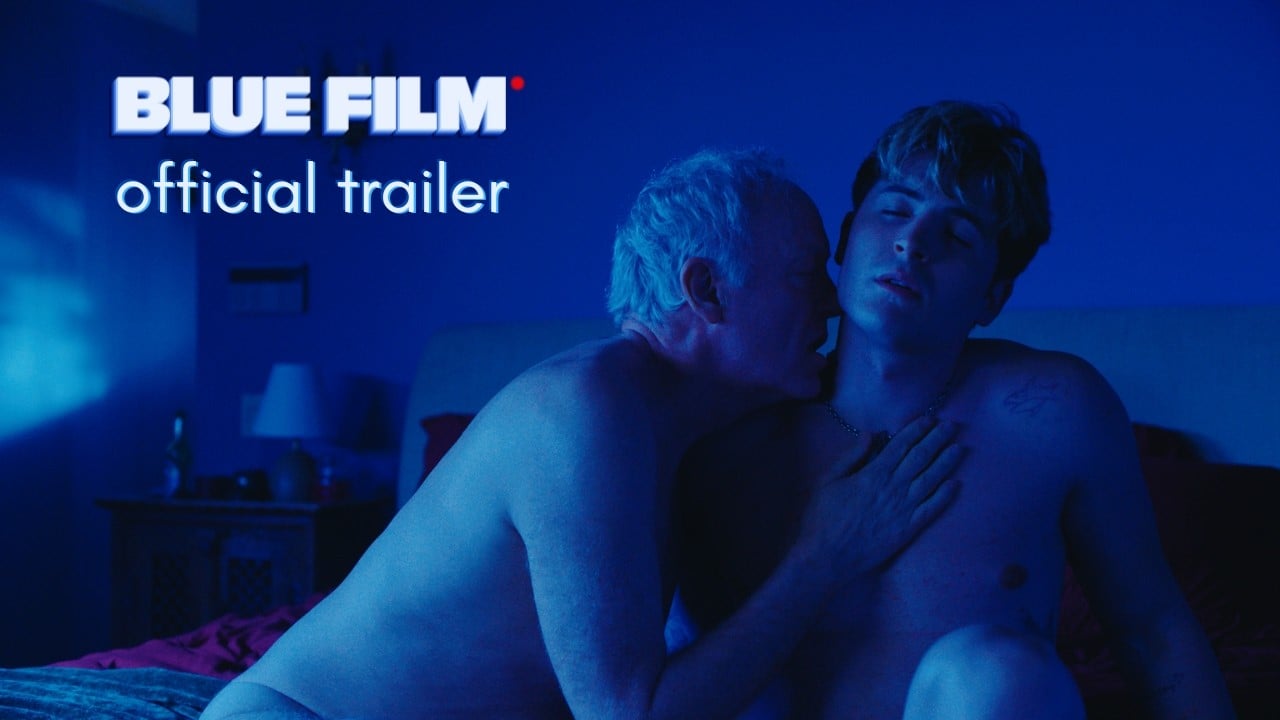
Once we reach the final home stretch, it is clear Blue Film is not just about sex but emotional honesty and specifically the kind Aaron refuses to give because doing so would mean confronting wounds he has spent years turning into performance. That’s ultimately what makes the film linger. Beneath all the ugliness and confrontation is a story about two people trying to redefine loneliness into something survivable, even when one of them has already poisoned that possibility beyond repair. It’s an excellent film. A deeply upsetting one, too, and one of the best of 2026.
Blue Film is currently playing in select theaters courtesy of Obscured Releasing.
It’s an excellent film. A deeply upsetting one, too, and one of the best of 2026.

Roberto Tyler Ortiz is a movie and TV enthusiast with a love for literally any film. He is a writer for LoudAndClearReviews, and when he isn’t writing for them, he’s sharing his personal reviews and thoughts on Twitter, Instagram, and Letterboxd. As a member of the Austin Film Critics Association, Roberto is always ready to chat about the latest releases, dive deep into film discussions, or discover something new.