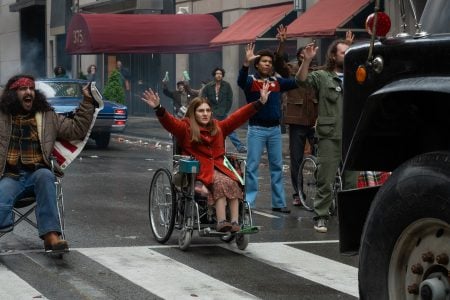
Based on the memoir, Daddy by this film’s writer, director, and subject, Madison Young, By The Roots explores a word that carries a lot of meaning and power. It is shown in the opening scene where, as a young girl, she is watching her father uproot a tree to move it out of the shade so it can grow better. She listens and learns. Later, when she asks her mother where her father is, it is met with disdain, hurt, and criticism. This is the basis for By The Roots and its central theory: how the absence of Madison’s father, and the imbalance it caused in her family, shaped her into the person she became. This film is a reenactment of that journey.
Reenactment feels more apt to describe By The Roots, as it feels filtered through someone recalling each experience as it’s being displayed. This becomes even more prevalent if you stick around through the credits, which add context to a lot of what was happening throughout the film. Without it, a lot of the dialogue and some of the more ethereal moments will feel excessive or contrived.
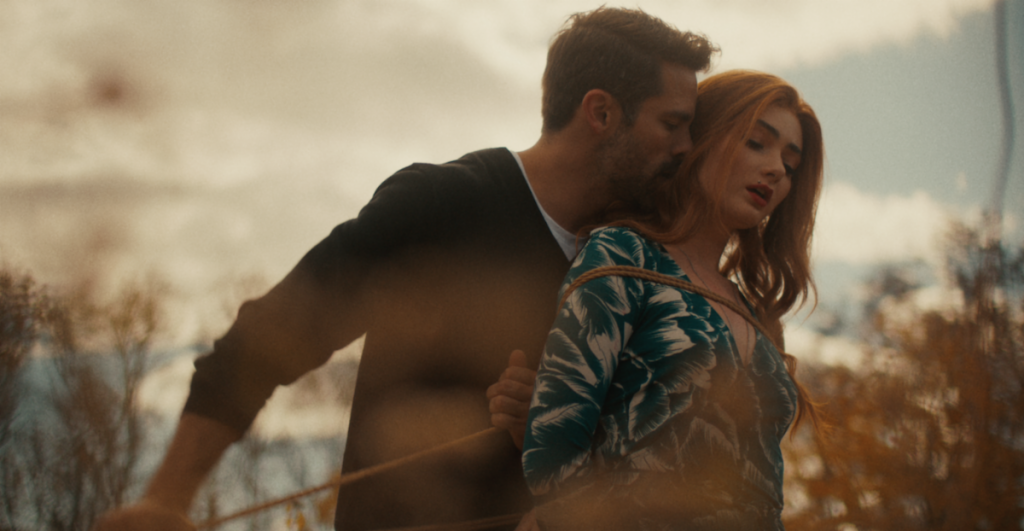
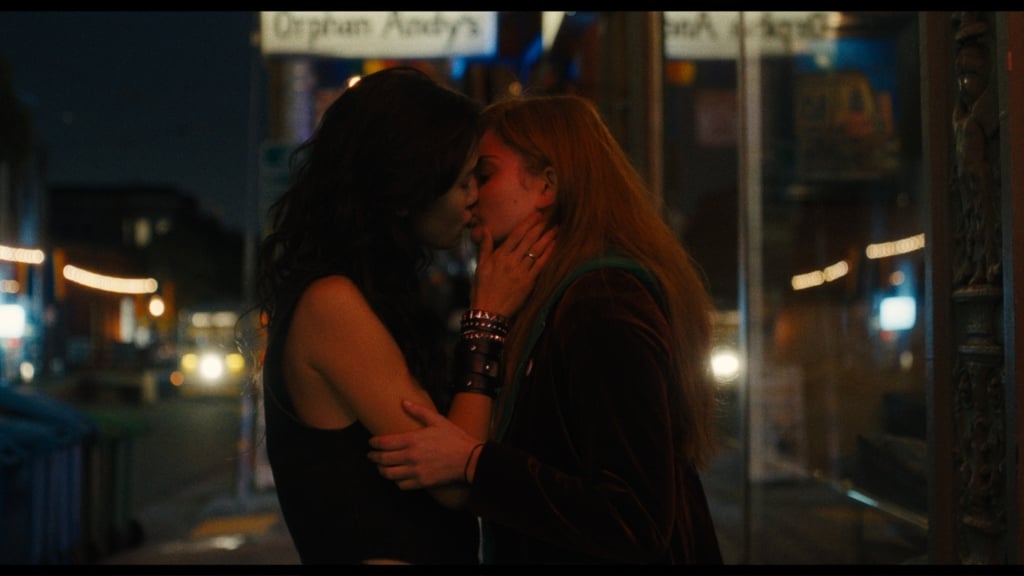
Madison is a child of divorce. A divorce that left her mother fractured, bruised, emotionally disruptive, and manipulative. Madison questions her sexuality as she grows up in conservative Ohio and escapes to San Francisco after graduating high school. She opens a gallery where she explores feminism, sexuality, and kinks such as bondage and sadomasochism (BDSM) as a form of art and self-expression. As she grows up, she becomes polyamorous, having two consensual relationships with a woman and a man named James, whom she refers to as “Daddy.” This is where the other meaning for that term comes in, as Madison and her boyfriend practice a form of Dom/Sub culture that she sometimes challenges as though they are equals, but also relents immediately into submissiveness.
This all comes to a head in By The Roots when she returns to Southern Ohio for her mother’s birthday after learning that her mother is also selling her childhood home. Desperate to recover a keepsake she has kept hidden in the fields for years, she returns with James to face her family’s incessant badgering, questioning of her work and lifestyle, and endless judgment of the LGBTQ scene in San Francisco. While Madison is mostly portrayed as the sympathetic character and her mother as a callous villain, the film finds a strong balance between the two. There are moments where your sympathy shifts as it becomes clear Madison and her mother are at two different ends of a spectrum and refuse to meet each other in the middle.
Her mother feels bitter, lonely, trapped, and mostly unhappy, and resents a daughter who moved away and is able to live a more fulfilling life despite its unconventional standards. Madison, meanwhile, still refuses to see the hurt and harm that her mother has endured, how it has shaped her, and how it has kept her from moving forward.
This balance makes you teeter between the two as it becomes clear they are both dealing with psychological trauma neither of them has healed from. For those looking for a catharsis of sorts by the end of By The Roots, you won’t find one here. This internal divide never gets resolved. The two part ways having little to no more understanding of the other than when they began, and even what little could have been said is never shown.
The film uses a non-linear structure throughout, traveling from the past to the present. We get to see Madison’s evolution from a wide-eyed dreamer child to a curious, artistic teenager, all the way to an exhibitionist artist. This structure gives us insight into all the different ways her relationship with her mother grew more and more toxic, and how her desire to escape to a more accepting life shielded her from her connection to her roots.
When Madison finally recovers her keepsake, the theme of By The Roots becomes much clearer. This is a story about dreams — the ones we have when we’re young, the ones we let go of, and the ones we hold on to. Most people will never understand those dreams or how they manifest themselves in real life, but that’s because they’re not supposed to. Those aren’t their dreams; they’re yours.
That encapsulates the difference between Madison and her mother. She gave up on her dreams a long time ago and can’t imagine what it’s like to even try to pursue them, or if it’s even possible now, while Madison lives hers every day.
By The Roots is an intimate and emotionally raw exploration of family trauma, identity, and the dreams we refuse to let die. Through a non-linear and deeply personal lens, the film examines how unresolved pain and generational wounds shape the relationship between a daughter searching for freedom and a mother trapped by the life she left behind.
It’s true your dreams may change and evolve, but it’s important to hold on to them. It’s important to pursue them because they will ground you in who you are when the world tries to tell you otherwise. When the world tries to tie you into knots, it’s important to know you brought the rope. So live free.
By The Roots is an intimate and emotionally raw exploration of family trauma, identity, and the dreams we refuse to let die. Through a non-linear and deeply personal lens, the film examines how unresolved pain and generational wounds shape the relationship between a daughter searching for freedom and a mother trapped by the life she left behind.

Phoenix is a father of two, the co-host and editor of the Curtain to Curtain Podcast, co-founder of the International Film Society Critics Association. He’s also a member of the Pandora International Critics, Independent Critics of America, Online Film and Television Association, and Film Independent. With the goal of eventually becoming a filmmaker himself. He’s also obsessed with musical theater.