

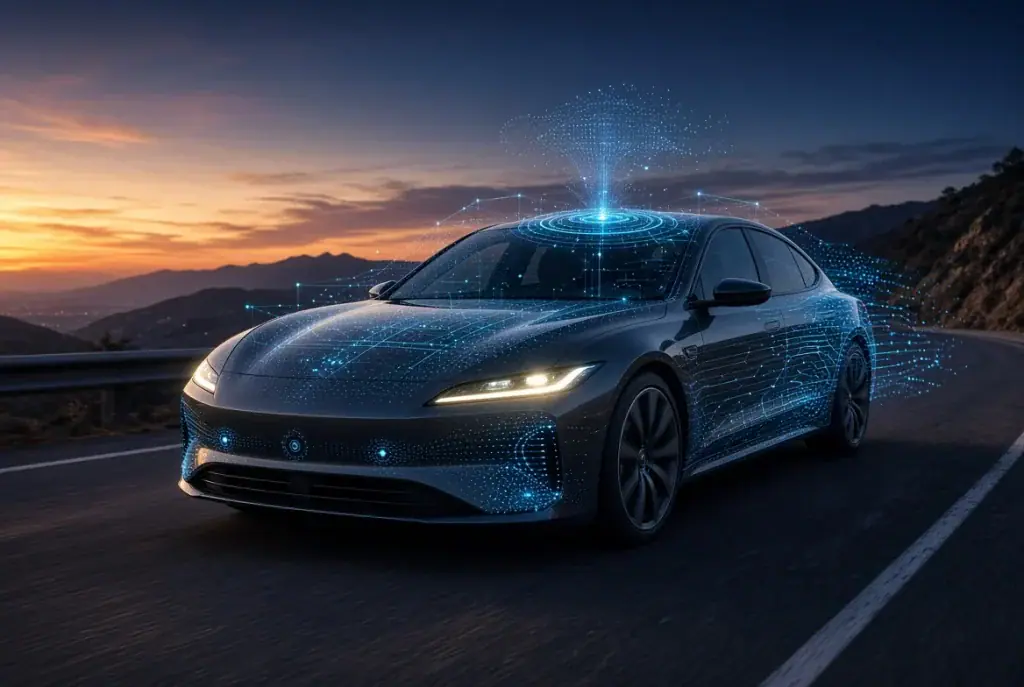
The modern automobile is no longer just an engine, four wheels, and a collection of mechanical components. Beneath its dashboard and body panels lies a sophisticated network of computers that continuously exchange information, monitor performance, and make thousands of calculations during an ordinary drive.
From automatic emergency braking to battery management and navigation, many features drivers take for granted depend on software and data processing.
This transformation is changing how vehicles are designed, maintained, and repaired. It also introduces challenges involving storage reliability, cybersecurity, and long-term software support.
Understanding these technologies reveals why the future of driving depends as much on computing infrastructure as it does on traditional automotive engineering.
Why Automotive Computers Need Storage That Survives Extreme Conditions
Unlike laptops or office computers, automotive electronics must function in environments that can be physically demanding. Vehicles experience temperature fluctuations, constant vibration, sudden power interruptions, and years of repeated use.
These conditions make reliable data storage an important engineering consideration.
Modern vehicles may use embedded flash memory and automotive-grade solid-state drives to retain software, navigation information, diagnostic records, and other essential data.
Storage manufacturers design specialized products to withstand conditions that ordinary consumer electronics may not tolerate.
For example, Lexar Enterprise specifies SSD operation from -40°C to +85°C, illustrating the wide temperature range that automotive storage solutions may need to accommodate.
This capability matters because vehicles can experience freezing winter conditions and intense heat, particularly inside enclosed electronic compartments.
However, temperature tolerance alone does not guarantee reliability. Engineers must also evaluate data integrity, endurance, vibration resistance, and compatibility with the vehicle’s electronic architecture.
Electronic Control Units Manage Far More Than the Engine
A modern vehicle contains numerous electronic control units, commonly called ECUs, responsible for monitoring and managing different functions.
Some oversee engine performance, while others control braking, steering assistance, climate systems, lighting, and vehicle stability.
These computers communicate through specialized automotive networks, allowing information to move between systems.
For example, a stability control system may combine wheel-speed information with steering and motion measurements to determine whether intervention is necessary.
Rather than operating independently, vehicle components increasingly depend on coordinated electronic decisions.
This interconnected structure improves functionality but also makes diagnosis more complicated.
A fault in one sensor or communication connection can affect several systems.
Automotive technicians therefore need diagnostic tools and electronic troubleshooting skills alongside traditional mechanical knowledge.
Sensors Turn Everyday Driving Into Continuous Data Collection
Modern cars constantly collect information about their surroundings and internal operating conditions.
Wheel-speed sensors monitor movement, temperature sensors help regulate mechanical systems, and cameras support features such as lane departure warnings.
More advanced vehicles may incorporate radar, ultrasonic sensors, and other technologies to detect nearby objects.
These sensors generate information that onboard computers interpret to support driver assistance and vehicle operation.
However, collecting data is only one part of the process.
Computers must distinguish useful signals from interference, interpret measurements accurately, and respond within appropriate time limits.
A camera detecting lane markings, for instance, must operate under changing lighting and road conditions.
This explains why sensor calibration and proper maintenance are increasingly important.
Replacing a windshield or repairing collision damage may require recalibrating certain driver-assistance components.
Driver-Assistance Features Depend on Fast Computing Decisions
Advanced driver-assistance systems, or ADAS, demonstrate how software and electronics influence vehicle safety.
Features such as adaptive cruise control, automatic emergency braking, and lane-keeping assistance use sensor information to evaluate driving conditions.
The system must process relevant information quickly enough to provide warnings or intervene when appropriate.
Computing delays, sensor limitations, or inaccurate measurements can affect performance.
This is why automotive engineers consider processing speed, software reliability, and communication latency when designing these systems.
Some functions also require temporary storage or access to stored calibration information.
Importantly, driver-assistance technology does not automatically make a vehicle self-driving.
Most consumer systems still require attentive human supervision.
Drivers should understand the limitations described in their owner’s manuals rather than assuming electronic assistance can handle every road situation.
Electric Vehicles Rely on Software to Protect Their Batteries
Electric vehicles make the relationship between computing and transportation especially visible.
Their battery management systems continuously monitor measurements such as cell voltage, temperature, and current.
This information helps regulate charging, estimate battery condition, and identify operating conditions that may require protective action.
Software also influences energy consumption through thermal management, regenerative braking, and power distribution.
Accurate monitoring is essential because battery performance changes with temperature, age, and usage.
Vehicle computers may record operating information that supports diagnostics and maintenance planning.
However, electric vehicles are not the only automobiles dependent on sophisticated electronics.
Gasoline-powered and hybrid vehicles also rely on computerized control systems to manage emissions, fuel delivery, transmission behavior, and overall efficiency.
The underlying trend is broader than electrification: nearly every vehicle category is becoming increasingly software-dependent.
Software Updates Are Changing What Vehicle Ownership Means
Traditionally, improving a vehicle’s functionality usually required replacing or adjusting physical components.
Today, manufacturers can sometimes modify features, correct software problems, or introduce improvements through updates.
Over-the-air updates allow supported vehicles to receive software remotely, reducing the need for certain dealership visits.
However, updating automotive systems requires careful safeguards.
A failed installation, interrupted power supply, or incompatible software package could interfere with important functions.
Manufacturers therefore need procedures for validating updates, protecting stored information, and recovering from unsuccessful installations.
Vehicle owners should follow official update instructions and avoid installing unauthorized software.
Software maintenance is becoming another part of responsible vehicle ownership, alongside oil changes, tire inspections, and mechanical servicing.
Connected Cars Create New Cybersecurity Responsibilities
Internet-connected vehicles offer useful capabilities, including remote diagnostics, navigation updates, and smartphone integration.
However, connectivity also introduces potential security risks.
Attackers may attempt to exploit weaknesses in vehicle applications, communication interfaces, or connected services.
Automotive cybersecurity therefore involves protecting software, restricting unauthorized access, and securing information exchanged between systems.
Encryption, authentication, secure startup procedures, and carefully managed software updates can help reduce these risks.
Manufacturers must also consider how long security support will remain available throughout a vehicle’s operating life.
For drivers, practical precautions include keeping supported software updated, securing associated mobile accounts, and avoiding untrusted accessories.
Cybersecurity is no longer relevant only to computers and smartphones. It has become an important part of automotive reliability and safety.
The Future of Vehicle Maintenance Will Be Increasingly Digital
As vehicles become more computerized, maintenance practices must evolve.
Technicians increasingly rely on diagnostic software, electronic service information, and specialized equipment to identify faults.
A warning light may reflect a mechanical problem, a damaged sensor, a software issue, or a communication failure between electronic modules.
Accurate diagnosis requires understanding how these possibilities interact.
Predictive maintenance may also become more useful as connected vehicles generate information about component performance and operating conditions.
Analyzing these patterns can help identify developing problems before they cause unexpected breakdowns.
However, predictions must be supported by reliable measurements and appropriate professional judgment.
The transition toward software-driven vehicles does not eliminate traditional automotive expertise. Engines, brakes, tires, suspension systems, and other physical components still require proper attention.
Instead, the industry increasingly needs professionals who understand both mechanical systems and digital technology.
The automobile’s transformation into a connected computing platform is already reshaping transportation. As software, sensors, and data storage become more important, reliable engineering will depend on making these technologies work together safely and consistently.
For drivers, this means the future of car ownership will involve caring for both the machine and the computers that help it operate.

Amanda Dudley is a lecturer and writer with a Ph.D. in History from Stanford University. After earning her doctorate in 2001, she decided to pursue a fulfilling career in the educational sector. So far, she has made giant strides by working as an essay writer for EssayUSA, where she delivers high-quality academic papers to students who need them.