

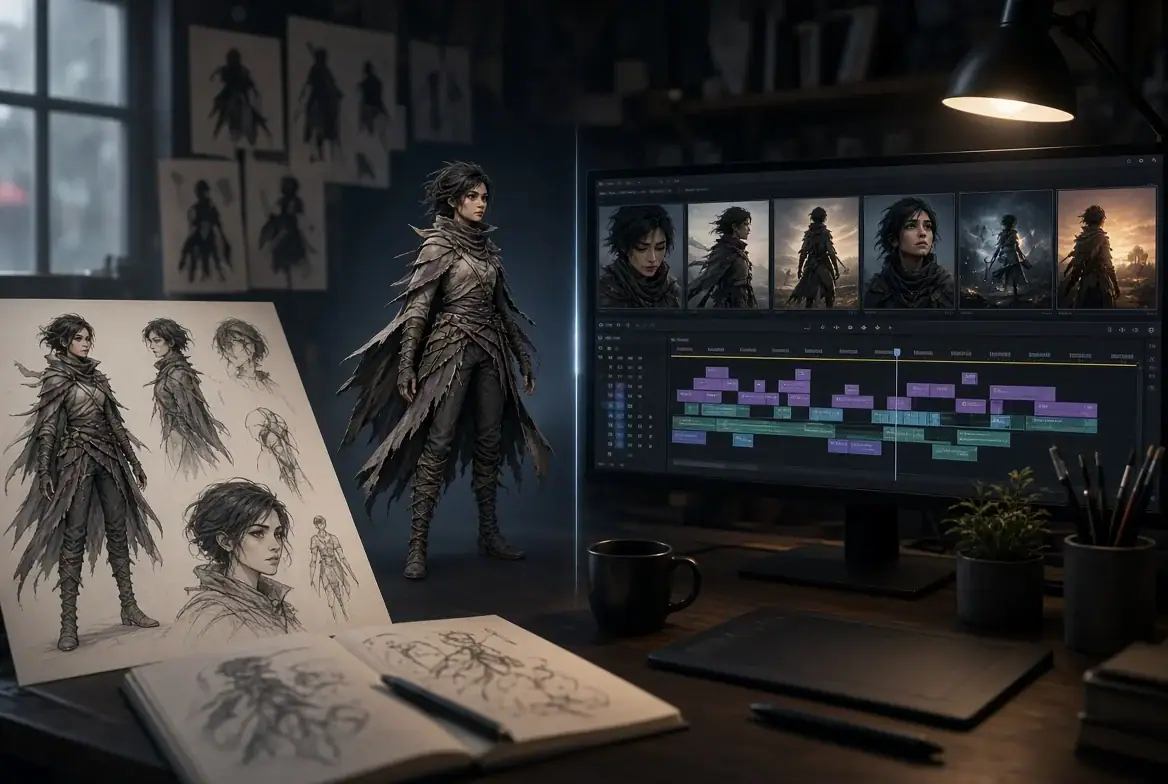
Original character art can make a striking still image. Turning that design into a short moving scene introduces a different challenge: the character must remain recognizable while the action feels connected to the story. Reference video recasting can help creators explore motion, provided they choose the reference for a narrative reason.
Motion is not the same as character
An illustrated hero can look perfectly composed in a portrait and feel oddly generic in a video. The problem may not be the rendering. It may be the borrowed movement. A bold dance step tells one kind of story; a hesitant look over the shoulder tells another. If the movement does not fit the character, no amount of visual polish will fix that mismatch.
Before searching for a clip, write one sentence about the moment. “She notices someone following her, then decides not to run” suggests a pause and a turn. “He arrives late but wants everyone to think he planned it” suggests an entrance with a bit of swagger. That sentence helps you choose a reference video whose timing carries the emotion you want.
Use footage you created or have permission to adapt. A famous scene or another artist’s viral clip may inspire the idea, but its popularity does not make it free material for a new post or trailer.
Look for a scene with one readable beat
For an initial character test, a single action is enough: enter, turn, reach, or stop. The camera should give the audience time to see who the character is. A quick sequence with several cuts may feel cinematic, but it can hide changes in the face or costume until the final piece is already assembled.
Watch the reference muted. Where does the viewer’s attention go? Is the subject large enough in the frame? Does the motion have a clear start and finish? A shot that works without dialogue gives you a sturdier foundation for a short character clip. You can add sound later, when you know the image itself communicates something.
The visual references should explain the character from the angles the action demands. A frontal portrait is a poor guide for a three-quarter turn if the hairstyle and costume are only defined from the front. Gather a few coherent views, keeping colors, accessories, and silhouette consistent. Ten contradictory drawings are less helpful than three that agree.
Treat the first render as a scene study
AI genjutsu allows a creator to use a short reference video or template and add images of an original character, outfit, or object. The new clip follows the source’s movement and timing while changing selected visual elements. For a character study, the prompt can be simple: replace the walking figure with the character in the reference images, keep the slow camera approach, and retain the pause before the turn.
The first result is a way to ask better questions. Does the character still look like the same person when the camera moves? Does the costume hold together during the turn? Does the pause feel intentional, or does it seem like an animation error? View the clip normally first, then inspect the frames where the character changes direction or crosses another object.
If the face shifts, try clearer views of the character. If the clothing changes, remove inconsistent artwork. If the performance feels wrong even when the image is stable, choose a different source movement. The last problem is a storytelling issue, not a prompt problem.
Build continuity beyond one attractive shot
A single clip can look convincing while failing to belong to the larger world. Before using it in a trailer, compare the result with your existing character art. Are the costume details and colors familiar? Does the environment fit the setting? Does the action imply a personality the character actually has?
For a series of social posts, reuse can work when it creates recognition. A recurring entrance or camera move can become a visual signature. But each post should reveal something new: a change in outfit, a new setting, or a different response to the same situation. Repeating a successful motion without a new beat eventually turns a character into a template.
Sound, captions, and cuts deserve their own pass. A synthetic scene should not be mistaken for footage of a real actor or event. If a recognizable person or borrowed music appears, confirm permission for the final use. The rights question is part of production, even for a few seconds of video.
Let the scene earn its place
AI genjutsu can make it easier to see how an original character might inhabit a movement that already works on screen. The creator still chooses the moment, checks the character’s identity, and decides what the scene adds to the story. A useful short video leaves the audience with a clearer sense of who the character is, not merely proof that the drawing can move.

Amanda Lancaster is a PR manager who works with 1resumewritingservice. She is also known as a content creator. Amanda has been providing resume writing services since 2014.