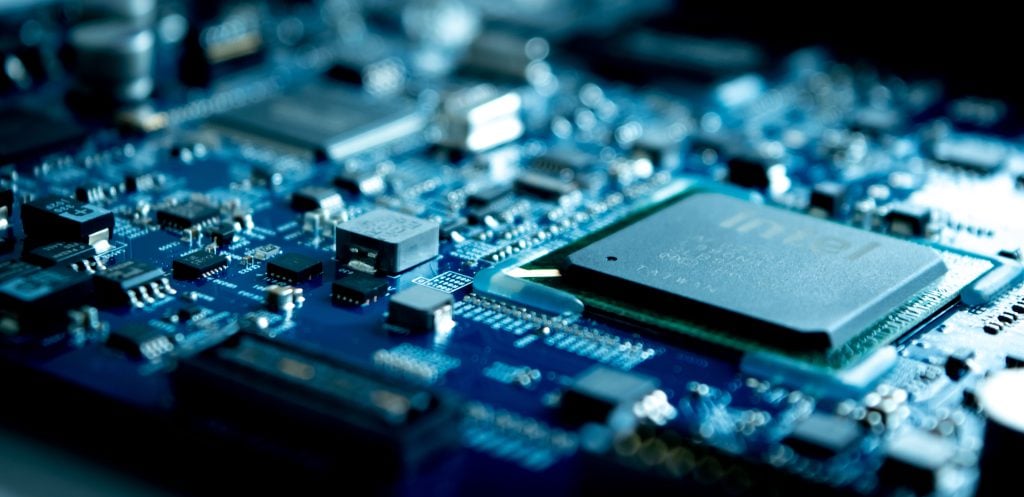
Circuit board recycling is one of the most consequential yet overlooked decisions an organization makes when retiring electronic equipment. Every server, router, workstation, medical device, and industrial controller contains at least one printed circuit board, and those boards carry both significant material value and significant liability. Handled correctly, circuit board recycling protects sensitive data, recovers valuable metals, and keeps a business in compliance with state and federal e-waste regulations. Handled poorly, it exposes the organization to fines, data breaches, and environmental penalties that far exceed the cost of doing it right the first time.
What Circuit Board Recycling Means for Businesses
For most companies, circuit board recycling is bundled into a broader IT asset disposition or electronics recycling program. The boards themselves are rarely removed and recycled in isolation. Instead, they leave the facility inside laptops, servers, printers, telecom equipment, point-of-sale systems, and a growing list of connected industrial devices. A licensed electronics recycling partner separates and processes those boards according to their composition, recovering metals while neutralizing the hazards baked into the assembly.
That distinction matters. Generic scrap recycling treats a board like any other piece of metal, which leaves money on the table and creates compliance gaps. Specialized printed circuit board recycling is engineered to maximize material recovery and document every step, giving businesses the records auditors and regulators expect to see. The result is a process that protects sensitive information, captures value, and stands up to scrutiny.
Why PCBs Demand Specialized Handling
A circuit board is essentially a layered composite of copper, fiberglass, plastic resin, solder, and trace amounts of precious metals, all of it engineered for durability. That durability is exactly what makes informal disposal so harmful, and exactly why recycling circuit boards through a licensed partner is the only defensible option for a business.
Hazardous Materials Inside Every Board
Lead solder, brominated flame retardants, beryllium, and nickel are common across older industrial and consumer boards. When PCBs are crushed in a landfill or burned in an unregulated facility, those compounds leach into soil and groundwater or release toxic fumes into the air. State and federal regulators have responded with strict disposal rules, and the consequences for noncompliance fall directly on the business that generated the waste, not the hauler who mishandled it. Proper circuit board disposal removes that liability and routes the materials into approved channels.
Data Security Risks Most Companies Overlook
This is the part of recycling circuit boards that most businesses underestimate. Boards inside laptops, servers, copiers, networking gear, and even modern HVAC controllers contain firmware chips, flash memory, and BIOS storage that can retain credentials, configuration data, and operational information long after the device is powered down. A board pulled from a decommissioned firewall, for example, can hold VPN settings and access rules. Tossing those boards into unsecured scrap channels is functionally identical to handing a competitor a copy of your network architecture. A licensed recycler handles those components under chain-of-custody controls and documents their destruction.
The Hidden Value Locked Inside Printed Circuit Board Recycling
Modern PCB recycling is profitable for a reason. A single metric ton of high-grade boards can contain more gold, silver, palladium, and copper than several tons of mined ore. Recovery of those metals through licensed circuit board recycling reduces dependence on new mining, lowers the embedded carbon footprint of future electronics, and offsets a portion of the total cost of disposal. For organizations refreshing equipment at scale, including large IT refreshes, data center migrations, and manufacturing line retirements, the value of recovered material can be meaningful enough to influence the overall economics of the upgrade.
The metals are not the only recoverable component. Plastics, glass fiber, and aluminum housings are sorted and routed into their own recycling streams under a zero-landfill model, which further reduces the environmental footprint of the equipment being retired. Done properly, PCB recycling closes the loop on the materials that built the original device.
How Licensed Recyclers Process Boards at Scale
The process behind professional circuit board recycling services is more involved than most clients realize, and understanding it helps businesses ask better questions of any recycler they consider.
Collection and Secure Transport
Boards rarely arrive at a recycling facility on their own. Licensed recyclers handle the logistics of pickup, packaging, and transport, often using their own fleet to maintain chain of custody from the loading dock to the processing facility. For sensitive equipment, the transport is sealed and tracked, and the business retains visibility throughout the move.
Dismantling, Shredding, and Material Recovery
At the facility, devices are dismantled and boards are separated by grade. High-grade boards, typically pulled from servers, telecom equipment, and industrial systems, are routed through processes designed to maximize precious metal recovery. Lower-grade boards from consumer electronics follow a different path, optimized for copper and aluminum. Mechanical shredding, magnetic separation, eddy current separation, and downstream metallurgical refining work together to extract clean material streams. Throughout the process, hazardous compounds are captured and managed under environmental controls rather than released. Every shipment closes with documentation, including a Certificate of Recycling that records the weight and disposition of the materials processed.
Industries That Generate the Most Circuit Board Waste
Some sectors produce circuit board waste at a volume that demands a formal program rather than ad hoc disposal. IT-heavy industries, including financial services, healthcare, and software, refresh server, networking, and workstation fleets on multi-year cycles that generate thousands of boards per event. Telecom carriers retire massive amounts of switching, routing, and transmission gear during network upgrades. Manufacturing operations replace programmable logic controllers, industrial PCs, and embedded systems regularly. Schools, hospitals, and government agencies cycle through laptops, tablets, and shared equipment on predictable timelines. In each of these settings, a recurring relationship with a licensed circuit board disposal provider is more efficient and far more defensible than handling retirements case by case.
What Compliant Circuit Board Recycling Services Should Include
A defensible program is built on a small number of non-negotiable elements. The recycler should be licensed and operate to recognized industry standards. Data destruction should follow accepted protocols, including DoD 5220.22-M wipes for drives where applicable and physical destruction where verification fails. Every pickup should generate a Certificate of Recycling that documents weight, materials, and destruction. The recycler should operate under a zero-landfill policy that routes every recovered material into a productive stream. Bulk pickup, scheduled service, and on-demand options should be available to match the operating tempo of the business. When those elements are in place, circuit board recycling stops being a compliance burden and becomes a routine, documented part of the asset lifecycle.
Making Circuit Board Recycling Part of How Your Organization Operates
Every device a business retires holds metal worth recovering, data worth protecting, and material worth keeping out of the landfill. Treating circuit board recycling as a strategic process rather than an afterthought protects the organization, recovers value, and supports the environmental commitments most companies now report on publicly. Partnering with a licensed, nationwide electronics recycling company makes that process repeatable, auditable, and economically sound at any scale.

Sandra Larson is a writer with the personal blog at ElizabethanAuthor and an academic coach for students. Her main sphere of professional interest is the connection between AI and modern study techniques. Sandra believes that digital tools are a way to a better future in the education system.