

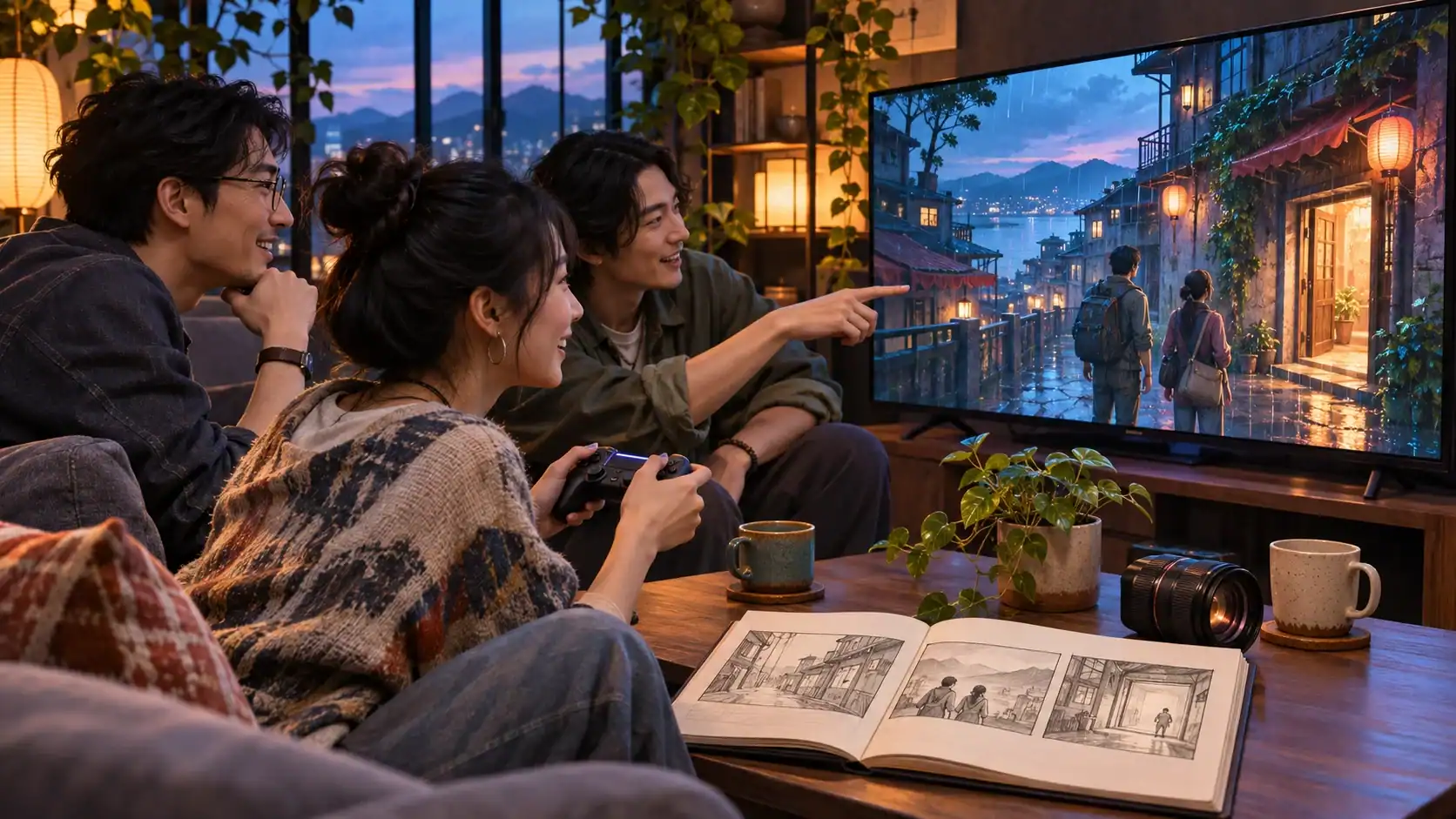
Have you ever sat through a film like Tazza: The High Rollers or the high-tension matches in Kaiji: The Ultimate Gambler and felt your heart racing? It’s a bit of a strange one, isn’t it? Even though we’re just watching from the comfort of the sofa, the atmosphere in these films is thick enough to cut with a knife. For years, East Asian cinema has mastered the art of the gaming narrative, but if you look closely, these stories aren’t really about the money or the cards. They’re about the people, the tension, and that unique sense of community that forms when everyone is focused on the same goal.
It’s fascinating to see how these cinematic themes have slowly started to mirror our own habits online. While we might not be dodging the elaborate traps set in a manga-inspired thriller, many of us are looking for that same sense of connection in our downtime. Whether it’s a quick round of something casual or a long chat in a virtual lobby, the social spirit of the “gaming den” has found a new, much more relaxed home in the digital world.
Please remember that gaming should always be a form of entertainment. It’s important to play responsibly and stay within your limits. If you ever feel that your gaming is becoming a problem, please seek support from organisations like BeGambleAware.
The Legacy of High Stakes: From Tazza to Kaiji
When we talk about the cultural fascination with games of chance in cinema, we have to look at South Korea and Japan. Films like Tazza: The High Rollers (2006) did something incredible for the genre. They took Hwatu, a traditional card game, and turned it into a high-stakes psychological drama. You can read more about the impact of Tazza on South Korean pop culture to see just how much it gripped the nation. It wasn’t just a hit; it became a cultural touchstone because it highlighted the wit and the social dynamics of the players.
Then you have Kaiji, which started as a manga before becoming a massive film franchise. It’s famous for its “restricted rock-paper-scissors” and other bizarrely simple games turned into life-or-death situations. While the stakes are obviously exaggerated for the silver screen, the underlying appeal is the same: the human element. We love watching how characters react under pressure, how they form alliances, and how they outsmart one another.
I’ve often wondered why these stories resonate so much with global audiences. I reckon it’s because they tap into a universal truth. We’re social creatures. Even in a competitive environment, we’re looking for a connection with the people across the table. This cinematic legacy has paved the way for how we view gaming today, moving away from the idea of a lone player and towards something much more shared and interactive.
Community over Competition: It’s the People That Matter
In many Western films, the lone hero often takes on the house in a solitary battle of wits. However, in Asian cinematic narratives, there’s a much stronger emphasis on the group. Even when characters are technically competing against each other, there’s an undeniable bond formed through the shared experience. Think about the bustling backrooms in Hong Kong cinema or the community mahjong games that appear in so many family dramas. These aren’t just places to play; they’re social hubs where gossip is traded, friendships are forged, and the game itself is almost secondary to the company.
This shift from competition to community is something we’re seeing more of in our own lives. Most people I talk to aren’t looking for a “jackpot” in the traditional, life-changing sense. They’re looking for a bit of a laugh and a way to spend time with others. The transition from cinematic ‘gambling dens’ to digital spaces is used to introduce the concept of community-centric play, specifically highlighting how online bingo games serve as a modern, social equivalent to the camaraderie seen in classic Asian gaming films.
It’s that feeling of being part of something. When you’re in a chat room or a digital lobby, you’re not just a username; you’re part of a conversation. The tension of the “big game” is replaced by the warmth of a “big chat.” It’s a much healthier and more enjoyable way to spend an evening, focusing on the social bonds rather than the outcome of the game.
The Digital Shift: From Spectatorship to Participation
We’ve seen a massive change in how people consume their entertainment lately. A few years ago, we were happy just to watch these high-tension thrillers on Netflix or at the cinema. But now, there’s a growing desire to move from being a spectator to being a participant. People are looking for ways to engage with these themes without the stress of the high stakes shown in the movies.
This is where “low-stakes, high-social-interaction” alternatives come in. Many fans of thrillers like Squid Game (without the grim bits, obviously) or Alice in Borderland are seeking out gaming environments that offer the same sense of mystery and excitement but in a safe, controlled, and friendly way. We want the “buzz” of the interaction without the pressure.
I find that this shift is particularly noticeable among those of us who have busy lives. After a long day at work, you might not want to jump into a highly competitive, fast-paced video game where everyone is shouting. Instead, you want something that feels like a virtual version of a pub quiz or a local bingo hall. It’s about winding down while still feeling connected to the world.
Modern Social Platforms: Digital Game Rooms
Modern digital environments have done a fantastic job of recreating the community spirit found in cinema’s most iconic game rooms. They’ve managed to take the best parts of those communal spaces—the friendliness, the shared excitement, and the visual flair—and make them accessible to everyone.
The aesthetics of these platforms often play a huge role in how we feel when we’re using them. I’ve noticed how the “Exclusive Bingo” games at Jackpotjoy draw visual and social inspiration from the communal atmosphere found in East Asian cinema. They use colours and layouts that feel welcoming and familiar, rather than cold and clinical. It’s a clever bit of design that helps to foster that sense of belonging.
These platforms aren’t just about the games themselves; they’re about the “rooms.” Each room has its own personality, its own regulars, and its own vibe. It’s the digital version of having a “local” where everybody knows your name. For many, this is the perfect middle ground—it provides the social interaction we crave from those cinematic narratives but keeps things light, fun, and easy to manage.
Why We Keep Coming Back to the Table
So, why does this cinematic community spirit continue to influence us? I think it’s because, at the end of the day, we haven’t changed that much. Whether it’s a group of friends playing mahjong in a 1960s Hong Kong apartment or a group of strangers chatting away in a digital bingo room in 2026, the heart of the experience is the same. We want to be seen, we want to be heard, and we want to share a moment with someone else.
The influence of Asian cinema has helped us to realise that gaming doesn’t have to be a solitary or purely competitive pursuit. It can be a bridge between people. By focusing on the social aspect, we take the pressure off ourselves and allow the experience to be what it was always meant to be: a bit of fun.
As we move forward, it’s likely that these digital spaces will become even more sophisticated, but I hope they never lose that “community first” approach. After all, the best stories aren’t the ones where someone wins a mountain of gold; they’re the ones where people come together, face a challenge, and walk away with a few new friends.
In a world that can sometimes feel a bit disconnected, these little pockets of social gaming are a great way to stay grounded. So next time you see a film like Tazza or Kaiji, look past the cards and the tricks. Look at the way the characters lean on each other, the way they talk, and the way they build their own little world. That’s the real magic of the game, and it’s something we can all enjoy in our own way, right from our own living rooms.
Gambling Disclaimer: This article is intended for informational and entertainment purposes only and should not be interpreted as an endorsement or recommendation to participate in real-money gambling. Casino games and online bingo involve financial risks, and players can lose money. Gambling is intended only for adults of legal gambling age in jurisdictions where it is permitted. Readers are responsible for verifying local laws, platform licensing, and eligibility requirements before participating. Geek Vibes Nation does not guarantee the safety, legality, or availability of third-party gaming platforms linked in this article. Always gamble responsibly, set spending limits, and never risk money you cannot afford to lose. For information and support, visit BeGambleAware.
Riley Cortez is a veteran sports betting strategist who blends data-driven analysis with real-world sportsbook experience. With a background in predictive modeling, Riley specializes in NFL props, NBA live betting, and long-odds futures markets. He writes with the goal of helping bettors make smarter decisions while navigating modern sportsbooks and evolving betting legislation.