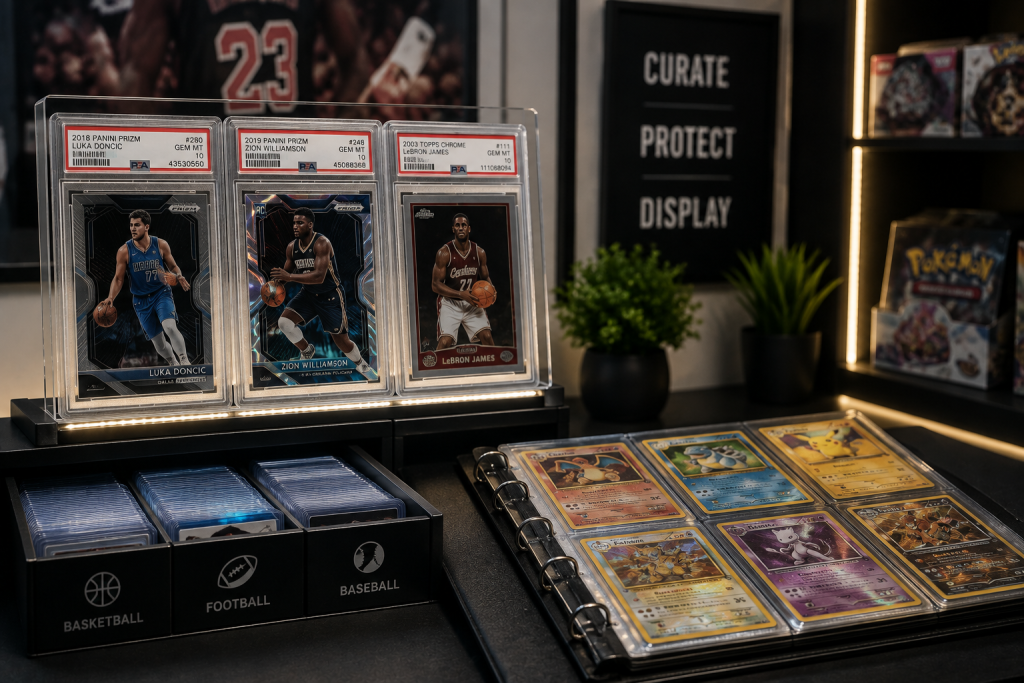
Collecting graded sports cards, trading cards, and special edition releases has become more than simply protecting valuable pieces of cardboard. For many collectors, the way a collection is displayed is just as important as the cards themselves. As collections grow, shelves and display cases can start to look inconsistent, especially when different eras, players, sets, and grading submissions are combined together.
Modern collectors are increasingly looking for ways to create a more organized and intentional presentation. Instead of viewing graded slabs as identical protective cases, many are adding visual elements that help separate themes and highlight specific parts of their collections. This approach allows collectors to showcase their favorite cards while maintaining the protection and authenticity that graded cases provide.
The Growing Trend Toward Curated Card Displays
A graded-card collection often represents years of searching, trading, investing, and personal memories. Whether a collector focuses on a complete trading card set, a legendary athlete, a specific franchise, or a particular era, each group of cards has its own story. A well-designed display can help communicate that story more effectively.
Many collectors are moving away from basic rows of identical slabs and creating displays that feel more like personal exhibitions. Color coordination, themed sections, and organized layouts can make a collection easier to appreciate while giving individual cards more visual impact.
This trend is especially noticeable among collectors who submit multiple cards from the same set or theme for grading. When dozens of similar slabs are displayed together, small design choices can help create separation and improve the overall appearance without changing the cards themselves.
Adding Visual Layers Without Changing Graded Cards
One of the biggest advantages of graded cards is that the protective case remains sealed and untouched. Collectors want to personalize their displays while keeping the original grading condition intact. This has led to growing interest in external accessories designed to complement slabs rather than modify them.
A PSA slab guard offers a simple way to add a visual layer around a graded case without opening, altering, or interfering with the certified card inside. These types of accessories allow collectors to introduce colors, themes, or presentation styles that match different sections of a collection.
For collectors building displays around favorite players, championship moments, complete sets, or personal grail cards, these small additions can create a stronger connection between the cards and the overall presentation. Companies such as Dragonscale Supplies provide collectors with options for guards and display accessories that support this type of customized approach.
Organizing Collections by Theme and Personal Meaning
A major benefit of themed display choices is the ability to organize collections based on what matters most to the collector. Some collectors may create a dedicated section for a favorite athlete’s career milestones, while others may highlight a complete card set from a specific year.
Color and design choices can act as visual markers that separate different categories. For example, a collector may use one style for rookie cards, another for rare inserts, and another for a personal collection of favorite cards. This makes a display easier to navigate and creates a more professional appearance.
This approach also helps collectors tell a story. Instead of presenting cards as unrelated items, a themed arrangement creates a connection between pieces. Visitors viewing the collection can immediately understand the purpose behind each section and appreciate the thought involved in building it.
Protecting Value While Improving Presentation
For serious collectors, maintaining card condition remains a top priority. Any display enhancement should support the protection of valuable cards rather than create unnecessary risks. External accessories are popular because they allow customization while keeping the original graded holder unchanged.
A carefully planned display can also improve the experience of collecting. Many enthusiasts spend significant time researching cards, tracking market trends, and building collections around specific interests. A thoughtful presentation allows that effort to be reflected visually.
As the hobby continues to expand, collectors are treating their displays more like curated showcases. Whether the focus is sports cards, Pokémon cards, or other trading card games, presentation has become an important part of the collecting experience.
The Future of Personalized Collector Displays
The collecting community continues to evolve, with more attention being given to creativity, organization, and personal expression. While card value and rarity remain important, collectors are increasingly interested in how their collections look and feel when displayed.
Future displays will likely continue moving toward customized layouts that combine protection with visual storytelling. Collectors are finding new ways to highlight meaningful cards, create themed sections, and make their displays reflect their individual collecting journeys.
A great collection is not only defined by the cards it contains but also by the way those cards are presented. By combining careful organization with thoughtful display choices, collectors can create showcases that remain engaging, memorable, and valuable for years to come.
Conclusion
Sports card and TCG collecting is entering an era where presentation matters as much as possession. Collectors are no longer limited to displaying rows of identical slabs; they are creating organized showcases that reflect personal interests, favorite players, complete sets, and memorable moments.
Adding external display elements provides an opportunity to create a more cohesive look while keeping graded cards protected and unchanged. As collections continue to grow, thoughtful presentation will remain a key part of the hobby. The future of collecting is not only about owning important cards but also about creating displays that celebrate the stories behind them.