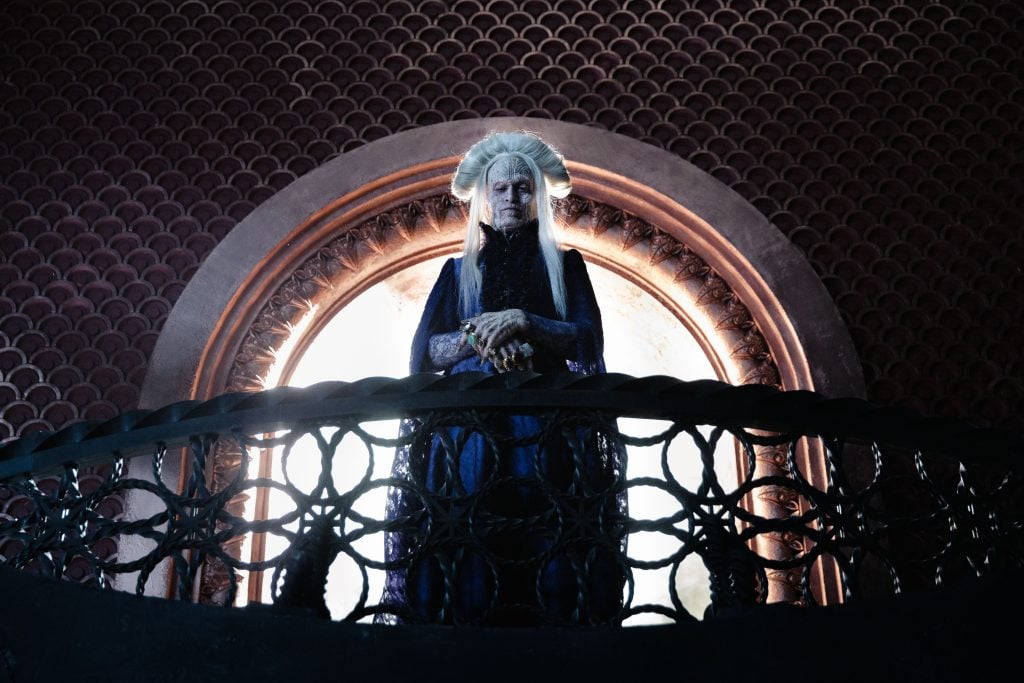
Dracula is a classic tale for good reason: vampires, romanticism, horror, and the macabre. These elements have been essential throughout countless adaptations and retellings of Bram Stoker’s novel. But for a story and a character that have appeared numerous times, how do you reinvent a legend? As we saw with Robert Eggers’ Nosferatu, there is an appetite. One might even say a bloodlust, for these tales featuring the creatures of the night. Enter this year’s Dracula from director Luc Besson, who, rather than defanging the Count, gives a version that leans more into gothic romance than vampire horror. It is a zany film that proves Dracula is far from dead and buried, but is cinematically alive and well.
In Dracula, Besson begins in the past. We find Vlad Dracula (Caleb Landry Jones) waging a religious war against the Ottomans. When his beloved wife Elisabeta (Zoë Bleu)is killed, he forsakes God and becomes cursed to eternal damnation. Over the course of four hundred years, he spends his time searching for the reincarnation of his wife, all the while spreading the vampire curse in his wake.
Much of the film’s opening is an updated version of Bram Stoker’s Dracula. On the surface, the film is in debt to the Francis Ford Coppola version, which first sought to explore the love story aspect of the Dracula story. Yet, where this film deviates and finds its footing is in its warm embrace as a gothic romance. Fans will not find a stalking creature of the night. Instead, this Dracula is more a dark prince, or fallen angel.
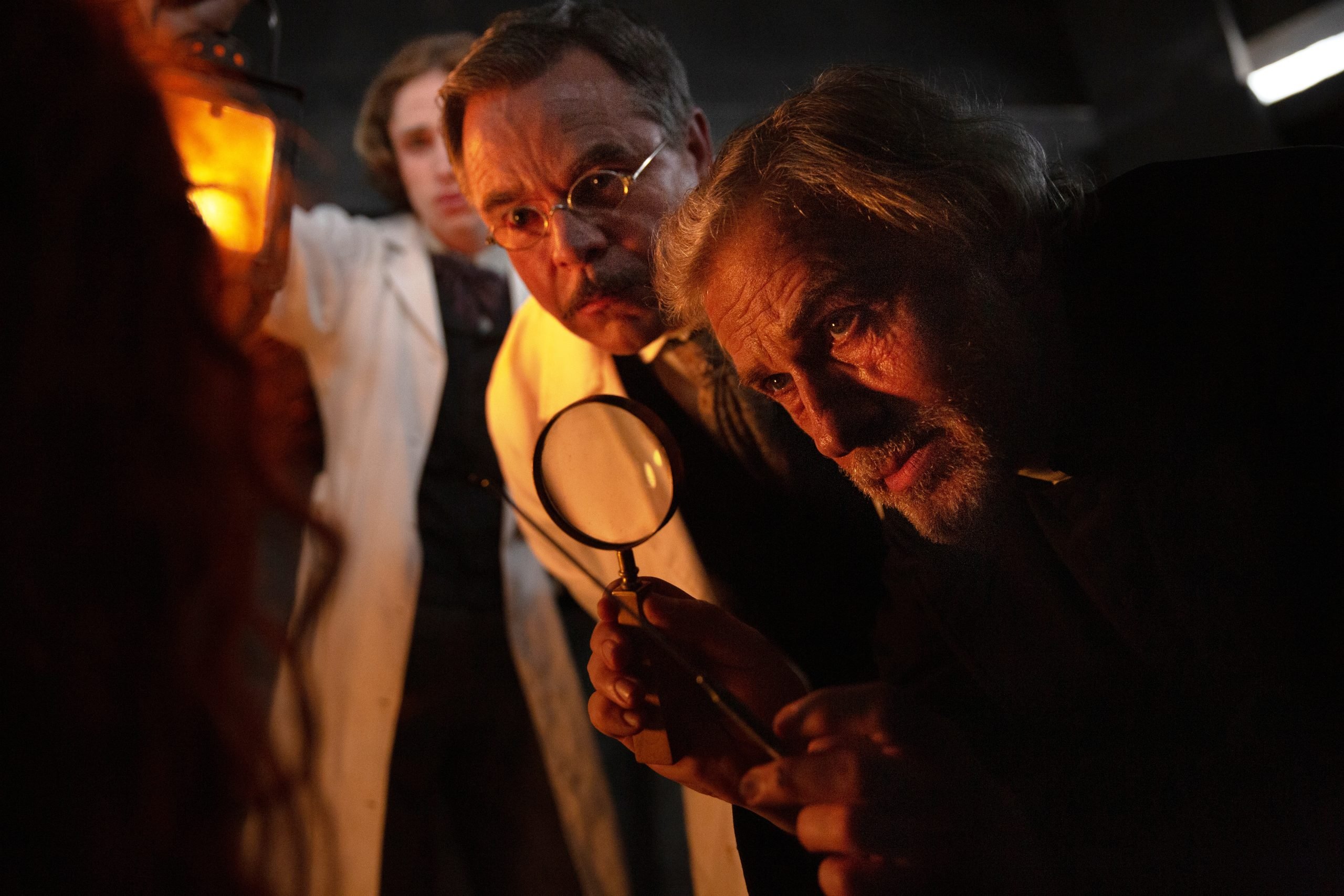
Dracula’s love is a nuanced element in the novel, and undoubtedly other films have sought to expand on it. The aforementioned Dracula by Coppola, and even the 1979 version, which doubled as a big-budget remake of the Lugosi film. Here, though, the love story is front and center. Over the fantastical, over the bloody horror. Those elements exist, but are more sideshow trappings. The main attraction is a romantic fable of passion and love rather than lust and possession.
The vampire element is more a curse or cross he must bear. The film introduces a unique aspect of Dracula’s power. The Count uses a perfume designed to lure women to him, while he searches for his reincarnated wife. Though do not fret, there is the presence of another vampiric minion who aids Dracula in his quest. Enter the character Maria (Matilda De Angelis), who doubles as this story’s Lucy and Renfield combination. The film also includes gargoyle goblins who act as Dracula’s praetorian guards. It is a jarring inclusion to the lore, but no less surprising a twist that further separates this Dracula from the myriad of other versions.
To its credit, the film takes the essential elements of the story and reshapes the narrative in a way that both honors the legacy and offers something new. As is the case in most accounts, Dracula meets with a relator, enter Jonathan Harker (Ewens Abid). Though unlike the usual English countryside setting where Dracula plans to call home, this film takes us to Paris in 1889, on the eve of the centenary of the French Revolution.
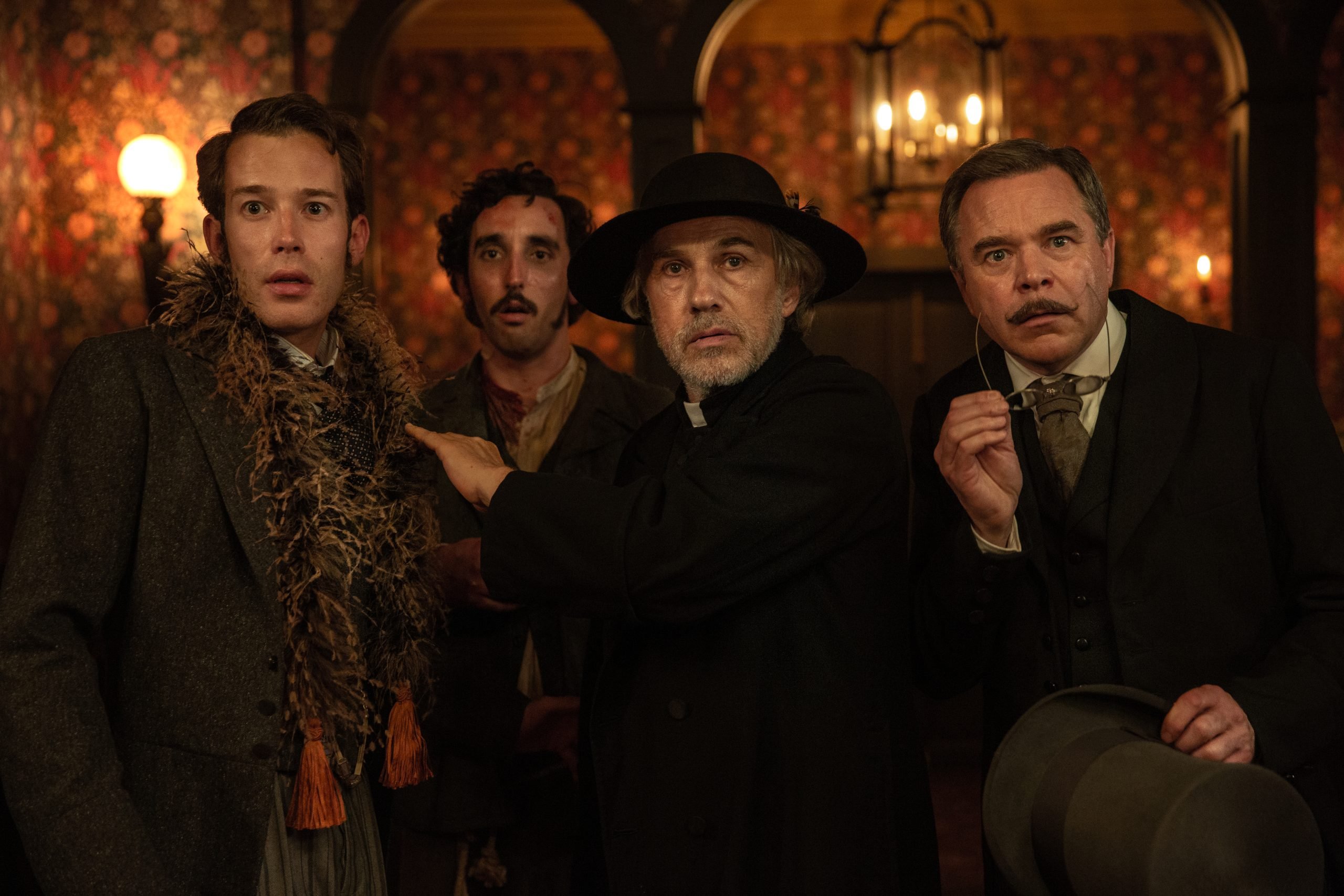
Here, the film does not simply change the setting for fun of it, but uses the Paris backdrops to infuse a sense of color and panache. There are no abbeys or creeping shadows in the countryside. Instead, in its place is a show of decadence and dramatic flair, allowing this Dracula to move more like an antihero than the usual creeping Nosferatu.
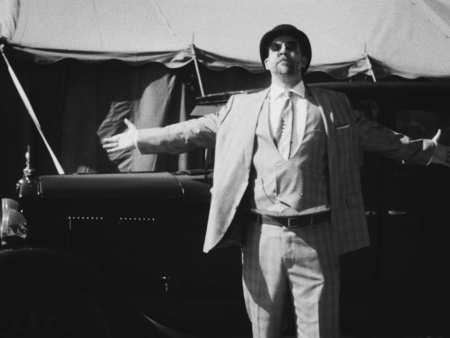
The script is unintentionally humorous. The rhetorical flourishes from Waltz and Landry Jones give the film a charming identity. There is a quirkiness in the air that cannot help but leave me aghast and enthralled. Those expecting a grand retelling of Dracula look elsewhere. This is its own beast, and it marches to its own unique tune, which, it just happens to be orchestrated by Danny Elfman.
Speaking of marching to its own tune, cinematographer Colin Wandersman infuses the film with a burst of light and grandiose atmosphere, making it feel almost like a dreamscape. Many versions bathe in shadows or mist. The images in this version have a unique brightness at odds with the traditional Dracula setting. Stylistically, the film wants to stand on its own. It paints a canvas that is both intimate, leaning into tragic-romance elements, and propulsive and gushing when the scenes become larger-than-life.
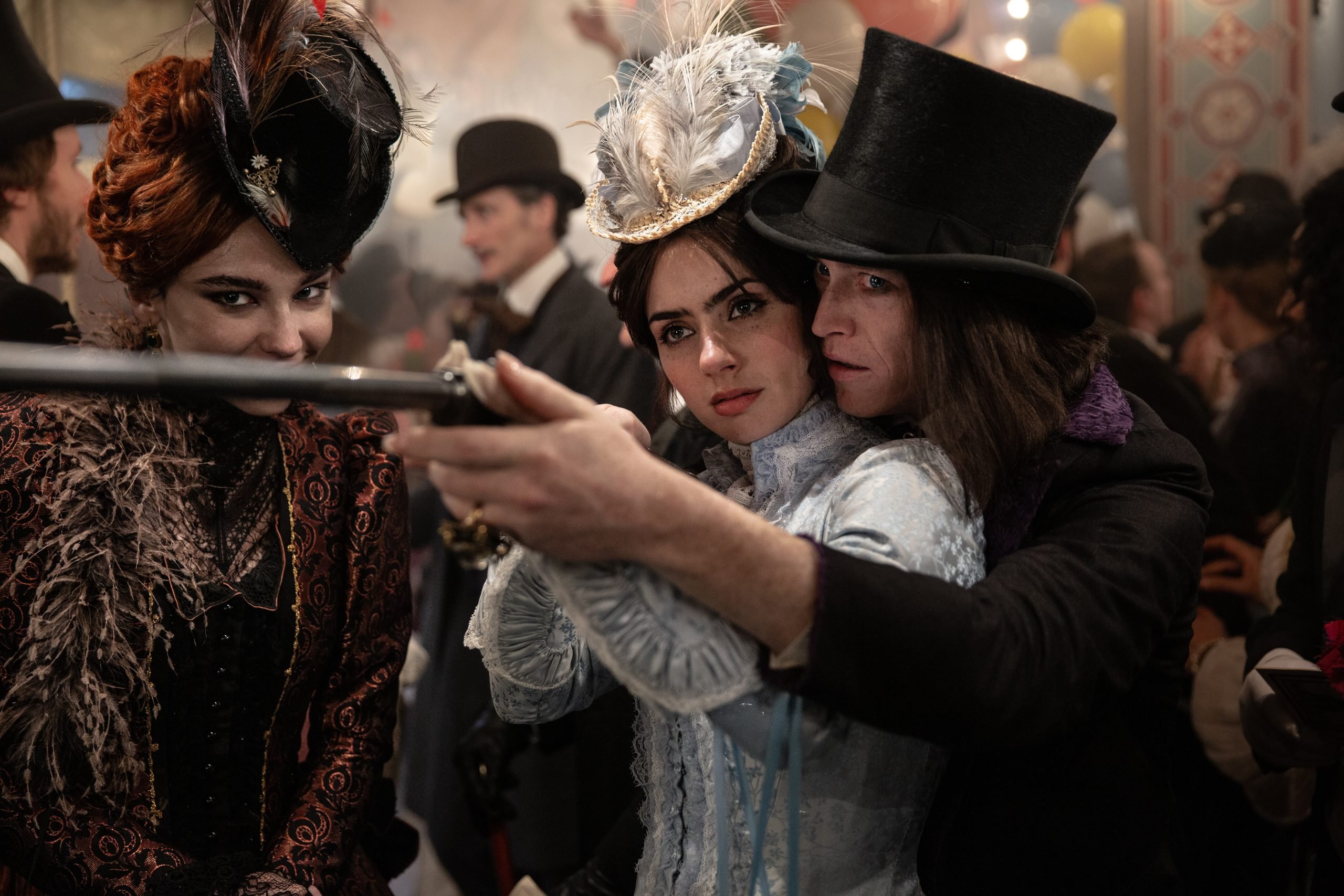
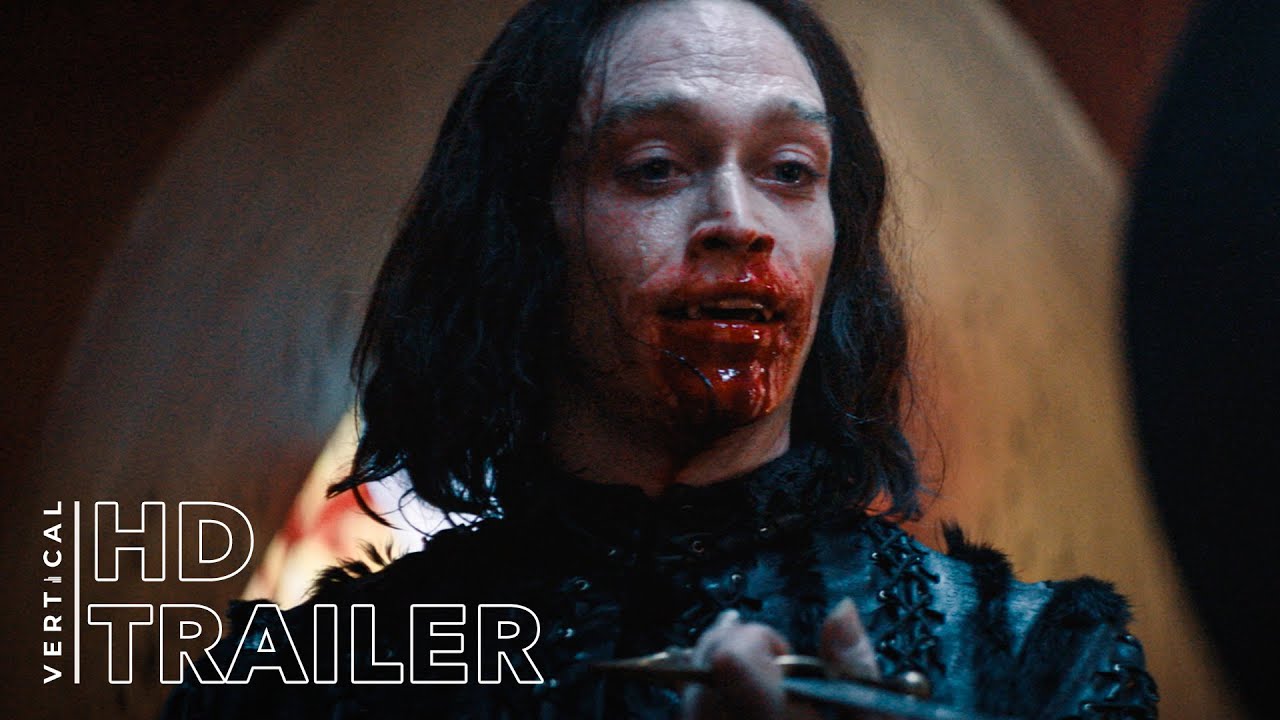
For Dracula himself, Landry Jones leaves his own mark on the legendary character. Rather than putting his own spin on familiar and oft-quoted lines, he gives us a vampire who still operates within the character’s history. He carves his own bloody path, both operatic and tragic. Never is he channeling one of his predecessors or conjuring a hokey impression. His Dracula is never meant to be a frightening bloodsucker but a sad character who evokes our sympathy.
Part of what completes the sale is his chemistry opposite Bleu, who also plays Mina, the reincarnated version of Elisabeta. The opening spends enough time establishing the love affair. When the star-crossed lovers are reunited, there is a feeling traveling across the sands of time to find one another. Whereas some interpretations of the angle feel forced, here Landry Jones and Bleu have remarkable chemistry, and we find ourselves rooting for their reunion.
Rounding out the cast is Christoph Waltz. He puts his own stamp on the Van Helsing character—playing an unnamed priest, sanctioned by the church to hunt down the vampire. This version is much less of a maniacal vampire hunter. He is a priest first and foremost. This dynamic adds an interesting wrinkle to the Dracula/Van Helsing rivalry, where there is much less hatred and more pity.
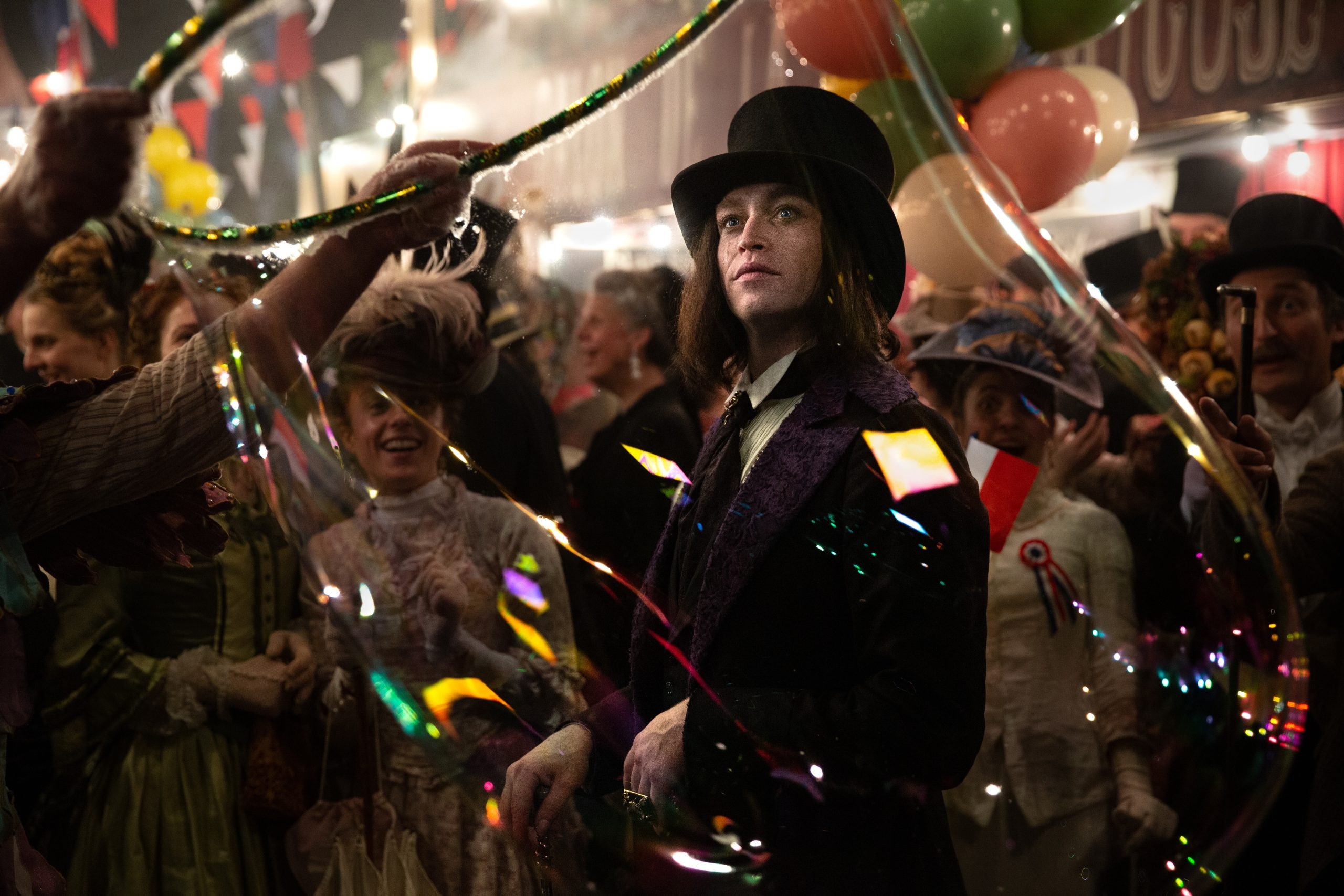
As an aside, this is a role Waltz was born to play. Delightfully, he draws echoes of Dr. King Schultz. He delivers hammy one-liners, infusing this film with humor amid all the ill-fated love. Amid the subtle yucks is a revealing portrait of a man enamored of his face as he attempts to make peace with evil.
Conversely, the movie struggles to reconcile tones that sometimes conflate. For much of it, we follow Dracula as a tragic antihero, cursed, while holding out hope of being reunited with his one true love. This element is the backbone of the story and pays off well inside the third act. However, this is a Dracula movie after all, so there must be blood and vampires and even a storming of the castle. All these elements run counter to the primary emphasis on this being a love story.
And yet, all these decisions, for as bold and even outlandish as they play out, somehow work. Dracula commits to the legend yet leaves a mark that will not be forgotten.Dracula is a story that will never die. The ability for writers and directors to find new elements that add to the rich, gothic tapestry that makes the Prince of Darkness eternal.
Dracula is currently playing in theaters courtesy of Vertical.
And yet, all these decisions, for as bold and even outlandish as they play out, somehow work. Dracula commits to the legend yet leaves a mark that will not be forgotten.

Writing & podcasting, for the love of movies.
His Letterboxd Favorites: The Dark Knight, Halloween, Jaws & A Christmas Story.