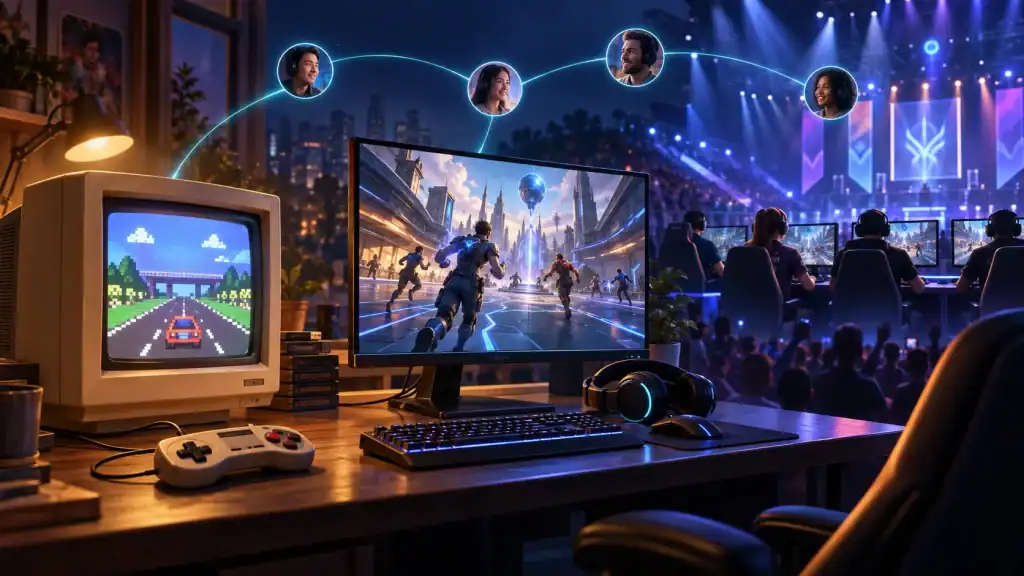
Online gaming. Changed a ton. Decades of it. Started with pretty simple multiplayer. Now? Global entertainment. Players chat. Compete. Team up. Build communities. Across borders. Better internet. Better hardware. Cloud tech. Smarter software. All pushed it forward.
Online games today aren’t just places to play against people. They’re social spaces. Competitive platforms. Creative outlets. Ongoing entertainment worlds. And tech keeps moving. Players and games? More interactive than ever.
From Local Multiplayer to Connected Gaming
Early multiplayer. Limited. Hardware held it back. Location too. Players usually needed the same room. Or a local network. Broadband changed that. Slowly. Remote multiplayer got practical.
Suddenly? Opponents and teammates from other cities. Other countries. Gaming shifted. Once something shared with friends and family nearby. Now huge international communities.
Modern online games can support thousands of registered players. Millions, even. How many are active at once? Varies a lot. Persistent online worlds keep people coming back too. Pick up where they left off. No starting over every time.
Faster Internet Has Changed Multiplayer Experiences
Internet speed. Reliability. Huge role. Faster connections move player actions and other info between devices and servers. Quicker.
Low latency matters most in competitive games. A delay between pressing a button and the server catching it? Changes gameplay. Especially fast-paced stuff. First-person shooters. Racing games. Fighting games.
So developers pay way more attention now. Server infrastructure. Matchmaking. Regional data centers. Network optimization. Behind-the-scenes systems. Big part of smooth multiplayer.
Cross-Platform Gaming Expands Player Communities
Cross-platform play. Another big one. Used to be, different consoles, computers, phones? Separate communities. Split up.
Cross-platform lets players on compatible systems join the same matches. Same shared worlds. Bigger communities. Device matters less.
Tricky to build, though. Developers juggle hardware performance differences. Control methods. Operating systems. Updates. Security needs. Balancing all that takes serious development. Serious testing.
For PC gamers, maintaining reliable hardware is just as important, particularly for demanding modern titles where overheating, component failures or performance issues can affect gameplay. Professional high performance gaming computer repairs can help diagnose hardware problems, improve system stability and keep gaming PCs performing reliably.
The Return of Classic Games Online
Modern games keep evolving. Older ones found new fans too. Through online platforms. Retro gaming communities let players revisit classics. No original hardware needed. Not necessarily.
Handheld fans, for example, can find ways to Play GBA Games Online. Classic Game Boy Advance experiences. Easier to reach now. Browser-based platforms also make it simple to Play Retro Games Online. Rediscover old-school gameplay.
Retro’s comeback shows something. New tech doesn’t wipe out old entertainment. Adds more ways to enjoy games from past generations. Honestly, kind of the opposite.
Voice Chat and Social Features
Online games keep adding communication tools. Talk while playing. Voice chat. Text messages. Friend lists. Clans. Guilds. Community systems. Single games turn into social spaces.
Huge for co-op games. Communication shapes how teams coordinate. Plan strategies. Split roles. Or just hang out while playing together.
Social features built communities outside the games too. Forums. Streaming platforms. Social networks. Dedicated chat services. Before playing. After playing. Always connected.
The Growth of Esports and Competitive Gaming
Tech turned online gaming into structured competition too. Ranked systems. Tournaments. Spectator modes. Organized events.
Esports opened doors. Pro players. Commentators. Coaches. Tournament organizers. Broadcasters. Content creators. Online infrastructure lets matches get played and watched by audiences worldwide.
Streaming tied competitive gaming even closer to entertainment. Viewers watch live gameplay. Follow tournaments. Interact with creators. Talk matches with other fans.
Cloud Technology and the Future of Gaming
Cloud tech. Shaking things up too. Traditional gaming needs heavy processing on the player’s own device. Cloud gaming shifts some of that to remote servers. Streams gameplay to a supported device.
Could make certain games playable on hardware that’d otherwise struggle. Depends heavily on internet quality, though. Server availability. Latency. Data usage.
Cloud’s useful beyond streaming games. Developers use remote infrastructure for multiplayer servers. Account systems. Content delivery. Backups. Analytics. Other online functions.
Artificial Intelligence in Online Games
AI’s showing up in games more and more. Lots of uses. Non-player character behavior. Matchmaking. Testing. Personalization. Procedural generation. Other systems.
Computer-controlled characters react to players in more varied ways. AI helps developers catch bugs too. Test different gameplay scenarios.
Brings new questions, though. Automation. Creative ownership. Player privacy. How much content should get generated on the fly? Those questions will only get bigger as AI gets more capable.
Security and Responsible Online Gaming
More connection. More responsibility. Online games collect and send info. Accounts. Servers. Chat systems. Payment platforms. Developers have to think about cybersecurity. Account protection. Cheat prevention. User privacy.
Moderation matters too. Big communities deal with harassment. Spam. Bad behavior. Other problems. Reporting systems. Community guidelines. Automated detection. Human moderators. All help keep things healthier.
Players have a part too. Strong passwords. Protected login details. Caution around suspicious links or messages. Plain and simple.
What Comes Next for Online Gaming?
Evolution keeps going. Internet infrastructure. AI. Cloud computing. Virtual reality. Gaming hardware. All developing further. Future games might offer even more connected worlds. Talk. Compete. Create. Explore. In ways earlier generations couldn’t pull off easily.
Tech changes. Core appeal doesn’t. Pretty simple, really. People like sharing experiences with other people. Tech builds the infrastructure. Game designers build the worlds, challenges, and systems that bring players together.
So online gaming’s history isn’t just better graphics. Better hardware. It’s a bigger shift. Toward connected digital entertainment. Communities. Interactive experiences. Even access to classic games. All central to the gaming landscape now.