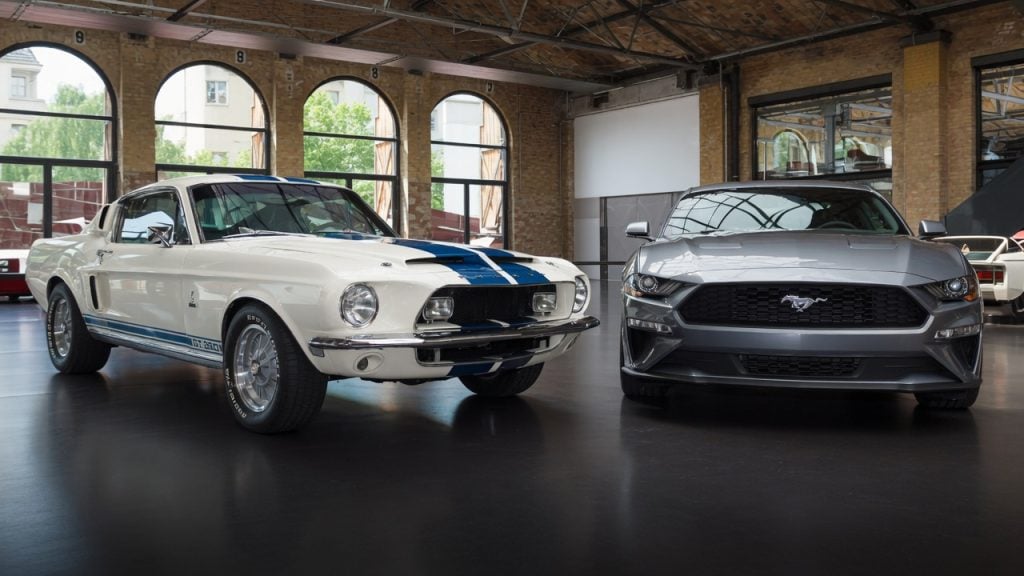
Few automotive lineages carry the emotional weight and mechanical credibility of the Ford Mustang’s performance bloodline. From the raw, race-bred machines of the 1960s to the track-focused supercars of today, the story of American muscle is one of relentless evolution. At the heart of that story sits a handful of iconic models that didn’t just define an era — they shaped the entire philosophy of what a performance car could be. Understanding this lineage means going back to where it truly began to matter: the golden age of Shelby-built Mustangs.
The Birth of a Performance Icon
By the mid-1960s, Carroll Shelby had already proven himself as both a racing driver and a builder of serious performance automobiles. His collaboration with Ford produced machines that transcended the typical pony car formula. The Shelby GT350 wasn’t simply a Mustang with cosmetic upgrades — it was a purpose-built performance vehicle designed to dominate both the street and the track. The 1967 model year represented a significant evolution of that formula, introducing a wider body, more aggressive styling, and refinements that made the car more accessible without sacrificing its competitive edge.
The 1967 variant arrived at a pivotal moment in American automotive culture. Muscle cars were proliferating rapidly, and the competition from General Motors and Chrysler was intensifying. Ford needed a flagship that could hold its own not just in showrooms but on racetracks. Shelby delivered exactly that — a car that balanced brute power with genuine handling capability, something that was far from guaranteed in an era when many performance cars were essentially straight-line machines with little regard for cornering dynamics.
Engineering That Stood Apart
What separated the Shelby GT350 from its contemporaries was the attention to engineering detail. The suspension was reworked to improve handling, the braking system was upgraded for better stopping power, and the high-revving small-block V8 was tuned to deliver power in a way that rewarded skilled drivers. These weren’t marketing decisions — they were the result of genuine racing experience applied to a production automobile. The car demanded respect and rewarded those who understood it.
If you’re serious about owning a piece of this history, the 1967 Shelby GT350 available through Revology Cars offers a meticulously restored and reimagined version of this legendary machine. Revology’s approach combines the authentic character of the original with modern reliability and drivability, making it possible to experience the golden age of American muscle without the compromises that typically come with vintage ownership. It’s a rare opportunity to connect with automotive history on a daily-driver level.
How Ford’s Technology Philosophy Has Evolved
The principles that Carroll Shelby applied to the GT350 — lightweight construction, optimized aerodynamics, and powertrain tuning — are the same principles that guide Ford’s performance engineering today. The methods have changed dramatically, but the underlying philosophy has remained consistent. Modern Ford performance vehicles benefit from decades of accumulated knowledge, advanced materials science, and computational tools that simply didn’t exist in the 1960s.
For a deeper understanding of how Ford has translated its racing heritage into contemporary technology, this detailed breakdown of Ford vehicle technology provides valuable insight into the engineering systems that power today’s performance lineup. From advanced driver assistance systems to hybrid powertrains and active aerodynamics, Ford’s technological evolution is a direct continuation of the performance-first mindset that Shelby helped establish decades ago.
The Role of Aerodynamics Across Generations
One of the most striking differences between the 1967 GT350 and modern Ford performance vehicles is the role of aerodynamics. In 1967, aerodynamic considerations were largely visual — the wide body and aggressive hood scoops of the Shelby were as much about appearance as function. Today, aerodynamics is a precise science, with active systems that adjust in real time based on speed, cornering load, and driver inputs. The goal, however, remains the same: keep the car planted, balanced, and responsive at the limits of performance.
The Mustang GTD: A Modern Heir to the Shelby Throne
If the 1967 Shelby GT350 represented the pinnacle of American performance in its era, the Mustang GTD makes a compelling case for that same title today. Ford’s most extreme production Mustang ever built, the GTD draws directly from the GT3 racing program and brings genuine supercar performance to a road-legal package. It’s a machine that Carroll Shelby himself would have recognized in spirit, even if the technology would have seemed like science fiction to him.
The latest expression of this philosophy is particularly striking. The Ford Mustang GTD Spirit of America Edition takes the already extraordinary GTD platform and adds a layer of patriotic heritage that connects it explicitly to the American performance tradition. It’s a deliberate nod to the cars that came before — the Shelbys, the Boss 302s, the Mach 1s — and a statement that Ford understands the cultural weight of the Mustang nameplate.
What the GTD Owes to Its Predecessors
The Mustang GTD’s development team didn’t start from scratch. They inherited a body of knowledge built over six decades of performance engineering, much of it traceable directly to the Shelby collaboration. The emphasis on driver engagement, the commitment to genuine track capability rather than just impressive specifications, and the willingness to make bold engineering decisions in pursuit of performance — all of these qualities echo the approach that defined the original GT350. The technology is unrecognizable, but the intent is identical.
Revology Cars: Preserving the Original Vision
While Ford continues to push the Mustang forward into new technological territory, there remains a powerful and legitimate desire to experience the original. Revology Cars has built its reputation on fulfilling that desire with integrity. Rather than simply restoring old vehicles to their original condition — with all the mechanical fragility that entails — Revology builds new versions of classic Ford and Shelby models using modern components and manufacturing standards. The result is a car that looks, sounds, and feels authentic while offering the reliability and safety of a contemporary vehicle.
This approach respects both the history of these cars and the practical needs of modern owners. A Revology GT350 can be driven regularly, maintained without specialized vintage expertise, and enjoyed without the anxiety that often accompanies ownership of a genuine 1960s collector car. It’s a thoughtful solution to a genuine problem, and it speaks to a deep understanding of what makes these cars meaningful to the people who love them.
Conclusion: A Lineage Worth Celebrating
The arc from the 1967 Shelby GT350 to the Mustang GTD Spirit of America Edition is not simply a story of increasing horsepower and advancing technology. It’s a story about a consistent set of values — performance, authenticity, and the belief that driving should be an experience worth having. Every generation of Mustang performance has built on what came before, and every enthusiast who chooses to engage with this lineage, whether through a restored classic or a modern supercar, is participating in one of the most enduring traditions in automotive history. The cars change. The passion doesn’t.

Robert Griffith is a content and essay writer. He is collaborating with local magazines and newspapers. Robert is interested in topics such as marketing and history.