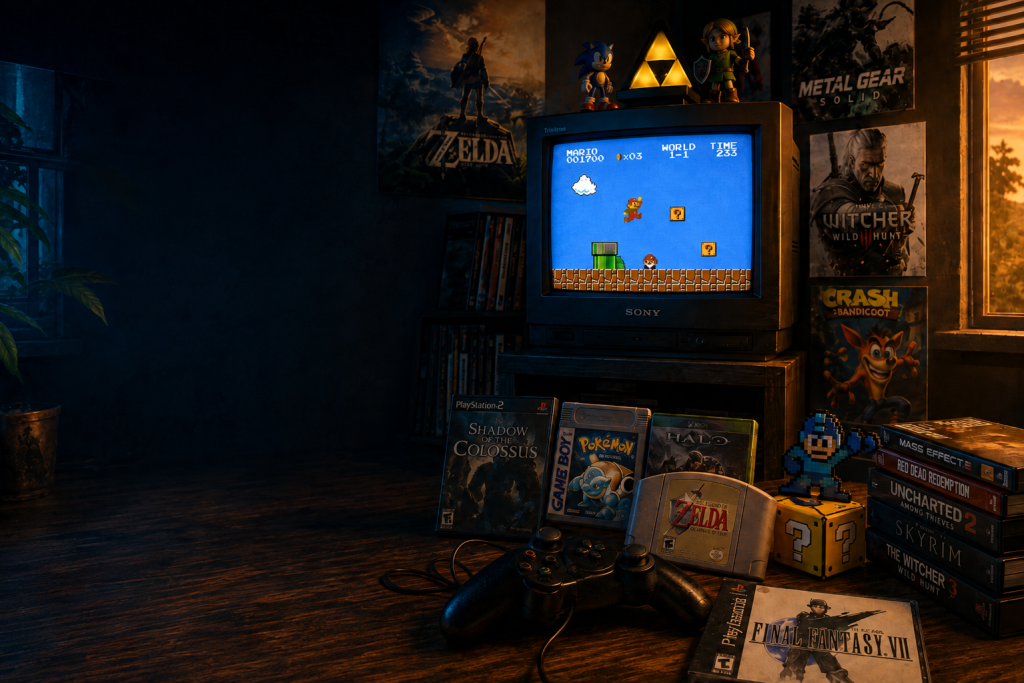
There’s something weird about booting up a game from 2007 and feeling more excited than when you start that brand new AAA title you just bought. Your Steam library is packed with recent releases, yet somehow you’re back playing the same game you’ve beaten six times already.
The gaming industry keeps pushing forward with better graphics, bigger budgets, and fancier technology. But players keep circling back to the same old favorites like they’re comfort food for the brain. What makes these titles so sticky that they survive console generations and graphics revolutions?
The Magic of Timeless Gameplay Loops
Great games nail their core mechanics so perfectly that everything else becomes secondary. Graphics age, stories get spoiled, but satisfying gameplay loops stay fresh forever.
This is why people still speedrun Super Mario 64 or grind ranked matches in Counter-Strike despite both games being older than some current players.
What makes gameplay loops addictive:
- Immediate feedback that feels good
- Clear skill progression you can feel
- Short sessions that respect your time
- Long-term goals that keep you coming back
- Mechanics deep enough to master over years
Take Tetris as the ultimate example. Blocks fall, you rotate them, lines clear. That’s it. No story, no characters, no progression system. Yet people have played it obsessively since 1984 because the core loop is pure perfection. Each game feels slightly different, and improvement is obvious and rewarding.
Dark Souls created a similar magic with its combat system. Every enemy encounter feels like a puzzle where learning attack patterns leads to that perfect no-hit run.
The dopamine hit from finally beating that boss after the twentieth attempt never gets old, which is why the Soulsborne community stays massive years after release.
Communities That Refuse to Die
Games don’t exist in a vacuum anymore. The social element keeps titles alive long after developers stop supporting them.
When a game builds a dedicated community, that community becomes the content. Players create their own reasons to return through competitions, challenges, and shared experiences.
Minecraft is the poster child here. The base game is essentially digital Legos, but the community turned it into everything from adventure maps to full programming tutorials. Servers create entire economies and social structures.
Modding Communities as Life Support
Some games achieve immortality through mod support. When developers give players the tools to reshape experiences, those games never truly age.
The base version might feel dated, but mods keep updating graphics, adding content, and fixing issues faster than any official patch could.
Skyrim came out in 2011, yet it’s still getting tens of thousands of concurrent players on Steam. Why? Because the modding scene turned it into whatever players want.
Want realistic weather and survival mechanics? There’s a mod. Prefer turning dragons into Thomas the Tank Engine? That exists too. The game underneath stays the same, but the experience stays fresh.
Benefits of strong modding communities:
- Free content that extends playtime indefinitely
- Graphics updates without official remasters
- Bug fixes when developers move on
- Entirely new game modes and mechanics
- Personal customization for individual preferences
Games like Garry’s Mod took this concept to the extreme. The entire game is basically a toolkit for creating whatever you want. The community built everything from horror experiences to roleplay servers to physics puzzles. It’s the ultimate example of players becoming developers.
Low Barriers and High Rewards
Accessible games that are easy to pick up but hard to master tend to have incredible staying power. You can jump in for 15 minutes or lose an entire weekend. This flexibility matches how people actually play games, especially as responsibilities pile up with age.
Rocket League nails this balance. The concept is soccer with cars, which anyone understands immediately. But the skill ceiling reaches absurd heights with air dribbles, flip resets, and ceiling shots that look like physics-defying magic.
Someone can enjoy casual matches forever while competitive players grind mechanics for thousands of hours.
Stardew Valley offers similar accessibility with surprising depth. It’s a farming sim that seems simple, but optimizing crop rotations, relationship schedules, and dungeon runs creates complexity that dedicated players love exploring.
chill vibe means you can play stressed or relaxed, focused or zoned out.
This kind of flexibility mirrors what makes certain reward structures appealing in other forms of entertainment. The concept works similarly to what users find appealing about https://pl.polskiesloty.com/kasyna-bez-weryfikacji/ — it removes barriers to entry while still offering genuine engagement.
Games as Digital Comfort Food
The titles that never die usually share common threads. They respect player time, offer clear progression, support communities, and nail their core mechanics.
Your backlog might be overflowing with critically acclaimed new releases, but don’t feel guilty about firing up that same game for the hundredth time. Some experiences are worth returning to not because they’re old favorites, but because they’re genuinely excellent in ways that don’t age.
The games industry keeps chasing innovation but sometimes the old formulas work because they’re simply right.