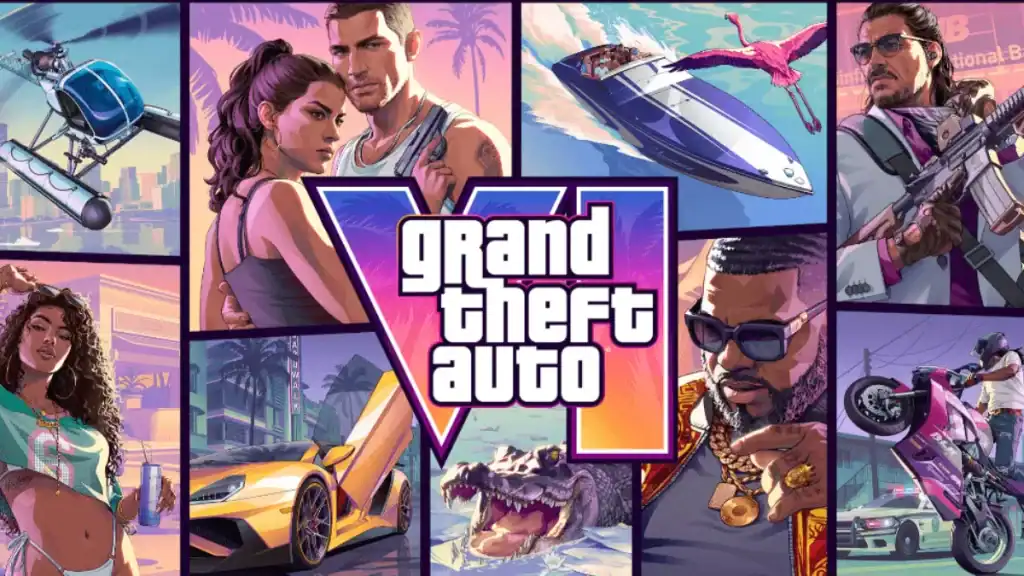
Grand Theft Auto VI will undoubtedly be one of the biggest video game releases in years, but anyone hoping to add a traditional physical copy to their collection is going to be disappointed.
Rockstar Games has already confirmed that the boxed version of GTA 6 will not contain a playable disc. Instead, customers who purchase the game at retail will find a digital download code inside the case.
That decision has generated considerable criticism from players who still prefer physical media, particularly because GTA 6 is exactly the kind of blockbuster release many assumed would continue receiving a traditional disc.
Take-Two Interactive CEO Strauss Zelnick does not appear convinced that producing one makes much sense anymore.
Speaking about the changing market for physical games, Zelnick argued that Take-Two is already overwhelmingly a digital business and suggested discs are becoming increasingly unnecessary for both publishers and customers.
He also compared the future of physical video games with vinyl records: something that may continue to exist for enthusiasts and occasional special releases, but no longer represents the primary way most people consume the medium.
Take-Two Says Its Business Is Already More Than 90% Digital
Zelnick pointed toward Take-Two’s digital business when explaining why the company is comfortable with the direction Rockstar has chosen for GTA 6.
“Our business is well over 90% digitally distributed,” Zelnick said, arguing that Take-Two is effectively operating as a digital company already.
The company’s own financial results support the broader point.
For the fiscal year ending March 31, 2026, Take-Two reported that 97% of its net revenue came through digital online distribution, compared with only 3% categorized as physical retail and other distribution.
There is an important distinction in those numbers.
Take-Two’s digital revenue does not represent only people purchasing full games through the PlayStation Store, Xbox Store or PC storefronts. The company operates enormously successful digital businesses built around downloadable content, virtual currency, subscriptions and recurrent consumer spending in games including Grand Theft Auto Online and the NBA 2K series.
In other words, saying 97% of Take-Two’s revenue is digital is not the same as saying 97% of customers who had the choice between a disc and a download selected the download.
It does, however, demonstrate why Take-Two sees digital distribution as the center of its business rather than an alternative to physical games.
Zelnick Says Discs Sometimes “Don’t Really Make Sense”
Zelnick’s comments went beyond acknowledging the popularity of digital purchases.
He argued that discs can become unnecessary from the customer’s perspective as games increasingly depend on online connectivity, account registration and large digital downloads.
For a game as enormous as GTA 6, producing enough physical media to contain the entire game would potentially require multiple discs. Players would also still need patches, updates and online connectivity for some features after installation.
From Zelnick’s perspective, if a customer is already connected to the internet and downloading additional data, the distinction between installing from a disc and downloading the game directly becomes less meaningful.
That argument makes sense from a convenience standpoint for many players. It becomes more complicated when the discussion turns from installation to ownership.
A physical copy is not valuable only because it provides game data without requiring a lengthy initial download. Players can lend it to someone else, sell it after finishing the game, purchase it secondhand or keep it after digital storefronts and licensing agreements change.
A download code inside a plastic case does none of those things.
GTA 6’s “Physical Version” Is Really A Digital Copy In A Box
Rockstar is still selling what it calls a physical version of Grand Theft Auto VI, but the meaning of that term has changed considerably.
The box contains a code that can be redeemed to download the game. There is no game disc inside.
Rockstar says the code-in-box edition will be available beginning November 12, one week before the game launches on November 19. That timing allows customers to redeem the code and preload the game before release.
The $79.99 Standard Edition will therefore provide the same digital game regardless of whether someone purchases it directly through an online storefront or buys a box from a retailer.
The biggest difference is essentially the packaging.
For collectors, that may still have value. A GTA 6 case can sit alongside physical copies of Grand Theft Auto III, Vice City, San Andreas, Grand Theft Auto IV and Grand Theft Auto V.
But the case itself cannot be used to play the game.
Once the code is redeemed, the license becomes tied to the appropriate digital account. The customer cannot later remove the code from that account, place it back inside the case and sell the game to someone else.
The Used-Game Market Is One Of The Biggest Things Players Lose
The disappearance of discs changes more than how games are installed.
A traditional physical copy creates a secondary market that exists largely outside the control of the publisher.
Someone can purchase a game for $80, finish it a month later and trade it toward another release. A different customer can then buy that used copy for less than the original retail price.
Friends can exchange games without each purchasing a separate license. Parents can buy used titles for their children. Local game stores can lower prices when inventory builds up.
Publishers make money from the first sale, but they generally receive nothing when that same disc changes hands again.
Digital distribution eliminates that entire cycle.
Every new customer must obtain access through an authorized digital transaction. There is no used digital copy of GTA 6 sitting on a shelf six months after launch for $39.99 because another player finished it and traded it in.
That gives Rockstar and Take-Two considerably more control over how much the game costs and when that price changes.
It is easy to understand why that model is attractive to a publisher. It is equally easy to understand why customers who use the secondhand market would see it as a loss.
The Vinyl Comparison Is More Nuanced Than It Sounds
Zelnick also compared physical video games with vinyl records, but his point was not that physical media will disappear completely.
He suggested that publishers may still produce occasional physical editions in the future, much as the music industry continues pressing vinyl even though streaming and digital distribution dominate everyday listening.
That comparison actually describes the direction physical gaming could be heading relatively well.
Vinyl is no longer the default way most people listen to a new album. It has instead become a premium product for collectors and enthusiasts who specifically value owning something tangible.
Physical games could follow a similar path.
Major publishers may eventually stop producing millions of standard retail discs while limited-edition companies and collectors continue supporting smaller premium runs.
There is one major complication, particularly for PlayStation.
Sony has announced that production of physical discs for all new games released on PlayStation consoles will end beginning in January 2028. After that date, new PlayStation releases will be sold digitally through the PlayStation Store or through retailers offering digital products.
That potentially makes the vinyl comparison harder to apply. Vinyl survived because companies still manufacture records for the people who want them. If a platform stops supporting the physical format entirely, publishers cannot simply decide to produce a small collector-oriented run whenever they feel there is enough demand.
GTA 6 Feels Like The Game That Should Have Been The Exception
If any modern release seemed likely to justify a traditional physical edition, it was Grand Theft Auto VI.
This is not a small game expected to sell primarily to an online niche. It is the sequel to one of the most commercially successful entertainment products ever created.
Grand Theft Auto V has remained relevant across three console generations, while GTA Online has kept millions of players connected to Rockstar’s version of Los Santos for more than a decade.
The arrival of GTA 6 is expected to bring people into stores, sell consoles and attract customers who may not purchase many other new games during the year.
That is precisely why the absence of a disc feels significant.
If Take-Two does not consider a physical disc worthwhile for something as enormous as GTA 6, it becomes difficult to imagine which mainstream releases would justify one in the future.
The decision feels less like an unusual experiment and more like a glimpse of where the largest publishers believe the industry is headed.
There Are Practical Reasons For Rockstar To Prefer Downloads
Digital distribution does offer advantages beyond eliminating the secondhand market.
A game needs to be finalized well before release if millions of discs must be manufactured, packaged and shipped around the world. Developers refer to the version sent for manufacturing as “going gold,” but development rarely stops at that point.
Studios continue fixing bugs, adjusting performance and preparing launch updates while physical copies are being transported to retailers.
A digital-only release reduces some of that pressure.
Rockstar can continue working closer to launch without worrying about which build has already been pressed onto millions of discs. Every customer can receive the same current version through a preload or update.
There are manufacturing savings as well.
Take-Two does not need to pay for multiple high-capacity discs, account for regional disc production or ship as much physical material around the world. A game expected to occupy an enormous amount of storage could otherwise require more than one disc.
Those are legitimate business and development considerations.
They do not change the fact that the savings primarily benefit the publisher while customers purchasing the Standard Edition are still paying $79.99.
Digital Games Were Once Supposed To Remove Physical Costs
The shift toward downloads has always carried an awkward question about price.
A digital game does not require a disc, plastic case, printed insert, freight shipment or physical retail inventory. Yet digital and physical editions have generally been sold at the same suggested retail price.
That continues with GTA 6.
The Standard Edition costs $79.99 even though every version ultimately becomes a digital download.
There is no cheaper price for customers who skip the box because the box itself contains no meaningful version of the game.
From Take-Two’s perspective, pricing reflects the value of the software rather than the cost of the container used to deliver it.
Consumers may view the calculation differently. If removing discs reduces manufacturing and distribution costs while eliminating resale, they may reasonably ask where their share of those savings appears.
Internet Access Still Matters
Zelnick’s argument that players are already connected is true for a large portion of the modern gaming audience, but not everyone has the same internet connection.
A massive game can take hours or even days to download in areas with slower broadband.
Some customers also face monthly data limits, unreliable rural service or networks shared between several family members.
Physical games increasingly require large patches, and many discs no longer provide a perfectly self-contained version of a game. Still, having much of the base game available locally can reduce how much data must initially be downloaded.
The code-in-box version of GTA 6 removes that possibility completely.
A player can own the case, insert nothing into the console and still need to download the entire game before playing.
That may be irrelevant to someone with gigabit fiber. It is a much bigger problem for someone downloading hundreds of gigabytes through a slower connection.
Take-Two Is Following A Much Larger Industry Shift
Rockstar is hardly the first company to move away from physical releases.
PC gaming largely abandoned discs years ago, with storefronts such as Steam making digital libraries the standard way millions of players purchase games.
Console gaming has held onto physical media longer, but even there the change is obvious.
Microsoft sells Xbox consoles without disc drives. Sony offers digital PlayStation 5 hardware and has now announced a future in which new PlayStation games will no longer be produced on discs at all.
More collector’s editions arrive without a copy of the actual game. Some retail releases contain only download codes or require substantial online downloads before they are useful.
Take-Two is responding to that market, but GTA 6 could also accelerate it.
Publishers will be watching closely to see whether the lack of a disc produces any meaningful resistance at the cash register.
If one of the most anticipated games in history sells tens of millions of copies without offering traditional physical ownership, other companies will have little reason to believe discs remain necessary for their own largest releases.
GTA 6 Is Unlikely To Be Hurt By The Controversy
The difficult reality for physical-media supporters is that Take-Two is probably correct about one thing: the absence of a disc is unlikely to prevent GTA 6 from becoming an enormous commercial success.
Players have waited more than a decade for a new mainline Grand Theft Auto game.
The story follows Jason Duval and Lucia Caminos through the fictional state of Leonida, with Vice City serving as one of its central locations. Rockstar has positioned the game as its largest and most immersive open world yet.
That level of anticipation gives Take-Two enormous freedom.
Someone who has spent years waiting for GTA 6 is unlikely to abandon the game entirely because the retail case contains a download code.
They may complain about it. They may refuse to buy the box. They may dislike the precedent.
But many will still purchase the digital version on November 19.
That makes GTA 6 a powerful test case for just how little physical ownership now matters to the commercial success of a major console game.
Zelnick May Be Right About The Market Without Being Right For Every Consumer
Zelnick’s comments are likely to frustrate players because he is looking at the issue through a very different lens.
Take-Two sees a business where nearly all of its revenue already flows through digital channels. Manufacturing discs for a shrinking segment of the audience can therefore appear inefficient, particularly when the company expects one of the largest game launches in history.
A physical collector sees something else.
They see an $80 game they cannot truly place on a shelf, lend to a friend or sell later. They see another part of gaming history moving from something people possess to something they access through an account.
Both perspectives can exist at the same time.
Digital distribution is more convenient for millions of players. It is also more profitable and controllable for publishers. Physical media is less popular than it once was, but it still provides consumer options that a download code cannot reproduce.
The real question is no longer whether digital games will become dominant. That battle has already been decided.
The question is whether dominance has to mean eliminating the alternative.
Grand Theft Auto VI launches November 19, 2026, for PlayStation 5 and Xbox Series X|S. Its Standard Edition is priced at $79.99, while the Ultimate Edition costs $99.99.
Customers can still buy a box. They just should not expect to find GTA 6 itself on a disc inside it.

DC Fanboy! Superman is the greatest comic book character of all time. Favorite movies are Man of Steel, Goonies, Back To the Future