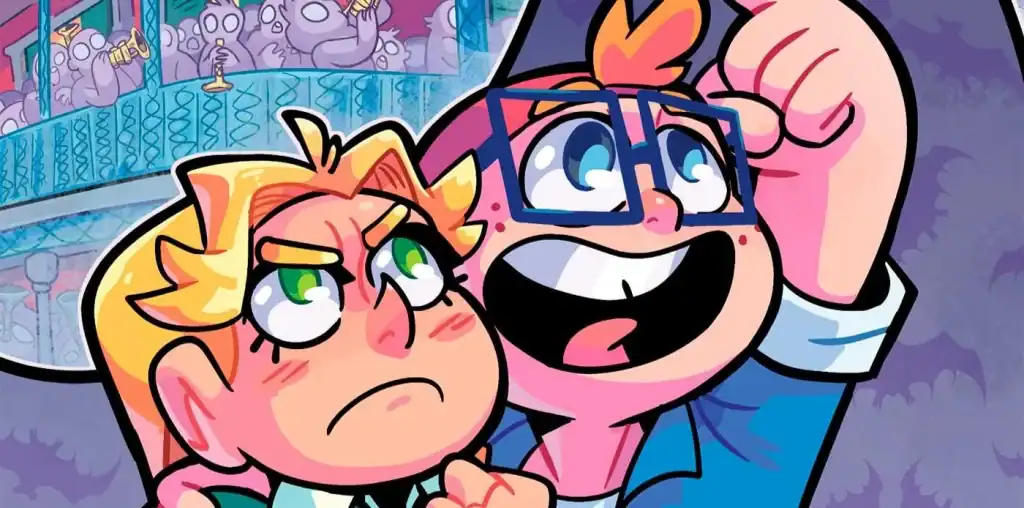
Tristian Evans of Geek Vibes Nation sits down with comic book writer and editor Chas! Pangburn to talk about his career in comics, his work on Double Booking, his experience with licensed properties, and what’s next.
GVN: Hello Chas! Thank you for stopping by Geek Vibes Nation to speak with us about your career in the comic book industry. Can you start by telling our audience about yourself and your work?
Thanks a bunch for having me, Tristian! G.V.N. has always had my back, so I’m more than happy to chat. You and your team are doing great work across the industry for all sorts of indie pubs and creators–every post truly helps. (Especially since it’s written by actual humans and not A.I.!)
As for me? For the past handful of years, I’ve been a senior editor of licensed comics at Mad Cave Studios, so most would know of my work on Speed Racer, Dick Tracy, Gatchaman, Flash Gordon, The Smurfs, various Disney books, etc. However, I’m now a full-time freelance writer, editor, letterer, and typesetter for not only Mad Cave but for various other pubs in the industry.
Most notably, I’m the co-writer of the upcoming Star Wars: A New Hope – Triple Take graphic novel and the award-winning “flip book” adventure series, Double Booking. I’m fortunate to co-write all of these with my older sister, Kim Shearer.
GVN: You’ve worked as an editor, writer, and letterer. What first brought you into the comics industry?
I actually spent the majority of my twenties working in TV/film/commercial production in Cincinnati, Ohio. Although I was involved with a lot of fun projects in a variety of roles, I was wearing too many hats. After some burnout, I realized I was at my happiest as a writer and telling my own stories.
Naturally, I dropped everything, enrolled at Full Sail University for my master’s degree in creative writing, and got to work. While in the program, I rediscovered my joy of comics and the storytelling involved. I quickly realized that, unlike TV/film, stories weren’t dictated by a budget–you didn’t have to “kill your darlings” because of a checkbook. As long as you have an interested artist, a page rate is the same whether they’re drawing a bunch of talking heads or action set piece. It’s a such a freeing medium–you can do a lot that other forms of media won’t even consider.
I was sold. I switched my focus from screenwriting to comic scripting and haven’t looked back.
While “trying to break in” as a writer, I realized I could also leverage my new degree as an editor. That led to freelance editorial work on books that got picked up at IDW, Dark Horse, and Scout. Being a glutton for creative work, I also used my prior graphic design experience to learn more about lettering and gigs on that front, too.
So, in short, too many hats, one hat, and then many hats again.
GVN: Was there a particular comic or creator that made you realize you wanted a career in the comic book industry?
A few, actually! My three “Js”: Jason (John Arne Sæterøy), Jeffrey Brown, and Junji Ito.
Jason is a master of emotional depth and pacing, Jeffrey Brown is the king of finding relatable humor and humanity in everyday moments, and no one can beat Junji Ito’s psychological dread and surreal art.
The common denominator between them all? Decompressed storytelling. I love getting to live with characters and moments as long as I can–they can hit your head and heart so much harder.
GVN: You previously worked at Mad Cave Studios and eventually became a senior editor of licensed properties. How did your responsibilities evolve over time?
I was first hired to be a senior editor at Mad Cave Studios way back in January of 2022. At the time, I worked on various work-for-hire and creator-owned books the company was putting out, but I knew of the bigger/longterm publishing plan. Eventually, the licensed train got moving in 2023, I hopped on board, and I juggled as many I.P.s as possible.
Licensed editorial work is essentially the same as standard editorial work…but with an extra step. With standard WFH/creator-owned books, judgment calls can be made in-house without any sort of oversight, but with licensed tales, you still have to get licensor-approval for every step of the comic’s creation. A publisher is playing in a sandbox for a limited amount of time, but it’s still the license-holder’s sandbox, if that makes sense. Sometimes, you get to work with collaborative licensors, who really let you play; other times, there are already strict dos/don’ts in place that have to be explicitly followed.
However, most of the time a publisher receives a license, you’ll see them just do a 4-5 issue series–maybe a few one-shots on the side, maybe a follow-up series here and there–and call it a day. At Mad Cave, we had bigger ambitions out the gate, so it was all about immediately making multiple titles within each world. Each license would get an ongoing series, so all spin-offs would revolve around that central pillar. Being the gatekeeper of it all, I had to become a one-stop knowledge shop for collaborators and coworkers.
GVN: You worked with properties such as Gatchaman, Speed Racer, Flash Gordon, and various Disney titles. How does editing a licensed property differ from developing an original series?
What people don’t necessarily think about is that you’re juggling the interests of multiple parties. There’s the company you work for, the creators under you, the licensor of the intellectual property, and your own editorial sensibilities. With different wants/needs from all, it can be a balancing act, but it’s definitely a fun challenge.
The key is researching/mastering the lore of each property, constant communication, full transparency, and tracking–if only you could see the spreadsheets I made!
GVN: All those titles are so different tonally. How did you adjust your editorial approach from one title to the next?
The interesting thing about Mad Cave Studios is that they have multiple imprints. Mad Cave proper (standard comics), Maverick (YA graphic novels), Papercutz (MG/AA graphic novels), and Nakama Press (manga). With a slate like that, they already have natural demographics built into each imprint, which makes things a little easier.
So, in a way, the biggest adjustments came down to the target audience. An action-packed floppy for comic shops is bigger/taller than a 6.5×9 middle grade book that’ll be in bookstores. With the former, you more page real estate, violence can be shown, maybe there’s cursing; with the latter, you have to pay more attention to the word choices and how it affects the reading level, the smaller page size, etc. Beyond that, every licensor has different rules, processes, and red tape to work through.
GVN: What are some of the most common challenges that arise during the production of a licensed comic?
Approval times, for sure. Some licensors are extremely timely in their responses, but others can sometimes take weeks (or months!) to get back to you due to their own internal bureaucracy. If one gear is stopped or broken, it halts everything that follows. Let’s say you’re waiting on line-art to be approved, so the colorist isn’t working…but that also means the letterer isn’t working, either. Small batches and staggering steps always help counteract that…but that means more approvals to work through.
In a timeline-based industry, any extra clock to worry about can make things more than a little stressful and down to the wire.
GVN: Looking back on your time at Mad Cave, what project best represents what you brought to Mad Cave?
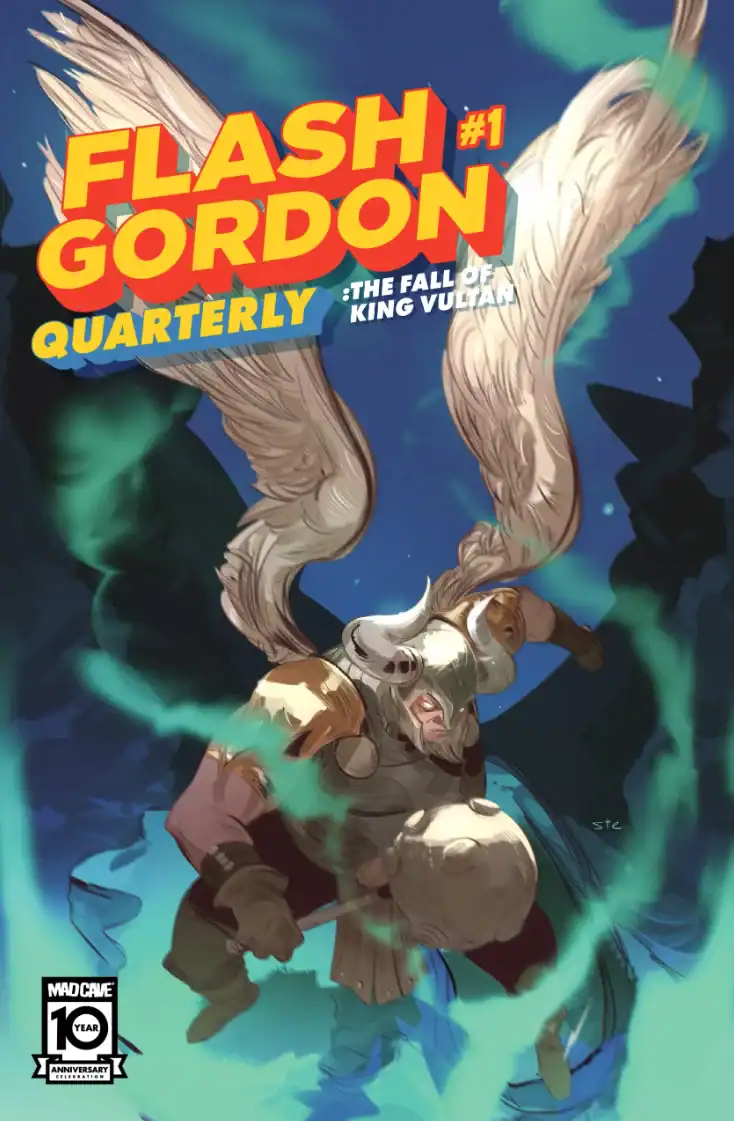
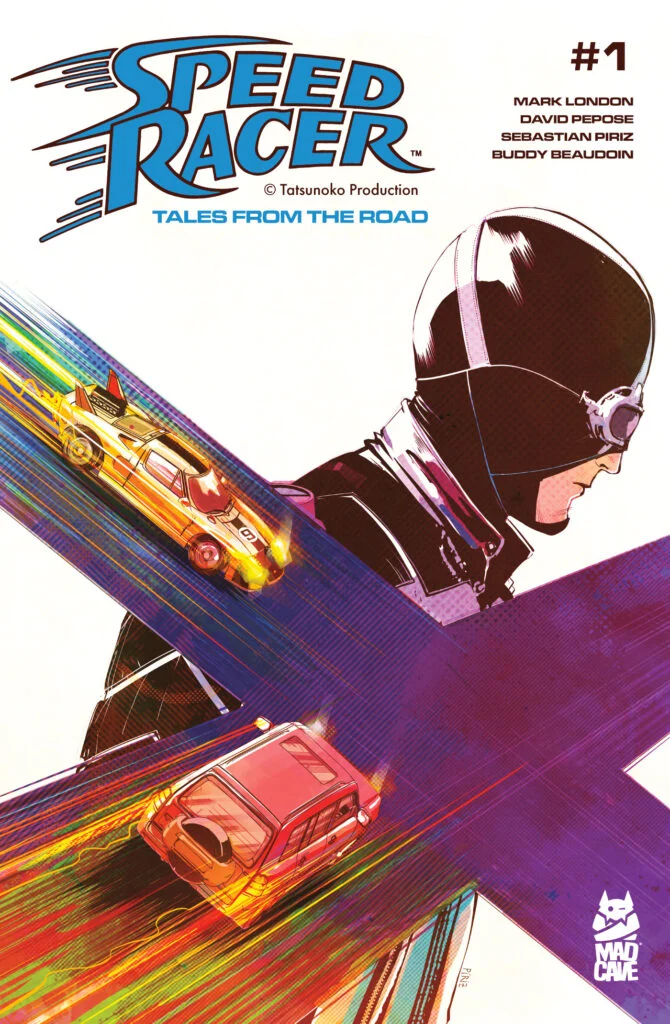
The quarterly releases for Flash Gordon Quarterly and Speed Racer: Tales from the Road. While I could’ve “taken the easy way out” by simply releasing one-shot tales, I wanted to do something interesting and fun.
Each issue has a “featured” cover story plus additional back-up tales. I used it as an excuse to pull in established pros, up-and-coming creators, and some who are completely new to the medium. Licenses can sell off the name alone, so I figured it’d be a great way to boost marketability and boost the portfolio of upcoming creators.
In this industry, some creators never get to work on a licensed book, so that single licensed bulletpoint can really open the door to more work.
GVN: Double Booking 3 comes out soon from Mad Cave’s Papercutz imprint. Could you tell our readers a little bit about the series and what to expect in the third installment?
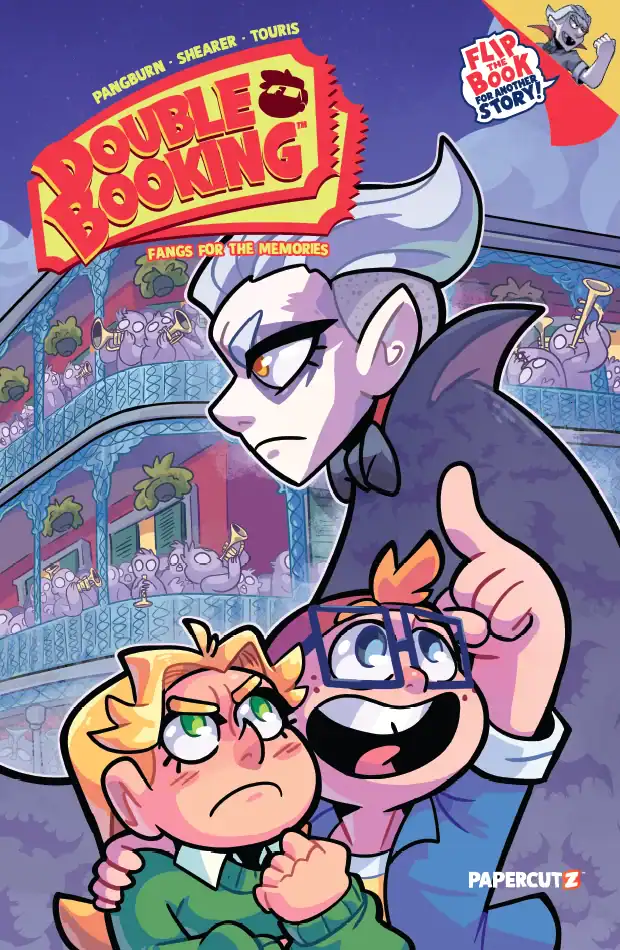
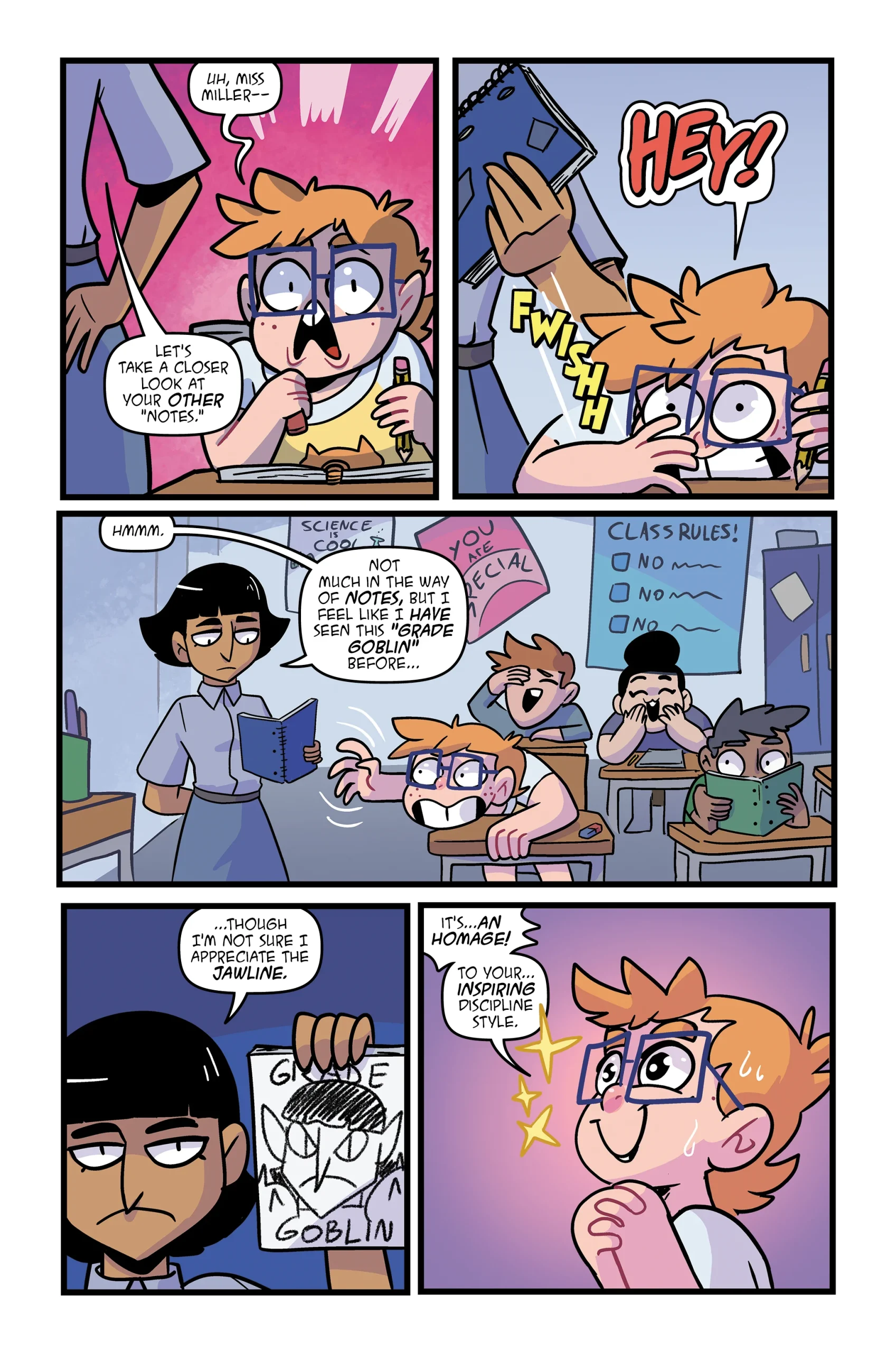
Double Booking is a middle-grade graphic novel series I co-write with my sister, Kim Shearer, with art by Nic Touris and color assistance from Anto Denise. It follows siblings Otto and Nan on supernatural adventures around the world, but there’s a twist: you read one sibling’s story on one side, then physically flip the book to read the other’s. Each side of the book has a different perspective—and a different art style—so you need to read both to get the full story. Very “he said, she said” Rashomon-ish storytelling filled with monsters, mysteries, educational components, and sibling disagreements–something my sister and I know a little about, haha.
Although it can be read on its own as a complete book, book three is a continuation of the character growth we’ve previously seen for the Reiner family. Otto and Nan may be older and wiser, but they still have so much to learn. There is a lot of fun family lore in this one, too. And zombies. And vampires. And a giant crocodile.
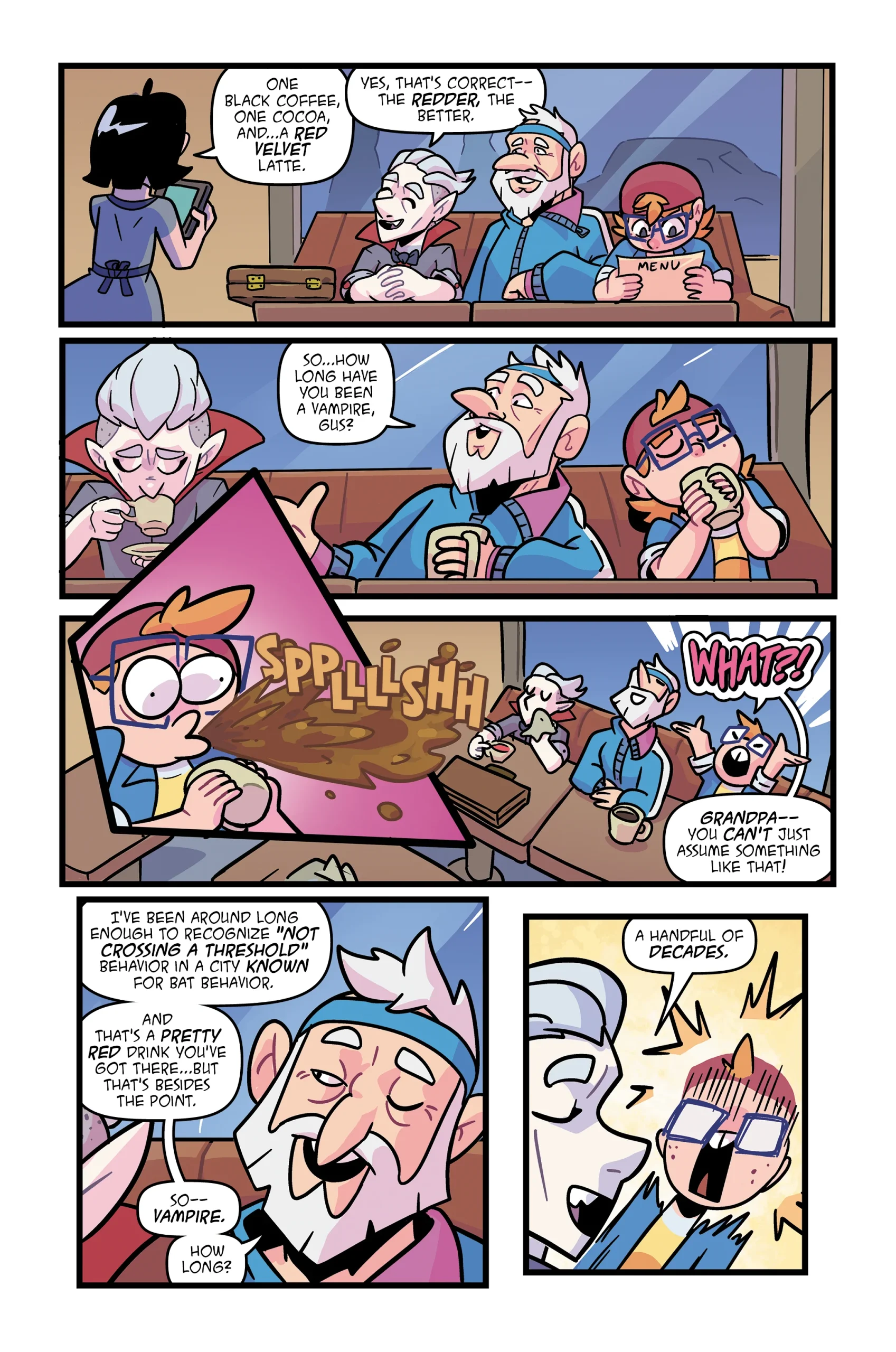
GVN: Siblings Otto and Nan visit New Orleans in this installment and encounter a vampire musician. What inspired the combination of jazz, vampires, and the city’s history?
For each Double Booking release, Kim and I meet up, spitball ideas, and come up with the book’s outline/breakdown together. The “monster” of the book is always the most fun element to figure out because the rest of the book falls into place from there. E.g., Double Booking: The Tail of the Mummy Cat had Princess Tiaa/”Mummy Cat”, so it naturally takes place in Egypt. Double Booking 2: When and Where Wolf? has Ralphie, the vegan werewolf, on a cruise ship during a high tide (with a stop in New York). When we decided on an vampire for this volume, it was natural for us to make things take place in the lore-ridden city of New Orleans. From vampires to music to voodoo, there are so many interesting elements we got to explore.
GVN: You and Kim are siblings writing about siblings. How much of Nan and Otto’s relationship is formed by your own experiences growing up together?
I’d say it’s less about experiences and more about personality. I’m very much a weird eccentric creative kid like Otto, whereas Kim is more calm, collected, and logical.
In a strange way, we could kind of “channel” who we already are when finding their voices and how they’d interact with each other. Outside of the older sister dynamic and divorced parents, there really isn’t anything else that lines up with our real lives!
GVN: How has your creative relationship with Kim and artist, Nic Touris, evolved since the beginning of the series?
With three years of meet-ups, phone calls, and trips under our belt, Kim and I have undoubtedly gotten closer. Co-writing a book is a very unique experience that not many get to do–especially not with a sibling!
Although we’ve only worked with Nic remotely, the same definitely applies to him. Beyond the usual work emails and chats, we’ve gotten to know him, his sense of humor, and his interests. As a writer, it makes things so much easier when I can reference a game, movie, or meme and he immediately gets what I’m going for. He always takes the ball and runs with it.
GVN: You and Kim also have a Star Wars story coming out next year. Can you tell us about that?
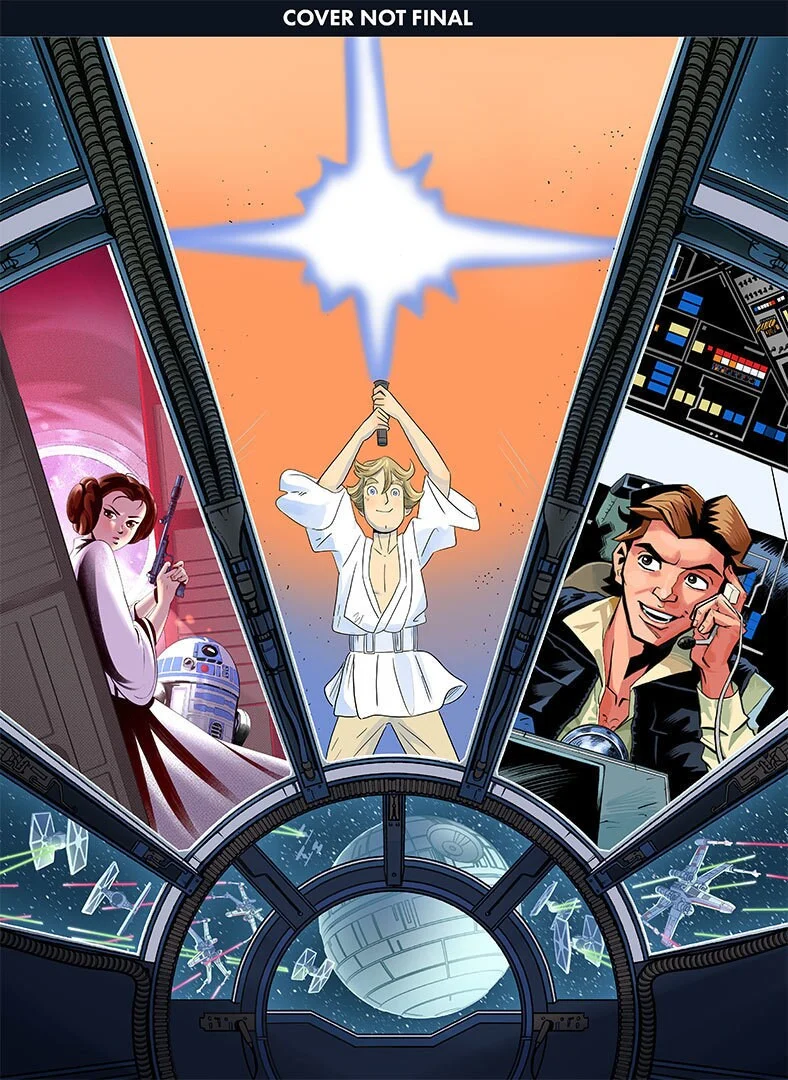
Building on the different perspectives in the Double Booking series, Kim and I got to co-write Star Wars: A New Hope – Triple Take. It’s an all-ages retelling of the original film through Luke, Leia, and Han’s different perspectives, celebrating its 50th anniversary. Luke remembers a sweeping hero’s journey, Leia remembers the very real stakes of fighting the Empire, and Han remembers being incredibly impressive. Naturally.
Each account has its own visual style, so the storytelling changes depending on who’s doing the telling. Same galaxy-changing adventure, but with three somewhat different recollections and a wrapper story!
A New Hope has experienced various retellings through the years–even graphic novels–but never in such a unique visual way. We’re fortunate to be involved and beyond excited for fans to check it out early next year.
GVN: A New Hope is one of the most well-known stories in pop culture. How did you go about making the story feel narratively fresh and new?
Sadly, we can’t go too deeply into those details just yet. However, I’d say to think of Obi-Wan’s famous line: “What I told you was true, from a certain point of view.” As with Double Booking, perspective matters!
GVN: Leia, Han, and Luke experience the same conflict from very different positions. What did writing each perspective reveal about these characters that audiences might overlook in the film?
Everyone’s the hero of their own story. Luke’s a dreamer, Leia’s very literal–a tactician, and Han’s a “the fish was THIS big” kind of guy. They all lived the same adventure, but how they tell it is another story.
The 1997 “Special Edition” releases are officially canon, so every new component created for the franchise builds from there. It’s all about playing in the gaps and not breaking existing continuity. Think: what if this scene started earlier or what if that scene continued on?
GVN: After spending several years helping other creators shape their stories as an editor, how does it feel to place greater emphasis on your own work as a writer?
It’s been incredibly fulfilling to give my own stories more time and care…and put my editorial experience to work in a different capacity!
When I write, I think about the whole production process: “Will this scene work on the page? Will the lettering swallow the panel? Does this description even make sense to an artist or colorist? What do my teammates need to know?” Knowing what goes into each step helps me write with my collaborators in mind.
Comics are collaborative. An artist isn’t just a pencil jockey executing your vision. You have to trust each other to build something together. The more you understand each role, the better a collaborator you can be. As an editor, you have to learn and know it all.
GVN: Do you see your future primarily in writing, or do you hope to continue balancing writing, editing, lettering, and production work?
Ideally, I’ll be writing more and dialing back other responsibilities, but I just can’t say no to any gigs that spring up. I live for collaboration and creation–it just doesn’t feel like work to me!
GVN: You’ve successfully carried a creative partnership with your sister across multiple projects. Are there more stories that you and Kim hope to tell together?
Time (and sales) will definitely tell! Keep those fingers crossed for more Double Booking releases, more Star Wars: Triple Take books, and other tales that might pop up.
GVN: Without asking you to reveal anything still under wraps, what can readers expect from the next chapter of your career?
More writing, editing, and lettering on TBA licensed projects. Some new licensors and publishers, some familiar ones. One way or another, I’m always hustling.
GVN: When you look at everything you’ve accomplished as an editor, writer, and letterer, what still feels like the dream project you’re working toward?
Honestly, it was this Star Wars book! I grew up a reluctant reader. Comics got me reading, and the Star Wars Expanded Universe novels quickly had me reading at an adult level. From the original Kenner toys to the Power of the Force releases to the Boba Fett tattoo on my leg, the franchise has been a huge part of my life. Getting to contribute to it is a dream come true.
Beyond that, I’m a huge gamer, so I can’t help but get giddy whenever I work on something in that world. I’m currently lettering Vampire Survivors for Titan Comics, but something else from a different publisher is being announced relatively soon. Haha, if I’m being honest with myself, I’d love to be known as the “gamer comic” guy.
GVN: What do you hope the name Chas! Pangburn represents within comics five years from now?
For better or worse, the work will always speak for itself. But I hope my name means more than just the stories I’m working on.
I hope my name brings to mind kindness, care, humor, and professionalism. I want to be known as someone who cares about the work and the people making it—someone you can count on, enjoy working with, and want to create with again.
At the end of the day, we’re making comics. We’re in the best industry in the world! We should be having fun while telling good stories. The experience of making the book is just as important as the final product in a reader’s hand.
GVN: Where can our readers connect with you online?
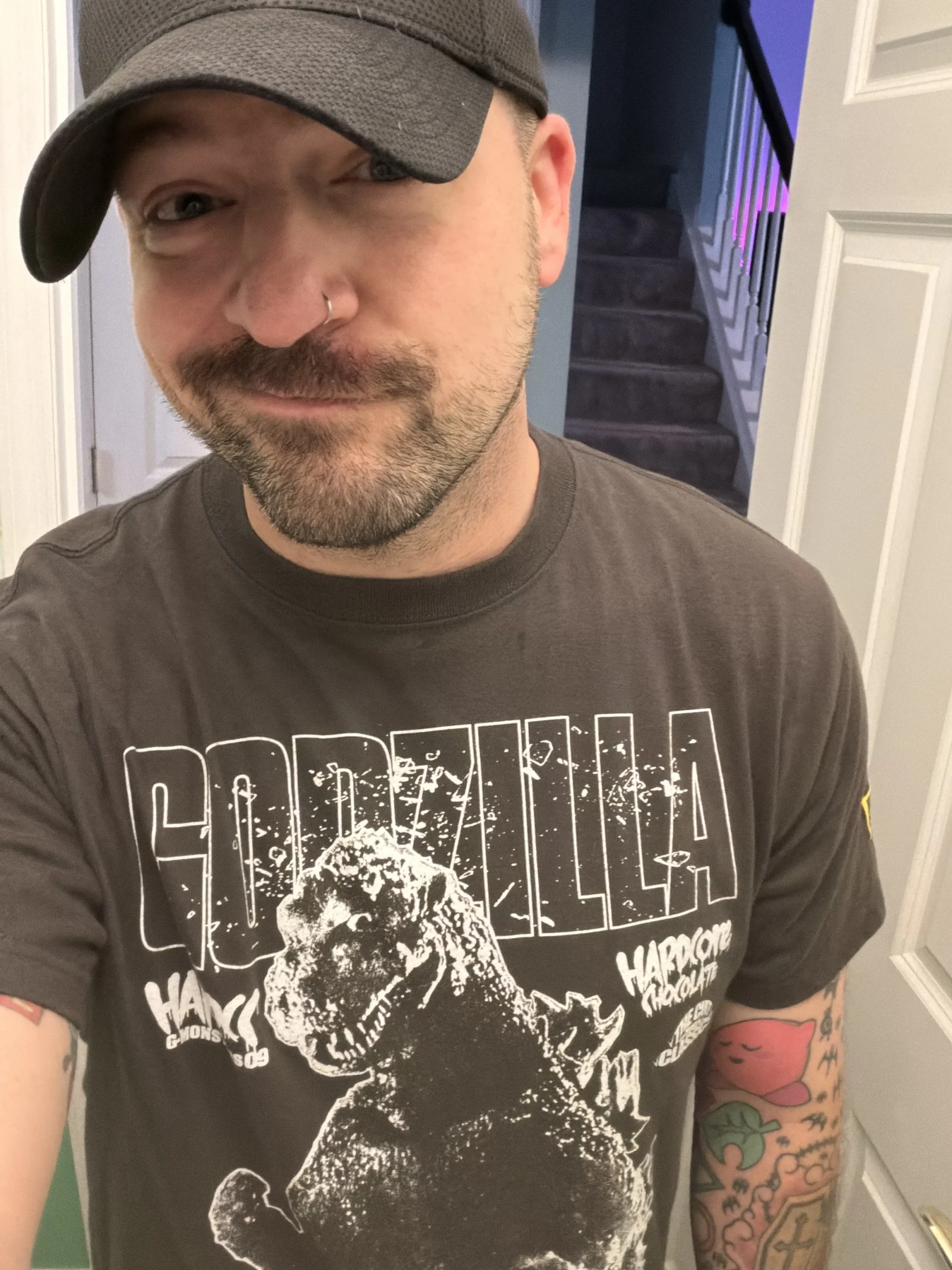
Feel free to give me a follow over on Instagram: @chasexclamationpoint
However, please note: my feed oscillates between projects I’m working on and a very cute (but bossy) Shiba Inu named Mira Beck Pangburn.
Dobule Booking 3 will available online and in-stores September 29th.
Star Wars: A New Hope: Triple Take will be available April 27th 2027.
Writer. Video Essayist. Film/TV Critic. Pop Culture Enthusiast.
When he isn’t writing for Geek Vibes Nation or The Cinema Spot, Tristian can be found typing away at one of the novels or screenplays he’s been working on forever.