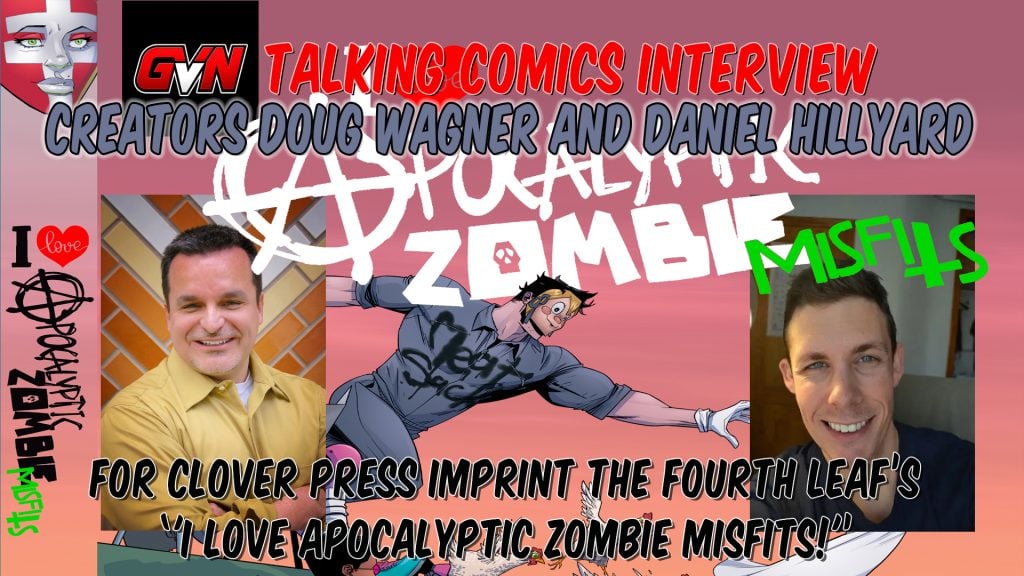
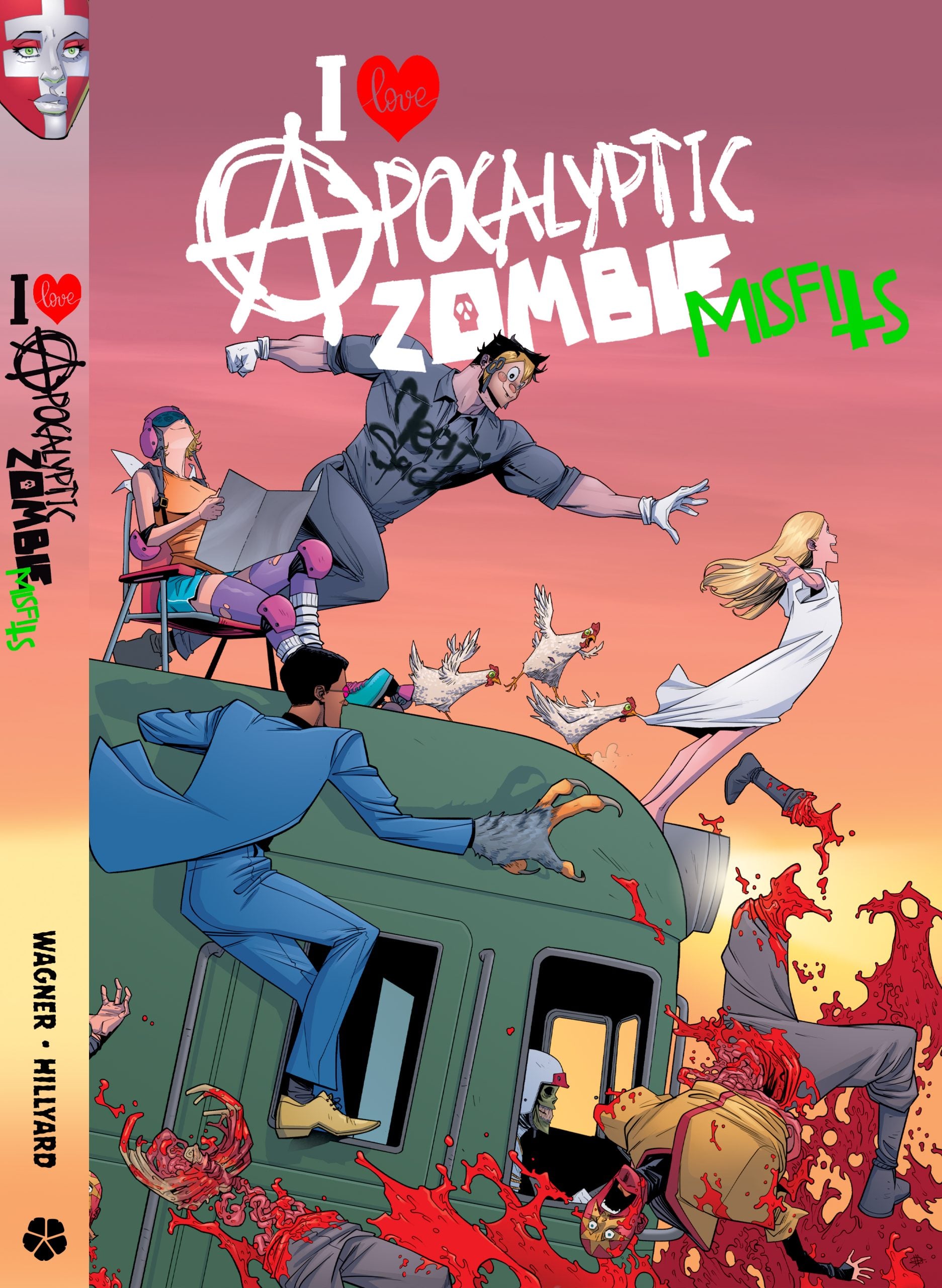
Some projects announce themselves with a whisper. Others kick the door off its hinges, set the room on fire, and dance in the smoke. I LOVE APOCALYPTIC ZOMBIE MISFITS! is unmistakably the latter. It is a gloriously unhinged, punk‑charged graphic novel from long-time creative collaborators writer Doug Wagner and artist Daniel Hillyard. Two creators who have spent decades refining the art of beautiful and fun chaos. Their latest collaboration, now on Kickstarter, arrives through Clover Press’ bold new imprint The Fourth Leaf, a home built for stories that don’t just color outside the lines — they redraw the entire page, which is right up Wagner and Hillyard’s alley.
Creators Wagner and Hillyard bring a feral, lived‑in energy to this world of misfits, mayhem, and mutated heart. It’s a book that refuses to behave, yet somehow lands with surprising humor and emotional weight. The kind of narrative only creators who trust each other implicitly can pull off. As The Fourth Leaf plants its flag in the comics landscape, I LOVE APOCALYPTIC ZOMBIE MISFITS! feels like a mission statement: fearless, unruly, and defiantly human.
Recently, we sat down with Doug and Daniel to dig into the creative spark behind the madness, the craft choices that shaped its tone and visual identity, and what this new imprint means for stories that thrive on breaking expectations.
The Creative Spark
GVN: It is always a pleasure to catch up with both of you again. It’s hard to believe it’s been more than five years since we last discussed your books “Narco” and “Plastic.”Time does fly. So, let’s jump right into “I LOVE APOCALYPTIC ZOMBIE MISFITS!” This book feels like a glorious collision of grindhouse chaos, punk‑rock attitude, and heartfelt misfit energy. What was the spark that convinced you both this particular brand of apocalyptic weirdness needed to exist, and when did you know it was a “Fourth Leaf” project rather than something for a traditional publisher?
WAGNER: For me, every story starts with one idea that refuses to leave me alone. With I LOVE APOCALYPTIC ZOMBIE MISFITS, it was the image of this ragtag group of supernatural misfits crossing the country together in a beat-up truck as the world was coming apart around them. I had no plot. I didn’t know who half the characters were yet. I just knew I wanted to climb into that truck and go wherever they were headed.
That’s usually my process. I don’t sit down and outline an entire series from day one. I start with an idea that excites me, then I spend months – or sometimes years – asking questions. Who are these people? Why are they together? Why do they stay together? Eventually the story starts answering those questions for me, and before I know it, I’ve got this wonderfully weird cast that somehow feels like a family.
WAGNER: As for The Fourth Leaf, it became obvious pretty quickly that this was the right home. AZM was never meant to be a standard monthly comic. Daniel and I wanted it to be a prestige hardcover graphic novel that readers could disappear into from beginning to end. When Hank started talking about a creator-focused imprint where the format serves the story and not the other way around, it felt like he was describing the exact book we’d already been making.
That’s what excites me most about The Fourth Leaf. It’s not just another imprint. It’s a place where creators can tell the story they’ve always dreamed of telling in the format that serves it best. That’s a pretty rare opportunity, and Daniel and I were thrilled to help kick it off.
Developing the Characters
GVN: The cast of I LOVE APOCALYPTIC ZOMBIE MISFITS! is wild, damaged, and strangely lovable. (I’m partial to Cecil and Yoel, myself). How did you approach building characters who are both absurd and emotionally grounded, and which one surprised you the most as the story evolved?
Wagner: I think the trick is not treating them like the joke. It’s easy to come up with a cool concept – a resurrected nerd in a serial killer’s body, a roller-skating archangel, a skinwalker – but if that’s all they are, readers stop caring pretty quickly.
Daniel and I spend a lot more time asking who these people are than what they are. What do they want? What are they afraid of? What are they carrying around that nobody else sees? Once we know those answers, the absurdity becomes fun because it’s happening to someone who feels real.
As for surprises… it’s probably Pavla. I always knew she’d be important, but I didn’t expect her to become the emotional glue that quietly holds this broken group together. She has this incredible strength that’s never loud or flashy. The more I wrote her, the more she kept surprising me.
That’s one of my favorite parts of making comics. The characters eventually stop feeling like they’re following your plan. They start making decisions that feel true to them, and your job becomes getting out of their way and writing down what THEY tell you happens next.
Pushing Art in New Directions
GVN: Daniel, your linework has always carried a kinetic, lived‑in grit. What visual rules — or anti‑rules — did you set for yourself to capture the book’s “beautiful disaster” aesthetic, and how did the apocalypse setting let you push your style in new directions?
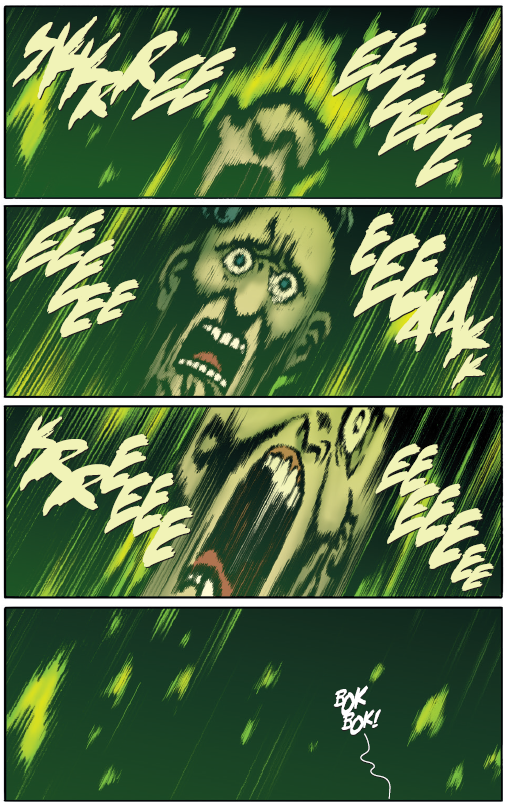
HILLYARD: Thanks so much. For AZM I wanted to try and be a bit looser and incorporate more textures and effects into my work. With my style, I usually make it a point to render everything even in a cartoony way. I don’t often leave myself room to let things be just a shape or a blur, but here I really wanted to try and push myself outside of my rendering comfort zone and try to make panels that felt more kinetic.
You used the term “punk-rock” earlier and that was exactly the feeling I wanted to go for. The push for more texture brushes especially in the environments was something I wanted to try out too. I think with AZM it’s important that the world feels lived in and ancient, like there’s an old jar somewhere in there with hundreds of years old ghosts in it [laughs]. Each new story that Doug and I work on presents unique challenges and opportunities. I think by its nature as this sort of supernatural road trip western, it became the perfect place to really lean into trying these out.
Putting the Characters FIRST
GVN: Doug, the book balances humor, horror, and genuine pathos without ever feeling like it’s winking at the audience. What tonal decisions were non‑negotiable for you, and how did you keep the emotional core intact amid all the chaos?
Wagner: I don’t really have a list of creative non-negotiables. For me, it usually comes down to one simple question: Does this make the story better? More specifically, do Daniel and I both absolutely love it? If the answer is yes, it stays. If one of us isn’t excited about it, we keep pushing until we find something we both can’t wait to put on the page.
As for keeping the emotional core intact, I think that comes from always putting the characters first. Plot, monsters, action, comedy, the end of the world – they’re all there to serve the characters, not the other way around. Every big set piece, every crazy idea, every laugh should either reveal something about a character or push them further along their emotional journey.
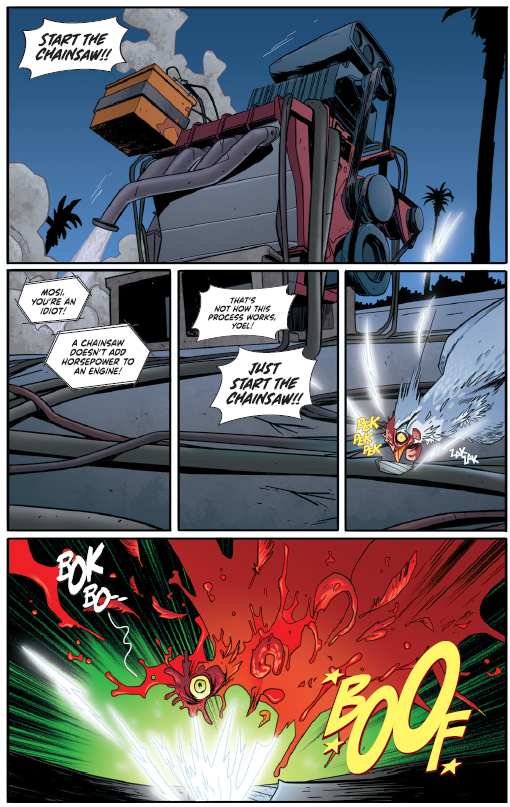
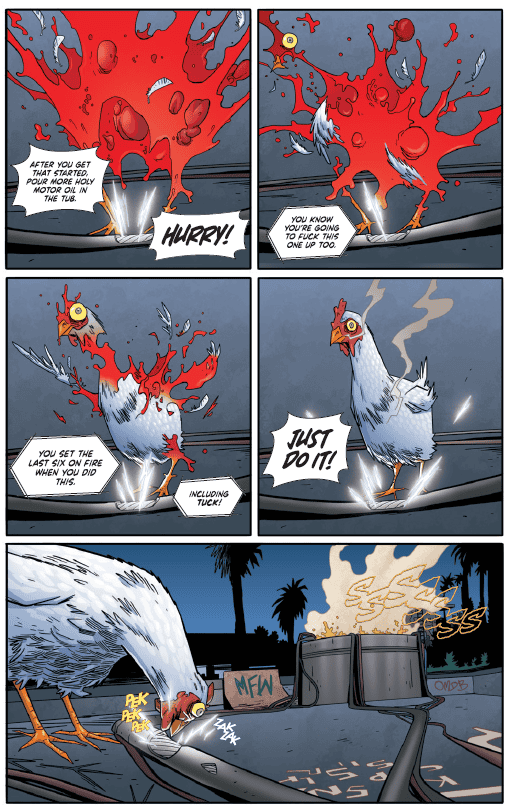
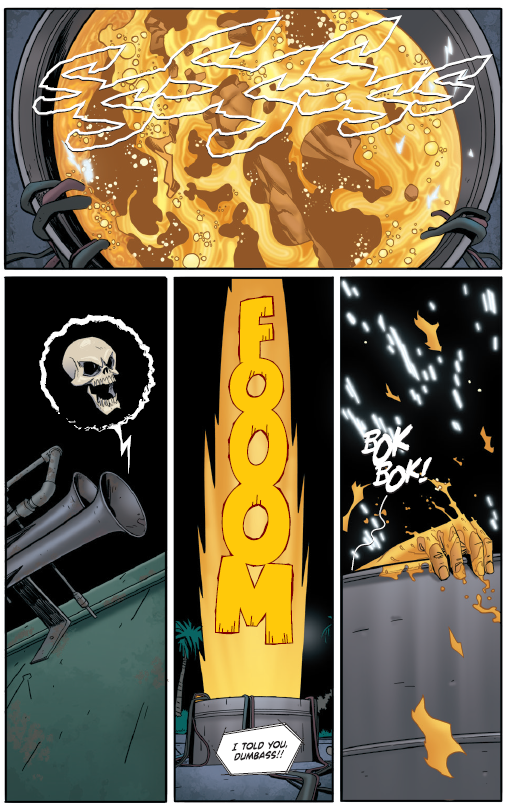
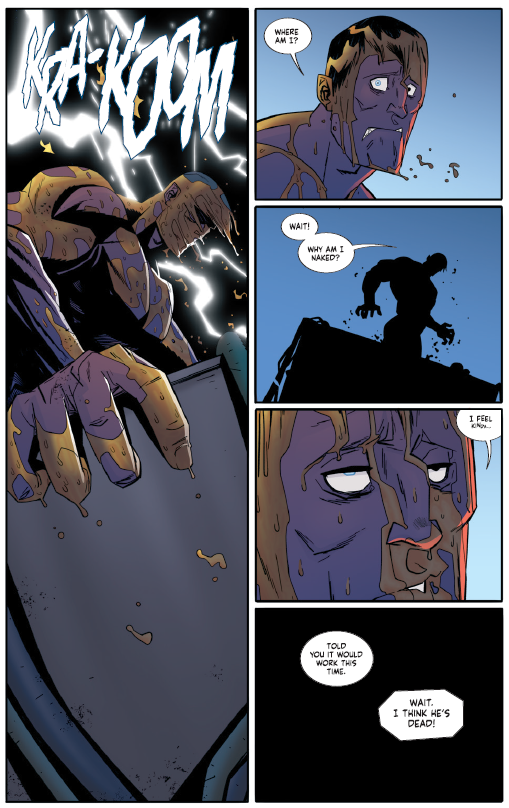
I’ve never been interested in weirdness for weirdness’ sake. The weird stuff is the candy coating. What I really care about is whether readers fall in love with these characters. If they do, they’ll happily follow them through zombie trucks, murder chickens, hillbilly Jesus cults, or whatever other insanity Daniel and I throw at them.
Working Together
GVN: You’ve collaborated for years, but this project feels like another major milestone of your shared sensibilities. What unique strengths did each of you contribute that the other relied on, pushed against, or enhanced while creating this graphic novel?
Wagner: There isn’t a single moment where we lean on each other, challenge each other, or consciously amplify the other’s work. We’re doing that with every panel, every page, every scene. At this point, it’s almost automatic.
That’s what happens after working together for so many years. We trust each other completely, and neither of us is precious about our ideas. The only thing we’re trying to protect is the story. If one of us has a better idea, it goes in. If something isn’t working, we fix it. Our goal has never been to prove whose idea it was – it’s to make the best comic we’ve ever made.
When I’m writing, I know Daniel is going to elevate what I’ve put on the page. He has an incredible sense of storytelling, pacing, and character acting, and there are moments in every project where he finds an emotional beat or visual joke that never occurred to me. Those are some of my favorite pages because that’s when I know the collaboration is working exactly the way it should.
I think that’s why we’ve been able to work together for so long. Neither of us is trying to prove we’re the smartest person in the room. We both care about making the best comic possible, and after all these years, we know how to push each other to get there.
Hillyard: It’s a conversation that bounces back and forth. Sometimes you hear of creators doing each section of their work in isolation and completing the whole thing on their end before handing it off to the next person. That might work well for some, but with Doug and I it’s like a conversation or a tennis match. It’s the back and forth that challenges us and pushes us to do better. Doug mentioned the little extras I add here and there; that works because we are creating the books side by side, and it means that we are able to take those ideas that can come up in the spur of the moment and run with them.
The Fourth Leaf
GVN: Clover Press’s launch of The Fourth Leaf marks an exciting new space for creator‑driven, unpredictable storytelling. How did working under this new imprint shape the book creatively, and what excites you most about what The Fourth Leaf represents for comics?
Wagner: One of the things that excited me most about The Fourth Leaf was that the conversation never started with, “How do we make this fit?” It started with, “What’s the best version of this project?” Those are two very different approaches.
From the start, Hank looked at AZM and said, “If that’s the story you want to tell, then let’s build the book around that.” As a creator, that’s incredibly exciting.
More broadly, that’s what I hope The Fourth Leaf comes to represent. A place where creators can bring the project they’re most passionate about without feeling like it has to fit a predetermined format or expectation. Maybe that’s a comic series. Maybe it’s a graphic novel. Maybe it’s an illustrated novel or something we haven’t even thought of yet. The format should serve the story not the other way around.
What Readers Will Come Away With
GVN: Thank you both once again for your time. Finally, beneath the zombies, mayhem, and misfit madness, the book carries a surprisingly sincere emotional throughline. What do you hope readers feel when they reach the final pages, and what makes THIS story more than just a wild ride?
Wagner: More than anything, I hope readers close the book with a smile on their face and a genuine affection for these characters. If they laugh along the way, get a little emotional, and wish they could spend more time with this wonderfully dysfunctional group, then Daniel and I did our jobs.
I think the stories that stay with us aren’t the ones with the biggest explosions or the craziest twists. They’re the ones where we genuinely care about what happens to the people at the center of them. That’s always been the goal for Daniel and me. If readers finish AZM talking about Cecil, Yoel, Pavla, Mosi, or any of the others like they just said goodbye to old friends, I’ll consider that the biggest compliment we could receive.
Hillyard: I couldn’t agree more.
Talking with Doug Wagner and Daniel Hillyard about I LOVE APOCALYPTIC ZOMBIE MISFITS! feels a lot like reading the book itself — unpredictable, charged with creative electricity, and grounded by a surprising amount of heart. Their partnership continues to evolve in ways that challenge the boundaries of what creator‑owned comics can be, and Clover Press’ new imprint The Fourth Leaf gives them exactly the kind of runway where a project this wild can take flight without compromise.
As the comics landscape keeps shifting, it’s creators like Wagner and Hillyard — unafraid to get weird, unafraid to get sincere, and absolutely unwilling to play it safe — who remind us why independent storytelling matters. I LOVE APOCALYPTIC ZOMBIE MISFITS! isn’t just a graphic novel; it’s a statement about embracing the unruly, the heartfelt, and the defiantly original.
The Fourth Leaf’s I Love Apocalyptic Zombie Misfits! by Doug Wagner and Daniel Hillyard has now launched its Kickstarter campaign.

Senior Writer at GeekVibesNation – I am a 60 something child of the 70’s who admits to being a Star Trek/Star Wars/Comic Book junkie who once dove headfirst over a cliff (Ok, it was a small hill) to try to rescue his Fantastic Four comic from a watery grave. I am married to a lovely woman who is as crazy as I am and the proud parent of a 21-year-old young man with autism. My wife and son are my real heroes.