

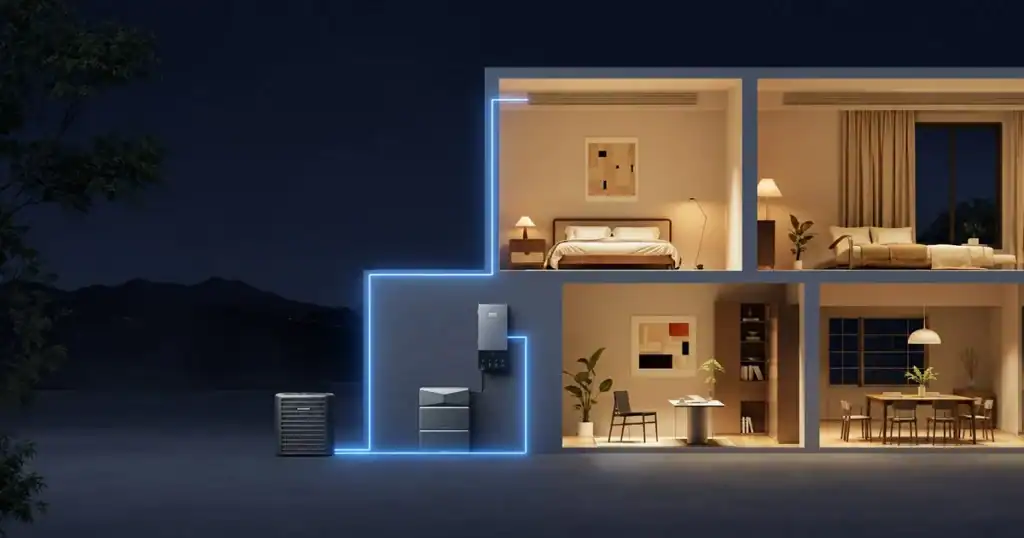
The lowest-cost home generator is not always the one with the cheapest fuel or purchase price. Its real operating cost depends on how much electricity it delivers, the appliances it powers, and how often it runs. Fuel-powered generators incur ongoing fuel and maintenance expenses, while battery systems can draw on stored solar energy or electricity charged in advance. To compare them fairly, homeowners should calculate the cost of supplying useful electricity over time and consider how their backup needs change throughout the year.
How to Calculate a Generator’s Cost per Hour
Start With the Energy Actually Delivered
A generator’s hourly cost becomes meaningful when you compare it with the electricity it supplies. Divide the cost of operating the system for one hour by the kilowatt-hours delivered during that period. For a fuel-powered unit, include fuel consumption and allocate routine maintenance costs across its operating hours. For a battery system, account for charging electricity, conversion losses, and any relevant maintenance expenses. A system delivering 5 kWh in an hour may cost less to operate than one delivering 8 kWh, but only if its total hourly expense is sufficiently lower. Comparing cost per kilowatt-hour alongside cost per hour reveals whether a system provides affordable power at the output your household needs.
Fuel Prices Tell Only Part of the Story
Fuel-based generators convert gasoline, propane, or natural gas into electricity. Their running costs depend on local fuel prices, engine efficiency, and the electrical load. A generator operating for an hour at a light load may consume fuel differently from the same unit powering several demanding appliances. Homeowners should therefore check the manufacturer’s fuel-consumption figures at relevant load levels instead of relying on a single advertised estimate. Maintenance expenses also belong in the calculation. Oil changes, filters, and other scheduled service items contribute to the cost of ownership. Recording actual fuel use during a typical outage can provide a more accurate estimate than relying on rated output alone.
Battery Systems Need a Different Cost Calculation
Battery systems store electricity rather than generating it continuously from fuel. Their operating cost depends largely on how they receive that electricity. When a household charges from the grid, the relevant cost reflects the electricity tariff and charging losses. When solar panels supply the energy, the calculation changes because the household may consume electricity that would otherwise be exported or stored for later use. Battery capacity also matters because it determines how much energy is available before another charge is needed. For example, Anker SOLIX E10 Whole-Home Backup supports solar input of up to 9 kW per unit. Its actual hourly cost depends on the energy source, charging conditions, household demand, and system configuration.
Which Factors Make Backup Power More Economical?
Match Output to the Appliances You Need
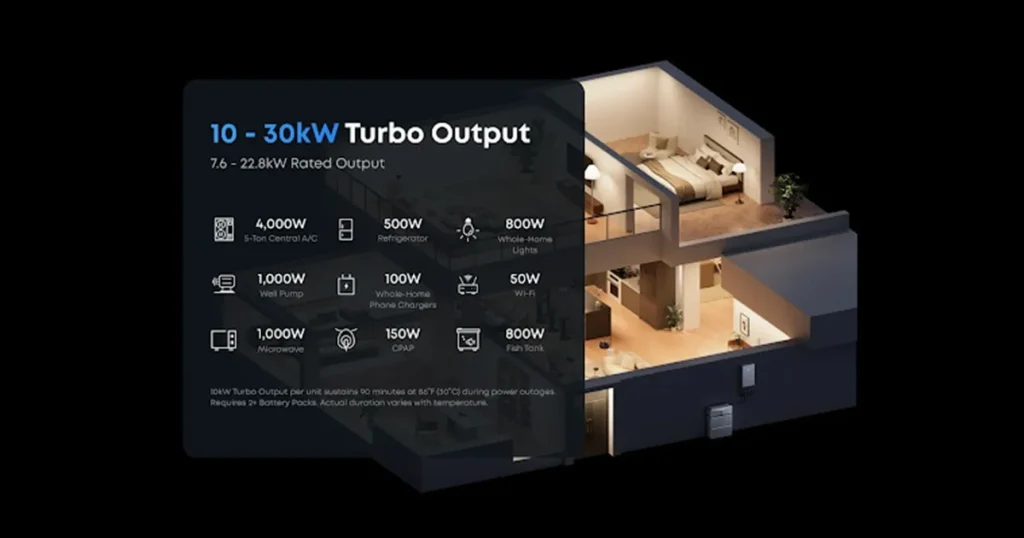
The most economical system is one that supplies the right amount of power without requiring unnecessary capacity. List the appliances that must remain operational during an outage, then estimate their running wattage and operating hours. Refrigerators, lighting, internet equipment, and medical devices may form one essential load group, while air conditioning and electric cooking can increase demand considerably. Motors also require sufficient starting power. An undersized system may not support the intended appliances, while a correctly matched system directs spending toward useful capacity. The best generator for home backup power is therefore the one that meets the household’s actual load requirements at a reasonable lifetime cost, rather than simply offering the highest rated output.
Solar Charging Can Change the Long-Term Cost
Solar charging can reduce the amount of electricity a household purchases from the grid or fuel it needs for backup generation. The financial benefit depends on local electricity rates, available sunlight, charging efficiency, and how much solar energy the household can consume or store. A battery charged from solar power during the day can supply evening loads, allowing the household to shift energy use across time. Anker SOLIX E10 supports dual MPPT solar inputs, with up to 9 kW of solar input per unit and expansion to 27 kW across three units with the Power Dock. This configuration offers a way to combine household backup with solar energy management, subject to the installed system and available generation.
Extended Outages Require a Cost-Per-Day View
An hourly comparison does not fully describe the economics of a long outage. A battery may supply power from stored energy without continuous fuel use, but the household must plan for recharging when that energy runs low. A fuel-powered generator can continue supplying electricity as long as fuel remains available. A hybrid setup can combine both approaches. Anker SOLIX E10 supports battery storage, solar charging, and a compatible Smart Generator charging option. Its battery capacity can expand from 6 kWh to as much as 90 kWh across a supported three-unit configuration. Households should estimate daily energy consumption and available recharge sources to determine how long their chosen setup can sustain essential loads.
Conclusion
The lowest-cost generator depends on more than its purchase price or hourly fuel expense. Homeowners should compare delivered electricity, maintenance, charging costs, and the power required by essential appliances. Solar charging may reduce operating expenses when suitable generation is available, while fuel-based generation can support extended operation when fuel supplies are accessible. Battery systems such as Anker SOLIX E10 add flexible storage and charging options. Calculate both cost per kilowatt-hour and total cost over a realistic outage period to make a practical decision.

I am an entertainment geek since my childhood days when I watched Star Wars, DC, MCU and other universe movies. Movies have a special place in my heart and mind too. That’s why, I get addicted to writing and sharing my love of movies with others.