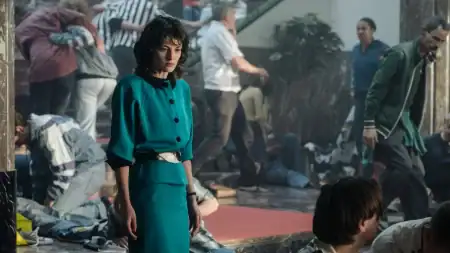
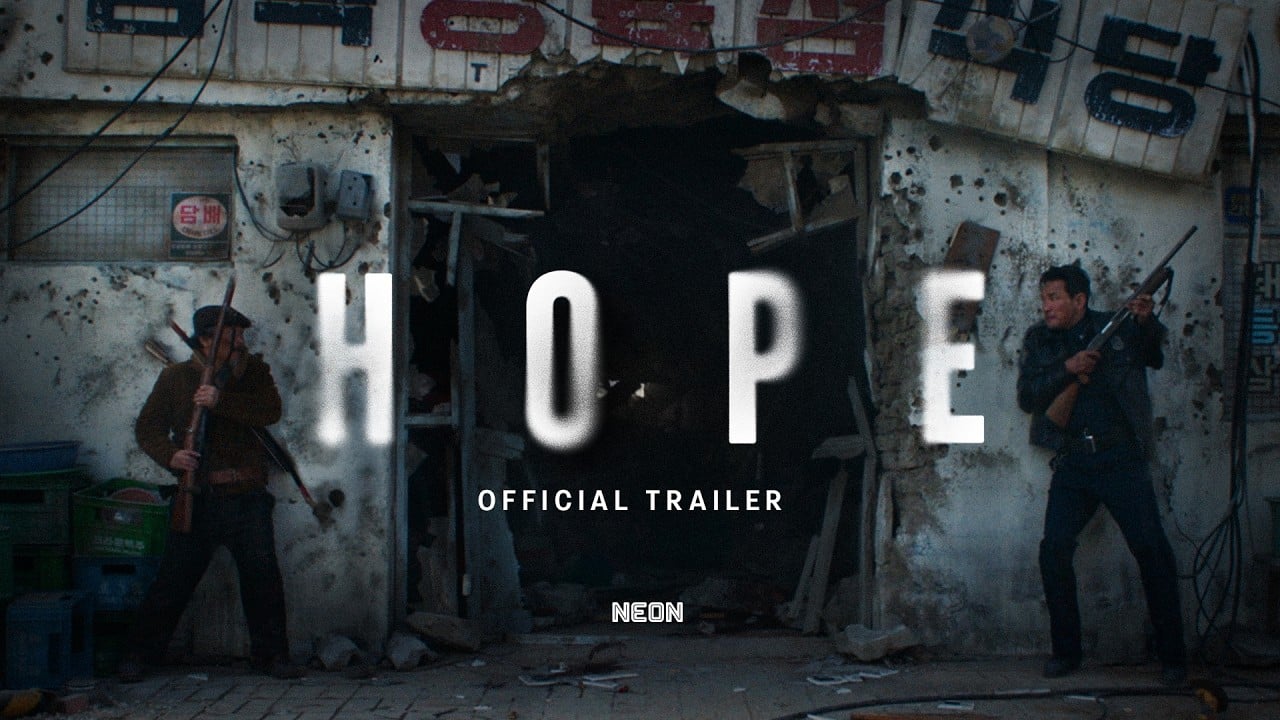
“Abandon all hope, ye who enter here.” So reads the translated inscription above the gates of Hell in Dante’s “Inferno,” just the first third of his epic “Divine Comedy.” The tagline doesn’t quite have the same ring to it when prescribed to the fictional South Korean town Hope Harbor, a quaint locale that seems particularly inclined to dissuade the fears of any visitors should they travel past the welcome sign. It would be small enough to be considered a village if not for the expansive forests that border it, miles of wooded land designed to keep threats out and safety in. It appears that the only living things to call it home are police officers, farmers, hunters, shopkeepers, those who forged a community based on familiarity and respect, as long as those within don’t hint at representing the slightest bit of danger. At least, that’s how one can assume it was before the events of Na Hong-jin’s hotly anticipated Hope unfolded, since the township portion has been reduced to utter ruins, the streets once lined with small businesses and storefronts now look more like the remains of a warzone. But Hope Harbor sits in the heart of the Demilitarized Zone. So… what’s with all the blood? What fire is that billowing cloud of smoke coming from? And what on earth keeps making those vicious shrieking sounds that seem to be echoing from the soil to the skies?
All of the above should be noted as rhetorical questions, mind you, for while The Wailing auteur’s latest sci-fi flick spends plenty of time performing an otherwise necessary exercise in expository-adjacent legwork, it’s hardly keeping any secrets. Or, to be as fair as possible, it’s not hiding them particularly well. Ever since Hope premiered to a divisive mix of exultation and disorientation at May’s Cannes Film Festival, critics and audience members alike have referred to the film as an alien movie, one with significant genre elements that could be called action, western, and horror, but mainly, there was talk of extraterrestrials. So when a group of gun-wielding fellas – a cop and a few flannel-donning gamesmen – stumble upon a massacred cow in the middle of a dirt road with a slash in its side that only could have been delivered by a creature of profound size and force, it doesn’t matter that only a few of Hope’s 156 minutes have passed: Viewers will have a strong sense that what these characters are dealing with is far from human, even if the baffled mortals surrounding this poor, brutalized animal assume it must have been that damn tiger that keeps coming from the north to steal their food.
Hardy har har. Laughter is the best medicine, so they say, but the laughing matters are few and far between in Na’s epic, as the true threats – whether diplomatic or otherworldly – loom large, though they linger even longer. It’s not quite that Hope has a pacing problem as much as it relishes the opportunity to build tension for so long that the desired stress fractures well before its architect likely intends, leaving us to wonder when we’re finally gonna get to the good stuff. We spend a great deal of the film’s first act switching between the recon efforts of police chief Bum-seok (Hwang Jung-min) and tracker Sung-ki (Zo In-sung, a much needed boost of charisma), and as much as Na is clearly eager to keep you on the edge of your seat with how close they keep getting to finally coming face to face with the mysterious being that has trampled through their home with the grace of Godzilla, we can only hang on for so long before the eyerolls come and we cry for the “with it” to “get on” already.
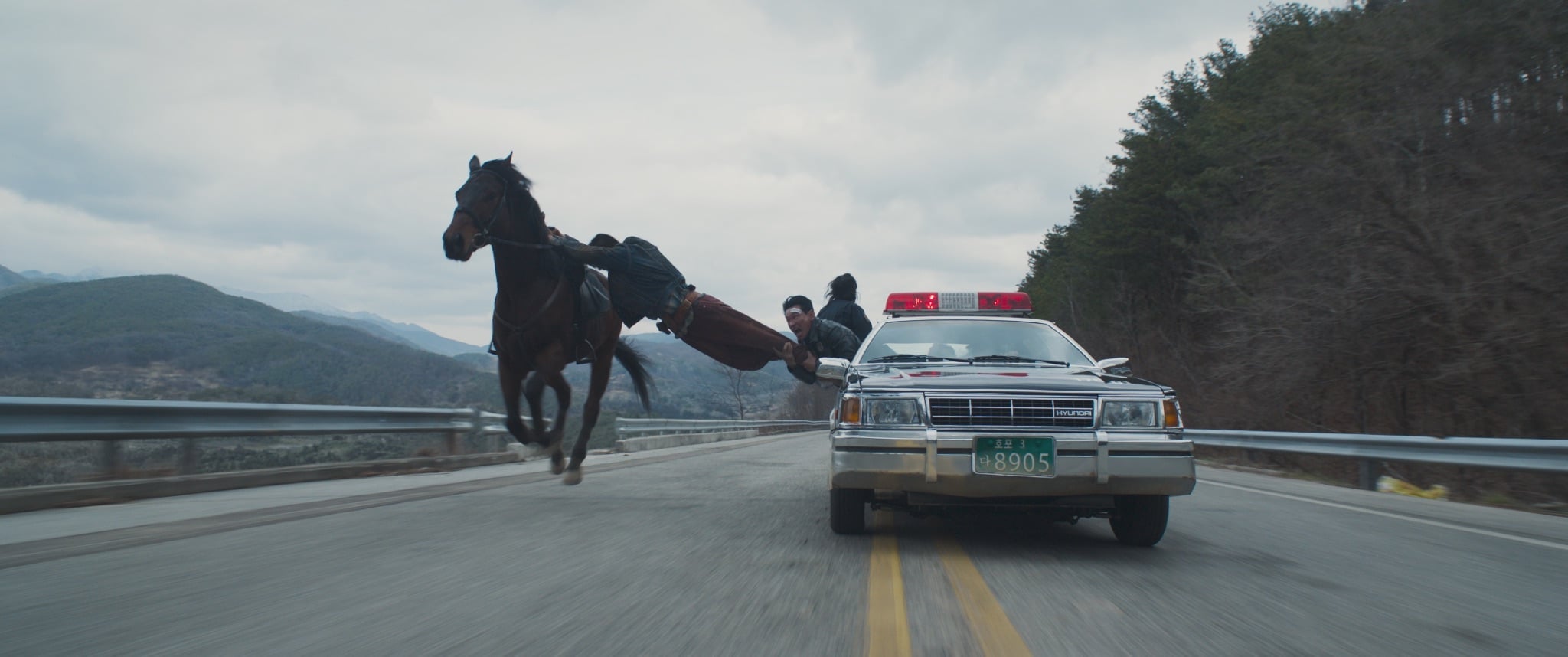
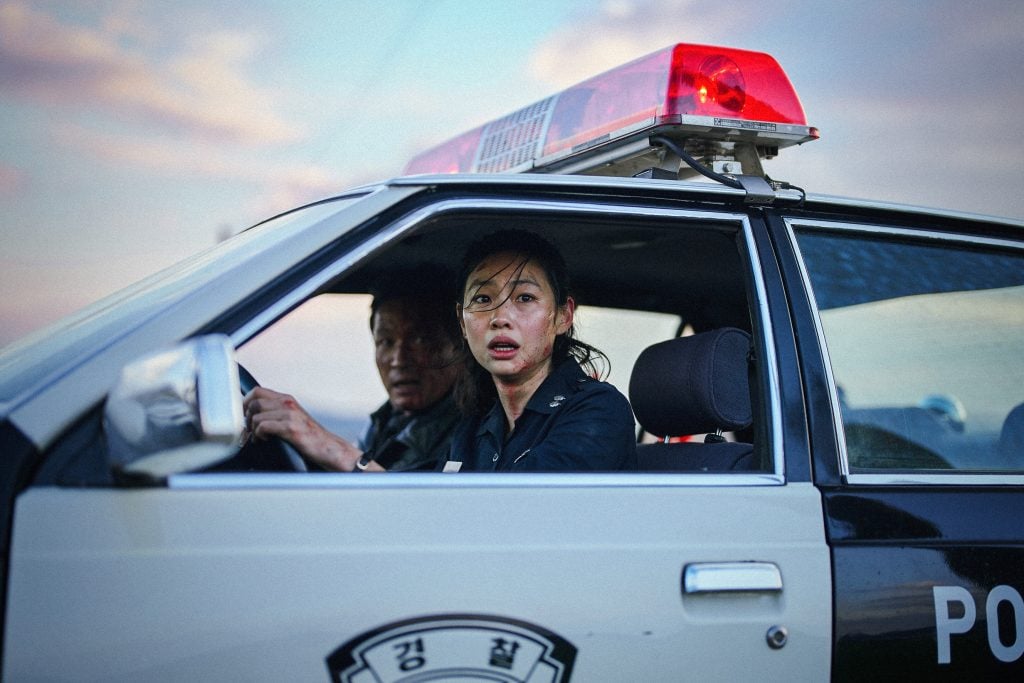
Enter Squid Game’s Jung Ho-yeon as Im Sung-ae, a rookie under Bum-seok’s policing command, wielding an assault rifle and whipping a cop’s cruiser through the crumbling streets as if Vin Diesel put in a shift as the film’s driving instructor, and it feels like Hope is definitively on its way to guts, glory, and whatever goo is sure to come out of this creature. And soon enough, we do arrive at that point, a gigantic set piece battle between citizens and colossi where cars are crashed, multiple horses are rode, and clips are emptied with the impulsivity of an online RPG, but there’s still so much to endure in the lead-up to its 100-minute finale that the huffing, puffing, heel-dragging nature of this beast of an experience can only be so exhilarating without veering off towards exhaustion.
This is not to say that Na should have cut down more of his film’s runtime – the Cannes cut ran 160 minutes, so 240 seconds were left on the cutting room floor somewhere – and it would be lazy criticism to suggest that something as trivial as runtime would ever be the difference between a fun, fine film and a truly great one. In its favor, Hope succeeds in doing what few other “war” pictures ever bother to attempt: It drops the audience directly into the situation at hand, after first blood has been shed, not an indeterminate period prior when a bunch of men in suits gather in rooms to discuss the stakes of it all, only to pull the same punches they would have had their meeting been conducted over email. Kudos for knowing (and trusting) that the vague existence of peril is often enough to ignite interest in even the most skeptical set of eyes.
The problem isn’t with length, or even with the monster’s mileage in terms of how devastating its nature can be. It’s that mileage is not inherently married to meaning, nor that the film’s sinister undertones – about outsiders invading or otherwise, though the plethora of signs around town warning that spies and landmines should be expected and swiftly dealt with if spotted should tell you where Na’s secondary focus lies – are necessarily enough to make us care about the outcome. Especially when we have a pretty good idea of where the finish line is, and what’s waiting for us when we reach it.
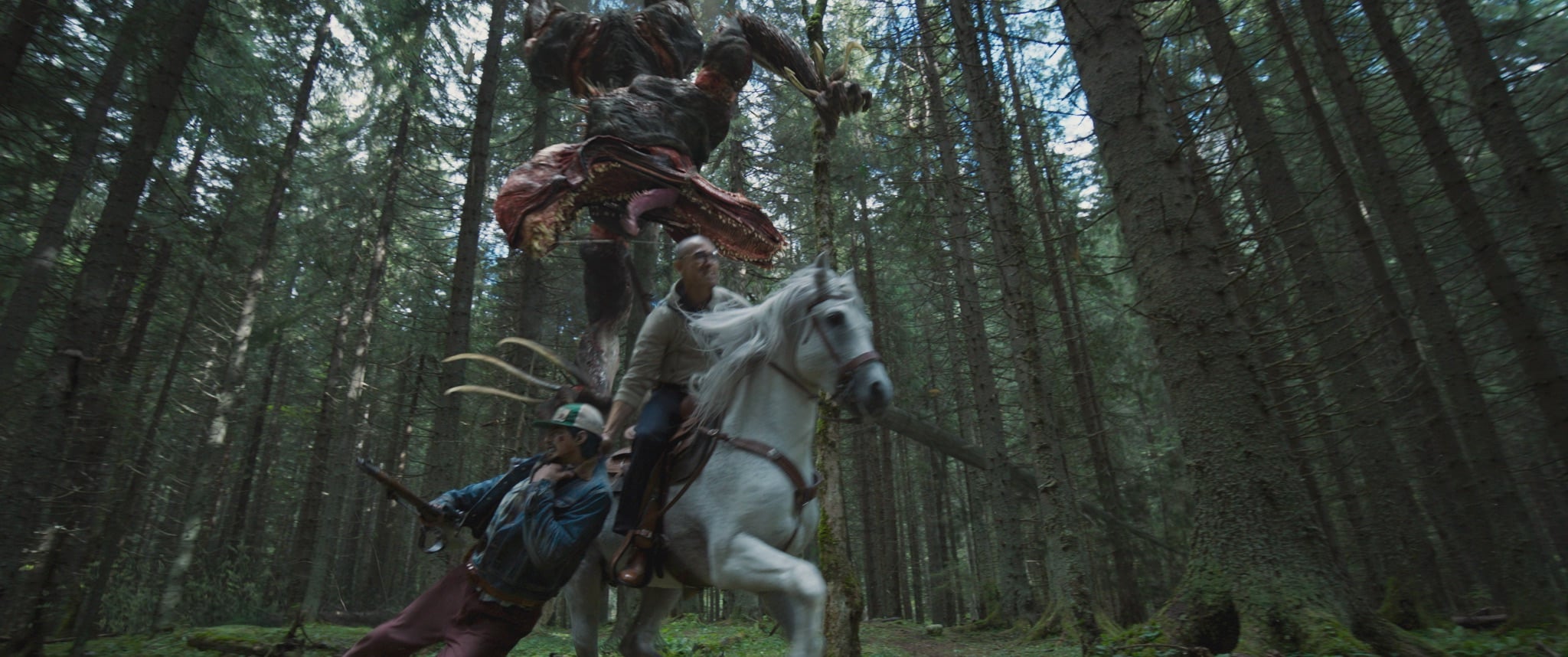
It would be disingenuous not to mention the fact that a number of names that American audiences will recognize will pop up in the opening credits, though to spoil when or how the likes of Michael Fassbender, Alicia Vikander, and Taylor Russell show up would be even criminal, so perhaps it’s best to abandon expectations in addition to hope when ye enter here. The same goes for the film’s CGI, a much-discussed bug out of Cannes that isn’t quite the bug is was dubbed by many who felt it was the worst they’d ever seen at the time, though it’s fair to say that no amount of work in the editing bay may have saved the appearances of Hope’s inhuman presences. Its monstrosities are jarring sights both in how startling they truly are as fully realized, as well as the fact that this is the fully realized result. Reportedly the most expensive Korean production in history, boasting a ₩50 billion ($37 million) budget, it’s the landscape and how feverishly Hong Kyung-pyo’s cinematography captures it that strikes as the most accomplished work here. (Razvan Gheorghiu’s stunt coordination runs a close second.) Never has a man wielding an AK-47 on horseback as an alien’s chompers narrowly miss his head looked or felt like such a religious experience.
That the same being said about plenty of its parts cannot be reiterated for the whole isn’t so much a negative as it is a disappointment, though blame the optimist for wanting to be as thoroughly entertained as the glass half-full Cannes attendees were in the aftermath of Hope’s initial crash landing. Like many crashes, however, it’s a lot more interesting – albeit less productive – to rubberneck as you pass by. Hell, you might see something you’ve never seen before. There’s plenty of that to be found in Hope, the kind of action packed thriller that is practically begging to be hit with such distinctions and has so much meat on its bones that it doesn’t know what to do with half of the remaining bites. More than half of that is undercooked, but sometimes people ask for it to come out that way. Dante himself wrote it best: “You did thirst for blood, and with blood I fill you.”
Na Hong-jin’s Hope delivers a sprawling alien epic full of spectacle and tension, even when its ambition becomes overwhelming.
Hope will debut exclusively in theaters on September 9, 2026, courtesy of NEON.
Before we let you go, we have officially launched our merch store! Check out all of our amazing apparel when you click here and type in GVN15 at checkout for a 15% discount!
For major deals and money off on Amazon, make sure to use our affiliate link! If you are purchasing any of the latest and best in physical media at MovieZyng, you can support us using our affiliate link.
Na Hong-jin’s Hope delivers a sprawling alien epic full of spectacle and tension, even when its ambition becomes overwhelming.
-
GVN Rating

Will Bjarnar is a writer, critic, and video editor based in New York City. Originally from Upstate New York, and thus a member of the Greater Western New York Film Critics Association and a long-suffering Buffalo Bills fan, Will first became interested in movies when he discovered IMDb at a young age; with its help, he became a voracious list maker, poster lover, and trailer consumer. He has since turned that passion into a professional pursuit, writing for the film and entertainment sites Next Best Picture, InSession Film, Big Picture Big Sound, Film Inquiry, and, of course, Geek Vibes Nation. He spends the later months of each year editing an annual video countdown of the year’s 25 best films. You can find more of his musings on Letterboxd (willbjarnar) and on X (@bywillbjarnar).