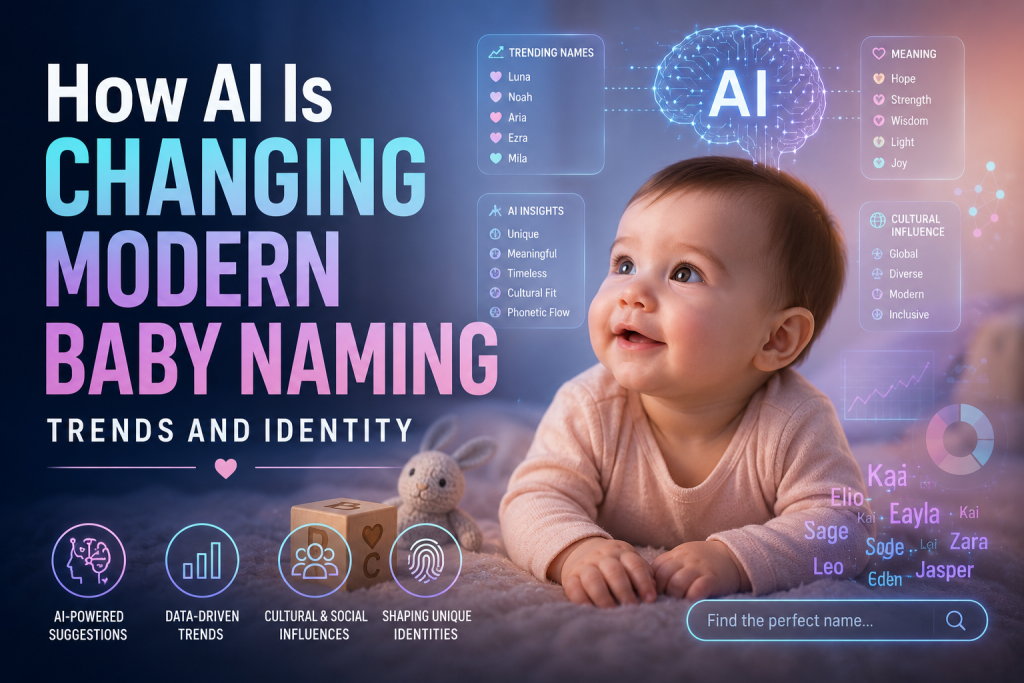
Somewhere between choosing a Netflix profile and picking a filter, artificial intelligence quietly worked its way into one of the most personal decisions a person can make. Naming a child used to mean baby books and a strong opinion from a grandparent. Now it can mean typing a few preferences into an app and scrolling AI generated suggestions before dinner is ready. That shift says less about parenting and more about how thoroughly AI personalization has settled into ordinary life, showing up in decisions that feel too human for software, and ending up there anyway.
The Rise of AI in Personal Decision-Making
AI in small daily choices isn’t new. Streaming services pick the next show, shopping apps guess the next purchase, playlists build around a mood nobody typed out loud. What changed recently is scope. Generative AI tools moved from suggesting what exists to generate something new on request, a caption, a workout plan, a name.
Name generator tools are a small but telling example, a category that once felt like a novelty now sitting next to ordinary planning apps, narrowing hundreds of options into a shortlist someone can actually consider.
Naming Trends in the Digital Age
Naming has always followed culture closely, tracking royalty, movies, and music through the decades. What’s different now is speed. A name can trend globally within a single viral video cycle, then fade fast, and the internet has become the dominant source shaping modern baby names.
That acceleration created a real sorting problem for expecting parents. Baby names trends now blend across cultures faster than any generation could track by hand, exactly the kind of problem software gets pulled into solving.
How AI Name Generators Work
Under the surface, an ai baby name generator mostly works by pattern matching. A model trained on huge naming datasets learns which sounds, origins, and structures pair well, then generates options based on whatever a user specifies, style, origin, a starting letter, existing sibling names.
An online name generator isn’t replacing a baby book so much as filtering it. A generic list of popular names exists everywhere. Personalization technology adds a way to run that list through specific, oddly particular preferences and return something tailored rather than pulled from a decade old chart.
Cultural Impact of AI-Driven Name Suggestions
Artificial intelligence is increasingly shaping personal decisions, from entertainment choices to more meaningful aspects of life such as naming. Tools like a baby name generator with last name reflect how AI can assist users in exploring personalized and culturally relevant name options, matching a first name’s sound and origin against a family surname before a parent settles on a shortlist.
The cultural effect shows up in the numbers. Name diversity has climbed as families draw from more traditions at once, and generators built around blending cultural naming trends make that mixing easier than a single baby book ever could. Local naming customs haven’t disappeared. They’re competing with a wider, faster moving pool of ideas than any past generation had access to.
Personal Identity and Technology
There’s something a little strange about outsourcing part of your identity, even indirectly, to software. A name is one of the first things anyone learns about a person, and it usually sticks for life, longer than almost any other choice made on someone else’s behalf. Having AI involved in shaping that choice touches on digital identity questions worth sitting with, not answering with alarm, just genuine curiosity about where the line actually sits.
Most people using these tools aren’t handing over the decision entirely. They’re using AI closer to how someone might use a thesaurus, a wider net for ideas, with the final call staying human. Self expression isn’t replaced by the tool. It’s assisted by one.
The Future of AI in Everyday Life Decisions
Naming is a small case study in a much larger pattern that keeps repeating across different corners of daily life. AI tools in daily life are expanding into travel planning, home design, even relationship advice, each one following the same shape, taking a personal decision and adding a layer of data informed suggestion on top of it.
None of this points toward AI making these calls instead of people. It points toward AI becoming a normal first step before a human makes the final one, quietly present in decisions that used to start with a blank page and a family conversation instead.
Conclusion
Artificial intelligence has become part of not just the technological side of life but the cultural one too, influencing even personal decisions like choosing a name. It reflects a broader trend toward personalizing digital experience, one specific choice at a time. Whether that’s a passing curiosity or a lasting shift in how people approach identity and tradition is still an open question, but for now, it’s already changing how a lot of new names get chosen.