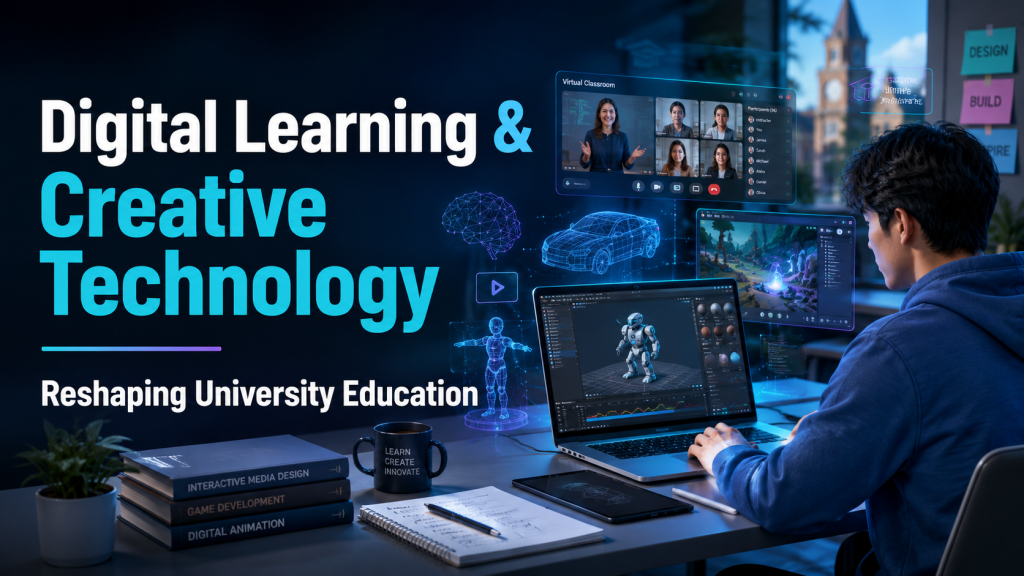
University education has changed dramatically in recent years. Students are no longer limited to lecture halls, printed textbooks, and fixed campus schedules. Digital platforms, creative software, virtual classrooms, and project-based learning are now part of academic life. This shift became especially visible during the pandemic, but many systems introduced during that period remained useful after campuses reopened.
Creative subjects such as 3D animation, game design, visual effects, digital modeling, and interactive media have also become more demanding. Students must understand artistic concepts, professional software, deadlines, teamwork, and remote communication.
The Growing Role of Digital Creative Skills in University Programs
Modern universities increasingly include digital production subjects in animation, media, design, architecture, gaming, film, advertising, and computer graphics programs. These subjects are practical by nature. Students may need to build 3D models, create character rigs, design game environments, animate scenes, render visual effects, or edit final video sequences.
The learning process often involves Maya, Blender, Houdini, Unreal Engine, Unity, ZBrush, Substance Painter, Nuke, After Effects, and DaVinci Resolve. Each application has its own workflow and technical requirements, making several tools difficult to master within one semester.
Students looking for an overview of support related to these creative areas can explore https://triadessay.com/services-3d-animation-game-design-dai-zuo/ for information about these creative fields and workflows.
Why 3D Animation and Game Design Require More Than Software Knowledge
Knowing how to open a program is not the same as understanding how to complete a strong project. Creative technology courses require a combination of planning, visual judgment, technical skills, and problem solving.
A typical 3D or game design project may include several stages:
-
Concept development and visual references
-
Storyboarding and scene planning
-
3D modeling and sculpting
-
Texturing and material creation
-
Character or object rigging
-
Animation and motion capture
-
Lighting and rendering
-
Compositing and post-production
-
Final editing and presentation
Each stage affects the next one. A weak model can create problems during rigging. Poor rigging can make animation difficult. Incorrect lighting can reduce the quality of an otherwise strong scene. For this reason, students must think about the whole production pipeline rather than treating every task as separate.
How Online Learning Changed University Education
The pandemic accelerated an existing shift. Universities moved lectures, tutorials, assessments, and discussions online, while students and teachers became familiar with video conferencing, learning portals, recorded lectures, cloud storage, and online submissions.
What began as an emergency solution became a lasting part of higher education. Many institutions now mix face-to-face teaching with online learning, while some courses remain fully digital.
A useful reference for understanding the continued development of a post-pandemic online course in universities is the way universities now combine live classes, recorded content, digital assignments, and learning management systems within a single academic structure.
Synchronous and Asynchronous Learning Have Different Advantages
Online university courses generally use two main approaches. Synchronous learning happens in real time. Students attend a scheduled lecture, seminar, or tutorial through a platform such as Zoom or another live meeting system. This format allows immediate discussion, questions, presentations, and interaction with classmates.
Asynchronous learning gives students more flexibility. Lectures may be recorded, readings can be uploaded, and assignments can be completed within a specified period. Students do not always need to be online at the same moment as the instructor.
Both methods have advantages. Live sessions create stronger interaction and accountability, while recorded materials allow students to review difficult concepts at their own pace. Many universities now combine both methods to provide a more balanced learning experience.
Learning Management Systems Became Central to Student Life
Digital learning platforms are now essential to university organization. Systems such as Canvas, Blackboard, Moodle, and Brightspace help students access course materials, submit assignments, view grades, join discussions, and receive announcements.
For students, these platforms provide one central place for academic work, while teachers can organize content and monitor progress.
Digital convenience also creates responsibility. Students must check deadlines, notifications, assessment instructions, and schedule changes. Missing an online announcement can be as serious as missing an important classroom instruction.
Successful online learners therefore develop strong habits around organization, communication, and time management.
Creative Courses Become More Complex in Remote Environments
Subjects such as game design and 3D animation can be more challenging online than traditional theory-based courses. Large project files, specialist software, powerful hardware, and frequent feedback are often required.
A student may need to share a 3D scene, upload a large rendered video, collaborate on a game project, or demonstrate a process during a live class. Internet speed and computer performance can affect the experience.
Remote creative work also complicates communication. In a physical studio, students can quickly show a problem to a lecturer. Online, they may rely on screenshots, recordings, or screen sharing.
This is why clear project planning becomes especially important.
Practical Ways Students Can Manage Digital Projects
Students working on demanding online or creative courses can improve their performance by building a consistent workflow.
Start by breaking large assignments into smaller tasks. Instead of treating a final animation or game project as one deadline, create separate dates for research, modeling, texturing, animation, rendering, and editing.
Keep organized folders and use clear file names. Saving multiple project versions can prevent major losses if a file becomes corrupted.
Students should also:
-
Back up important work in more than one location
-
Read the full assignment brief before starting
-
Check software compatibility before sharing files
-
Test renders early rather than waiting until the final day
-
Ask questions when technical requirements are unclear
-
Keep notes from instructor feedback
-
Allow extra time for uploading large files
These habits may seem simple, but they reduce stress and prevent avoidable mistakes.
Collaboration Is Now a Digital Skill
Group projects are common in universities, especially in game design, animation, media production, and online courses. Students may work together even when they are not in the same location.
Digital collaboration requires more than sending files. Team members need to agree on responsibilities, deadlines, file formats, naming systems, and communication channels.
For example, one student may focus on modeling while another handles textures and another works on animation. If the team does not use consistent settings, the assets may not work correctly when combined.
Regular short meetings can prevent confusion. Shared documents, task boards, cloud folders, and version control systems can also help teams stay organized. These methods are useful not only for university projects but also for future professional work.
Online Courses Still Require Active Participation
One common misunderstanding is that online courses are easier because students can study from home. In reality, remote learning often requires greater self-discipline.
Students may need to attend live sessions, complete weekly discussion posts, submit assignments, participate in group projects, prepare presentations, take quizzes, and sit online examinations. Without a regular campus routine, it becomes easier to delay tasks.
Creating a weekly schedule can make a major difference. Students should reserve specific hours for lectures, reading, practical work, revision, and project development. It is also helpful to study in a consistent space where distractions are limited.
The most successful online learners treat digital classes with the same seriousness as physical classes.
Where University Learning Is Heading Next
University education is unlikely to return fully to its older model. Digital platforms, recorded teaching, remote collaboration, and creative technology are now too useful to disappear.
Subjects such as 3D animation, game design, visual effects, and interactive media will keep evolving as software advances. Students will need artistic judgment, technical ability, communication skills, and digital independence.
The strongest model will combine both worlds. Face-to-face teaching offers direct interaction and studio experience, while online systems provide flexibility, resources, and easier collaboration.
Students who can manage digital platforms, creative software, deadlines, and online communication will be better prepared for university study and modern professional work.

Caroline is doing her graduation in IT from the University of South California but keens to work as a freelance blogger. She loves to write on the latest information about IoT, technology, and business. She has innovative ideas and shares her experience with her readers.