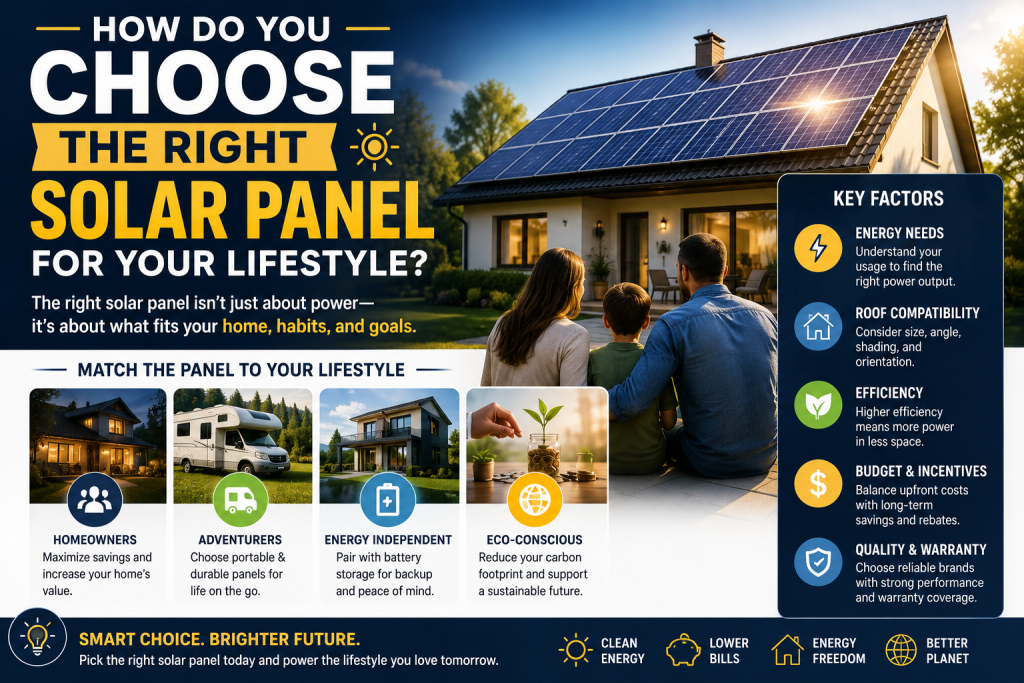
Choosing the right solar panel starts with one practical question: how and where will you use it most? A panel for weekend camping should solve a very different problem than one for RV travel, emergency home backup, or daily off-grid work. The best choice balances output, portability, durability, and compatibility with the devices or power station you already use. Instead of focusing only on wattage, look at your routine, charging habits, and the conditions your gear will face. Some users need a lightweight panel they can pack and unfold in minutes, while others need a fixed setup that can deliver steady energy over long periods. When you match the panel type to your lifestyle first, the buying decision becomes simpler and far more effective.
Match Your Lifestyle With the Right Solar Panel Type
Identify Your Primary Power Needs
Start by listing what you need to power and for how long. If your goal is to keep a phone, camera, lights, and a small battery pack charged during day trips, a compact low- to mid-wattage portable solar panel may be enough. For camping weekends, van travel, or fishing trips, you may need enough output to recharge a portable power station that supports coolers, fans, drones, or laptops. Home backup needs are more demanding and usually call for higher-wattage panels that can help sustain essential loads during outages. Daily users should also think about charging speed, available sunlight, and whether they need direct device charging or stored power for later.
Compare Portable, Foldable, and Fixed Solar Panels
Portable solar panels suit users who value convenience, mobility, and quick setup. They work well for casual outdoor use, road trips, and backup charging because they can be moved easily to follow the sun. Foldable panels take portability further by reducing packed size, making them especially useful for campers, overlanders, and anyone short on storage space. They are easy to carry, deploy, and store after use. Fixed solar panels make more sense for consistent, long-term setups such as cabins, sheds, RV roofs, or home backup systems. They usually offer a more permanent energy solution and reduce the need for daily repositioning. The right format depends on how often you move, how much space you have, and whether your system is temporary or permanent. If your lifestyle changes locations often, portability matters most.
Key Features That Matter Before You Buy
Power Output, Efficiency, and Charging Speed
Power output determines how much energy a solar panel can generate under proper sunlight conditions, so it should match the size of the job you expect it to handle. Higher wattage generally supports faster charging and better performance for larger power stations, but output alone does not tell the whole story. Efficiency matters because a more efficient panel can convert more sunlight into usable electricity in a smaller surface area, which is especially helpful when space is limited. Charging speed also depends on sunlight intensity, panel angle, shading, and system losses. For buyers comparing options, this is the section where product specifications matter most: review the rated wattage, conversion efficiency, output ports or connectors, operating conditions, and estimated recharge performance with compatible power stations.
Weight, Durability, and Weather Resistance
A solar panel that is easy to carry but too fragile for regular outdoor use will become frustrating quickly. Weight matters most for hikers, tent campers, and users who need to pack gear by hand, while RV travelers or homeowners may accept a heavier panel in exchange for more output. Durability should include strong materials, reinforced corners or frames where applicable, and a design that handles repeated setup and transport without damage. Weather resistance is equally important because outdoor charging often means exposure to dust, light rain, humidity, and temperature changes. Buyers should check whether a panel is designed for occasional outdoor use or for more demanding field conditions. A rugged, well-built panel usually delivers better long-term value than a lighter but less durable alternative.
Ensure Compatibility With Your Power Setup
Pairing Solar Panels With Portable Power Stations
A solar panel should work smoothly with the way you store and use energy. If you plan to charge a portable power station, confirm the panel’s connector type, voltage range, and input compatibility before buying. A mismatch can reduce charging performance or prevent charging entirely. This step matters because many users rely on solar not for direct device charging, but for replenishing stored energy they can use later for appliances, electronics, or emergency backup. Also consider how long the solar recharge process will take based on the battery capacity of the power station and the panel’s output. A properly matched setup feels seamless: the panel collects energy efficiently, the power station accepts it safely, and your devices stay powered when you need them.
Choosing the Right Solar Panel Collection for Your Needs
When reviewing a solar panel collection, focus on how the available sizes and formats map to your routine rather than choosing only by price or maximum wattage. A good collection usually includes compact panels for light charging, mid-range options for travel and portable power stations, and higher-output models for backup or extended off-grid use. This variety makes it easier to scale your setup as your needs grow. Think about whether you need one versatile panel or a broader system that can support multiple situations, such as road travel, backyard backup, and emergency preparedness. It also helps to choose within a collection designed to work cohesively with compatible accessories and power solutions.
Conclusion
The right solar panel is the one that fits your actual routine, not just the one with the biggest numbers on the box. Start with your power needs, then choose the panel type that matches how you travel, camp, work, or prepare for outages. From there, compare output, efficiency, charging speed, weight, and durability with equal care. Finally, make sure the panel is compatible with your power station or broader setup so it performs reliably when you need it most. A thoughtful match gives you more useful energy, less hassle, and better long-term value. Whether you want light portable charging or dependable backup power, choosing based on lifestyle first will lead you to a solar panel that feels practical, efficient, and easy to use every day.

Sandra Larson is a writer with the personal blog at ElizabethanAuthor and an academic coach for students. Her main sphere of professional interest is the connection between AI and modern study techniques. Sandra believes that digital tools are a way to a better future in the education system.