

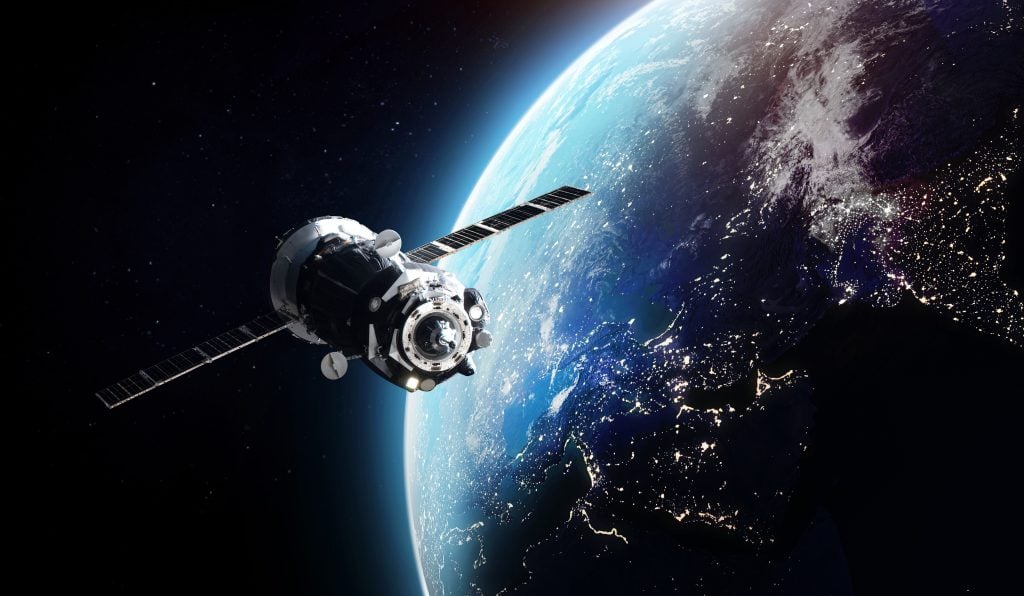
Picture yourself driving through unfamiliar territory, relying on your phone’s GPS. Meanwhile, someone halfway across the globe video-calls their family. Scientists track hurricanes in real time. What connects these moments? Sophisticated satellite parts orbiting above, working tirelessly to keep our world connected.
These technological marvels have transformed modern life remarkably. Early space missions relied on basic satellite parts, yet they established the foundation for today’s multi-billion-dollar industry. Modern spacecraft integrate dozens of specialised subsystems working in perfect harmony.
Essential Satellite Parts That Power Modern Systems
Think of a satellite as a highly specialised robot operating in one of the harshest environments imaginable. Its parts must withstand extreme temperature swings, intense cosmic radiation, and the complete vacuum of space while performing flawlessly for years without maintenance.
The power subsystem serves as the satellite’s beating heart. Solar panels convert sunlight into electricity, while batteries store energy during Earth’s shadow periods. Attitude control systems keep them properly oriented using reaction wheels, thrusters, and magnetorquers. These critical satellite parts work together seamlessly to maintain precise positioning.
Onboard computers process commands and manage system health, ensuring all satellite parts coordinate perfectly. These radiation-hardened processors resist cosmic rays that destroy standard chips.
How Satellite Communication Works
What is the importance of satellites in communication? The answer extends far beyond international phone calls. Communications create invisible highways across the sky, carrying everything from emergency broadcasts to live television feeds spanning continents.
Transponders form the core of communication systems. These sophisticated devices receive signals from Earth, amplify them, change their frequency to prevent interference, and then beam them back down to receiving stations thousands of miles away. Different types of communication rely on various frequency bands, each offering unique advantages.
Ground stations transmit signals upward using specialised antenna systems. Satellite parts process and redirect signals before sending them earthward to their destinations. High-gain antennas focus signals with precision, amplifiers boost signal strength, and redundant parts ensure continuous operation. According to NASA’s communications program, these systems maintain incredibly precise timing to coordinate transmissions.
Satellite Navigation Systems That Guide Daily Life
Navigation has revolutionised how humanity moves through the world. GPS, alongside Europe’s Galileo and Russia’s GLONASS, depends on atomic clocks accurate to billionths of a second. These timepieces represent the most precise satellite parts ever manufactured.
The principle sounds simple: calculate your position by measuring how long radio signals take to reach you from multiple satellites. Yet this concept demands extraordinary precision. Navigation satellites broadcast timing signals synchronised with atomic accuracy, while receivers compare these signals to determine exact locations.
Farmers use GPS-guided tractors to plant crops with centimetre-level accuracy. Emergency services locate callers in distress within seconds. Ships navigate safely through crowded harbours. These applications demonstrate how navigation systems improve navigation and communication beyond simply finding driving directions.
Earth Observation Satellites Monitoring Our Planet
Earth observation serves as our planet’s watchful guardians. These specialised spacecraft carry advanced imaging systems revealing environmental changes invisible from ground level. Optical sensors capture visible and infrared light, synthetic aperture radar penetrates clouds, and multispectral cameras detect subtle variations in vegetation health.
The data these satellites collect transforms our understanding of Earth systems. Climate scientists track melting ice sheets, agricultural experts monitor crop yields, and disaster response teams assess damage from earthquakes and wildfires. Each observation mission requires carefully selected satellite parts optimised for specific wavelengths and precise resolution requirements that match scientific objectives.
Consider a satellite tracking Amazon deforestation. Its cameras must distinguish vegetation types, detect individual tree changes, and transmit massive data volumes. This demands high-resolution sensors, powerful processors, and robust transmission systems.
The Integration Challenge of Satellite Parts
Building a satellite isn’t like assembling catalogue components. Engineers make diverse parts cooperate flawlessly in space’s unforgiving environment. Thermal management prevents overheating or freezing. Radiation shielding protects electronics.
Every component must meet stringent requirements for mass, power, and reliability. Engineers constantly balance capability against weight. Testing includes vibration, thermal vacuum, and electromagnetic compatibility checks.
The Future of Space Technology
The space industry stands at a fascinating crossroads. Miniaturisation allows smaller spacecraft to accomplish missions once requiring school-bus-sized satellites. Advanced manufacturing, including 3D printing, reduces costs while enabling complex designs. Artificial intelligence enables autonomous decisions without Earth commands.
Whether enabling video calls to remote villages, guiding autonomous vehicles, or monitoring climate change from orbit, satellites have become indispensable. Understanding the satellite parts that make these missions possible helps everyone appreciate space technology’s complexity and the ingenuity of those who design satellite parts for these remarkable machines.
What satellite application has most impacted your life? Share your thoughts in the comments below. We want to hear how satellites changed how you work, communicate, or navigate your world.

Caroline is doing her graduation in IT from the University of South California but keens to work as a freelance blogger. She loves to write on the latest information about IoT, technology, and business. She has innovative ideas and shares her experience with her readers.