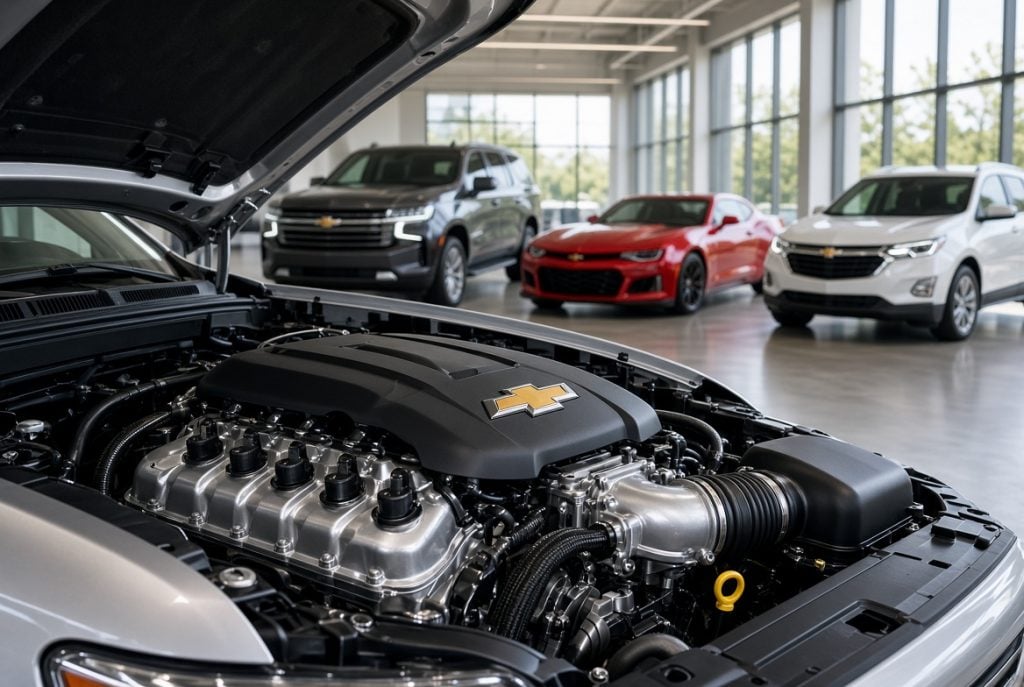
Choosing the right Chevrolet engine is about matching performance to the way you actually drive. A commuter may prioritize fuel efficiency and smooth operation, while a truck owner may need strong towing and hauling capability. Families may want a balance of power, efficiency, and comfort, while drivers who enjoy responsive performance may place greater emphasis on acceleration. When comparing options at a Chevrolet dealer in Oklahoma City, understanding the differences between available powertrains can make the decision easier. The right engine should provide enough capability for your regular needs without adding unnecessary cost or complexity.
Start With Your Driving Habits
The best engine choice begins with an honest look at your daily routine.
Think about how often you drive in city traffic, how many highway miles you cover, whether you regularly carry passengers, and whether you tow or haul equipment. Also consider how important fuel economy is to your budget.
A driver who spends most of the week commuting through city streets may have very different priorities from someone who regularly travels long distances or pulls a trailer.
Consider How Much Power You Actually Need
More horsepower is not automatically better for every driver.
A powerful engine can provide quicker acceleration and greater towing capability, but additional performance may come with higher fuel consumption and a higher purchase price depending on the vehicle and configuration.
Choose an engine based on the work you expect it to perform. If your vehicle will primarily handle commuting, errands, and occasional trips, a smaller or more efficiency-focused powertrain may provide everything you need.
Think About Fuel Economy
Fuel economy becomes especially important for drivers who cover substantial mileage.
Even small differences in efficiency can add up over thousands of miles. Estimate your annual mileage and compare the expected fuel consumption of the Chevrolet models and engines you are considering.
Remember that real-world fuel economy can vary based on traffic, speed, weather, driving habits, vehicle load, tire condition, and other factors.
Consider Chevrolet’s Four-Cylinder Options
Four-cylinder engines can be a practical choice for everyday driving.
Depending on the Chevrolet model, a four-cylinder engine may offer a useful balance of power and efficiency. It can be particularly suitable for commuters and families who do not need substantial towing capability.
The exact engine specifications vary between models, so compare the engine associated with the specific Chevrolet vehicle and trim you are considering.
When a Four-Cylinder Makes Sense
A four-cylinder can make sense if your driving mainly consists of:
- Daily commuting
- City and suburban errands
- Highway travel
- Family transportation
- Light cargo carrying
- Occasional road trips
If these activities describe your routine, there may be little reason to pay for a larger engine simply because it produces more power.
Consider Turbocharged Engines
Turbocharging can help an engine produce stronger performance without requiring a very large displacement.
A turbocharged engine may provide useful low- and mid-range power, which can be helpful when merging onto highways or carrying passengers.
However, turbocharged engines can have different maintenance requirements and operating characteristics. Review the manufacturer’s recommendations for the exact vehicle you are considering.
Think About Your Highway Driving
Highway drivers need an engine that can maintain comfortable speeds and provide sufficient acceleration when merging or passing.
If you regularly travel on interstates, take your preferred vehicle for a highway-oriented test drive when possible.
Pay attention to how easily the vehicle accelerates, how smoothly the transmission responds, and whether the engine feels comfortable at sustained speeds.
Consider V6 Power for Added Capability
A V6 engine can provide a useful middle ground for drivers who want more capability than a typical four-cylinder offers.
Depending on the Chevrolet model, a V6 may provide stronger acceleration, increased towing capacity, or greater performance.
This can be useful for families who regularly travel with heavy loads or drivers who need additional capability without moving to the largest available engine.
When a V6 May Be Worth Considering
A V6 may be a better fit if you regularly:
- Carry several passengers
- Drive through hilly areas
- Tow moderate loads
- Travel long distances with substantial cargo
- Want stronger acceleration
- Use your vehicle for both work and recreation
Always compare the specific towing and payload ratings for the vehicle configuration rather than relying solely on engine size.
Consider V8 Power for Serious Truck Work
For drivers who need substantial towing or hauling capability, a V8-powered Chevrolet truck may be worth considering.
A larger engine can provide strong power for demanding workloads, but it may also consume more fuel.
Before selecting a V8, determine the actual weight of the trailer or equipment you need to move. There is little benefit in paying for maximum capability if you rarely use it.
Match the Engine to Towing Requirements
Towing is one of the clearest reasons to choose a more powerful powertrain.
However, towing capacity depends on more than the engine. Transmission, drivetrain, axle configuration, cooling equipment, cab and bed configuration, and other factors can affect the vehicle’s rated capacity.
Determine the maximum trailer weight you expect to tow, then compare the manufacturer’s rating for the exact configuration.
Never assume that two Chevrolet trucks with the same engine have identical towing capabilities.
Think About Payload as Well
Towing is not the only measure of truck capability.
Payload refers to the weight the vehicle can carry, including passengers, cargo, and certain trailer-related loads.
If you regularly carry tools, building materials, recreational equipment, or other heavy items, check the vehicle’s payload rating.
Understanding both towing and payload requirements will help you select an engine and configuration that match your workload.
Consider Hybrid Powertrains
Some Chevrolet models offer electrified powertrain options that can provide a different approach to efficiency and performance.
Hybrid technology can be particularly appealing to drivers who want to reduce fuel consumption while retaining the convenience of a gasoline-powered vehicle.
If you are considering a hybrid, think about how much city driving you do, how frequently you travel long distances, and whether the available model meets your cargo and performance requirements.
Evaluate Electric Chevrolet Options
Electric vehicles provide another powertrain choice for drivers whose priorities center on efficiency and reduced gasoline use.
An electric Chevrolet can be a practical option when charging is convenient and the vehicle’s range meets your daily requirements.
For frequent road travelers, consider charging availability along regular routes and the time needed to recharge during longer trips.
Your home charging situation should also be part of the decision.
Consider Your Climate and Driving Conditions
Oklahoma drivers can experience hot summers, severe storms, heavy rain, and occasional winter weather.
These conditions can influence how a vehicle feels and performs.
If you regularly travel in challenging weather or on unpaved roads, consider whether all-wheel drive or four-wheel drive is appropriate for your needs.
Remember that an appropriate drivetrain does not eliminate the importance of good tires and careful driving.
Think About Vehicle Size
Engine choice should be considered alongside vehicle size and weight.
A compact Chevrolet may not need the same level of power as a full-size SUV or pickup.
Likewise, a heavy truck used for towing requires a different powertrain strategy than a small commuter car.
Start by selecting the vehicle category that fits your lifestyle, then compare the engines available for that model.
Compare Operating Costs
The cost of an engine goes beyond its purchase price.
Consider fuel consumption, routine maintenance, insurance, tires, and potential repair expenses.
A more powerful engine may cost more to operate, particularly if you drive many miles each year.
Calculate estimated annual fuel expenses based on your mileage rather than making a decision solely on the vehicle’s advertised efficiency.
Think About Resale and Long-Term Ownership
If you plan to keep your Chevrolet for many years, focus primarily on how well the engine fits your long-term needs.
If you expect to sell or trade the vehicle sooner, resale demand may also influence your decision.
However, choosing an engine you do not need simply because you believe it may have stronger resale value can lead to unnecessary expenses during ownership.
Take a Proper Test Drive
A test drive can reveal whether an engine feels appropriate for your driving style.
Try city streets, highway ramps, and hills when possible. Pay attention to acceleration, transmission response, engine noise, braking, and overall smoothness.
If you are considering a truck, test it with your typical driving conditions in mind and research towing performance separately.
Ask About the Exact Configuration
Engine availability and specifications can differ by model, trim, drivetrain, and model year.
Before purchasing, confirm the exact engine, transmission, drivetrain, fuel requirements, towing capacity, and fuel-economy ratings for the vehicle you are considering.
This prevents confusion when comparing similarly named trims.
Conclusion
Choosing the right Chevrolet engine starts with understanding how you use your vehicle. Four-cylinder options can be well suited to everyday commuting, while turbocharged engines and V6 options can provide additional performance and flexibility. Drivers with serious towing or hauling requirements may need a V8 or another high-capability powertrain, while hybrid and electric options can appeal to those prioritizing efficiency.
The most important consideration is matching capability to actual needs. Think about your mileage, passengers, cargo, towing requirements, driving conditions, fuel budget, and long-term ownership plans. Then compare specific Chevrolet models and configurations and take your preferred options for a thorough test drive.
The right engine is not necessarily the biggest or most powerful one. It is the powertrain that delivers the performance, efficiency, capability, and ownership costs that make sense for your everyday driving.

Hi! I’m Bryan, and I’m a passionate & expert writer with more than five years of experience. I have written about various topics such as product descriptions, travel, cryptocurrencies, and online gaming in my writing journey.