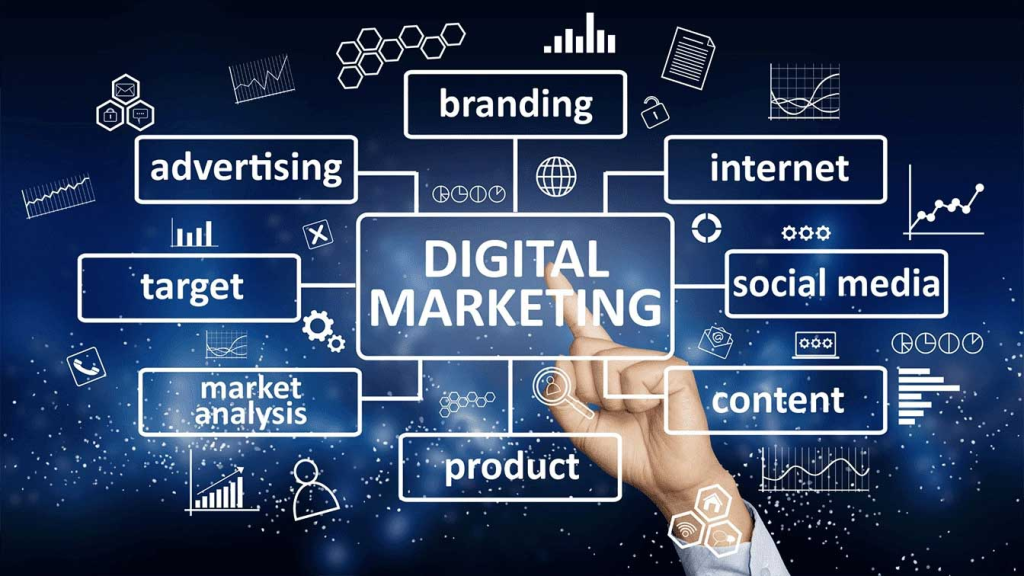
The Core Pillars of Modern Digital Marketing Strategies
In June 2026, businesses everywhere face significant digital marketing challenges. The landscape is evolving rapidly, making it difficult to connect with customers and drive growth effectively. What worked just a few years ago might no longer be sufficient. New technologies, especially artificial intelligence, constantly reshape how audiences engage. Navigating this complex environment requires robust modern digital marketing strategies for businesses globally. We need innovative approaches to ensure our brands not only survive but thrive. This guide will explore the most impactful strategies, focusing on channels, AI integration, and actionable insights. These apply to a wide range of sectors, from e-commerce to those needing Modern digital strategies for trades.
A modern digital marketing strategy is a comprehensive, long-term blueprint that outlines how a business will achieve specific objectives through digital channels. It differs fundamentally from campaigns and tactics. While a campaign is a focused, time-bound effort designed to achieve a particular goal (e.g., a product launch campaign), and tactics are the individual actions within that campaign (e.g., a specific social media ad or email sequence), the strategy provides the overarching vision. It answers the critical questions: “What are we trying to achieve?” and “Why does this matter?” This strategic framework defines objectives, identifies target audiences, and provides a roadmap for all marketing activities, ensuring cohesive effort across various digital touchpoints.
At its heart, a successful strategy aligns directly with broader business objectives. We advocate for setting SMART (Specific, Measurable, Achievable, Relevant, Time-bound) goals to ensure clarity and accountability. For instance, instead of “increase sales,” a SMART goal might be “increase qualified leads by 20% through targeted content marketing and paid social campaigns within the next six months.”
Understanding our audience is paramount. Developing detailed buyer personas, based on data and research, allows us to tailor messages and choose channels effectively. These personas should go beyond demographics, delving into motivations, pain points, and digital behaviors. Furthermore, in 2026, a robust first-party data strategy is non-negotiable. With the deprecation of third-party cookies, owning and leveraging our customer data provides a significant competitive advantage, enabling hyper-personalization and more accurate attribution.
Mapping the customer journey, from initial awareness to post-purchase advocacy, helps identify critical touchpoints and content needs. This journey is rarely linear; it’s often a looping process of research, discovery, and re-engagement. Technologies like low-code development platforms are empowering businesses to rapidly create personalized landing pages and digital experiences without extensive coding, accelerating time-to-market for strategic initiatives. Marketing automation, used by 88% of marketing organizations, further streamlines repetitive tasks, freeing up our teams to focus on strategic thinking and creative execution. We understand that customer experiences are the key differentiating factor, with 80% of marketers agreeing on this point, underscoring the need for a customer-centric approach.
Navigating the AI Search Disruption: SEO, AEO, and GEO
The search landscape in 2026 has been fundamentally reshaped by artificial intelligence. While traditional Search Engine Optimization (SEO) remains crucial for organic visibility, we now operate in an environment where AI Overviews and answer boxes often dominate results. This shift introduces two new critical dimensions: Answer Engine Optimization (AEO) and Generative Engine Optimization (GEO).
AEO focuses on optimizing content to directly answer user queries concisely and accurately, making it digestible for AI models that synthesize information. GEO, on the other hand, is about ensuring our content is not just found, but cited and referenced by generative AI systems like Google’s AI Overviews, Perplexity, and ChatGPT Search. This means competing for citations in AI-generated answers rather than merely vying for a top organic ranking. The goal is to be recognized as a trusted, authoritative source that AI systems will confidently pull from.
Here’s a comparison of how these elements differ:
Feature Traditional SEO (Pre-2024) Generative Engine Optimization (GEO) (2026) Primary Goal Rank high in organic search results for keywords Be cited/referenced by AI Overviews and generative AI answers Content Focus Keyword-rich pages, comprehensive articles Concise, factual answers (under 40 words), structured Q&A, topical depth Measurement Organic rankings, click-through rates, website traffic AI Overview visibility rate, citation frequency, assisted conversions Key Optimization Keyword density, backlinks, technical SEO Structured data, semantic SEO, topical authority, external validation User Intent Matching keywords to user queries Directly answering conversational queries, anticipating follow-ups Competitive Edge High domain authority, large volume of content Content quality, trust signals, unique insights, first-party data Adapting Modern Digital Marketing Strategies for AI Overviews
AI Overviews are changing how users consume information, often providing direct answers without the need to click through to a website. To thrive in this environment, our content must be structured for AI extraction. This means including a direct, concise answer within the first 100 words of informational posts, using clear headings, and implementing FAQ sections with natural language questions. We also need to leverage structured data and schema markup to explicitly tell search engines what our content is about, making it easier for AI to understand and utilize.
Building topical authority is more critical than ever. Instead of focusing on individual keywords, we develop comprehensive content clusters around specific topics, demonstrating deep expertise. This signals to AI systems that we are a reliable source for that subject matter. Furthermore, citation frequency—how often our brand or content is referenced by other authoritative sources—is becoming a key indicator of trust and credibility for AI. For those looking for advanced tactics to navigate this new terrain, exploring resources on AI marketing cheat codes can provide valuable insights into leveraging AI for competitive advantage.
Content Authority and Semantic Search
In 2026, content is not just about keywords; it’s about context and meaning. Semantic SEO focuses on understanding user intent behind queries and creating content that addresses the broader topic comprehensively, rather than just stuffing keywords. We achieve this through content clustering, where related articles are grouped and interlinked, establishing our authority on a subject. This approach helps AI understand the depth of our knowledge.
High-quality content that genuinely provides value, answers user questions, and demonstrates expertise is paramount. Low-code sites, for example, enable us to rapidly deploy and test new content formats and interactive experiences, optimizing for user engagement and clarity, which in turn signals relevance to search engines. Our content must be optimized not just for search engines, but for the user’s journey and intent, providing clear, accurate, and trustworthy information that AI can confidently cite.
High-ROI Channels and Compounding Growth Systems
In 2026, effective digital marketing isn’t about isolated channels; it’s about an integrated, compounding system where each component reinforces the others. The goal is to maximize Return on Investment (ROI) while optimizing Customer Acquisition Cost (CAC) and increasing Customer Lifetime Value (LTV). We know that email marketing, for example, boasts an impressive average ROI of $36 for every $1 spent, making it one of the highest-performing digital marketing channels.
Integrating Modern Digital Marketing Strategies Across Channels
To build a truly compounding growth system, we must integrate our marketing channels. This means moving beyond channel-specific silos and orchestrating efforts across the entire customer lifecycle.
- Email Marketing:Still a powerhouse for nurturing leads and driving conversions, email marketing accounts for 80% of all outbound marketing messaging in 2022. Segmenting lists by behavior and personalizing content leads to significantly higher engagement and ROI.
- Paid Search (PPC):Essential for capturing high-intent buyers at the decision stage. Paid search provides immediate visibility and allows for precise targeting, offering instant reach that organic channels build over time.
- Paid Social:While organic social reach has declined, paid social remains invaluable for brand awareness, top-of-funnel initiatives, and retargeting. Platforms like Meta, TikTok, and LinkedIn allow for sophisticated audience segmentation. We’ve seen that 86% of industry professionals cited increased exposure as a leading benefit of social media marketing in 2023, with 76% claiming increased website traffic.
- Video Marketing:With consumers spending an average of 4 hours and 39 minutes on their phones daily by 2024, video content, especially short-form, is critical. It engages audiences across platforms and can significantly boost conversion rates.
- Lifecycle Marketing:This involves tailoring messages and offers to customers at each stage of their journey, from awareness to advocacy. Marketing automation plays a crucial role here, enabling personalized communication at scale. For innovative approaches to blending these elements, exploring various Creative digital marketing strategies can offer fresh perspectives on how to build integrated campaigns that resonate.
- Conversion Rate Optimization (CRO):Continuously optimizing our websites and landing pages for better conversion is fundamental. This includes A/B testing, improving user experience, and streamlining conversion paths.
The Role of Digital PR in Building Brand Trust
In an age where trust is a measurable metric, Digital PR has become an indispensable component of modern digital marketing strategies. It’s the practice of earning visibility, authority, and credibility through credible third-party sources in the digital ecosystem. Unlike traditional advertising, Digital PR focuses on who else is vouching for us.
For AI search, external validation signals are crucial. AI systems synthesize information from sources they already trust. Therefore, securing brand mentions, features, and backlinks from reputable publications and industry influencers builds the authority that AI relies on. This isn’t just about exposure; it’s about building lasting trust signals. Digital PR helps fill the “trust gap” that SEO alone cannot, positioning us as thought leaders and experts in our field. This authority compounds over time, making our brand a more reliable source for both human users and AI.
Frequently Asked Questions about Modern Marketing
Navigating the complexities of digital marketing in 2026 often brings up fundamental questions. Here, we address some of the most common inquiries to provide clarity and actionable insights for strategy execution.
What is the difference between a digital marketing strategy and a campaign?
The distinction between a digital marketing strategy and a campaign is crucial for effective planning and execution. A digital marketing strategy is a long-term, high-level plan that defines a business’s overarching goals, target audience, and the general approach to achieve those goals through digital channels. It’s the “what” and “why” – why we are doing something and what we aim to achieve in the grand scheme. For example, a strategy might be to “become the leading online provider of eco-friendly home services in the Northeast region.” This strategy is stable, evolving only with major business shifts.
A digital marketing campaign, conversely, is a specific, time-bound initiative designed to achieve a particular, smaller goal that contributes to the broader strategy. It’s the “how” and “when.” For instance, within the eco-friendly home services strategy, a campaign might be “launch a social media campaign in Q3 to promote our new solar panel installation service, aiming for 15% lead conversion.” Campaigns have clear start and end dates, specific budgets, and detailed tactical execution plans. Multiple campaigns can run concurrently or sequentially, all feeding into the overarching digital marketing strategy.
How does Answer Engine Optimization (AEO) impact search visibility in 2026?
Answer Engine Optimization (AEO) has a profound impact on search visibility in 2026 due to the rise of AI-powered search engines and conversational search interfaces. Instead of simply listing links, these new search environments prioritize providing direct, concise answers to user queries, often through AI Overviews or integrated chat functions.
AEO ensures our content is specifically structured and optimized to be easily consumed and cited by these AI systems. This means:
- Increased Visibility in AI Overviews:Content optimized for AEO is more likely to be featured in the prominent answer boxes that appear at the top of search results, effectively bypassing traditional organic listings for many queries.
- Enhanced Credibility and Trust:When AI systems consistently cite our content as a source for answers, it builds significant authority and trust for our brand, both with users and with the AI itself.
- Adaptation to Conversational Search:As voice search and AI chatbots become more prevalent, users pose questions in natural language. AEO prepares our content to directly address these conversational queries, leading to higher relevance and visibility.
- Focus on Topical Authority:AEO encourages a shift from keyword-stuffing to demonstrating deep, comprehensive knowledge on specific topics, which AI values for providing nuanced and accurate answers.
AEO is not just about ranking; it’s about being the definitive, trusted source that AI turns to for answers, fundamentally reshaping how our brand is discovered and perceived in the digital landscape.
Why is first-party data critical for modern digital marketing?
First-party data has become absolutely critical for modern digital marketing in 2026 for several compelling reasons:
- Privacy Regulations and Cookie Deprecation:With increasing global privacy regulations (like GDPR and CCPA) and the impending deprecation of third-party cookies across major browsers, the traditional methods of tracking and targeting users are becoming obsolete. First-party data—information collected directly from our customers with their consent—provides a privacy-compliant alternative.
- Enhanced Personalization:First-party data allows for unparalleled personalization. By understanding our customers’ direct interactions with our brand, purchase history, preferences, and behaviors, we can deliver highly relevant content, offers, and experiences. This level of personalization is crucial, as 63% of consumers expect personalized experiences based on their purchase history.
- Improved Accuracy and ROI:Data collected directly from our audience is inherently more accurate and reliable than third-party aggregated data. This leads to more effective targeting, reduced ad waste, and ultimately, a higher ROI on our marketing spend. High-performing marketing teams analyze performance in real-time (72%), and accurate first-party data fuels this agility.
- Owned Audience and Competitive Advantage:Building an owned audience through first-party data (e.g., email lists, CRM data, website analytics) creates a valuable asset that competitors cannot easily replicate. It reduces our reliance on external platforms and their changing algorithms, giving us greater control over our marketing efforts.
- Foundation for AI and Automation:First-party data is the fuel for advanced AI and marketing automation systems. It enables predictive analytics, AI-powered lead scoring, and automated personalized customer journeys, streamlining operations and boosting efficiency.
First-party data is no longer just a nice-to-have; it’s the strategic asset that underpins effective, ethical, and future-proof digital marketing in 2026.
Conclusion
The digital marketing landscape of 2026 demands a strategic shift. We must move beyond fragmented campaigns and embrace an integrated, AI-orchestrated system that prioritizes customer experience, first-party data, and verifiable trust. The rise of AI search, AEO, and GEO signifies a profound change in how visibility and authority are earned, requiring us to create content that not only answers questions but is also cited as a trusted source.
By focusing on high-ROI channels, fostering compounding growth through seamless integration, and building brand trust via Digital PR, we can navigate this complex environment. The businesses that will thrive are those willing to innovate constantly, adapt to new technologies, and always put the customer at the center of their strategy. This commitment to continuous improvement and strategic foresight will be the ultimate differentiator in achieving sustainable business growth in the years to come.

Amanda Lancaster is a PR manager who works with 1resumewritingservice. She is also known as a content creator. Amanda has been providing resume writing services since 2014.