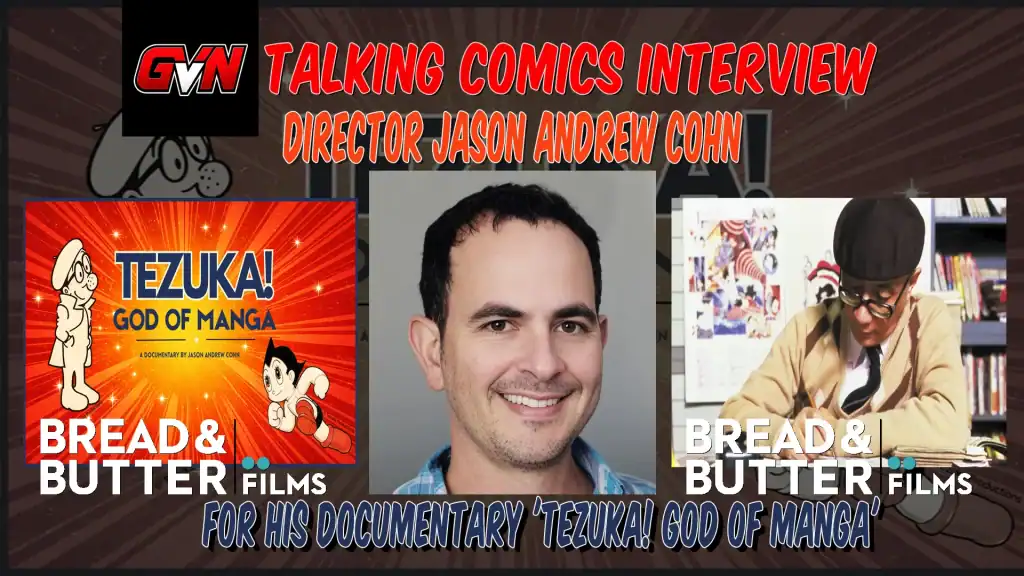
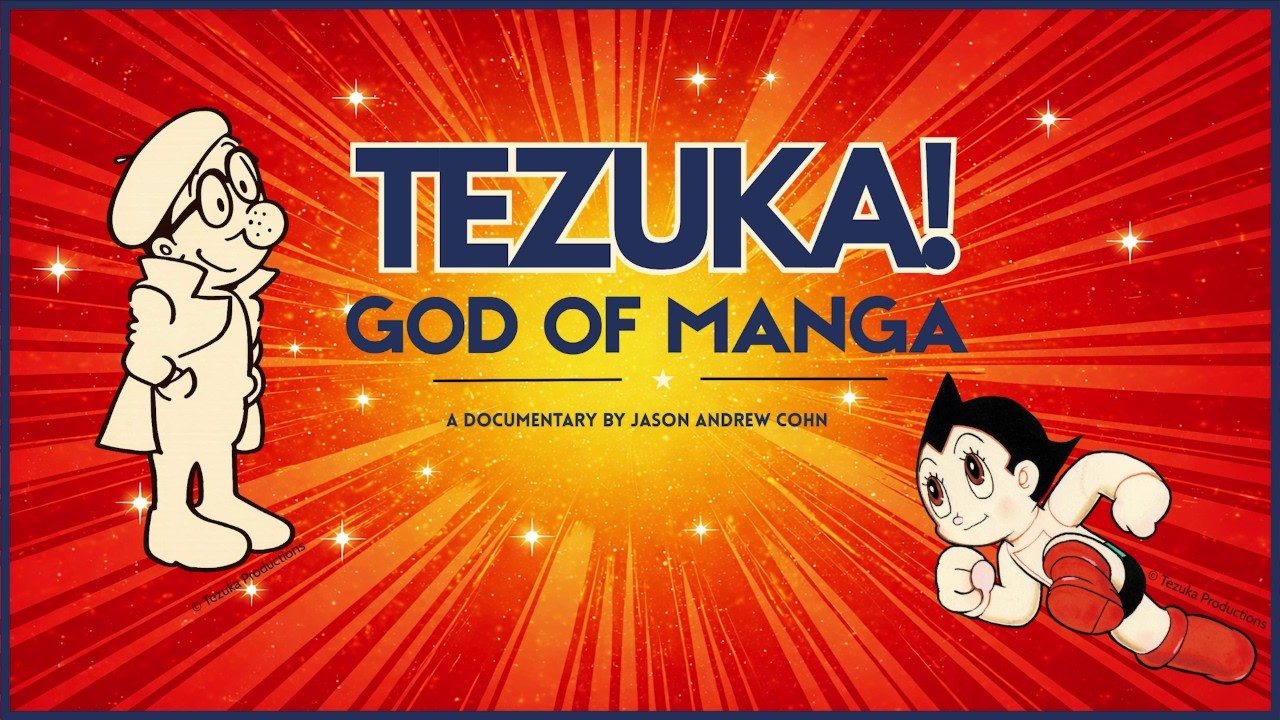
Osamu Tezuka isn’t just a giant in manga and animation—he’s the very foundation of the modern industry. In TEZUKA! God of Manga, Peabody Award–winning director Jason Andrew Cohn takes on the daunting challenge of telling the story of a creator whose influence feels almost mythical.
Rather than chasing the legend, Cohn focuses on the man himself: a restless innovator, a boundary-breaker, an artist who reshaped global storytelling one page, one frame, one obsession at a time. Using rare archival materials, candid interviews, and a cinematic style that echoes Tezuka’s bold creativity, the documentary reintroduces a cultural icon to a new generation.
Before launching their Kickstarter campaign, we recently chatted with Cohn about the challenges, contradictions, and responsibilities of portraying the life of a creator widely celebrated for revolutionizing the field. Now, please welcome Peabody Award-winning director Jason Andrew Cohn to GVN Talking Comics.
Creative Inspirations
GVN: Thanks for taking the time to chat with us, Jason. Before we dive into this exciting documentary, let’s talk a bit about your creative beginnings. When did you first become interested in film and documentaries, and whose work sparked that passion?
JASON: My father was a major cinephile and I grew up seeing classic movies all the time. I had probably seen 2001: A Space Odyssey five times by the time I was 13. So I’ve always loved film. But I didn’t really have a lot of exposure to documentaries until I went to journalism school. I was planning to become a newspaper journalist but I decided to take some TV production classes and I really got into it. I loved the collaborative nature of it. And I learned that writing for TV and documentary is just like writing for print except that it’s in three dimensions because you can replace words with sound and pictures. My professor at Berkeley, Jon Else, is an incredible filmmaker and I was very inspired by some of his work, like Cadillac Desert and Day After Trinity.
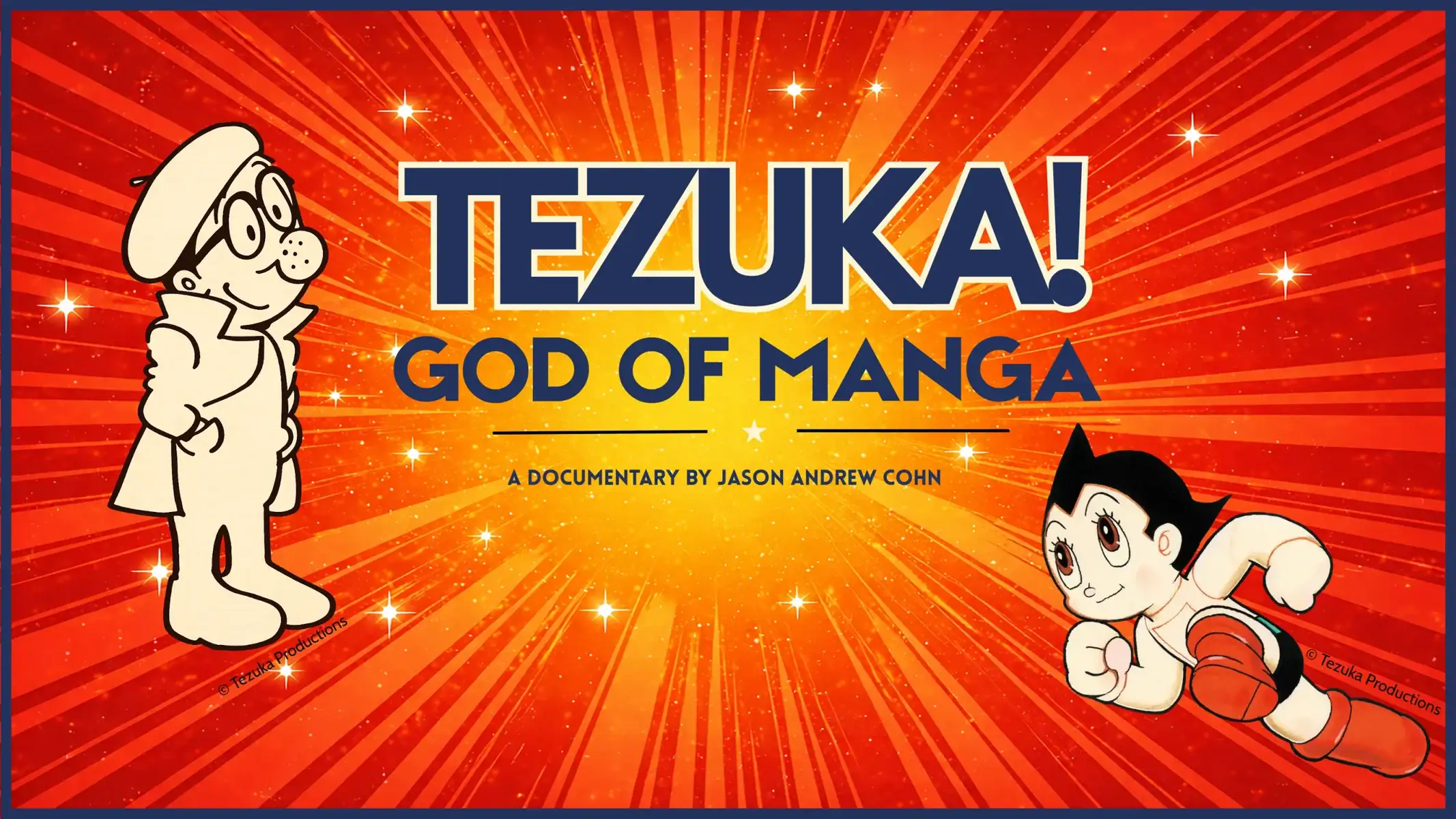
TEZUKA! God of Manga
GVN: In this exciting project, you chose to spotlight Osamu Tezuka, often referred to as the “God of Manga.” Yet your film explores the person behind the legend. When during your research did you realize the documentary should challenge the simplified view of his legacy?
JASON: I think the danger of making a film about someone like Tezuka who had such a long and varied career is that you feel a responsibility to be comprehensive and stick in some mention of every significant thing he did. The result of that kind of approach is usually long on information but short on insight. Of course, this is an opportunity to introduce Tezuka to a vast audience of people who may know very little about Japan so you also have to find space for the historical and cultural context that he was working within. And then the ultimate imperative is to capture something essential about who Tezuka was as a human being and as a creator, because it’s hard for people to care about the work if they don’t care about the person who did it. So it’s a balancing act, but I think all of those things work together if you can find the right ratio of information, context and human insight.
Ongoing Discoveries
GVN: The documentary showcases rare footage, sketches, and personal materials. What was the most unexpected archival discovery that changed the way you understand Tezuka’s creative process?
JASON: We’re still very much in the process of digging through all of that. The Tezuka archive is massive and they’re still discovering new unfinished manuscripts from time to time. I think the main thing that emerges is a picture of someone with an astounding combination of creative energy and what I’d have to call a compulsion to create.
Like all writers, he had slumps and down periods where he was unhappy with his work because he didn’t think it lived up to what he had done in the past or because the audience wasn’t digging it. But his way of dealing with it was to just grind through the slumps, constantly churning out material with the belief–or the hope, anyway–that he’d work it out.
In jazz music, musicians often talk about seeing another cat doing something new and fresh and then going to “the woodshed” to figure it out because they didn’t want to be left behind. I think Tezuka was doing that all the time. He was the most influential manga artist of all time but he was also an absolute sponge who was constantly picking up techniques from other artists. He never stopped trying to grow. I think there’s a great lesson there for all artists.
Tezuka’s Fingerprints
GVN: Tezuka’s fingerprints are everywhere in modern animation and comics, from character design to serialized storytelling. In your conversations with contemporary creators (without giving too much away), what influence came up most consistently?
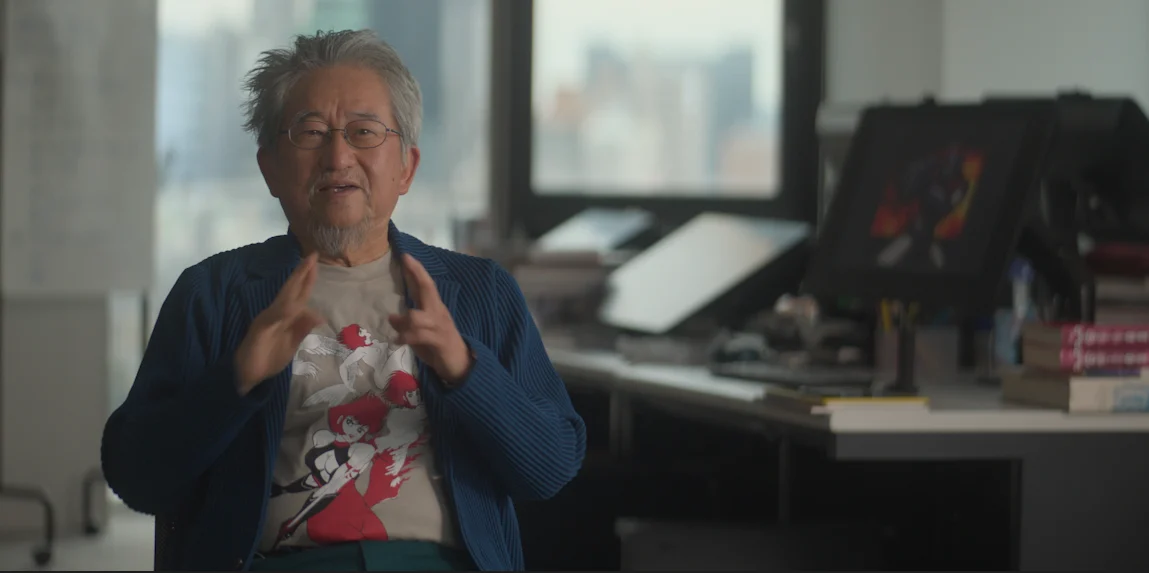
JASON: I think universally there was the feeling that Tezuka expanded the possibilities of storytelling and liberated people to write about whatever moved them in any genre. Naoki Urasawa put it pretty succinctly when he told us that Tezuka taught him that the universe inside his head was completely free. I think that sentiment was echoed by almost everyone.
Go Nagai said that when he first read Astro Boy as a kid in the aftermath of the war, he realized that everyday life was pretty boring but the world of manga could be as exciting as you wanted it to be. And when you look at the way that manga developed in Japan, as compared to comics in the U.S., I think you see those Tezuka fingerprints everywhere. It’s just a very individuated art form, which I realize cuts against certain stereotypes about Japan and the U.S. but it’s clearly the case for most of manga’s history.
“A Process of Constructing, Deconstructing, Reconstructing”
GVN: When documenting a cultural icon whose work spans decades and genres, how did you navigate the responsibility of presenting both the brilliance and the more complicated aspects of Tezuka’s career?
JASON: Writing a documentary is very much a process of constructing, deconstructing, reconstructing, wash, rinse, repeat. So we’ll be working through that until the very end. But as I alluded to earlier, I think failure is intrinsic to Tezuka’s story. One of the best things he did was to fail repeatedly. His animation studio went bankrupt. He had many manga stories that were unpopular or came and went with little fanfare. And then through the process of failure he would always emerge on the other side as a revitalized artist. So I think that’s a critical part of his story that we have to get right.
Kickstarter
GVN: You are bringing this film to Kickstarter to help fund it. What will Tezuka fans who visit this campaign find that would excite and motivate them to help bring your vision to the conclusion it deserves?
JASON: Well, I’m hoping people will support the film just because they see the value of getting Tezuka’s story out in the world! But if that isn’t enough we’re going to have some really special rewards for backers. Tezuka Productions is offering us a couple very rare original color magazine prints so that’s a really unique opportunity for collectors.
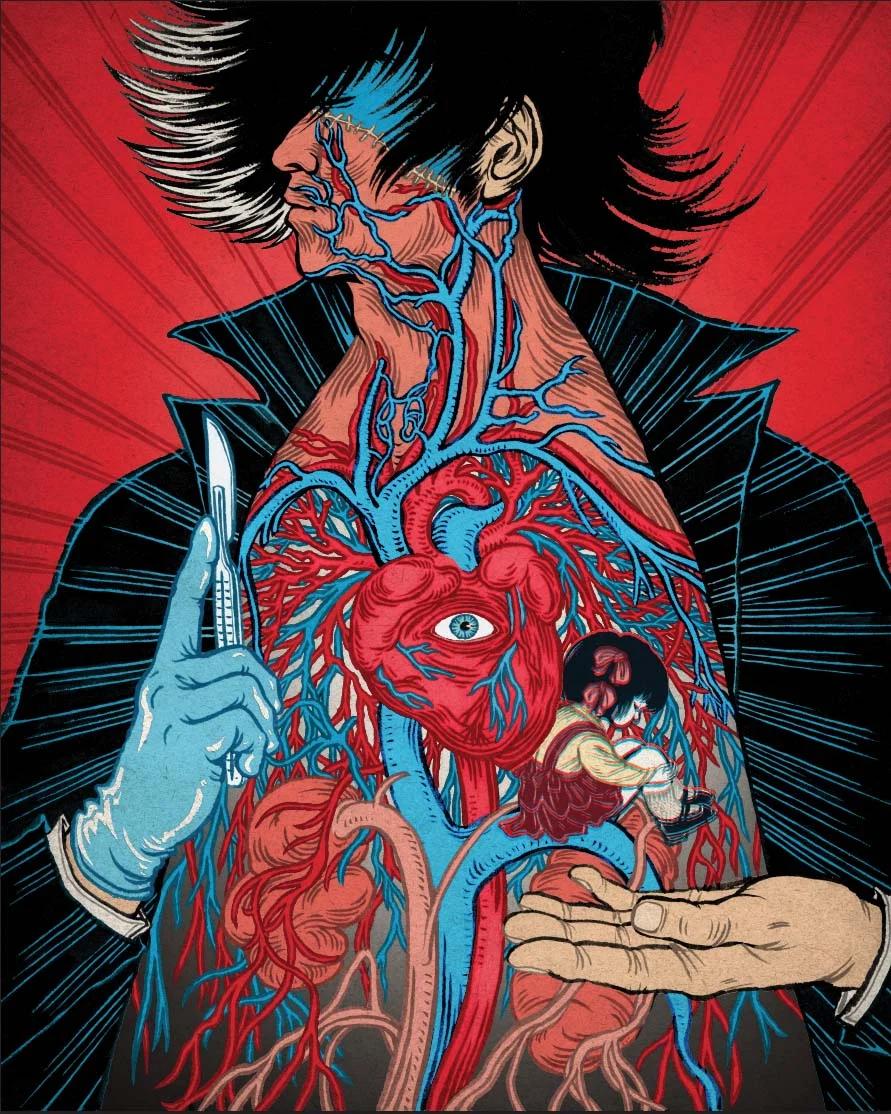
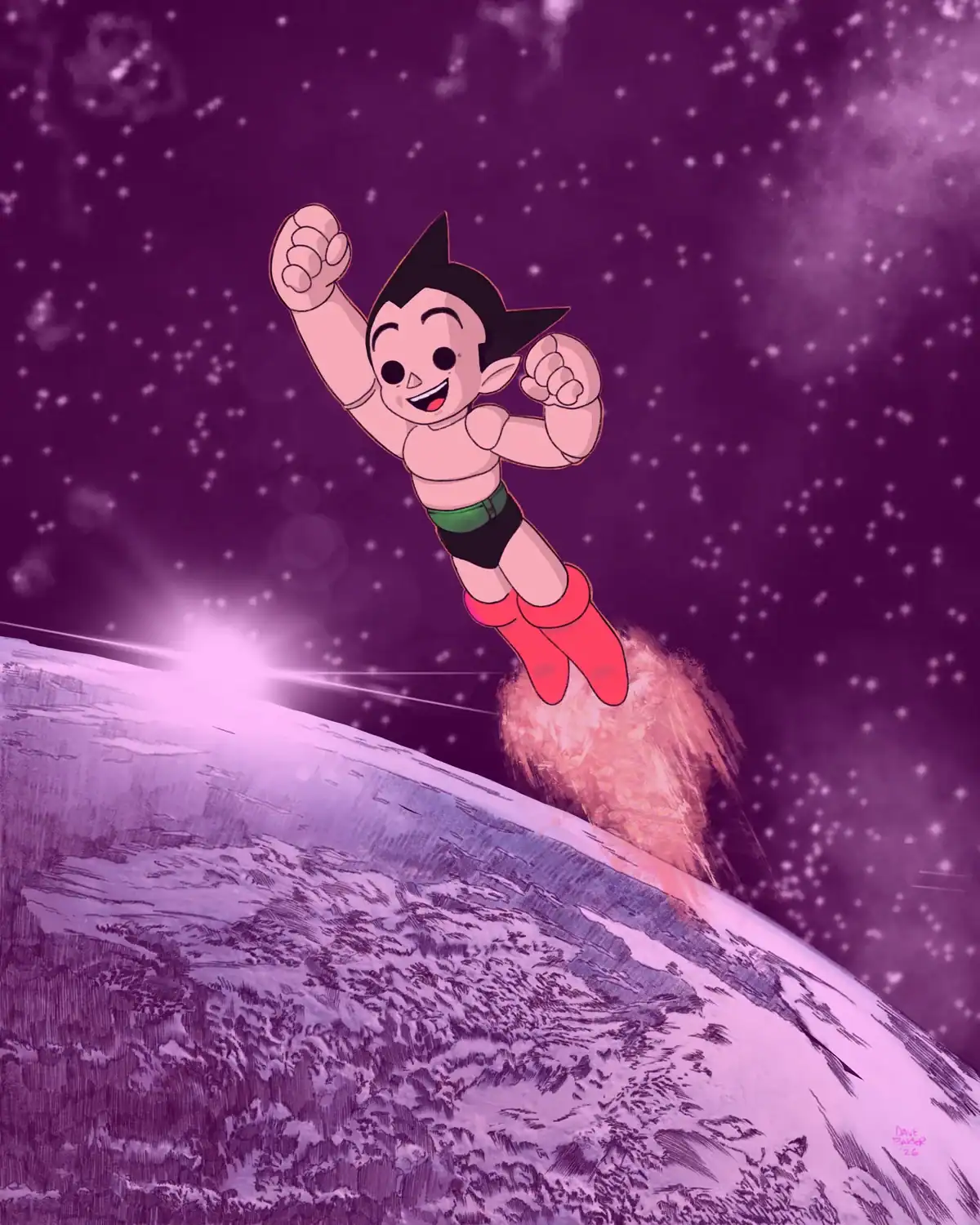
And they also permitted us to commission a dozen or so incredible artists to produce their own original versions of Tezuka characters. So we have illustrations by folks like Shinichi Ishizuka, Gurihiru, Jorge Gutierrez, Jesse Lonergan and Yuko Shimizu. Paul Pope is supposedly working on one as we speak! All these artists were really excited to have the opportunity to put their own spin on Tezuka classics like Black Jack and Phoenix and Astro Boy so it’s super cool to see what they’ve come up with. I’m going to frame all of them and have a Tezuka wall in my office. I can’t wait!
“…Traces of Tezuka Everywhere…”
GVN: Thank you again, Jason, for chatting with us today. Finally, for audiences discovering Tezuka for the first time—or rediscovering him through your film, what do you hope they take away about his relevance to today’s global comics and animation landscape?
JASON: It’s in the nature of all popular culture to be constantly evolving and usually at a pretty rapid pace because the market values novelty so much. But there are some people in every cultural field whose imprint is so deep and pervasive that no matter how much things change you can never completely escape their gravitational field, to mix metaphors for a moment. I absolutely see Tezuka that way. And I think anyone who watches the film will walk away seeing traces of Tezuka everywhere, including in some American comics and animation. He’s just monumentally important in that world and I hope that the documentary goes some way towards making Tezuka more of a household name in the Western world, the way Miyazaki is, for instance.
Thanks for the opportunity to talk with you and your audience. It was a pleasure!
In TEZUKA! God of Manga, Jason Andrew Cohn doesn’t just revisit the legacy of a titan—he reopens the conversation around how modern storytelling came to be. Uncovering the layers of myth to reveal the restless and relentless creator beneath. Cohn gives audiences a rare look at the engine that powered an entire artistic revolution. It’s a documentary that honors Tezuka’s brilliance without shying away from the complexities that shaped him, and it invites viewers to reconsider the foundations of the comics and animation they love today. As Cohn’s film makes clear, Tezuka’s influence isn’t a relic of the past; it’s a living current still charging the medium’s future. You can check out the Kickstarter campaign here.

Senior Writer at GeekVibesNation – I am a 60 something child of the 70’s who admits to being a Star Trek/Star Wars/Comic Book junkie who once dove headfirst over a cliff (Ok, it was a small hill) to try to rescue his Fantastic Four comic from a watery grave. I am married to a lovely woman who is as crazy as I am and the proud parent of a 21-year-old young man with autism. My wife and son are my real heroes.