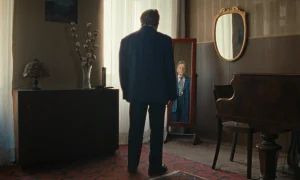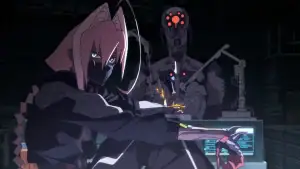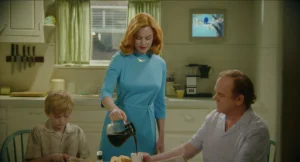

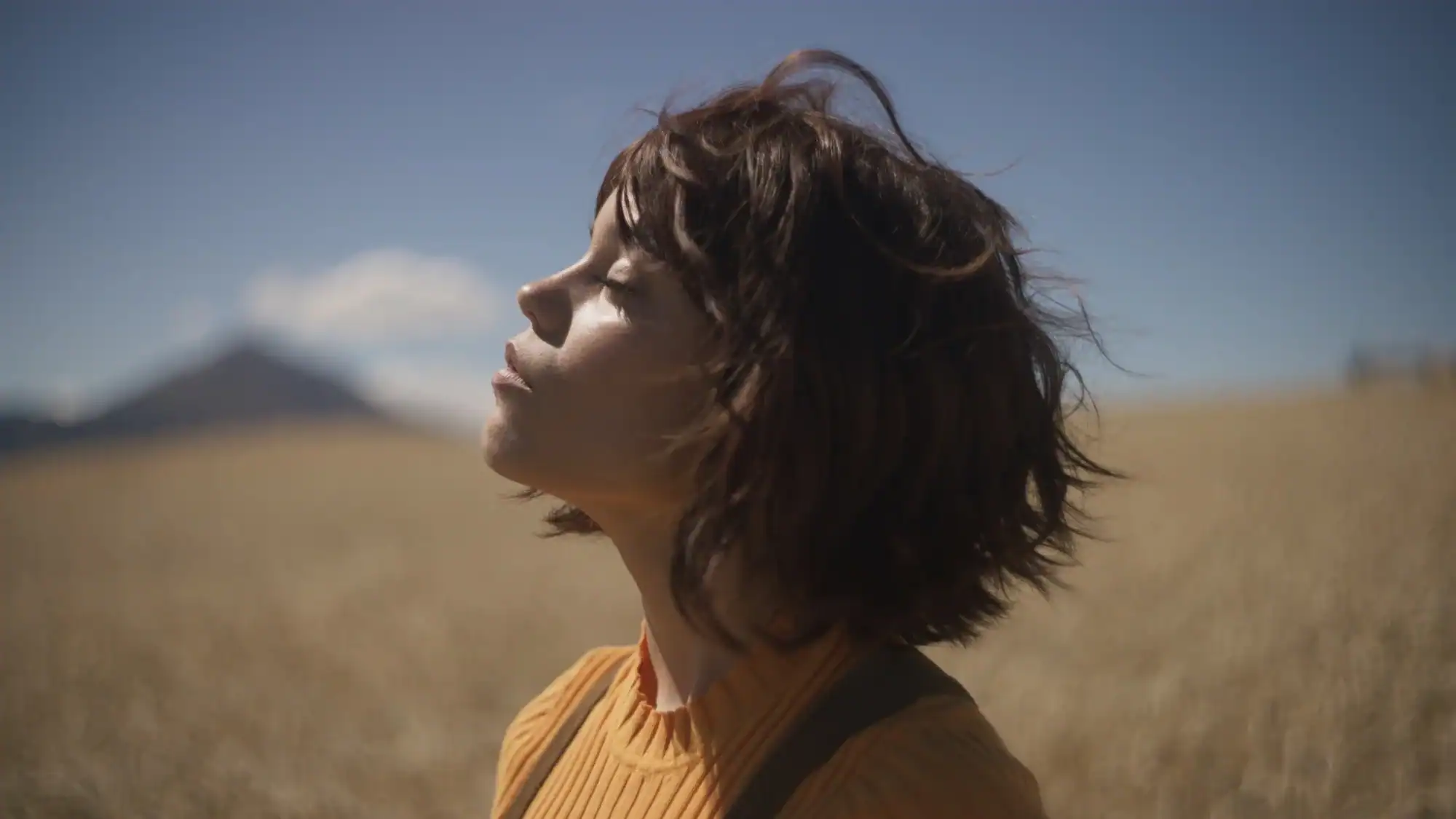
Synopsis
Based on the bestselling novel from Nobel Prize-winner Kazuo Ishiguro and written and directed by Academy-Award® winner Taika Waititi (Jojo Rabbit), Klara and the Sun introduces audiences to Klara (Jenna Ortega), an Artificial Friend who wants nothing more than to find the perfect home. When Klara meets Josie (Mia Tharia), each immediately senses a kindred spirit in the other. Josie has a fraught relationship with her mother (Amy Adams) and they’ve suffered great loss, but Klara’s innocent wonder and unwavering loyalty begin to heal the family and bring light to Josie’s complicated world.
This is going to sound cliché because it is, but you need to cherish the special people in your life while they’re here because tomorrow really isn’t promised. Despite the path humanity is currently on, no amount of wealth or technological advancement can replace real people or human connection. This is not only a statement I stand behind, but also a topic the film calmly dances with. No matter how realistic, how picture-perfect, or how convenient ones and zeroes can be made to appear, they’re no replacement for the warmth, laughs, and affection of your fellow humans. So don’t neglect those you care about, and make as many memories as you can because once they’re gone, you realistically can’t get them back.
“Hello, Sun.”
Whether you’re seventy-five or fifteen, we’ve all read and watched the dangers of robots and artificial intelligence since we could walk, yet here we are. The risks were never as simple as technology will kill us all, but also the temptation to never let go of what has always been finite. Written, produced, and directed by Taika Waititi, Klara and the Sun is a luminous exploration of a post-war dystopian future and the intersection of technology, humanity, and grief. Told through the curious yet innocent gaze of an Artificial Friend robot named Klara, the world of discovery and wonder gets lost in its own findings. Unfortunately, the film is thematically overcrowded and fails to calibrate its ambitions. Weaving a dark narrative through rose-colored, constantly computing glasses, it attempts to balance joy and endearment with sorrow and familial drama. Its efforts work like a charm until they wear out their welcome and lean too heavily to one side. Charming, sweet, and cute can only take a story so far, especially when its subject matter is as significant as losing a child.
Set in a future where governments have taken away the internet after a probably avoidable World War III, lifelike robots are as accessible as buying a puppy from a store window. The rich and powerful have developed a way to widen the gap between themselves and the rest of society by altering their kids’ DNA to enhance their intelligence. When wealthy single mother, Chrissie (Amy Adams), decides to allow her daughter, Josie (Mia Tharia), to choose her own Artificial Friend, she chooses a quirky, observant discontinued B1-generation model named Klara (Jenna Ortega), who was living her robotic life similar to that of an orphan attempting to be chosen by families looking to complete their household. However, what wasn’t initially apparent is that while Klara may look like a young adult, she’s essentially like a baby: a blank slate that learns and imprints, and has never been outside. Constantly in the way and doing the wrong thing, Klara is unaware of the looming cloud of dysfunction she’s been brought into. The lavish home of Chrissie, Josie, and their housekeeper, far from the buzzing of the city, is full of ire, heartbreak, resentment, estranged love, and life-altering secrets.
“Sorry, darling, but you’re just not the droid we’re looking for.”
As all these elements- war, tech, the future, and society are intrinsically tied together, Waititi skirts the difficult, more intriguing topics and world-building, opting for something easier and more approachable: family drama. Harbouring all the scenarios and emotion you’d expect, the film’s sentiments begin to feel hollow as only surface-level themes are explored while most are merely mentioned. Touching on faith, mortality, an unhealthy reliance on science, classism, and myriad philosophical, thought-provoking concepts, it’s easy to convince yourself you witnessed something great as you ponder what everything meant. Furthermore, you’re analyzing the surrounding world in an attempt to determine why the story lacks sufficient depth. You end up filling in the gaps yourself with moral ponderings. The story feels as though it was built around a philosophical question posed to children, yet it demands an adult audience. While Klara and the Sun will play great for some, it fails to commit to a direction and lacks some of the vivaciousness that makes Taika Waititi’s films stand out. Unfortunately, similar films tackle this subject with far more precision and guts.
Visually, the film makes a splash with its wardrobe, set design, and color palette. The cinematography is solid, the score fits the somewhat obscure setting, and Jenna Ortega smiles more than we’ve ever seen before; it’s almost creepy. If futuristic dystopian stories typically scratch a certain itch for you, unfortunately, this one just doesn’t have the nails or the reach. Its rewatchability is low.
Pace & Pop
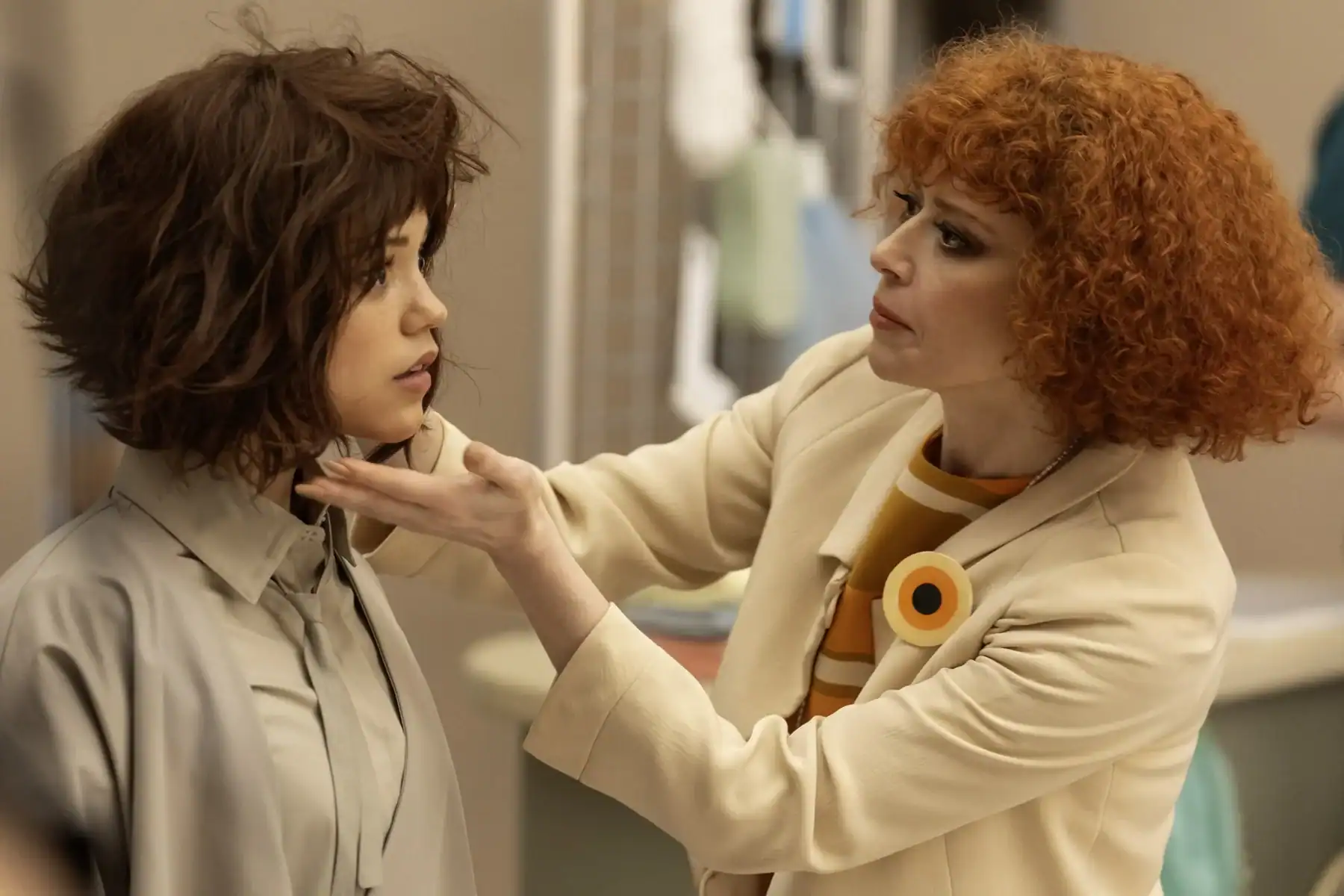
Initially, the film’s pace feels balanced and lively, but by the time it reaches the middle of the second act, it begins to feel tedious. It can’t seem to choose a narrative direction, which in turn results in a tonal and pacing imbalance. While the charm does eventually wear off, what pops is the “first day as a person” comedic trappings of Klara. Everything tends to be pretty funny when you don’t know how anything works.
Characters & Chemistry
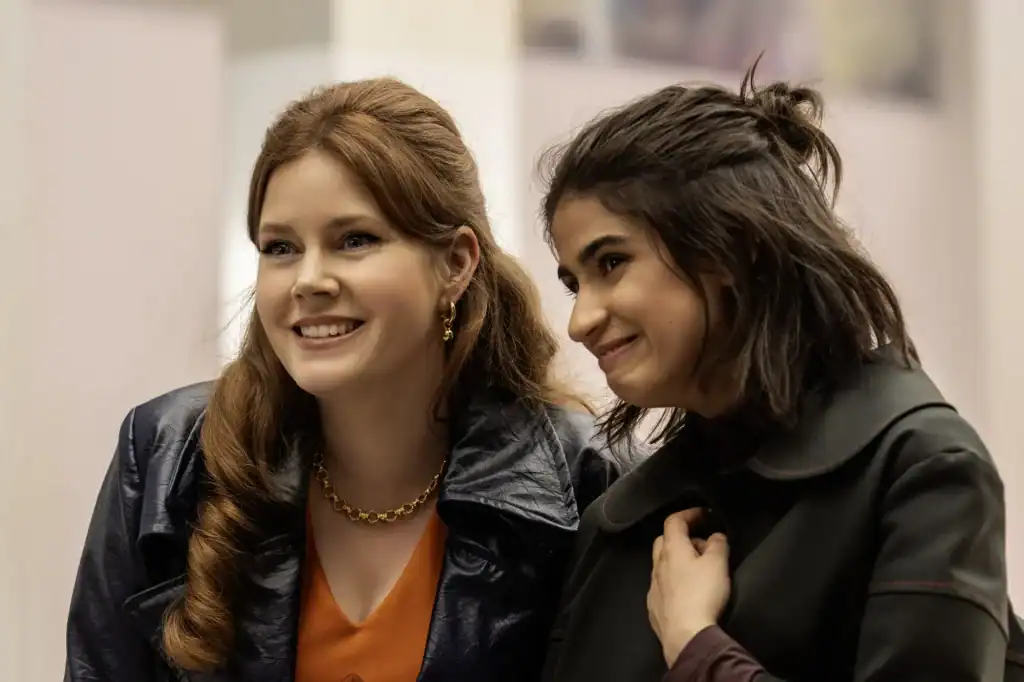
Starring: Jenna Ortega, Amy Adams, Mia Tharia, Aran Murphy, with Steve Buscemi and Natasha Lyonne
Despite any grievances, the performances are solid. As the Artificial Friend, Klara, Jenna Ortega embodies childlike whimsy and wonder while conjuring the spirits of Frankenstein’s monster and Edward Scissorhands with Labrador Retriever energy. Her face is highly animated, and anything requiring the use of her legs is quite the processing task. It was difficult to understand how Chrissie (Amy Adams) is supposed to be perceived. While living in a dense cloud of grief and fear, you want to feel sorry for her, but at every turn, she seems to be an unlikeable person. Her behavior becomes incredibly hard to excuse. While Mia Tharia may not have had the most dialogue as the young, ill Josie, her physical performance rivals Ortega’s. From pain and disappointment to jealousy and love, Tharia conveyed the faces a teenage girl uses to express whatever she’s feeling with precision. Some scenes required only a mere glance, and it was enough to elicit an emotion. Together, the trio is a whirlwind of a strange yet familiar human experience. However, despite their best efforts, the film collapses like a dying star.
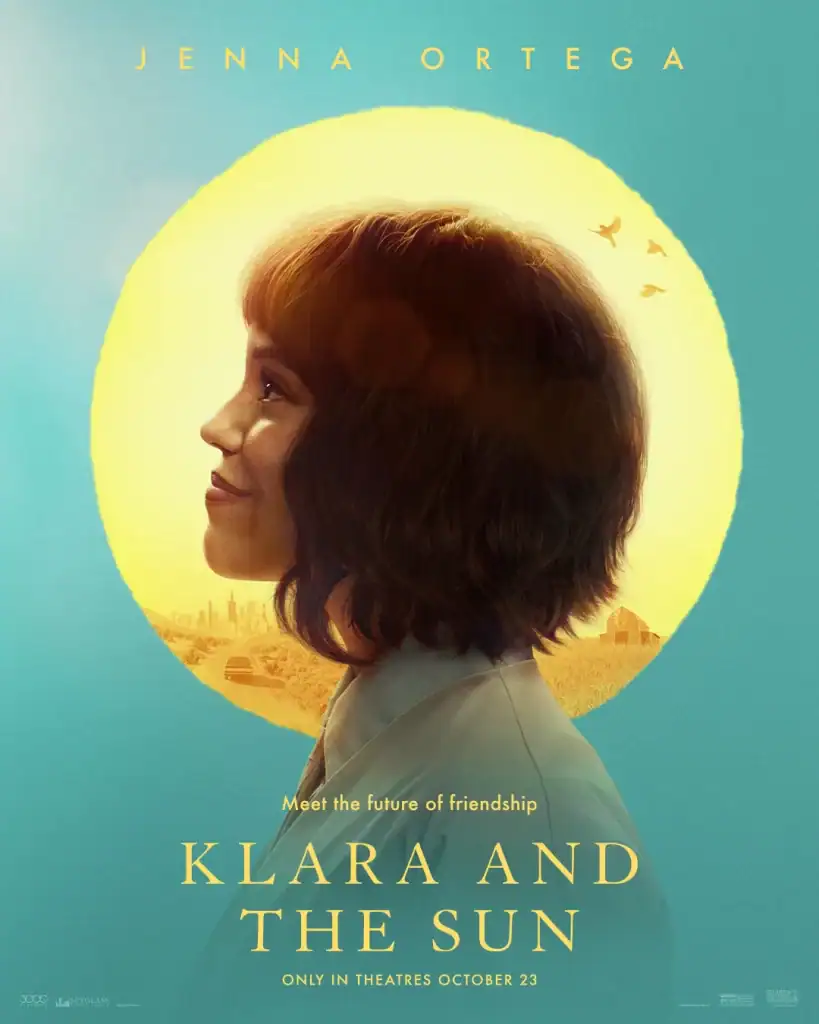
Klara and the Sun skips into theaters on October 23, 2026. Stay safe and stay woke.
Rated: PG-13
Runtime: 1h 56m
Director: Taika Waititi
Screenplay: Taika Waititi and Dahvi Waller
Based on the book by: Kazuo Ishiguro
Producers: David Heyman, p.g.a., Garrett Basch, p.g.a., Taika Waititi, p.g.a.
Executive Producers: Gary Barber, Alex G. Scott, Jeffrey Clifford, Rosie Alison, Kazuo Ishiguro
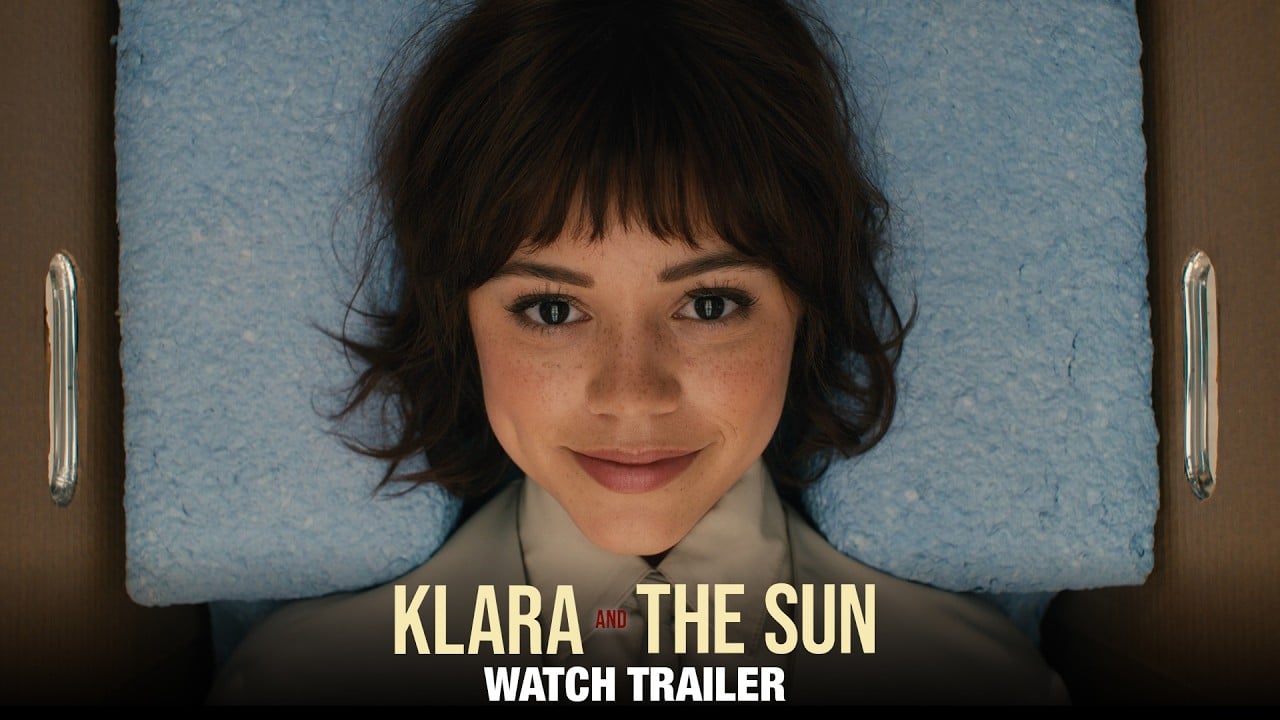
Klara and the Sun is a luminous exploration of a post-war dystopian future and the intersection of technology, humanity, and grief.
-
GVN Rating

Senior Critic. Observing the human race since 1988.