

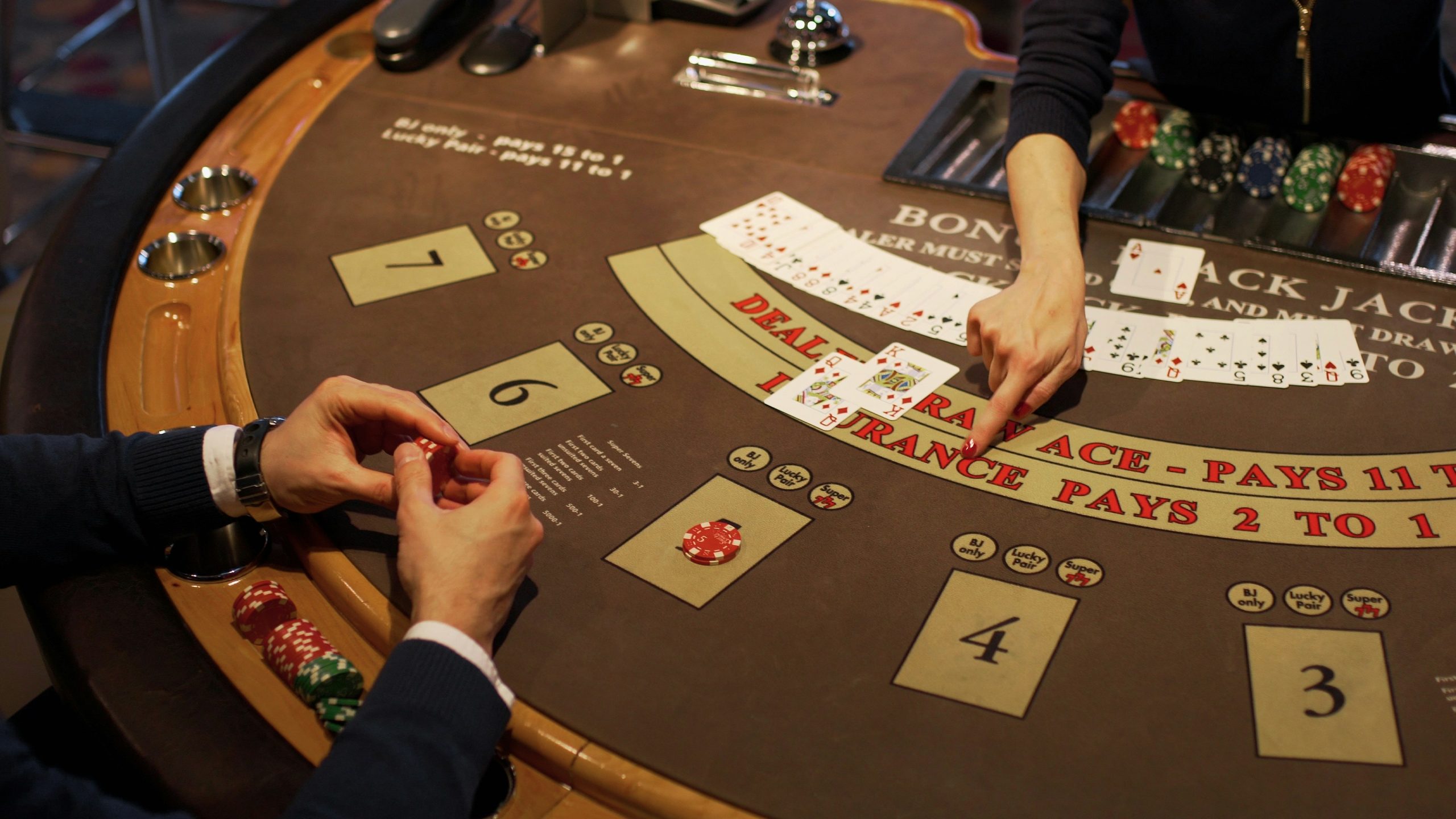
Most of what happens at a live Blackjack table takes place before a single card reaches a player’s seat. Studios follow set procedures for every shoe, and each step has a practical reason behind it. If you’ve watched Blackjack hands dealt on camera, you’ll have seen most of these steps, often without any explanation. Here’s what each one does.
Mixing the decks
Most live Blackjack tables use six or eight standard decks of 52 cards. Depending on the studio, they’re shuffled by hand, by an automatic shuffler or by a continuous shuffling machine. An automatic shuffler mixes the full set in one go before it’s loaded. A continuous shuffler takes used cards back every few rounds, so the shoe has no fixed end point. The aim is the same either way. The order of the cards should be random.
Placing the cut card
The cut card is a plain plastic card placed into the stack. In a physical casino, a player is often invited to make the cut. At a live table, the dealer usually handles it. Its position decides how much of the stack is dealt before the cards are shuffled again. When it comes out of the shoe, the round in play is the last one from that shoe.
Loading the shoe
The shuffled cards then go into the shoe. It’s a box that lets the dealer slide out one card at a time, face down. This keeps the cards hidden until they’re dealt, and the dealer never needs to hold the full stack. Many shoes in live studios also have a scanner built into them, which comes up again below.
Burning the first card
Before dealing starts, the dealer usually takes the top card and places it straight into the discard tray without showing it. This is the burn card. It’s a standard table practice that stops anyone seeing the first card in the shoe. The burnt card plays no part in any hand.
Opening the betting window
Each round opens with a timed betting window, shown as a countdown on your screen. This is when stakes are placed using the chip values shown on the table. The dealer waits for the timer to finish rather than starting early, so every seat gets the same amount of time.
Closing bets
When the timer runs out, betting closes and the dealer will often confirm it out loud. Stakes not placed by then aren’t accepted for that round, and those already on the table are locked in. Decisions such as whether to hit or stand only come once the cards are dealt.
Reading each card
As each card leaves the shoe, the scanner reads it. This uses optical character recognition (OCR), the same type of technology that reads printed text from an image. It’s the reason the card value and hand total appear on your screen almost as soon as the dealer turns the card over.
When the round ends
Once a round is settled, it’s complete. You can leave the table at the end of any round, and there’s no need to stay until the shoe runs out. Every outcome in live Blackjack is decided by chance, so it’s worth setting a bankroll limit before you play. Trusted organisations offer free, confidential support if gaming becomes a concern.

Morgan Vance is an iGaming analyst with nearly a decade of experience covering online casinos and industry regulation. Known for breaking down complex betting systems into easy-to-understand insights, Morgan has reviewed over 500 casino platforms worldwide. His work often explores the intersection of blockchain technology and gambling, particularly the rise of crypto casinos and provably fair gaming.