
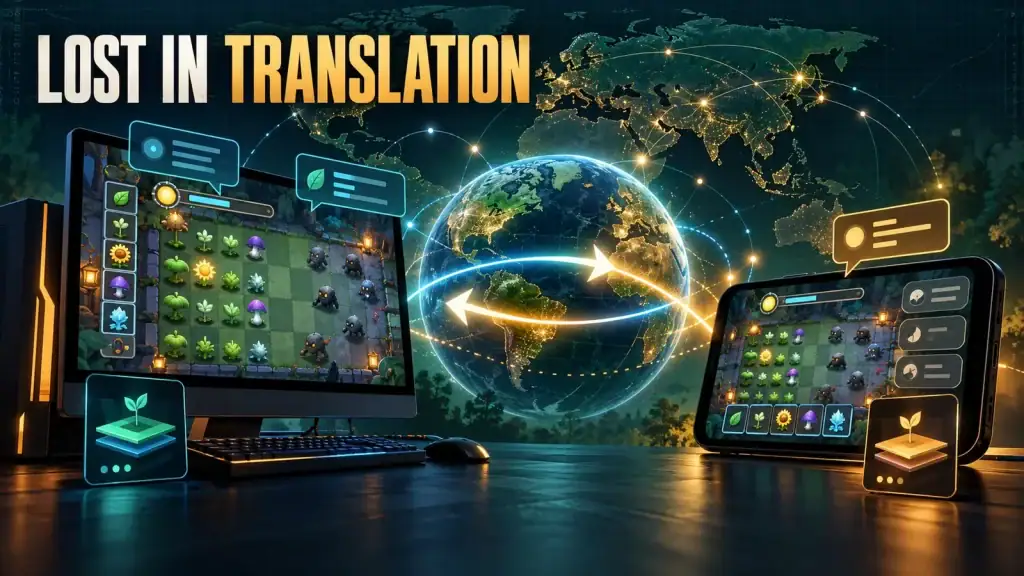
Fan projects rarely reach an international audience through one coordinated launch. There may be no global storefront, automatic updater, or localization team preparing every supported language at the same time. Instead, a game often travels through community posts, videos, translations, mirrors, and recommendations shared between players.
By the time that project attracts attention outside its original audience, several releases may already be circulating. A Windows build can be newer than its Android counterpart. An English translation may be based on an earlier base version. Two files with similar names may contain different features, fixes, or save compatibility.
This is the less visible side of a fan game going global. Translation helps people understand the game, but version tracking, documentation, and source verification help them understand what they are actually playing.
One Project Can Have Several Release Tracks
Official games usually give players a familiar path: open a storefront, select a supported platform, and install the latest available release. Community-distributed projects are not always that simple.
PVZ Fusion illustrates the problem. The unofficial fan-made project circulates across Windows and Android, while community translations may follow a different update schedule from the base release. PVZ Fusion is not affiliated with or endorsed by EA or PopCap.
The important detail is that “latest” can have several meanings. It might refer to the newest original-language release, the newest translated build, or the newest version available for a particular platform. Unless those labels are clearly separated, players can easily assume that every download carrying the same project name contains the same content.
That confusion affects more than access to new features. Guides may describe units that do not exist in an older translation. A save created on one release may not behave as expected after an update. Advice that is accurate for the PC build may not apply to Android.
Translation Has to Follow a Moving Target
Translating a game is not simply a matter of replacing one set of words with another. Menus have limited space, ability descriptions need consistent terminology, and jokes or cultural references may not survive a literal translation. Instructions also need to explain what the game expects rather than merely reproduce the original sentence.
The work becomes harder when the source material continues to change. A new update may add units, rearrange menus, alter progression, or rewrite descriptions that volunteers have already translated. Even a complete translation can fall behind as soon as the base project moves forward.
This creates a choice for community translators. They can release a stable translation of an earlier build, or they can chase the newest update while accepting that some text may remain unfinished. Neither approach is inherently wrong, but players need to know which approach a particular file represents.
PVZ Fusion is useful as a case study because its international audience may encounter base releases and translated builds at different points in that cycle. A version number without language and platform context does not tell the whole story.
Documentation Becomes Part of the Experience
When distribution is decentralized, community documentation starts doing work normally handled by a storefront and official support page. Players need more than a download link. They need release dates, platform labels, change summaries, installation notes, and clear explanations of whether a translation corresponds to the newest base version.
For PVZ Fusion, a current version guide helps readers separate platform, language, and release information before deciding which build matches their device. Keeping that information in one place also makes it easier to identify when a translated release trails the original-language version.
Good documentation also records uncertainty. If a mobile release has not been verified, a guide should say so. If a translation is incomplete, readers should know which sections remain in the original language. If a new build may affect older saves, that limitation should appear before installation rather than after a player loses progress.
For projects such as PVZ Fusion, these records allow strategy discussions to remain useful. When two players see different units or menus, checking their platform, language, and version can reveal that they are not actually playing the same build.
Community guides therefore become more than promotional pages. At their best, they act as an index connecting releases, translations, known differences, and original discussion channels.
Source Verification Matters as Interest Grows
A project that becomes popular will often appear on mirrors, file-sharing pages, and unofficial download sites. Some mirrors preserve the original files accurately. Others rename packages, remove context, or bundle unrelated software. Search results can make all of them look equally legitimate.
Translation can add another layer of uncertainty because a modified build is expected to differ from the original in some way. Players may have difficulty telling whether those changes are limited to language files or extend further into the package.
Responsible community resources should identify the release trail rather than simply presenting the first available file. Useful details can include the platform, base version, translation status, original announcement channel, file name, release date, and checksum. No unofficial file should be described as completely risk-free.
Players can also protect themselves by avoiding installers that request unrelated permissions, comparing file details with established community records, and checking whether other users have confirmed the release. These habits matter for any community-distributed game, regardless of how familiar its name has become.
Different Platforms Create Different Expectations
Platform differences are easy to overlook when a project shares one title and visual identity. A desktop release may support keyboard shortcuts and larger interface elements, while a mobile build may require altered controls, compressed assets, or a separate update schedule.
Those differences affect how guides should be written. A tutorial that only says “install the latest version” is incomplete if the available Android and Windows releases do not match. Troubleshooting advice also needs to identify the platform before recommending file locations, settings, or update steps.
This is why clear labels are more valuable than a single universal download button. They let players make informed decisions without assuming that every release is interchangeable.
Communities Carry More Than Words Across Borders
When a fan game reaches a new language community, its players do not remain passive consumers. They create tutorials, compare terminology, report version differences, document mechanics, and explain where new releases came from. Video creators demonstrate features that are difficult to describe, while Wiki editors turn scattered discoveries into searchable references.
Together, these contributions form an unofficial support network. Translation opens the door, but documentation helps people remain oriented after they enter. Version records keep discussions accurate, and source verification gives players a better basis for deciding which files to trust.
PVZ Fusion is one example of a broader pattern. A fan project can cross borders quickly, but the information surrounding it must travel as carefully as the game itself. Without that work, global attention produces confusion. With it, separate language communities can participate in the same evolving project while understanding the differences between their releases.
Going global is therefore not a single moment. It is an ongoing maintenance job carried by the people willing to translate, verify, explain, and keep the record current.
Select a repo
Table of Contents

Amanda Dudley is a lecturer and writer with a Ph.D. in History from Stanford University. After earning her doctorate in 2001, she decided to pursue a fulfilling career in the educational sector. So far, she has made giant strides by working as an essay writer for EssayUSA, where she delivers high-quality academic papers to students who need them.