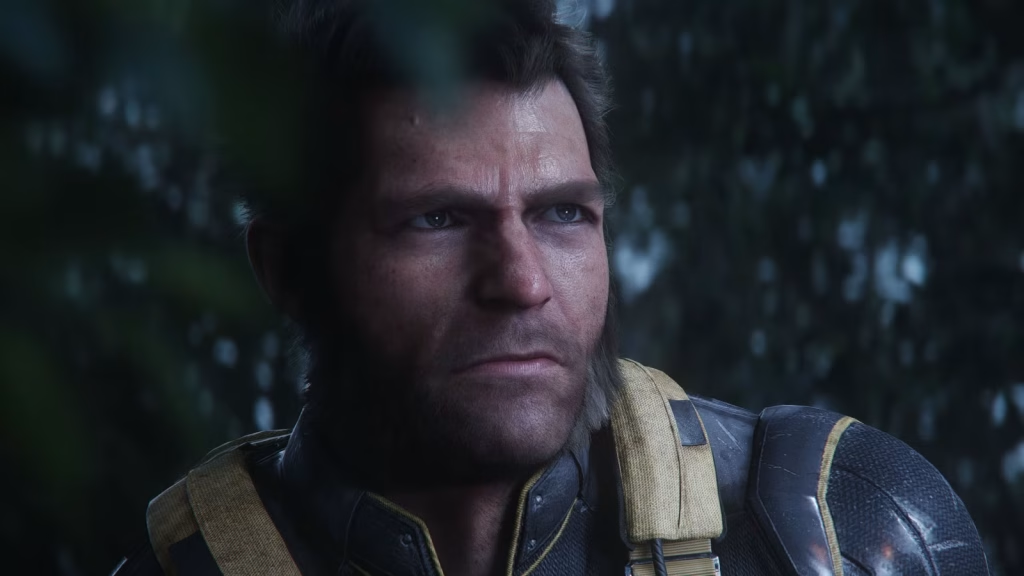
Marvel’s Wolverine includes references that reach across Logan’s comic-book history, animated appearances, and the wider Marvel universe. Some are easy to recognize, while others blend into the scenery as advertisements, collectible labels, or background details. Looking beyond the next objective can reveal how much history is packed into the game’s world.
This guide highlights eight Easter eggs and references worth watching for. Some are hidden environmental details; others are deliberate costume tributes or familiar visual callbacks. They reward different kinds of fans, whether your introduction to Wolverine came through comics, animation, or another Marvel game.
Spoiler note: This article mentions mission names, locations, collectibles, and costumes. It avoids the ending and post-credits revelations.
1. Wolverine’s Famous Picture-Frame Pose
Where to look: The Mission Replay screen associated with Logan’s Nightmare Cabin.
Wolverine reclining on a bed and looking at a photograph is a familiar image from X-Men: The Animated Series. The game recreates that recognizable pose in its mission-selection presentation, bringing one of the character’s most widely shared animated moments into the menu itself.
The original scene shows Logan looking at a picture of Jean Grey and Cyclops. Online, the image became a template for replacing the photograph with practically anything someone might miss or admire.
What makes the reference effective is its placement. It is part of a screen players may revisit, so the joke can become a recurring piece of the experience. It also acknowledges a softer, more wistful image of Wolverine within a game dominated by his aggressive side.
2. The Incredible 181 Whisky Bottle
Where to look: A boarded-up garage during The One That Got Away.
The Incredible 181 bottle points to The Incredible Hulk #181, the issue featuring Wolverine’s first full appearance. The number is the clue: it connects an ordinary-looking collectible to a major moment in the character’s publication history.
There is an important distinction here. Wolverine first appears briefly in The Incredible Hulk #180, before taking a substantial role in the following issue. Calling #181 his first full appearance preserves that difference.
It is an economical reference. Players unfamiliar with the comic can read the label as a fictional brand, while longtime fans can recognize why that particular number matters. The object fits naturally into the environment without needing a character to explain the joke.
3. Uncanny Whiskey Nods to the X-Men
Where to look: Logan’s storage-bedroom area during Homecoming, when the game introduces the collectible.
The Uncanny Whiskey name points toward Uncanny X-Men. It is another example of the bottle labels carrying meaning beyond their role as collectibles.
This is a useful early reminder to read what you pick up. A collectible can offer more than progress toward a completion goal; its name may connect to a comic title, an identity, or a piece of Logan’s history.
These references are especially well suited to a character with decades of stories behind him. A short label can acknowledge that history without interrupting the current adventure or requiring the game to adapt every storyline it mentions.
4. A Reserved Place for Warren Worthington III
Where to look: The casino during Roll the Dice, near the dance-floor area.
A reservation for Warren Worthington III references Angel. It is a small environmental acknowledgment of another X-Men character, rather than a full character appearance.
That distinction matters: a name in the scenery establishes a reference, but it does not promise that the person will enter the story. Small details like this work because they suggest a wider world beyond Logan’s immediate mission.
5. Roxxon Advertisements in Tokyo
Where to look: Advertising throughout Tokyo’s urban environments.
Roxxon is another recognizable Marvel name embedded in the scenery. Its signs bring a familiar corporation into the background of Wolverine’s journey.
This kind of reference rewards looking at an environment as a place rather than only a route to the next objective. Advertising can contain a connection just as easily as a collectible or a conversation.
6. Hammer Industries on a Billboard
Where to look: A billboard during In the Shadows.
Hammer Industries offers another corporate Marvel reference, particularly recognizable to Iron Man fans. It expands the background beyond organizations directly involved in Logan’s immediate conflict.
A company logo is a restrained way of acknowledging other corners of Marvel. It does not need to introduce another hero or stop the campaign for an explanation.
7. The Animated Suit Celebrates Cartoon Wolverine
Where to look: The suit collection.
The Animated suit gives Wolverine a cel-shaded appearance that acknowledges his animated identity. It is a more visible tribute than a hidden sign, but it belongs alongside the game’s other nods to the character’s history.
Costumes are particularly effective references because players can carry them into the rest of the experience. The tribute becomes part of how the game looks during play, rather than a detail noticed once and left behind.
The contrast is also part of the appeal. A cartoon-inspired version of Logan brings a different visual language to the same environments and encounters. For fans whose strongest connection to Wolverine comes from animation, that can make the character feel immediately familiar.
8. Weapon X and Other Classic Looks
Where to look: The broader selection of unlockable and craftable suits.
Insomniac’s official features overview identifies looks inspired by Weapon X, Old Man Logan, Ultimate Wolverine, and Patch. These are intentional references to different versions and periods of Logan’s history, rather than hidden discoveries in the strictest sense.
That range is valuable because Wolverine does not have just one recognizable image. His identity includes superhero uniforms, experimental equipment, civilian clothing, and disguises. The wardrobe gives those different associations space within the same game.
It is worth exploring the suit names as well as their appearance. Some references will be immediately recognizable, while others provide a starting point for discovering a comic or version of the character you have not encountered before.
How to Spot More Wolverine Easter Eggs
The best approach is to slow down between objectives. Read bottle labels, look at signs, and pay attention to names on objects that might otherwise appear decorative. Menus deserve attention too, as the picture-frame tribute demonstrates.
It also helps to separate a clear reference from a theory. A named company, recognizable costume, or recreated pose offers something concrete to identify. A vague visual resemblance may be interesting without proving that a particular character or storyline is being teased.
The most enjoyable Easter eggs add another layer to a location or object without being necessary to understand the main story. Marvel’s Wolverine has examples across several categories, making exploration rewarding for fans with different connections to the character. You do not need to recognize every reference to appreciate the detail, but each familiar name gives the world a little more history.

DC Fanboy! Superman is the greatest comic book character of all time. Favorite movies are Man of Steel, Goonies, Back To the Future